
An Announcement, Not a Hands-On Test
Meta announced the Meta VR Glasses in September 2026 and plans to put them on sale in spring 2027. For now, this is an announced product, not a device that is available to try in everyday conditions. The published information offers insight into some aspects of Meta’s proposal, but it does not make it possible to assess the real-world experience through independent testing. Spring 2027 is also the planned launch window, not a guarantee that the glasses will be available in every country at the same time.
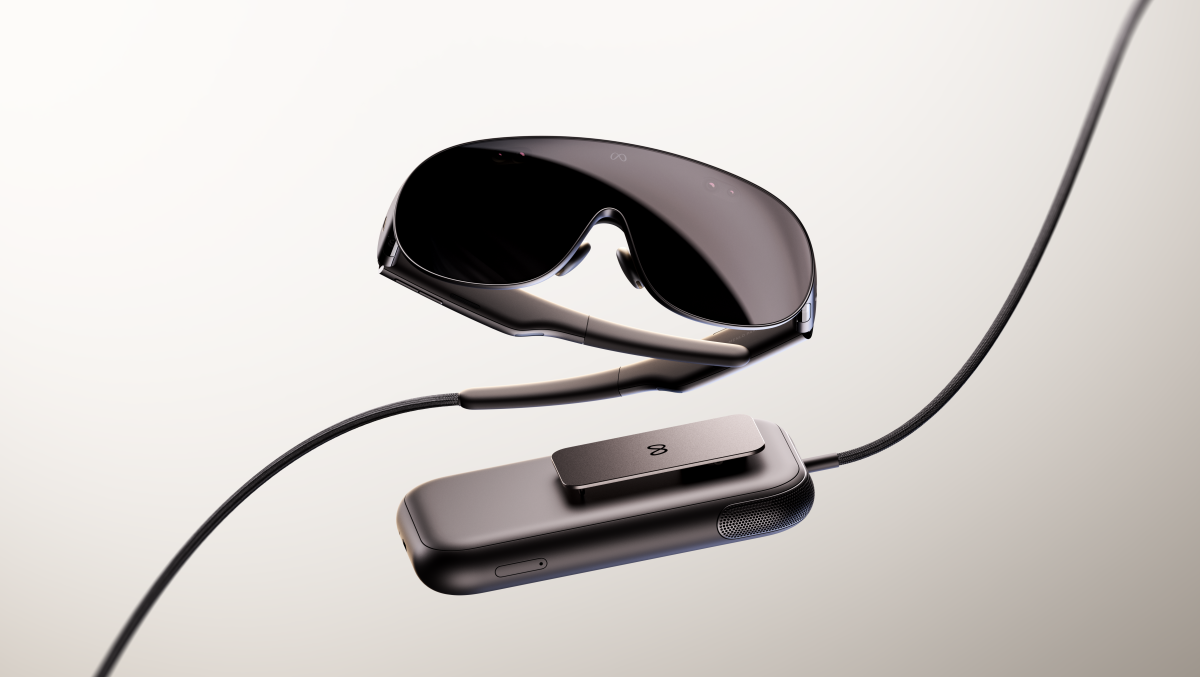
Meta describes the glasses as a virtual reality device weighing around 100 grams. The figure provides a specific reference point for the announced design, but its scope is limited: it should not be mistaken for a measurement of the complete system or used on its own to conclude that the product will be comfortable. To understand the full setup, it would also be necessary to know what additional components are worn during use and how they connect to or work with the glasses. (Meta)
This distinction matters because the weight of one component does not necessarily represent the total load a person bears while using a product. Meta’s stated figure is useful for describing the glasses as the company presents them, but by itself it does not answer practical questions about long sessions, movement, or use in different circumstances. Those questions remain open until more information and tests of the final product are available.
Weight Is Only One Part of the Design
The figure of around 100 grams appears in Meta’s presentation as a characteristic of the glasses. The company also describes a design that is open at the sides and passthrough cameras that keep the surroundings visible. These features help explain the format Meta is proposing and how the manufacturer characterizes it, but they do not by themselves establish how the device will feel when worn or how it will perform in different situations.
The open-sided design and passthrough cameras are separate aspects from the weight figure. The former describes the shape of the glasses; according to Meta, the cameras allow users to continue seeing their surroundings. Neither feature amounts to an independent assessment of the experience. To judge their practical effect, the product would need to be observed in operation, including how the view of the surroundings combines with the announced virtual reality experiences. (Meta)
The announcement presents the Meta VR Glasses as a new virtual reality format, but weight is not a complete description of the experience. Comfort depends, among other things, on fit and how the load is distributed. In principle, reducing what rests on the face could be an advantage; that does not prove the device will be comfortable for everyone or during extended sessions. Differences in fit between users and the way any necessary components are worn may also matter, and an isolated figure does not resolve those questions.
What the 100-Gram Figure Can Tell Us
The announced figure describes the weight of the glasses; it does not establish that everything needed to use them weighs the same. The available communication does not provide an independent measurement of the complete equipment in use. It is therefore worth separating the product specification from any interpretation about portability or comfort. Specifically, saying that the glasses weigh around 100 grams is not the same as saying that the entire setup a person wears or carries has that same weight.
Portability cannot be inferred from one specification alone either. To understand it, we would need to know what the system includes, which components are carried separately, and how the setup is arranged for use. Without that information, the announced weight of the glasses cannot be turned into a complete assessment of how easy the equipment would be to carry or use. This does not cast doubt on the stated figure; it clarifies what the figure describes and what it cannot demonstrate by itself.
Weight alone is also not enough to compare the experience with that of other headsets. A useful comparison would require consistent information about the complete system, its fit, and the conditions under which each measurement was taken. Comparing figures obtained in different ways could create a misleading impression, even if each number is accurate on its own terms. Without comparable data, presenting the figure as proof of an overall improvement would go beyond what Meta has confirmed.
Announced Features and an Experience Yet to Be Verified
Meta promotes the product as a device for virtual reality experiences, but an announcement is not an independent demonstration of the quality or usefulness of every feature. A proposal’s description tells us how the manufacturer presents it, but it is not enough to measure whether its features work well in real-world use. Specific capabilities, compatible content, and usage requirements need to be assessed using detailed manufacturer information and, when available, tests of the final product.
It is also important to distinguish between a feature being announced and the experience that feature provides. To evaluate the latter, we would need to know how the device behaves during use, what content can run on it, and what conditions are required. Until those details are established, it is not possible to treat a particular experience as confirmed or attribute results to the product that have not yet been independently verified.
The same caution applies to battery life, performance, and regional availability. The verified information here is not enough to establish battery results for particular tasks, confirm an app catalogue, or determine which services will be accessible in each market. These points remain open and should not be filled in with estimates or details from sources that are not supported by the verified research. The absence of such data does not mean a feature is missing; it means that, for now, its form in the final product cannot be confirmed.
What Prospective Buyers Should Check
Sales are planned for spring 2027, but the available information does not establish a confirmed final price or purchasing terms for each country. Before deciding, it will be worth checking local timing and availability, what is included, usage requirements, and warranty conditions once Meta publishes those details. The general announced date does not, by itself, determine when the product can be purchased in a particular market or what each offer will include.
When details are published, it will also be useful to distinguish the price of the glasses from any costs or requirements associated with using the system, if there are any. Those conditions cannot be anticipated from the information available now. Any purchase decision should therefore be based on confirmed information for the country and configuration a person is interested in, rather than assumptions about availability or included content.
Independent testing of the complete system’s weight, fit, and comfort over different periods of use will also be important. Such tests could clarify whether the announced figure translates into a reduced load when using the complete setup, and how the device feels after brief or extended use. Until then, 100 grams is an announced characteristic of the glasses, not proof that the complete setup is lightweight in every sense or comfortable for hours. The central distinction is simple: an announced specification describes what the manufacturer says; it does not replace an evaluation of the final product.