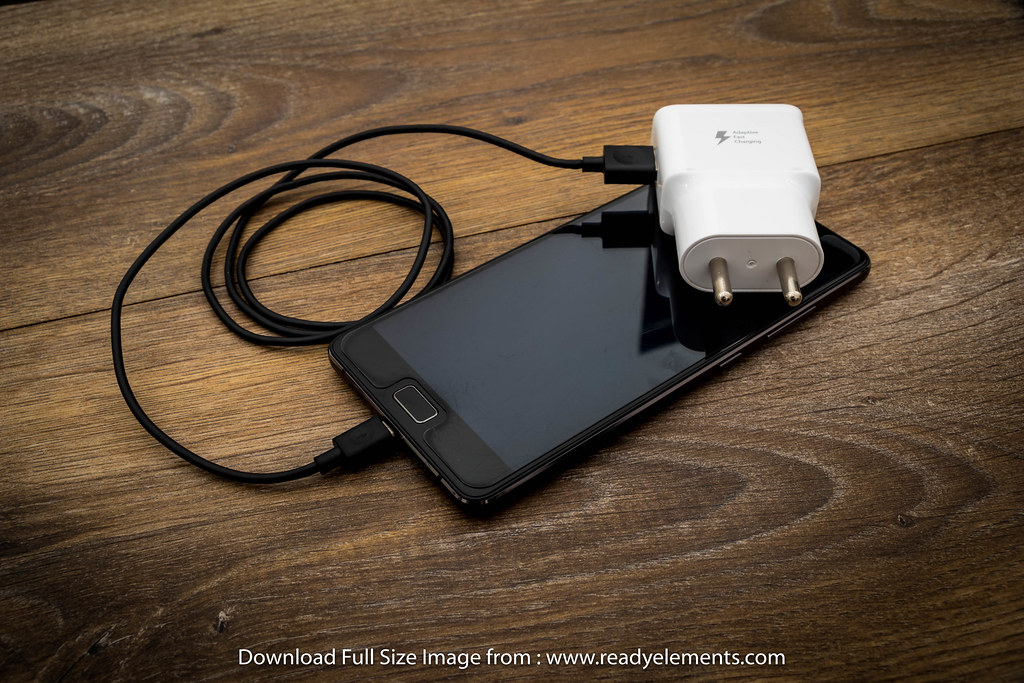
The editorial question is whether there is a verifiable development
A news story about a phone battery needs a specific event: a newly announced feature, a software change, a safety measure, a recall, or a verifiable product modification. The documentation provided does not, by itself, identify any of these events as a recent development. It contains support pages, general advice, and product references. Those materials may help explain a feature, but they do not show that anything has changed now. A current support page can describe an existing setting without telling readers whether it was introduced recently, and a product page can describe a device without establishing that its battery technology has just changed.
That is why the responsible approach is not to turn the search into a story about an improvement that has not been substantiated. The provisional conclusion is narrower: the sources reviewed do not support the claim that mobile charging or battery life has changed recently. This does not prove that no manufacturer or market has seen a development; it means the material available here is not enough to assert one. A publication should preserve that distinction, rather than treating missing evidence as proof that nothing happened or presenting an unverified possibility as a confirmed announcement.
What the support pages contribute
Apple maintains documentation about charging and caring for the iPhone battery, as well as information about the charge limit and optimized charging. These are useful references for explaining options documented by the company and directing readers to the manufacturer’s instructions. They can help establish what Apple says about using those options, but a help page, without a date or notice establishing a recent modification, is not equivalent to a new announcement. The existence of a page is evidence that the information is documented; on its own, it does not establish when a feature began, whether its operation has changed, or whether an update has reached users.
The available Google documentation serves a similar purpose: it offers help with battery-drain problems and describes programs associated with battery performance on certain Pixel phones. The existence of a page about a particular program allows the information published there to be attributed to Google, but does not justify generalizing it to every Pixel, all Android phones, or a newly deployed change. The scope of the document matters as much as its headline. A program may concern only named devices or defined circumstances. Unless the documentation says otherwise, readers should not be led to infer broader coverage, a launch date, or a change in policy.
A phone announcement does not prove a battery improvement
The material also includes a Google post about the Pixel 10a, dated February 18, 2026. That reference may be used to verify that Google communicated product information, but the existence of a launch does not, by itself, prove a charging innovation, a new energy-management policy, or improved battery life. Each claim of that kind needs specific support in the relevant product specifications, announcement, or technical documentation. A launch date and the fact that a product was presented are not substitutes for evidence about how its battery performs.
The same caution should be applied to announcements from any other brand. A promotional battery-life figure, a software feature, and a physical change to the battery are different claims and require different evidence. To compare models, the conditions would also need to be defined: software version, configuration, usage, network, and measurement method. Without those details, a standalone figure can invite a comparison the sources do not support. A reader should be able to tell whether a statement is a manufacturer’s claim, an independently tested result, or a description of a feature—and which devices and conditions it actually covers.
How to verify a possible news development
Before writing about a purported change, verification should start with a primary source: a manufacturer’s press release, an official product page, a release note, or a communication from a regulator. The date, country or market, affected models, and availability conditions should be located. If the claim comes from a support page, it is important to distinguish an instruction that is currently in force from an update that has just been published. Checking whether the page itself gives a publication or revision date can help, but that date still needs to be interpreted carefully: an updated help page does not necessarily mean the underlying feature is new.
A basic review can follow these steps:
- Identify the exact claim—for example, a new charging option, an energy-management update, or a program for a particular model.
- Find the official documentation that supports it and check when it was published or updated.
- Specify the devices, software versions, and markets covered, without extending the scope beyond what is documented.
- Cross-check technical aspects with an independent source when the story involves a comparison or a causal explanation.
- Separate confirmed facts from hypotheses and make clear what could not be verified.
Do not confuse general guides with comparable technical data
Some of the collected links concern 12-volt batteries or car batteries. Those texts are not direct evidence about phone charging: they deal with another product category and different conditions. Likewise, a general explanation of how to charge a device cannot establish how long a particular model takes to charge, how much battery life it offers, or how it will degrade over time. Advice that is sensible for one type of battery should not be transferred to another without evidence that the same conditions and technical context apply.
At a minimum, a comparison between phones would require equivalent models and conditions, as well as measurements whose methodology is transparent. It is not appropriate to fill a table of charging speeds or battery life with figures from different products or with advice intended for another kind of battery. If comparable data are unavailable, explaining the limitation is more useful than filling the gap with numbers. This is especially important when figures appear precise: precision alone does not make results comparable, and a number without a clearly described method can give a misleading impression of certainty.
What can be published now
With the evidence available, an editorial service piece can explain how to verify a story about charging and battery life and why the pages consulted do not prove a recent development. It should not be presented as an announcement of a new feature, improvement, or problem. If the aim is to report a specific change, the next step is to find a dated primary source and confirm its scope before writing a headline. The article can still be useful by showing readers what the material does establish and what evidence would be needed for a stronger claim.
The conclusion is not that battery technology is standing still, or that manufacturers have made no announcements outside the material reviewed. It is a conclusion about the file available for review: it does not contain enough primary evidence to assert a specific recent change. If additional documentation appears, the piece can be updated to explain what it adds, which devices it affects, and which points remain unconfirmed. That approach keeps the report open to new evidence without overstating what the current documentation can establish.