An announced project, not yet operational
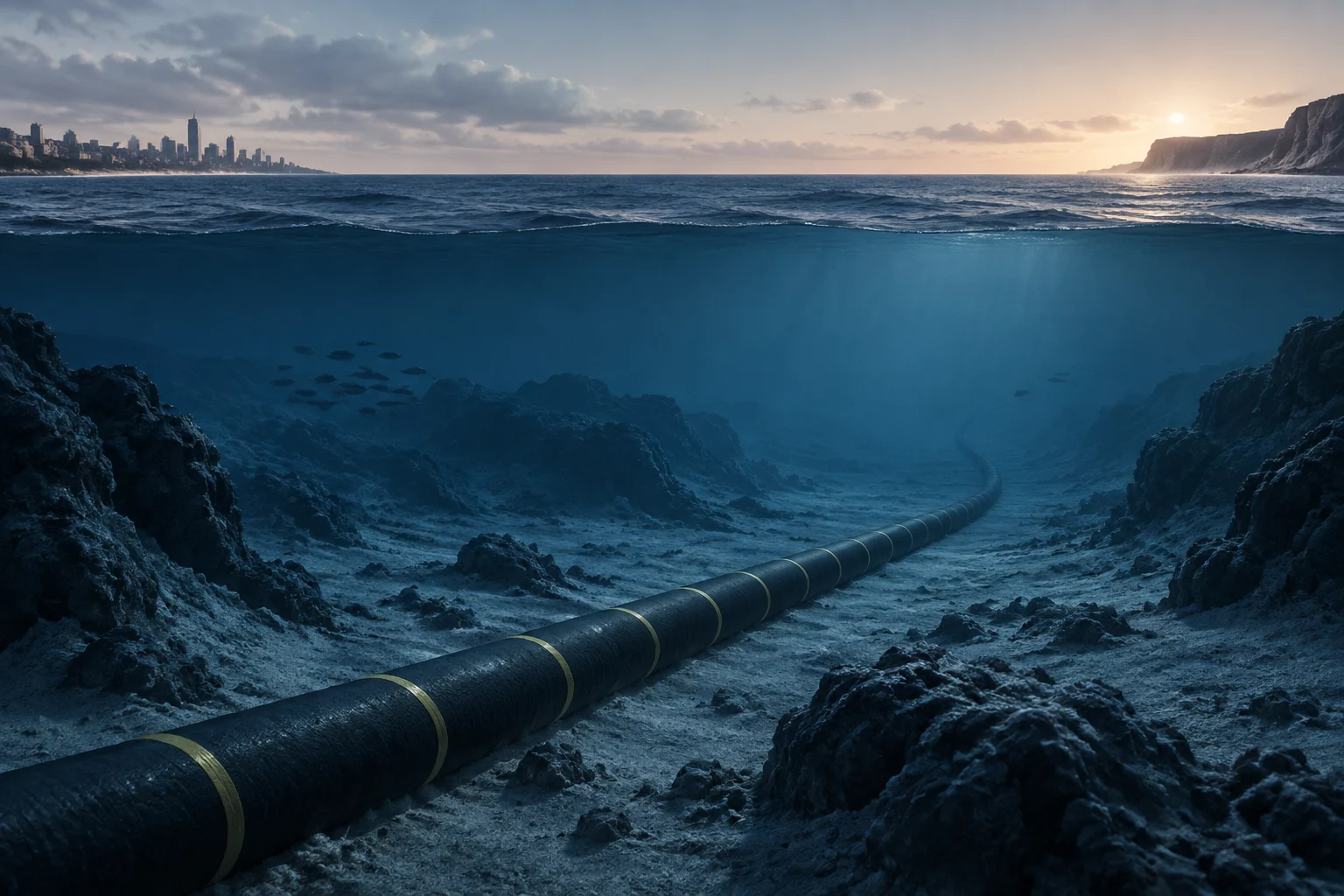
On 21 September 2026, Meta announced Petal as a subsea cable system that would connect France and the United States over a distance of about 7,000 kilometres. The company expects it to enter service in 2029. Meta names NEC and Sumitomo Electric Industries as collaborators and notes Orange’s participation in plans for the French landing. These are announced characteristics, not a description of a completed installation. (Meta)
The distinction between a planned project and an active service is essential when interpreting the figures. Meta’s material describes a planned route and a future date; it does not show that the cable has already been laid, tested or put into operation. Nor does it establish that its capacity has been measured across the transatlantic route. What can be said is that the company announced these features and has stated that its goal is to begin service in 2029. Petal should not be described as a route already available for internet traffic. (Meta)
The announcement assigns roles to participants, but the information available here does not independently establish the contractual scope of each role. It is therefore useful to distinguish announced collaboration from specific responsibilities for design, manufacture, installation and operation. That caution does not change the central point: Meta has announced a new transatlantic project and an expected timeline, but construction and operation are still future matters. Announced and operational are not synonyms.
What the 1-petabit figure means
Meta puts Petal’s planned capacity at 1 petabit per second, equivalent to 1,000 terabits per second. The company says this would be twice the capacity of the most advanced transoceanic cables it uses as a benchmark. It also illustrates the scale by comparing it with the simultaneous transmission of music to a large share of the world’s population. That analogy depends on the chosen audio bit rate; it is not a measure of connected users or a promise of service to consumers. (Meta Engineering)
A petabit figure describes the planned aggregate capacity of the system, not the speed available to a home, an app or an individual user. The end-user experience depends on other network components and on how the cable connects to the rest of the infrastructure. The “1 petabit” headline therefore conveys the scale of the design, but does not mean that an individual connection can download data at that speed. Independent coverage also describes Petal as a planned project, not infrastructure already deployed. (Data Center Dynamics)
It is also important to distinguish announced maximum capacity from the volume of data that might travel through the cable at a particular moment. The former expresses what the system could carry according to the described design; actual traffic would depend on network use and integration with other links. Comparing Petal with existing cables provides a reference for scale, but does not turn a target into a service measurement. In short, the figure characterises Meta’s stated technical ambition, not the everyday performance of a connection at the end of the chain. (Meta Engineering)
Two-core fibre: more optical paths in one fibre
The central innovation Meta describes is multi-core optical fibre. In the announced design, each fibre contains two cores through which light can travel: two optical paths in a single strand. The company presents this architecture as a way to increase capacity per fibre. Its technical explanation specifies 24 pairs of two-core fibres, equivalent in spatial channels to 48 pairs of single-core fibres. These are specifications of the announced design, not results from an installation already tested on the seabed. (Meta Engineering)
Multi-core fibre does not remove the challenges of transmitting information over an ocean route. Light must travel long distances, and the system needs to manage signals along the way. Meta describes amplifiers, repeaters and interfaces as parts of the planned architecture for handling and maintaining those signals. The published information explains the technical approach, but is not an independent assessment of sustained results, power consumption or operational reliability. (Meta Engineering)
Put simply, two cores provide additional spatial channels within a fibre. Making use of them requires equipment to manage transmission along the route. The components described by Meta form part of that solution, but knowing the architecture does not establish that the announced targets have already been achieved. The difference between design and measured performance is especially important for a cable whose service date is still in the future.
What is confirmed, and what remains outstanding
The available sources align with Meta’s general description: Petal is planned between the United States and France, would cover around 7,000 kilometres and is intended to enter service in 2029. The company also announces petabit-class capacity and an architecture using two-core fibre. The engineering documentation details technical aspects of the design, while the launch announcement presents the project and its collaborators. This consistency supports a description of what has been announced, but does not turn future specifications into measured results. (Meta; Meta Engineering)
Construction progress, the definitive route, the exact landing points and whether the schedule will be met remain to be verified. The cited public documentation also contains no demonstration of 1 petabit per second across the full subsea route. The plan could change during development and testing. This is a limitation of what is currently known, not a contradiction: the careful conclusion is that Petal has been announced with these goals, while its entry into service and actual capacity lie in the future. (Data Center Dynamics)
The available information makes it possible to distinguish facts about the announcement from outcomes that cannot yet be evaluated. The approximate route, timetable and described architecture are details communicated by the company; laying the cable, testing it and establishing its effective performance remain outstanding. There is no basis here for claiming that the targets have been met or missed. Making this distinction clear avoids confusing a design specification with a measurement from operational infrastructure.
Why Meta invests directly in cables
Subsea cables are part of the physical infrastructure that carries communications between continents. For Meta, participating in their development means taking part in international connection capacity used by its services and data centres. The company says it has invested in more than twenty cable projects. Petal is part of that infrastructure strategy; it is not a consumer product that can be bought separately. Its public significance lies both in its announced capacity and in the direct involvement of a major platform in international connectivity projects. (Meta)
Greater capacity could give the networks using the system more headroom, but it does not by itself demonstrate improvements in latency, resilience or prices for users. Those outcomes would depend on operation, terrestrial connections and how Petal is integrated with other routes. Meta describes expected benefits; their concrete effect can be assessed only once the infrastructure is installed and in service. The useful reading today is twofold: Petal proposes a two-core fibre design and announces ambitious capacity; the decisive test will be its real-world operation, planned—not guaranteed—for 2029. (Meta)
Meta’s participation also highlights how technology platforms take part in planning some of the infrastructure that supports their services. For Petal, Meta identifies NEC, Sumitomo Electric Industries and Orange as project participants, but the information consulted is not enough to specify precisely how contractual tasks are divided. What it does support is the conclusion that the initiative combines a high-capacity technical proposal with collaboration between companies. Its effects on other operators and users will depend on how the cable is built and used.