The search does include announcements, not just catalogues
The premise that the search results provided cannot verify any updates needs correcting: among them are pages published on Nikon’s corporate website announcing products and updates. They are not retailer pages or third-party comments. The responsible conclusion, therefore, is not that there is no news, but that the available evidence confirms certain specific announcements from one manufacturer, even though it does not provide a comprehensive picture of the industry. This distinction keeps the reporting aligned with what the sources actually establish, rather than treating a limited set of results as a complete survey.
That difference matters to people looking for purchase information. A catalogue shows which products a retailer offers; a manufacturer’s page can document that the company has announced a model or is developing an update. An official announcement verifies what the company states, but does not by itself establish availability in Spain, performance in use, or whether a product is the best choice for a particular person. Those questions require evidence of their own, so they should not be treated as settled merely because an announcement exists.
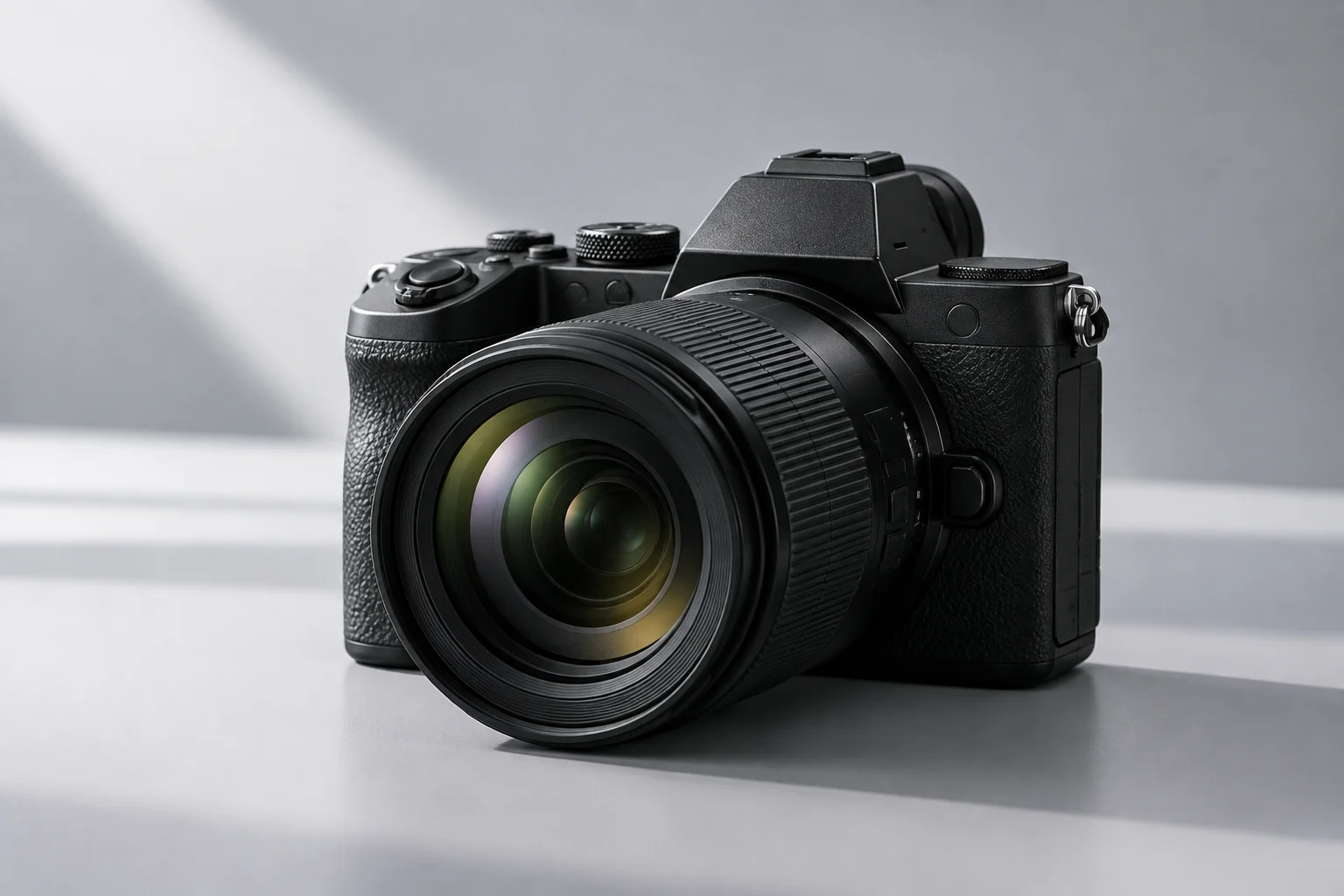
The Z5IIC appears in a Nikon announcement
On 24 September 2026, Nikon published a news item entitled “Nikon releases the Z5IIC full-frame mirrorless camera”. The verifiable point is that the company announced the Z5IIC as a full-frame mirrorless model. The linked page is a primary source for the announcement, not an independent review or a sales listing setting out terms for the Spanish market. It is therefore appropriate to report what Nikon announced, while making clear that the source is the company itself.
The claim should remain carefully bounded: the announcement confirms the launch that Nikon communicated, but the information supplied in the research is not enough to establish the local price, the date each distributor will receive it, actual availability, or test results. For a purchase decision, those details need to be checked separately using sources specific to the country. The model name alone is also no substitute for checking the exact commercial variant. These distinctions are useful because a confirmed company announcement and a confirmed local retail offer are different kinds of evidence.
The ZR and an update still in development
Another Nikon news item, dated 8 September 2026, says that the company is developing version 2.00 of the ZR camera’s firmware. The distinction between development and release is essential: the announcement supports the statement that Nikon said it was working on this version, but not that the update is already available, that its features are final, or that every user can install it. Reporting the status precisely avoids giving readers the impression that a planned software update has already reached owners.
The research also includes a 2025 Nikon page presenting the ZR as a full-frame sensor camera in the Z CINEMA series, resulting from collaboration with RED. Together, these documents provide context for the product name and the firmware announcement, but they do not replace release notes or an official download. An update in development should not be turned into an improvement that buyers have already received. That distinction remains important even when an announcement describes work on a forthcoming version, since development alone does not establish its eventual content or availability.
What retail catalogues do—and do not—tell us
Results from retailers such as Camaralia, MediaMarkt, TodoElectrónica and La Tienda Inteligente are useful for discovering categories and products that appear on their pages. However, a category page may combine models, offers, changing stock status and items from different market segments. Its contents do not, by themselves, prove that a product is new, that the manufacturer has announced a revision, or that a feature applies to every variant. Retail pages can be informative about what that particular retailer presents, but their scope should not be stretched beyond that.
Some results also need to be used within clear editorial limits. A live-camera website is about broadcasts, not announcements of photographic equipment; a CCTV category concerns surveillance as a market, not necessarily product news. The type of page determines what can be concluded: a retailer listing may document an offer observed there, but it cannot establish an official launch date or a firmware improvement. That is why product discovery and launch verification should be handled as separate tasks, using sources suited to each claim.
A useful verification method for future news
To turn a search result into useful reporting, first consult the primary page from the manufacturer or responsible organisation and check exactly what it says. Then separate an announcement from commercial availability: a communicated launch, a sales date, the markets included and the existence of a download are different facts. For a camera, it is also worth checking the model’s full name and variant to avoid transferring information from a similar product. A careful reading of the source establishes both what can be reported and what remains unanswered.
A practical editorial cross-check can follow these steps:
- Identify the source and date: prioritise the most recent official statement and verify that it concerns the model or software in question.
- Specify the status: distinguish between development, announcement, release and sale.
- Check the market: look for local distribution information before discussing price or availability in Spain.
- Attribute claims: if a feature appears only in the manufacturer’s statement, present it as information declared by the company, not as the result of an independent test.
Conclusion: there is news, but not a complete comparison
The evidence supplied does support reporting two specific updates: Nikon announced the Z5IIC in September 2026 and said that it was developing firmware 2.00 for the ZR that same month. There is also a 2025 reference identifying the ZR with the Z CINEMA series. These are claims limited to the corporate pages provided; they do not justify generalising about all manufacturers or saying that the products are already available in every market. Keeping the scope explicit allows the announcements to be reported without overstating what they prove.
The limitation of this research is its scope: it brings together announcements from one company and commercial category pages, rather than a systematic review of the industry or independent camera tests. That limitation does not invalidate the Nikon-attributed announcements, but it does prevent presenting an account of industry-wide developments or recommending a model on performance grounds. The useful conclusion is straightforward: publish what is documented, attribute it clearly, and leave unresolved what the sources do not establish. This approach recognises the real news while being transparent about the evidence still needed for broader claims or buying advice.