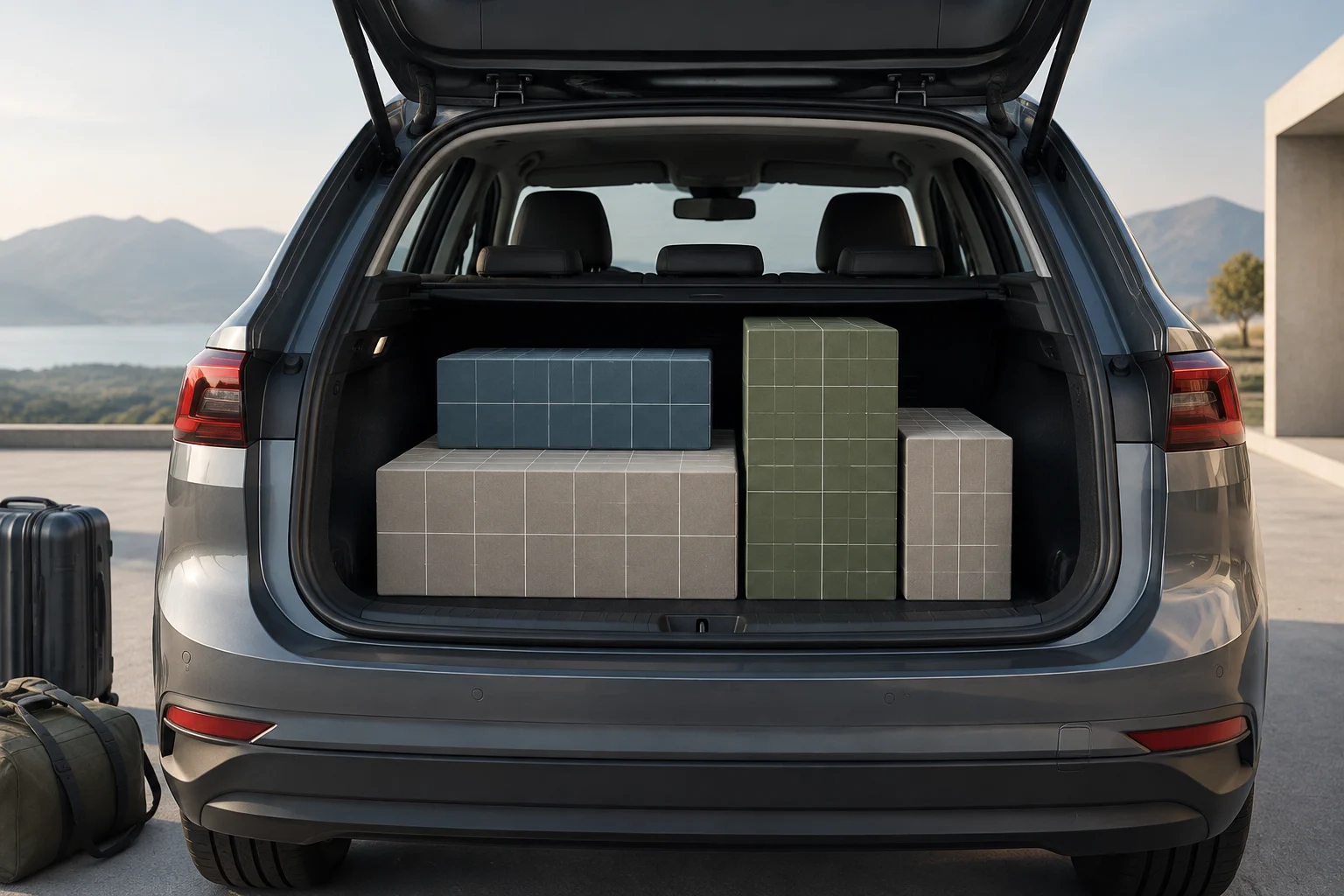
The figure in litres is a starting point, not a complete answer
When comparing cars, boot volume seems to offer a simple measure: more litres should mean more room for luggage. However, a figure on its own does not describe the compartment’s shape, the height available, the width between the wheel arches or the size of the opening. Nor does it tell you whether the capacity refers to the space below the parcel shelf, all the way to the roof, or a particular seat configuration. As a result, two cars with similar figures can behave very differently when you try to load a tall suitcase, a rigid box or a long object.
Published capacity is useful for a first comparison between vehicles, provided the figures were obtained or presented under comparable conditions. It is not a promise that any particular collection of objects will fit, and it is not a direct measure of how easy the car is to load. Editorial material about boot measurement distinguishes between calculation methods and explains why volume depends on how the space is defined and measured. For a prospective buyer, the key is to find out exactly what the number represents before treating it as a decisive criterion. Motor.es
It helps to separate three questions that are often conflated: what volume is quoted, how it was measured, and whether the shape suits the load you have in mind. Volume partly answers the first; the methodology helps with the second; the third requires dimensions, useful photographs or a physical check with the actual items. A technical specification containing just one value in litres cannot replace all three checks. Treat it as one piece of evidence, rather than as a complete description of the luggage space.
What VDA means—and what it does not tell you
VDA is a commonly cited reference in information about boot capacity. km77’s explanation uses the term for a measurement of the boot; consumer guides to the method describe the use of standard-sized blocks to estimate the volume that can be occupied by luggage. This approach makes comparisons more reproducible than calculating space solely from external dimensions or a geometric estimate, because it considers volume in units that can be placed inside the compartment. km77 Avanti Renting
Even so, seeing the word VDA next to a figure does not settle every detail. Check whether the value refers to the space up to the parcel shelf or to a different height, whether it includes an underfloor compartment, and what position the seatbacks were in when it was measured. It also matters whether the figure is for a particular version: equipment, the powertrain or the interior layout can affect the space available. If the specification does not state these conditions, it is more responsible to treat the figure as indicative and record what information is missing.
A VDA figure does not directly tell you whether a specific item will fit, either. An aggregate volume does not retain enough information about each dimension or the shape of the space. As a practical inference, the method helps compare capacity using a shared approach, but it does not turn the result into a fit test for particular luggage. Comparable litres do not necessarily mean comparable shapes: a rigid load may be blocked by a narrow opening even when the total volume appears generous.
How to read catalogues and databases without mixing up versions
Start by identifying precisely which car each figure refers to: generation, body style, trim and, where relevant, powertrain. A website that groups dimensions from many manufacturers can be a convenient way to find models, but its figures should be checked against the technical specification for the exact vehicle and the relevant market. The structure of car-dimension websites often organises searches by make, category and model; that makes information easier to find, but does not in itself prove that two published values use an identical measurement basis. Medidas de coches
In the manufacturer’s documentation, look for the capacity figure together with any note about the seats, parcel shelf, underfloor storage or configuration. If the document does not explain the method, do not assume that VDA was used simply because the figure is expressed in litres. Record the stated conditions as written and note anything absent. Then compare the information with an independent source that describes its method or the configuration it tested. A number repeated across several listings is not automatically an independent verification if they all refer back to the same specification.
A comparison sheet can prevent common mistakes. For each candidate, save the link and date you consulted it, the exact variant, the advertised value, the unit, the method if documented, and the height up to which the space is measured. Mark anything not provided as “not specified” instead of filling the gap with an assumption. Traceability matters more than the appearance of precision: a figure accompanied by its version and conditions is more informative than one with several decimal places but no context.
What independent reviews can add
Car reviews can provide observations that a short specification sheet does not: describe the shape, comment on access, or show the compartment in a particular configuration. Outlets such as Car and Driver España publish vehicle reviews by model and trim, and there are also analyses and buying guides that compare cars by category. Their availability shows that editorial coverage exists; it is not enough to claim that every review measures the boot using a shared protocol. Car and Driver España Coches.com
When using an outside review, check what the outlet actually did. A visual impression or description of use should not be presented as a volumetric measurement; an independent measurement, in turn, is comparable only if it specifies the method, version and conditions. Nor should a result from one vehicle be applied to an entire range if different body styles or configurations exist. Distinguishing between a published figure, a stated measurement and editorial comment lets you use the information without attributing more precision to it than it has.
If figures from different sources disagree, do not automatically choose the largest, the newest or the one that appears most often. First check that they refer to the same model and configuration; then compare the definition of volume and the methodology. If you cannot establish that they are equivalent, say that the figures are not directly comparable. A discrepancy does not necessarily mean that a source is wrong: it may reveal differences in measurement criteria or in the space included.
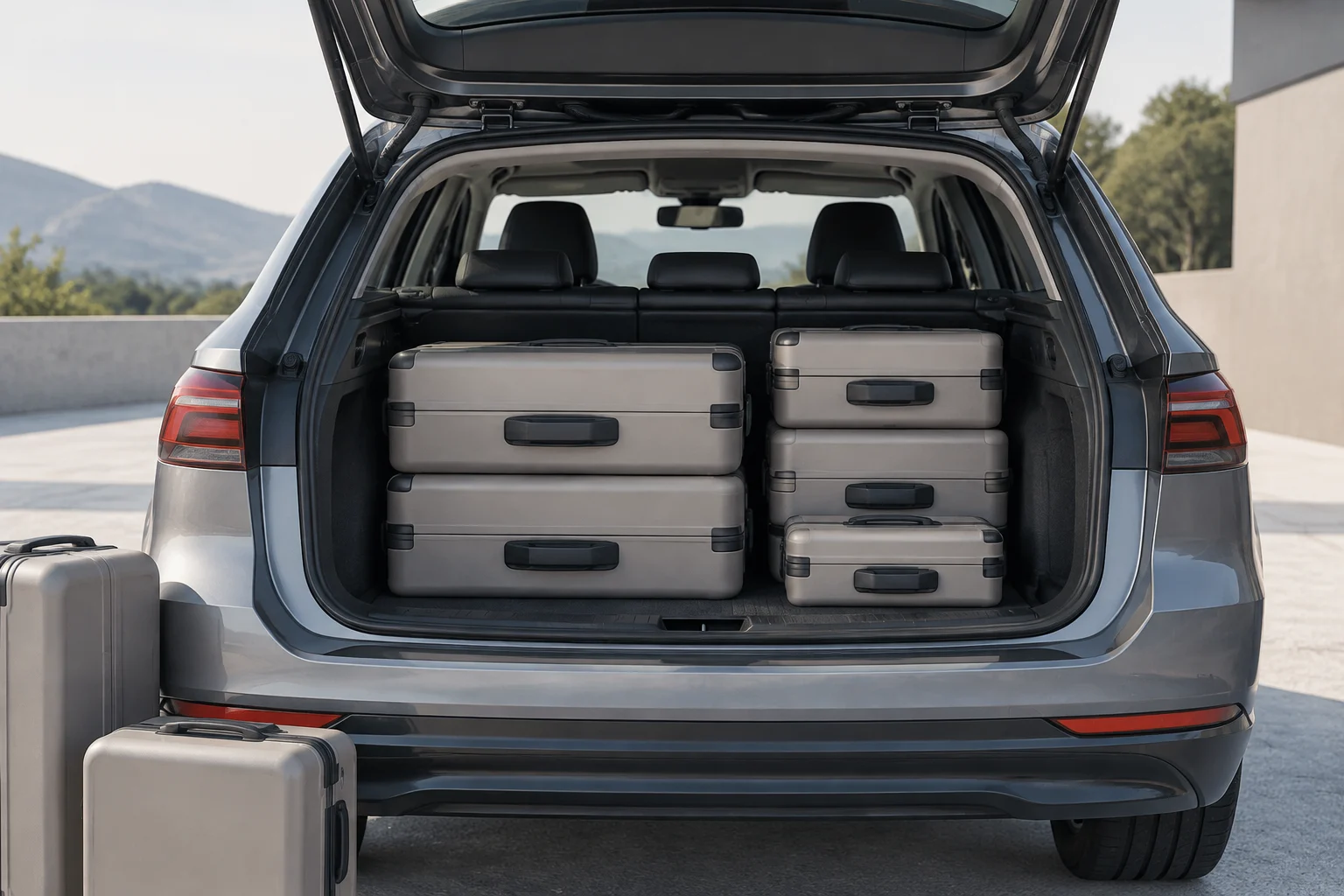
Boot shape and the load that really matters
For everyday use, capacity is not the only factor. Width between the wheel arches, floor length, height below the parcel shelf, seatback angle and the shape of the opening determine which objects can be put in and positioned. The loading lip and the ability to fold the seats also affect the process, even though a total-volume figure does not capture them. These are practical criteria to check in documentation for the specific model or, where possible, in the vehicle itself; they cannot be deduced from the published litres.
The underfloor compartment deserves an explicit question: does the quoted figure include it? Can it be removed or adjusted? What happens to the space when items from the car are stored there? The answer may change how useful the space is for organising a load, but not necessarily the official capacity figure. Similarly, figures measured with the seatbacks folded should not be compared with values measured with all seats in use. A fair comparison requires the same configuration and a distinction between the regular space and the expanded space.
If you have a priority item—a pushchair, suitcase, tool box or sports equipment—identify its dimensions and the orientation in which you need to carry it. Compare those measurements with the interior dimensions and opening, if available; if not, the most conclusive test is to try the item in the exact model. Whether a load fits is a geometric and practical question, not an automatic consequence of the boot having more litres.
Checklist for comparing models
Before deciding, gather information that answers the same question for each car. A useful comparison does not need to pretend to absolute precision: it should show what is known, where it comes from and what could not be checked. This checklist helps reduce misleading comparisons:
- Identify the variant: model, generation, body style, trim and powertrain, where stated.
- Save the source: prioritise the manufacturer’s technical specification and keep the link and date consulted.
- Read the conditions: method, seat position, reference height and treatment of the underfloor compartment.
- Cross-check cautiously: use independent reviews as a supplement, checking whether they describe or measure and what protocol they follow.
- Check the geometry: interior dimensions, opening, wheel arches and the specific load.
- State what is unknown: if the method or configuration is missing, do not present the figure as fully comparable.
The right conclusion is modest but useful: advertised volume can help rank options and identify possible differences; the methodology clarifies the scope of the figure; and the shape of the space and the actual load determine its usefulness to each person. Without comparable documentation for specific models, it is not possible to name an overall winner or validate a capacity through measurements of our own. The verifiable conclusion is that litres should be read alongside their method and context, and that deciding whether particular objects will fit requires dimensions or a direct check.