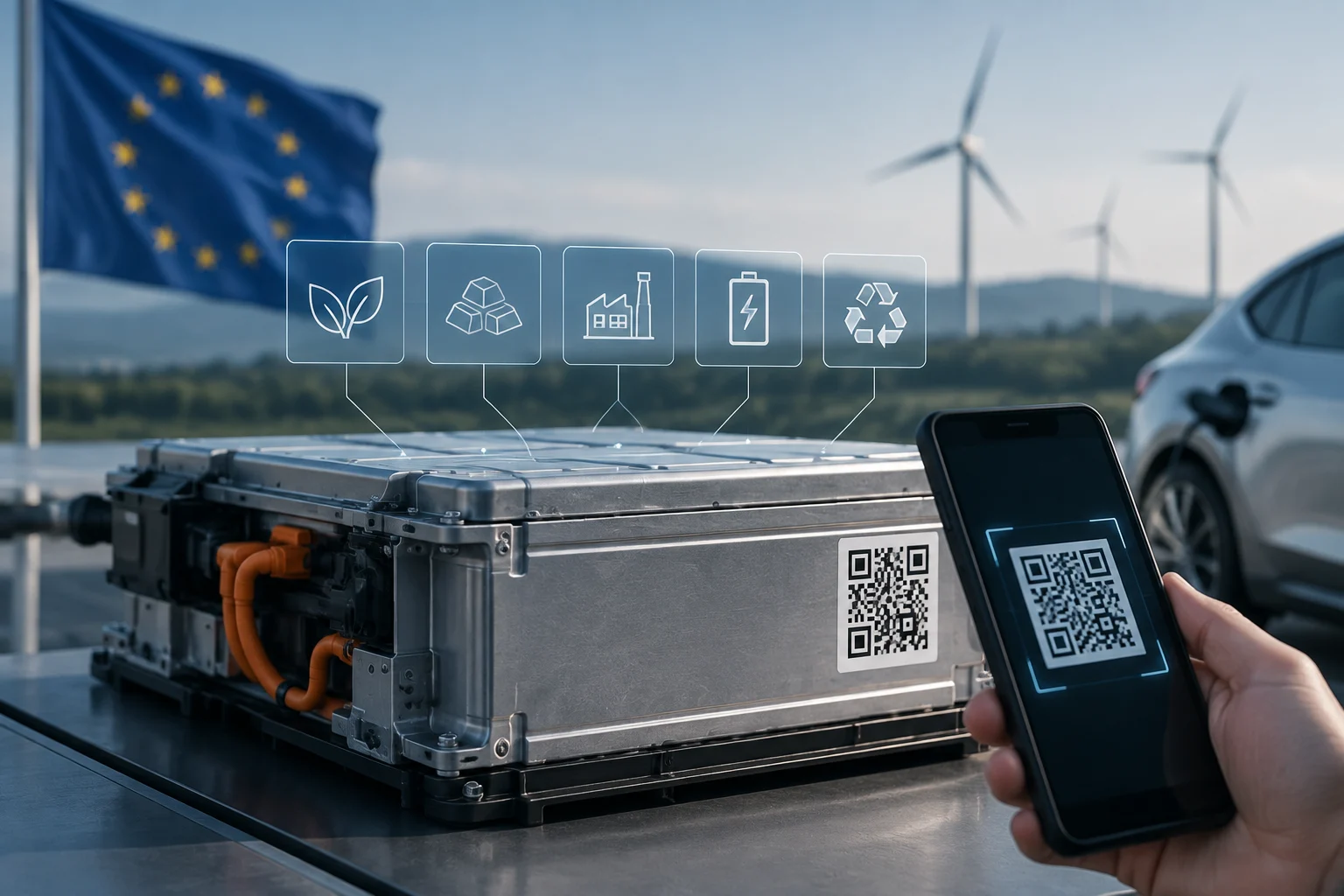
A digital record linked to each battery
A digital battery passport is an electronic record associated with a specific battery. It is not a single EU-wide application, nor a label that replaces the battery itself. Regulation (EU) 2023/1542 requires batteries within its scope to have a passport accessible through a QR code or another identification method linked to a unique identifier. This allows information to remain associated with the product and to be consulted at different stages of its life cycle, rather than being confined to a general product page or a separate document. The identifier is central to the idea: the record is intended to refer to the battery concerned, not merely to a broad product category.
The measure responds to a practical problem: the information useful for assessing a battery differs from one user to another. A purchaser may want to know about composition and performance; a repairer may need information for handling or replacing it; and a recycling operator may need details about materials and treatment. The Regulation provides a common structure, but it does not make every item of data public. It sets different access conditions depending on the kind of information and the user. The view intended for an individual therefore need not be the same as the view available to a professional or an authority.
Which batteries are covered by the requirement
The passport requirement does not automatically cover every battery and cell placed on the EU market. Article 77 of the Regulation applies it to batteries for light means of transport (LMT), industrial batteries with a capacity above 2 kWh, and electric-vehicle batteries. In everyday terms, this includes batteries for certain bicycles and other light electric vehicles, industrial batteries above the specified threshold, and traction batteries used in electric vehicles. Identifying the relevant category is necessary before concluding that a particular product falls under this specific requirement.
The Regulation also distinguishes other categories, such as portable batteries and starting, lighting and ignition (SLI) batteries. The fact that those categories are subject to other sustainability, labelling, collection or information requirements does not, by itself, mean that they must carry the digital passport under Article 77. The 2 kWh threshold applies to the industrial-battery category; it should not simply be extended to LMT or electric-vehicle batteries, which the Regulation lists as separate categories. The classification therefore matters: a battery’s intended category, rather than a general assumption about all batteries, determines whether this passport obligation applies.
This distinction is important when interpreting announcements by manufacturers or software providers. A platform offering a “battery passport” may be a commercial solution, but that does not prove that every covered product has already been registered or that every battery must use that platform. The legal requirement sets the outcome and the kind of information involved; the sources consulted do not designate one commercial service for the entire Union. The existence of a tool must therefore not be confused with universal implementation of the requirement. A service can support compliance without being the only permitted route or evidence that deployment is complete.
What information can be consulted
The content is specified in Annex XIII to the Regulation. The data groups include identification of the battery and its manufacturer, information about composition and materials, performance and durability, and data relating to the carbon footprint where applicable. The design also covers information relevant to dismantling, reuse or end-of-life management. These groups address different needs throughout the life cycle, from recognising a product to considering which treatment options may be appropriate. The data are meant to provide context about the battery and its handling, not to turn every consultation into a technical assessment of its condition.
It would be misleading to describe the passport as a specification sheet fully visible to everyone: the rules provide for different access conditions. Access depends on the user category and the type of information. Some data are made available to the public; other information may be reserved for people with a legitimate interest, such as operators working with the battery, or for competent authorities and bodies. End users should not assume that they can see protected commercial or technical data, while an authorised actor may be able to access information that is not openly published. The distinction between data sets is therefore just as important as the list of information covered.
In practice, the passport’s usefulness will depend on the information being available in an interoperable format, remaining associated with the correct battery, and being updated where appropriate. The Regulation provides a framework for this, but scanning a code does not by itself guarantee that every reader will receive all the data or that the information will make it possible to diagnose a battery without additional tools. The passport is a traceability and information resource, not automatic proof of a product’s physical condition. It is important to distinguish data that help someone understand a battery from a technical assessment of the condition of that particular unit.
Timeline: legal date versus actual deployment
The key date is set: from 18 February 2027, LMT batteries, industrial batteries above 2 kWh and electric-vehicle batteries within the relevant scope must have a passport. This is not a date inferred from a company roadmap; it is an obligation laid down in Regulation (EU) 2023/1542. It gives manufacturers and other actors a common deadline to prepare processes for identifying batteries and collecting and managing the data associated with them. Preparation may involve several organisations and information systems, not merely placing a code on a product.
However, an application date is not the same thing as a universal, complete public register already being available today. It is also necessary to distinguish the Regulation’s framework from implementing specifications and decisions that may clarify how systems, formats and exchange mechanisms are put into operation. The European Commission provides information pages and frequently asked questions about the passport, but these guides do not replace the legal text or turn explanatory guidance into an additional obligation. A summary helps explain the framework; it does not, on its own, settle every operational detail.
When assessing a company’s readiness, it is therefore useful to ask which elements are supported directly by the Regulation and which depend on operational details, tools or standards adopted to meet it. The obligation and its date can be verified; the implementation level of each manufacturer, the actual coverage of a service and the user experience cannot be inferred merely from the existence of the requirement. The legal timetable and practical availability are different things. A common date provides a regulatory reference point, but does not by itself describe how each solution works before that date or what information it can currently provide.
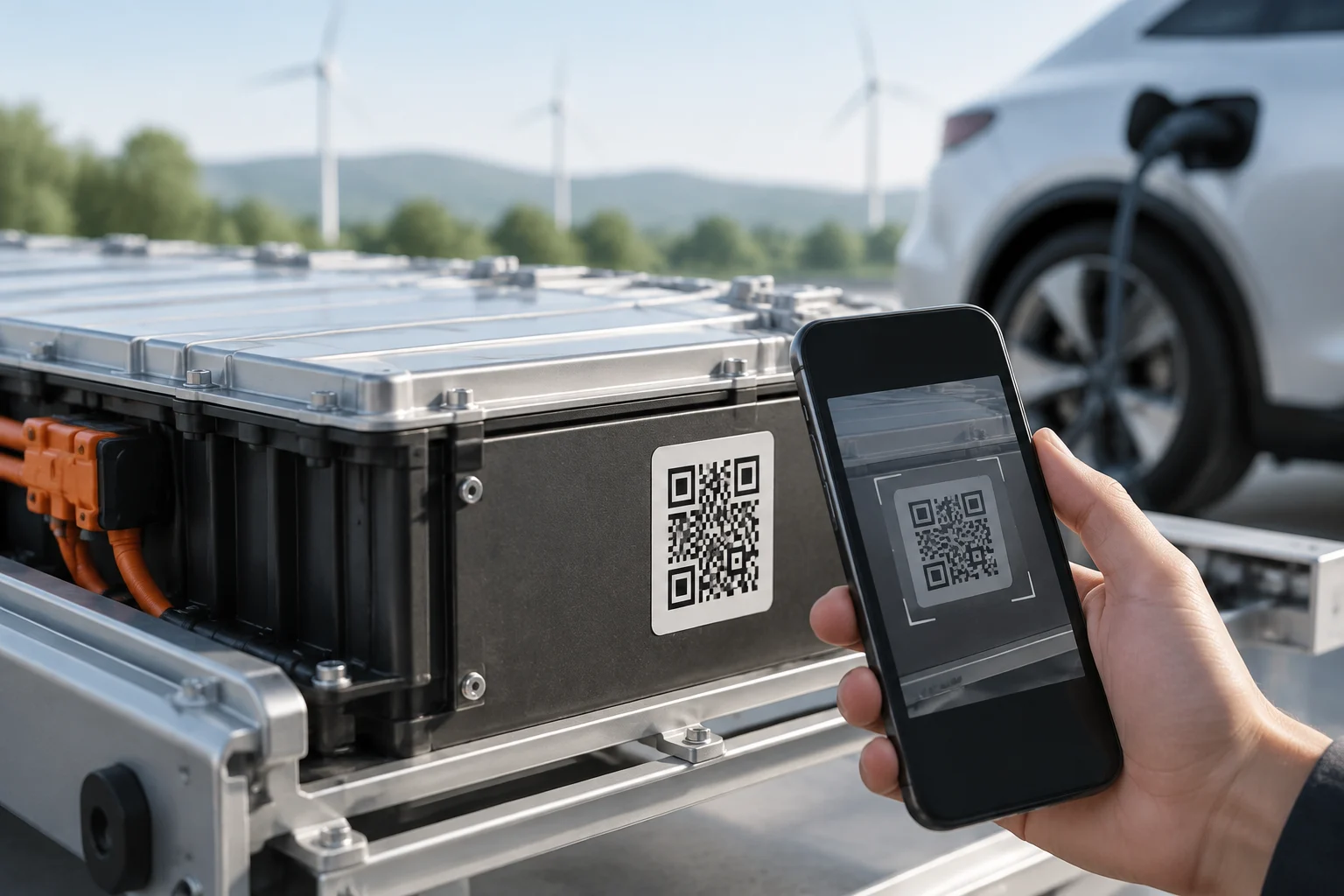
What changes for buyers, repair shops and recyclers
For someone buying a vehicle or battery, the passport may make it easier to consult standardised information about the product and its manufacturer. This could help bring together information that is currently scattered, but it does not automatically guarantee easy comparisons. Users will need to consider which fields are public, how the information is presented and which data can be compared across models. Nor does the passport replace a warranty, safety documentation or a technical assessment of a used unit. Its usefulness for a purchasing decision will depend, among other things, on whether the available data can be understood and compared in context.
Repair shops and other professionals could benefit from better-organised information when identifying components and considering repair, replacement or handling. The precise scope will depend on their access permissions and on the information supplied for each battery type. For recycling, consistent identification and information about composition and treatment may provide useful context when selecting processes. They do not remove the need for facilities, safe procedures or compliance with waste-management obligations. Information can support the work of these actors, but cannot replace the physical tasks involved in repairing or managing a battery.
For manufacturers and those responsible for placing batteries on the market, the work is not limited to creating a QR code. Reliable data must be associated with each identifier, access must be managed according to the user, and traceability must be maintained throughout the life cycle. The value of the passport will depend on the quality and continuity of its data, as well as on formal compliance. The Regulation defines the framework; actual results will depend on how different actors apply it and whether information can accompany the battery consistently. A technically available record will be of limited use if its data are incomplete, difficult to access for eligible users or no longer associated with the right battery.
What can be stated today and what should be checked
Three essential points can currently be verified in EU sources: the categories covered by the passport requirement, the date of 18 February 2027, and the existence of a defined data set and access rules in the Regulation. The EUR-Lex legislative summary and the Commission’s information pages help locate these requirements, but the Regulation and its annexes remain the primary reference for a specific legal question. Consulting sources in that order helps distinguish a concise explanation from the applicable regulatory detail. It also makes it easier to see whether a statement concerns the legal obligation or the way a particular service presents its information.
What should not be taken for granted is that every battery already has an operational passport, that anyone will be able to consult all the information, or that a solution promoted by a provider constitutes the official EU-wide system. The passport must also not be confused with the broader battery-sustainability framework. The Regulation includes other provisions concerning raw materials, carbon footprint, collection and recycling, with their own scopes and timelines. The passport is one part of that framework, not a complete account of every obligation related to batteries.
As a practical check, before relying on a claim about a battery, identify its category and capacity where relevant; locate the obligation in the Regulation; and distinguish public data from information requiring a legitimate interest or institutional access. This helps prevent a rule for differentiated information from being turned into a promise of total transparency. The passport is an important regulatory component, but its usefulness will depend on implementation and on the information that is actually available. A careful reader should therefore check both what the rules require and what the relevant user can consult in practice.