A Useful Figure Is Not Automatically a Diagnosis
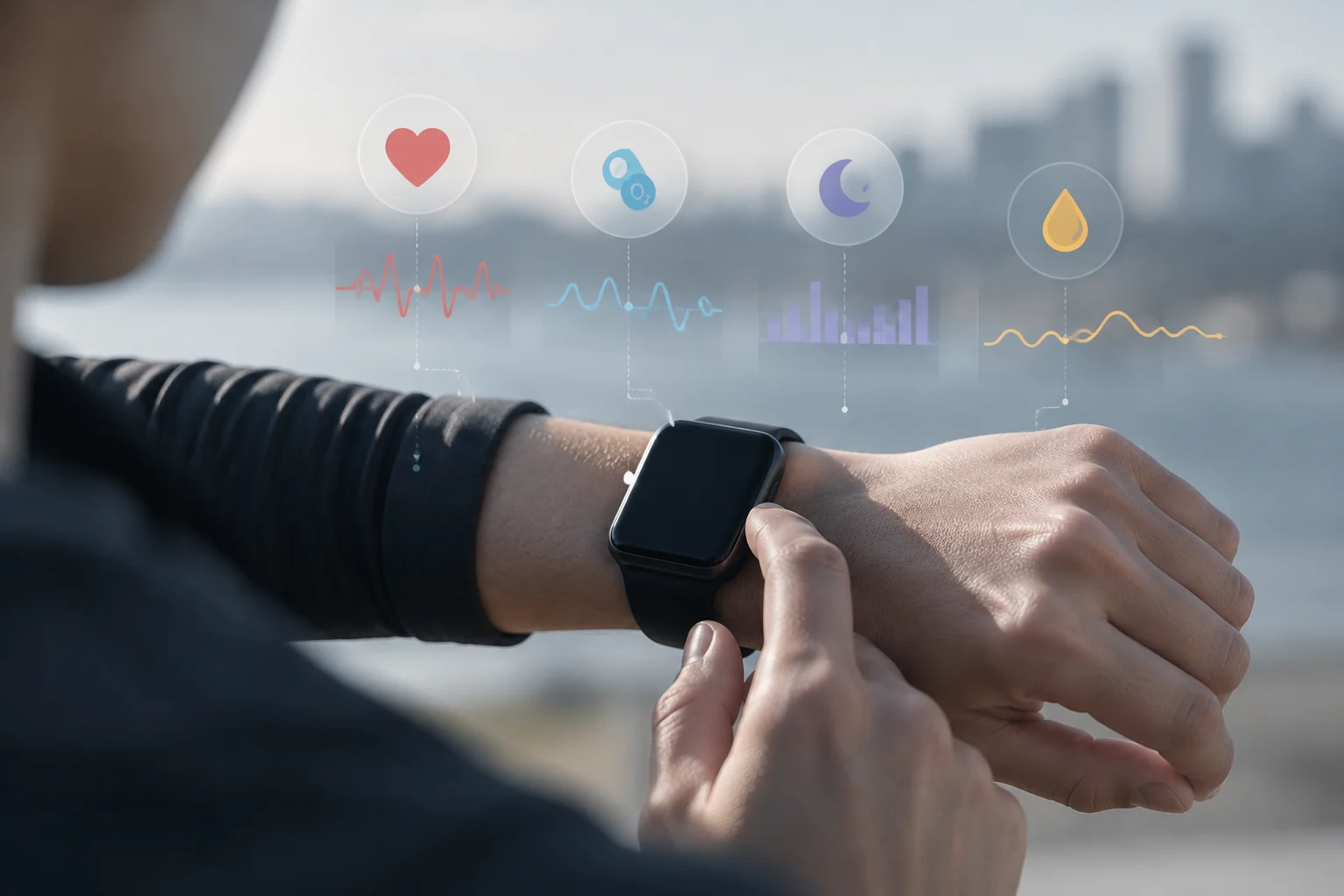
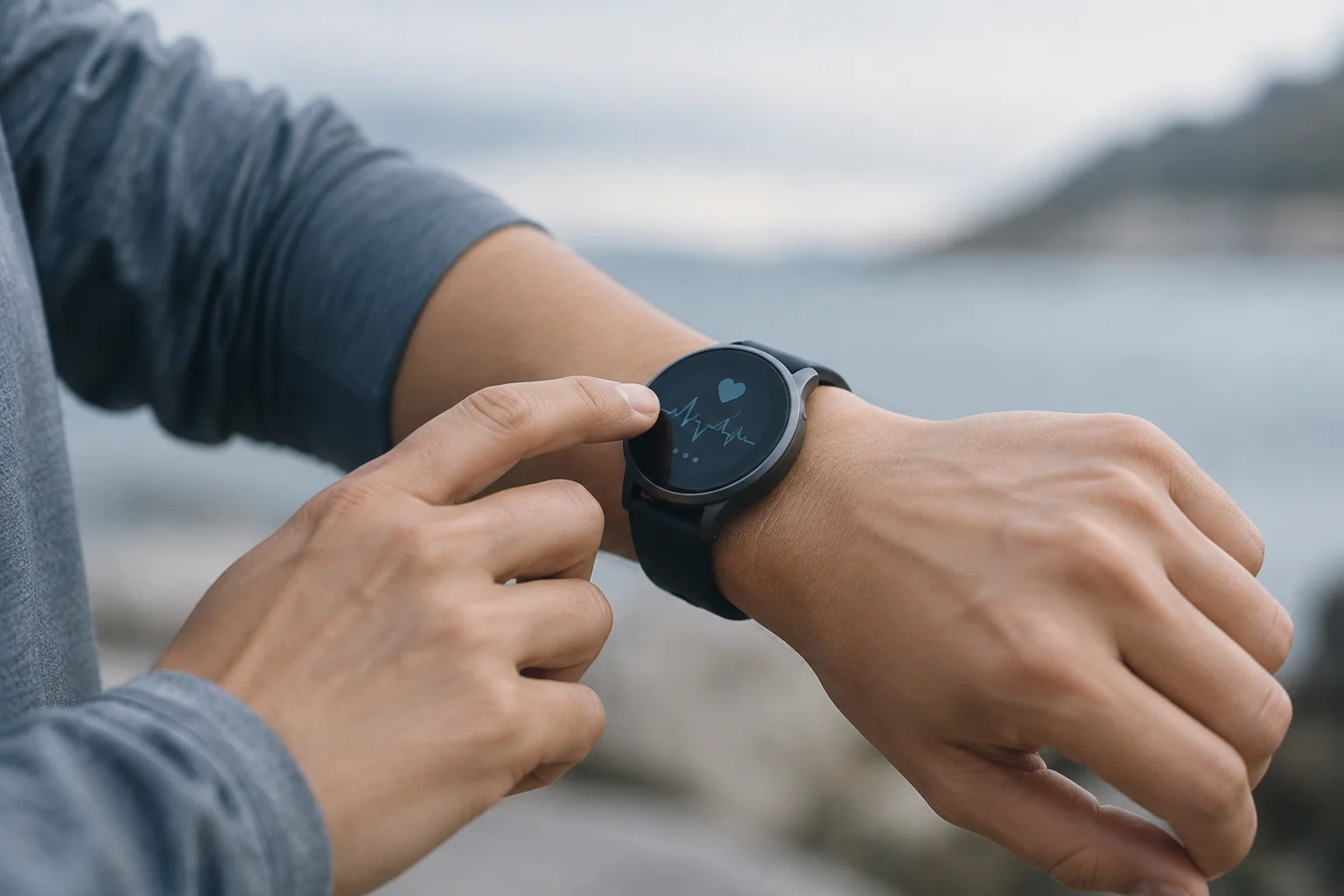
Wearable watches, bands and other devices turn bodily signals into easy‑to‑read numbers: pulse, sleep, oxygen or activity. Their availability makes it possible to observe everyday trends that an isolated clinic measurement does not show, but the convenience of the readout does not certify its clinical validity. A data point can be useful for personal monitoring and still not be validated for detecting disease or guiding treatment.
The right question is not whether a wearable is “accurate” in abstract terms, but what it measures, under what conditions and for which population. A signal taken at rest may behave differently during movement; a nightly average does not equal a diagnostic sleep test, and an estimate of a variable is not always interchangeable with its clinical reference measurement.
The systematic review published in 2026 on wearable sensors for health monitoring brings together clinical applications, rehabilitation and risk assessment, but the existence of investigated uses does not mean that all consumer devices are validated to make medical decisions. Evidence corresponds to a specific combination of sensor, algorithm, protocol and population, not to the entire category of smartwatches.
Pulse and Variability: Tracking Trends Is Not Measuring an ECG
Many wearables estimate pulse via photoplethysmography (PPG): a light source illuminates skin and a sensor records changes associated with blood volume. The algorithm converts that optical signal into an estimated heart rhythm. It is not the same method as an electrocardiogram (ECG), which records electrical cardiac activity, although some watches include electrodes to obtain an ECG signal under specific conditions.
The usefulness of PPG depends on signal quality and context. Device adjustment, movement, skin contact and activity can influence readings; therefore a stable trend at rest and a measurement during intense exercise should not be treated as equivalent situations. For heart‑rate variability (HRV), it also matters to know what method and time window the manufacturer uses: an HRV figure is not a complete cardiological assessment.
In practice, optical metrics can serve to observe personal changes over time, especially when comparing measurements taken under similar conditions. But they do not allow assuming that an alert or a normal reading confirms or rules out arrhythmia. If the device offers a concrete medical function, it is advisable to check what use it declares, what population it studied and what reference test it used. The 2026 review article documents the field of sensors and their applications but does not provide universal certification for each commercial product.
Oxygen and Sleep: A Nightly Reading Does Not Detect Apnea by Itself
Peripheral oxygen saturation (SpO₂) estimated by a wrist device is an indirect reading. It can be useful to observe patterns, but it should not be confused with a validated clinical measurement nor interpreted without considering adjustment, movement and usage conditions. A single low or normal reading alone does not establish a diagnosis; if there is a medical concern, assessment must rely on clinical context and appropriate methods.
Obstructive sleep apnea requires more than an oxygen signal: the apnea‑hypopnea index (AHI) is interpreted through a sleep study that records respiratory events and other parameters. A 2025 study compared smartwatch AHI estimation with level‑1 polysomnography in Korean adults. Of 90 simultaneously recorded individuals, 53 data sets met the requirement of at least three hours of valid watch data. That design provides validation in a specific scenario and sample, not authorization to extrapolate results to all watches, populations or usage conditions.
The study is relevant because it contrasts an estimate with a reference test, but also illustrates why methodological details matter: analyzed sample, valid signal time, population and algorithm. Polysomnography remains a different clinical evaluation from a wellness function integrated into a watch. Detection suggested by a wearable can justify consultation, but does not replace diagnosis nor should it be used to rule one out.
Glucose: Continuous Monitors Are Not Necessarily Non‑Invasive
It is useful to distinguish two technologies that are often confused. A conventional continuous glucose monitor (CGM) uses a sensor placed under the skin to estimate glucose in interstitial fluid; it is not an optical, contactless measurement. The fact that some sensors are sold over‑the‑counter in the United States does not change the principle of measurement nor turn any watch function into a clinically validated CGM.
Non‑invasive monitoring via light or sweat remains a development area. EIT Health describes DiaMonTech as a non‑invasive monitoring technology based on infrared, but that presentation of a technological initiative does not demonstrate that a consumer product is approved to guide diabetes treatment. For therapeutic decisions one must know the authorized indication, the exact device and the evidence supporting its use; a tech promise or demonstration is insufficient.
In people without diabetes, interpreting glucose readings also poses limits. An analysis in The Conversation notes that there are no established guidelines for interpreting data from glucose monitors in healthy individuals and warns that the flow of numbers can cause confusion or anxiety if given clinical meaning out of context. More data does not automatically mean better decisions: a metric requires interpretable ranges and evidence that acting on it improves outcomes.
Regulation: Wellness and Medical Device Are Not the Same Category
Regulatory classification depends on intended purpose and claims associated with a function, not just that a device incorporates sensors or measures a bodily variable. A 2026 legal analysis of FDA guidance explains that functions primarily aimed at promoting healthy lifestyles may fall outside certain medical‑device requirements; when a function is presented to manage disease or support clinical decisions, the regulatory assessment can change. A “health” label in advertising does not prove medical authorization.
That U.S. framework should not be transferred without nuance to the European Union. The available documentation in this research does not include an official source from the European Commission nor a regulatory source that would allow detailing the applicable CE classification for each type of wearable. Therefore, it is not rigorous to present FDA and CE marking as identical systems or attribute specific approval to a product without verifying its documentation and market presence.
It is also necessary to separate device regulation from the practical quality of its data. A function may be subject to regulatory requirements yet still have population or usage limits; conversely, a wellness function can be useful for observing habits without being intended for diagnosis. The question for the user is what concrete use is supported by documentation, not whether the manufacturer uses words like “smart”, “clinical” or “accurate.”
How to Read the Wearable Without Delegating Medical Decisions
To make the most of a wearable, treat its numbers as contextualized observations rather than verdicts. A trend can help prepare a conversation with a professional, especially if you keep information about when it was taken, what activity was performed and whether symptoms were present. Recording is a complement, not a substitute for clinical assessment nor a reason to change medication on your own.
Before buying or trusting a health function, it is advisable to review these points:
- Measurement: what signal the sensor records and whether the value is measured directly or estimated by software.
- Validation: whether the study compares the result with a clinical reference and describes population and conditions.
- Intended use: whether the manufacturer presents it as wellness, monitoring or medical function, and in which market.
- Limits: what situations affect readings and what to do when an alert or discordant data appear.
- Data: what information is stored, shared or exported; do not assume that an app offers the same protections as a clinical record.
The practical conclusion is prudent: wearables can make trends more visible and facilitate conversations about sleep, activity or heart rhythm, but clinical validity belongs to each concrete function, not to the device as a whole. Evidence may evolve and differ between models; in case of symptoms, concerning readings or treatment decisions, it is appropriate to consult a professional and verify applicable regulatory information in your country.