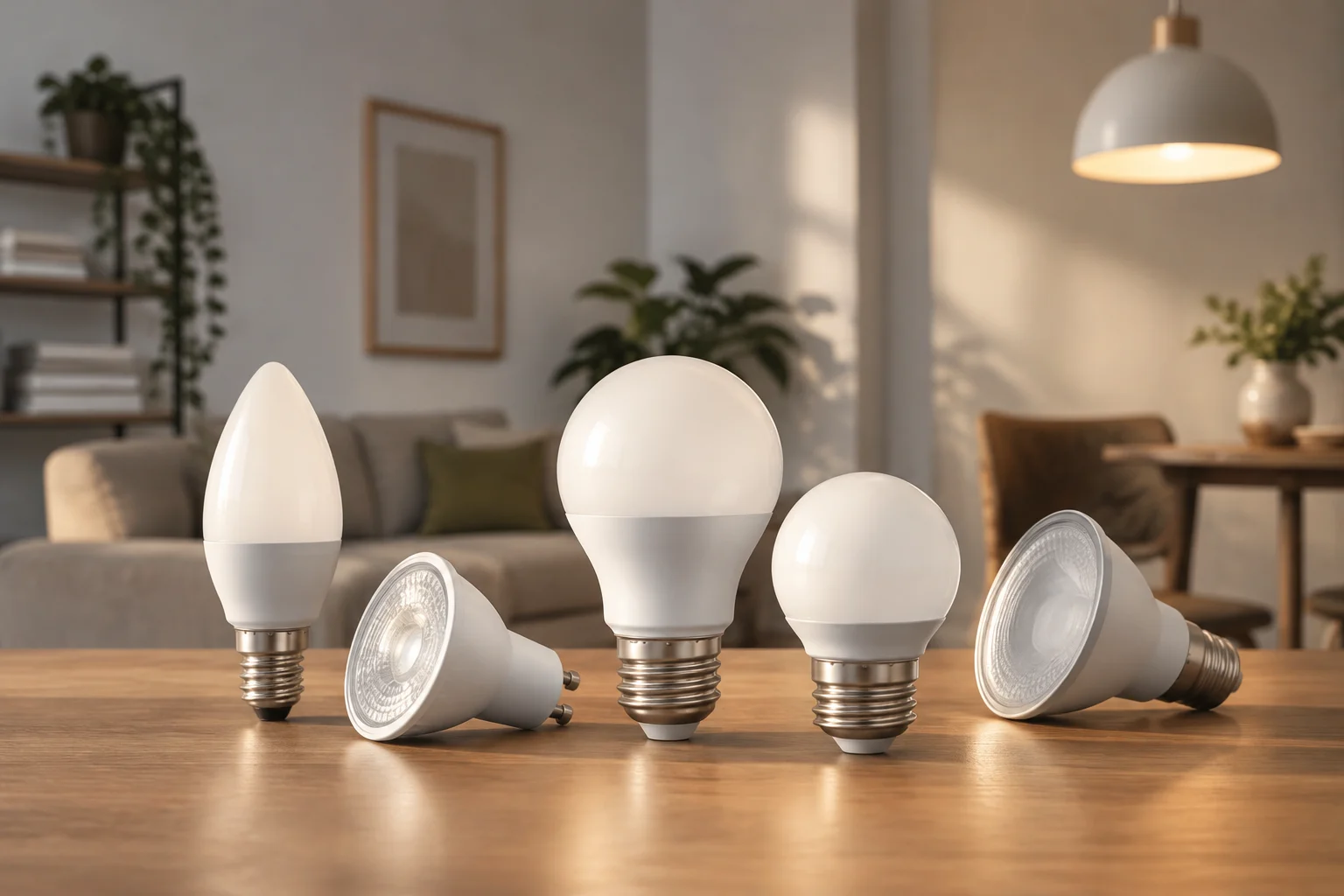
Start with the light you need, not the watts
Watts indicate the electrical power a bulb uses; on their own, they do not tell you how much light it produces. To compare brightness, look at luminous flux, expressed in lumens (lm). If you are replacing an older bulb, use the light you need in the room as your reference and compare that figure across the available options, rather than assuming that two bulbs with the same wattage will illuminate equally. The Institute for the Diversification and Saving of Energy (IDAE) includes efficient lighting among its recommendations for homes. Source: IDAE.
A lower-wattage bulb may produce a similar amount of light to a higher-consumption one, but the precise difference depends on the characteristics of each bulb. That is why it is useful to consider lumens and watts together: the former help you assess how much light the bulb provides, while the latter indicate the power it draws. The relationship between the two can help you judge efficiency, but it does not replace checking whether the light type and distribution suit the fitting and the room. Think about how the space is used as well. General lighting for a room and task lighting directed at a desk serve different purposes; perceived brightness depends on positioning, shades and surfaces, not just the lumen figure printed on the packaging. If the bulb sits behind an opaque shade, some light may be directed or blocked. Rather than pursuing a universal figure, compare it with the bulb you already use and decide whether you want similar lighting or a deliberate change. This helps avoid mistaking a catalogue specification for the result you will experience in a particular installation: the surroundings and orientation also affect how the light is used.
Read the energy label as a comparison, not a promise
The European energy label for light sources uses a scale from A to G. The European Union’s delegated regulation sets the labelling framework and the information that must be provided for covered products. Commission Delegated Regulation (EU) 2019/2015. The scale places a product’s efficiency according to the regulated method, but does not by itself tell you how much you will spend at home: actual consumption also depends on wattage and how long you leave the light on.
Compare the letter with the declared consumption and the light output. Two bulbs may have different energy classes and still not be equivalent in brightness, shape or intended use. A more favourable class can be a useful consideration when the other features meet your needs, but it does not make an incompatible bulb or one that provides too little light suitable for the room. Nor should you convert a letter directly into a fixed percentage saving against any other bulb: that comparison requires a reference product and specific conditions. The current scale may seem less generous than older labels because the letters used in different systems should not be treated as directly interchangeable. IDAE reported the introduction of the new energy label for light sources; that information provides context, while the European regulation is the legal reference. IDAE: new lighting label. Check the label on the product you intend to buy and consult its product information if you need detailed values; do not infer figures that the packaging does not provide.
Check the base, shape and colour before paying
The first physical check is the base: it must match the lamp holder in the fitting. Check the reference printed on the bulb you are replacing or on the fitting itself, as well as the available space. A bulb may have the correct base and still be too long or too wide for a shade. The shape of the body can also matter if the fitting has a narrow cover or the bulb is visible. After that, decide what colour tone you want. Colour temperature is normally expressed in kelvins (K): lower values usually describe a visually warmer light and higher values a cooler-looking light. This scale describes the appearance of the colour, not the amount of light or the energy used. If the packaging gives the colour temperature, use it to maintain a similar appearance among bulbs in the same room, or to choose a different tone deliberately. The whole home does not need exactly the same colour, but mixing very different tones in one space may look discordant.
Also consider the light distribution and the position of the light source. In a fitting that directs light downwards, it may matter whether the bulb distributes light in the expected direction; in a decorative shade, the visible appearance of the diffuser may matter. The right choice depends on the fitting and its function. Physical and visual compatibility is a prerequisite: a good label cannot fix the wrong base, a bulb that will not fit, or a tone that does not suit you. Check these conditions before comparing prices, because a bulb that does not suit the space will not meet its lighting needs even if its other specifications look appealing. The same printed information can lead to different practical results depending on the fitting, so compare the bulb with the actual opening, cover and position where it will be used. This is a straightforward way to avoid choosing on the basis of one attractive specification while overlooking an obstacle that prevents the bulb from working as intended.
Dimmers and fittings: check compatibility explicitly
If you use a dimmer, do not assume that every LED will work with it. Look for an explicit dimmable indication on the packaging or in the model’s product information, and check the conditions stated by the manufacturer. The bulb and dimmer are parts of the same installation: a model that does not declare compatibility may not let you adjust the light as expected. Do not infer compatibility simply because the old bulb could be dimmed. In enclosed fittings, confined spaces or accessories with specific conditions, check any restrictions stated by the bulb manufacturer and the fitting instructions. If the documentation does not confirm that the intended use is suitable, do not assume that it is. IDAE provides general guidance on efficient lighting in buildings, but the suitability of a particular bulb must be checked in its own product information and in the information for the fitting. IDAE: efficient lighting in buildings.
For a connected bulb or one controlled through a home system, also check the connection and control requirements stated by the manufacturer. The control method may depend on the bulb, the accessory and the system. This guide does not recommend a particular product or certify compatibility between brands or models; if the packaging and product information do not resolve the question, the prudent option is to consult the model’s official documentation before buying. Checking each component separately helps prevent compatibility from being taken for granted merely because the bulb screws into or fits the lamp. A correct physical fit answers only one part of the question: it does not confirm dimming, connection or control. Use the documentation for the exact model and intended installation, and avoid relying on a general assumption based on another bulb or another fitting.
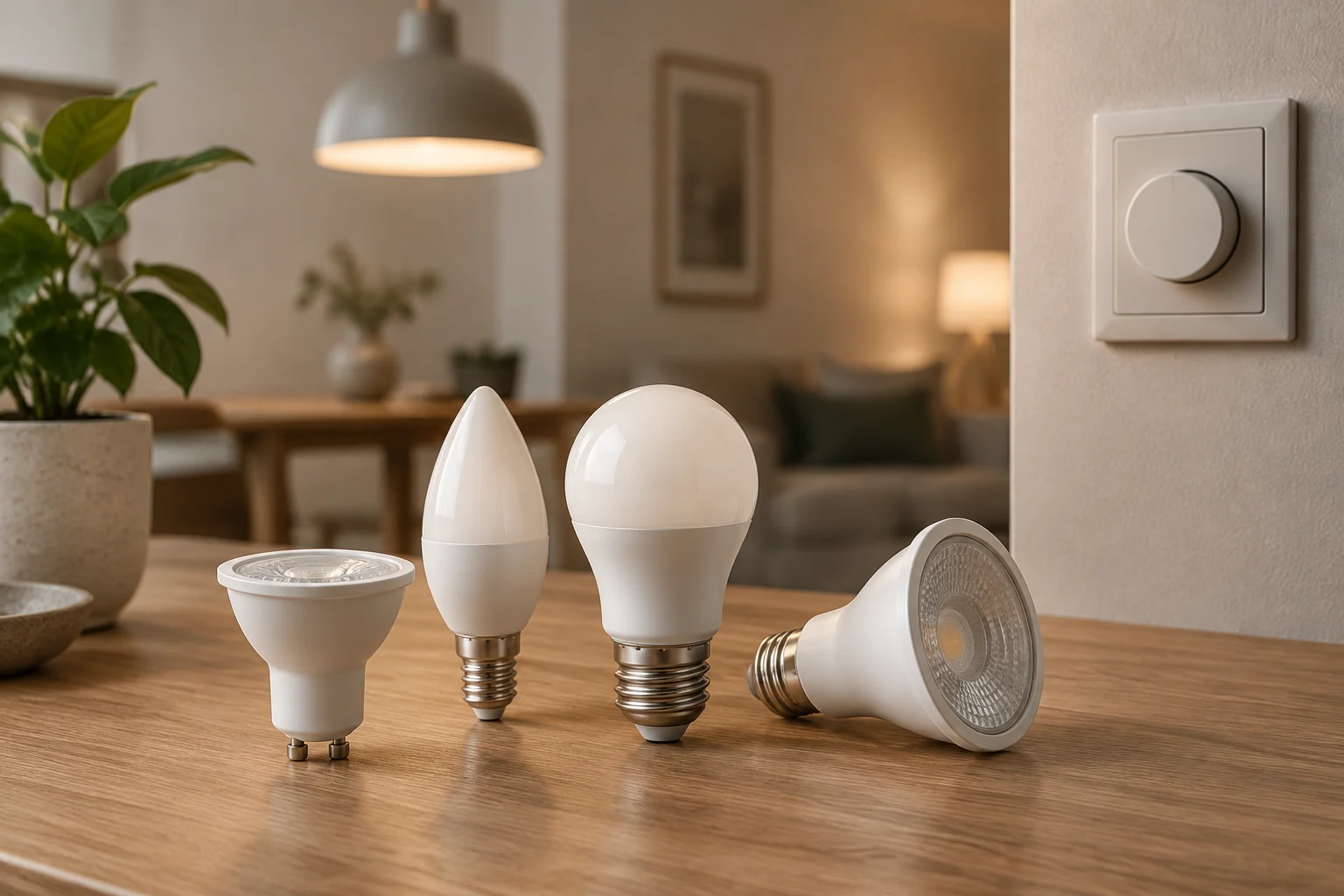
Estimate running cost using your actual hours
You can estimate a bulb’s electricity consumption by multiplying its power in kilowatts by its operating hours; to convert watts to kilowatts, divide the watt figure by 1,000. The result is kilowatt-hours (kWh). To estimate the cost, multiply that consumption by the price per kWh that applies to your contract and period. The result is an estimate: it does not include possible additional bill charges or tariff changes. For a fair comparison, use the same period of use for each option and the declared wattage of each bulb. Time spent switched on can matter as much as wattage when comparing cost. A lower-consumption bulb used for many hours may have a different impact from one used only occasionally. For a reasonable comparison, apply the same number of hours and the same electricity price to each alternative. Do not claim a fixed saving from changing technology without specifying the bulb being replaced, its wattage, the usage and the tariff.
This calculation informs a decision; it does not predict a future bill exactly. The energy label helps compare products within its framework, but it does not incorporate your household habits or guarantee a financial result. If several options provide a suitable amount of light and colour, comparing declared consumption and purchase price may help you decide. However, hours of use, tariffs and initial costs vary, so a conclusion that applies to one home does not automatically apply to another. The estimated result is most useful for comparing scenarios under shared assumptions, not for replacing the actual amount that will appear on a bill. Keep the assumptions visible when making the comparison: changing the hours or electricity price changes the estimate, even when the bulb itself stays the same.
Pre-purchase checklist
Before choosing, check this list on the packaging or in the product’s official information:
- Lumens: Is the light output suitable for what you are replacing or for the task you need to illuminate?
- Watts and label: Have you compared declared consumption and energy class without confusing them with brightness?
- Base and size: Do they match the lamp holder, and will the bulb fit inside the fitting?
- Colour temperature: Does the stated tone suit the room and the other lights in the space?
- Dimming and special use: Is compatibility with your dimmer or the fitting’s conditions explicitly stated?
- Estimated cost: Have you used your own hours of use and a comparable electricity price, rather than assuming a universal saving?
IDAE’s recommendations for households can be a starting point for considering domestic energy use and efficient energy use. IDAE: recommendations for saving energy at home. The buying decision, however, is made model by model: check the label and manufacturer’s information, because this guide does not compare specific commercial bulbs or present independent performance tests. If an essential feature is not documented, do not treat it as guaranteed. Overall, choosing a bulb means balancing the light you need, its fit with the fitting and its intended use, without treating one specification as the answer to every question.