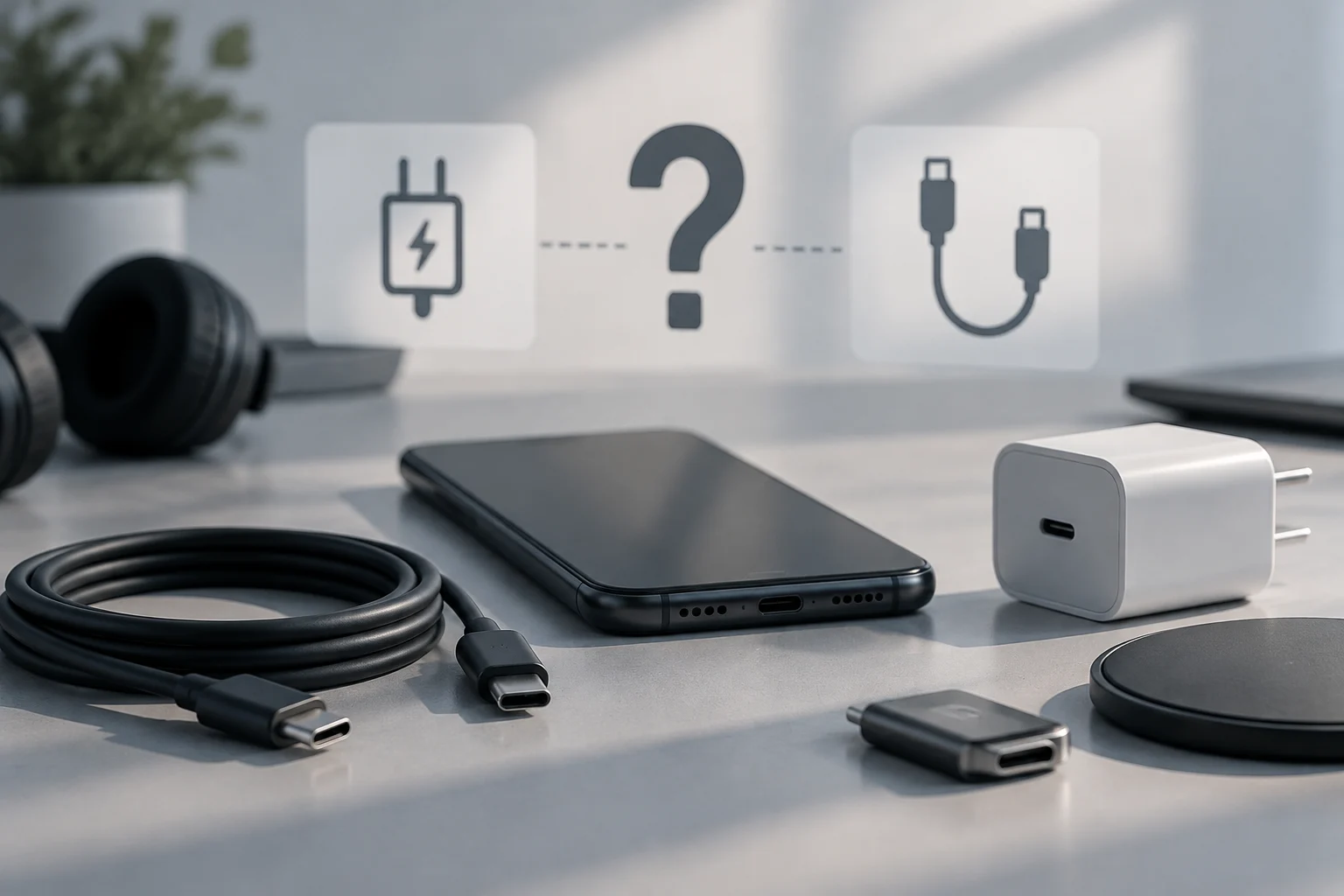
The evidence provided does not confirm a new development
The editorial question is specific: has compatibility between accessories and mobile phones changed recently, and is there enough evidence to explain who would be affected? The sources supplied do not support an affirmative answer. None verifiably documents a recent announcement by a phone manufacturer, an accessory manufacturer or a body responsible for a standard concerning a change in compatibility, connectivity or privacy.
This does not prove that no change has taken place. It means that the available research does not make it possible to confirm one. That distinction matters: a current-affairs story must connect an event, a date and a scope to documentation that can be checked. Without that chain, turning an inconclusive search into an affirmative headline would mislead readers. The appropriate conclusion is therefore limited to what the supplied material establishes, rather than extending it into a broader claim.
What the search results actually contain
Some results concern the accessories market, not a specific technical update. The Insight Partners presents a market report and an economic forecast; Mordor Intelligence likewise has a page about the sector’s size and outlook. This kind of material can help investigate commercial trends, but it does not demonstrate that a charger, cable, case or wireless device has gained or lost compatibility with a particular phone model. A market forecast is not a substitute for a technical specification. The subject of a report and the evidence needed to establish a device-level change are different things.
Other links are unrelated to technology accessories: they are pages about fashion accessories and jewellery. Their appearance in the results points to a relevance problem in the search, not to evidence about mobile connectivity. There is also an Android Developers page that serves as a general portal for news and documentation; the excerpt supplied does not identify a specific announcement about accessories. It should therefore not be presented as confirmation of one. A broad resource page may be useful as a place to continue searching, but that is not the same as finding a documented compatibility update.
The list also includes USB-IF pages about compliance tools and conformity. Their titles suggest that they concern USB procedures or specifications, but the excerpts received do not describe a particular change, an effective date or the products that would be affected. Without examining relevant documentation and linking it to the alleged change, citing these pages as proof would go beyond what the available evidence shows. A link that mentions a relevant technical field cannot, by itself, substantiate a specific claim about a product or phone.
What would be needed to report a change
A verifiable news report should begin with a primary source that explains the change—for example, official documentation from a manufacturer or from the body responsible for the specification. The article would need to identify the accessory or feature affected, the devices and versions involved, and the relevant dates. It is not enough for a page to mention USB, Android or accessories; there must be a direct connection between the document and the claim being published. That connection should be clear to readers and possible to check.
The scope would then need to be defined. A new feature may depend on the model, operating system, firmware version, certification or a combination of these factors. It is also important to distinguish between an accessory being physically connectable and all of its functions being available: a matching connector shape does not, by itself, prove every charging, data-transfer or control capability. This is a general verification principle, not evidence of a change in the sources received. It helps explain what would have to be tested or documented, without implying that such a change has been found.
For editorial purposes, a useful check would include at least: identifiable primary documentation, a date or version, a description of the impact and a relevant independent source providing context. If the claim concerns privacy or security, it would also be necessary to specify which data or permissions are involved. A privacy improvement should not be inferred from a connection change, and a security problem should not be alleged without specific evidence. Each part of the claim needs support appropriate to what it asserts.
What buyers can check
Although there is no confirmed development here that would justify replacing an accessory, it is still possible to carry out a careful check before buying. First, verify the exact phone model and consult the official product information or instructions for the accessory. Then look for the particular function that matters—charging, audio, data or pairing—instead of relying only on a broad label such as “compatible with mobile phones”. Compatibility should be considered in relation to the intended device and use.
It also matters to distinguish a seller’s claims from documentation that can be checked. If compatibility depends on a system version, an application or a setting, that condition should be stated clearly. For cables and chargers, the connector name alone does not establish what performance the combination will deliver; the relevant information is the accessory’s specification and what the phone supports. When a product listing is ambiguous, asking for confirmation is more sensible than assuming universal compatibility. This is a cautious way to assess a purchase, not a claim that any particular product has been tested.
These recommendations are not equivalent to product testing or a comparison of models. No model numbers, complete technical specifications, verified prices or test results have been provided. Consequently, there is no basis for recommending a particular item, declaring an accessory certified or claiming that a combination will work in every case. The checks described here can help a buyer ask focused questions, but they cannot replace product-specific evidence.
Conclusion: pause the story, don’t invent the change
The available material does not support publishing a news story about a recent change in mobile accessory compatibility. The search combines market reports, fashion pages, general developer resources and USB-related links, but it does not provide the specific evidence the proposed angle requires. The correct conclusion is limited: the change is not confirmed by the sources received; that is not the same as proving that no change exists. Keeping that distinction visible avoids turning a lack of confirmation into a claim about the world.
Before assigning the piece as news, a new, relevant search would be needed, followed by a review of the pertinent primary pages and a comparison with independent coverage. If that check finds no documented announcement, the appropriate course would be to drop the current-affairs angle or recast the piece as a buying guide, clearly separated from any supposed new development. In the present state of the evidence, a more categorical statement would not be responsible.