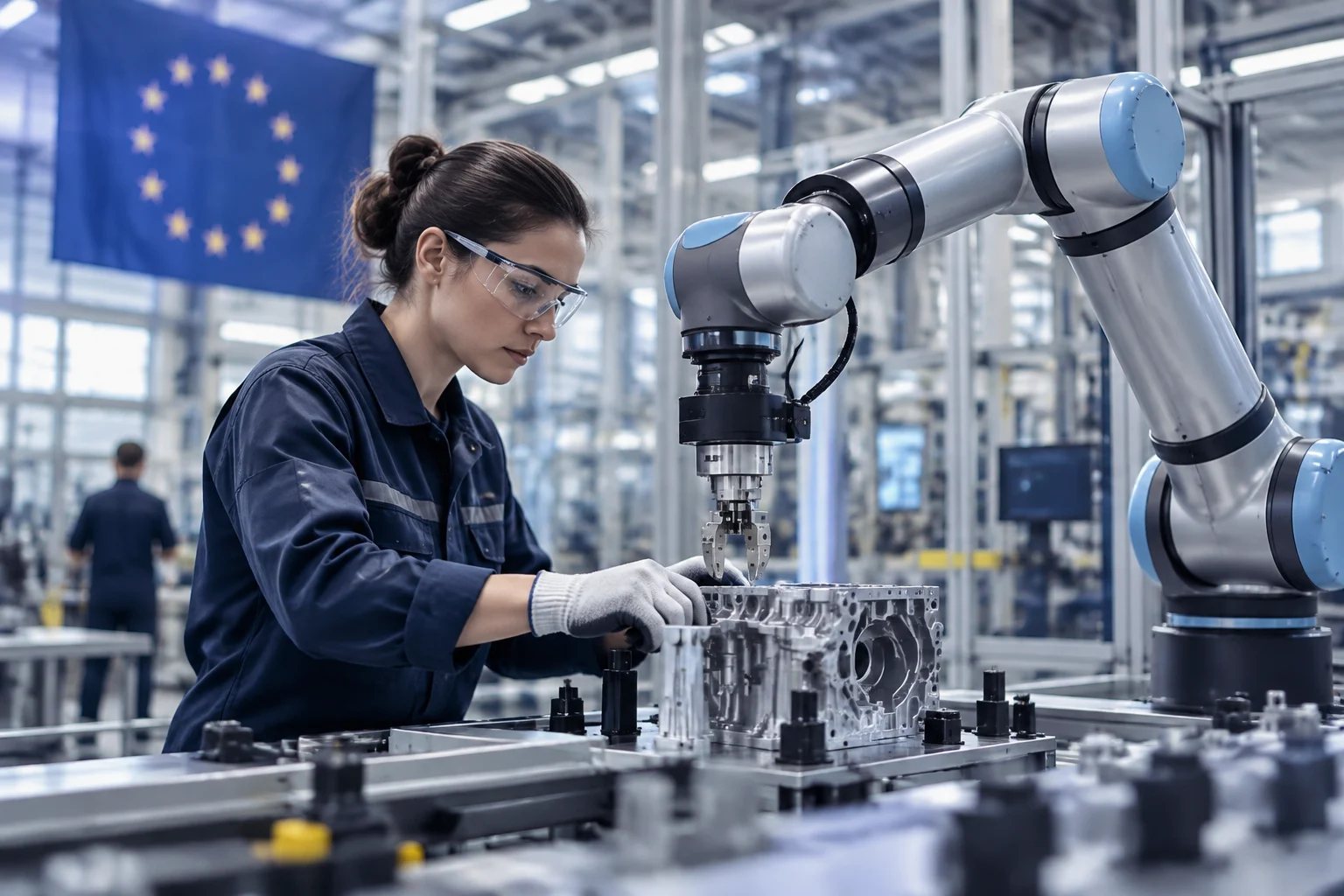
From fiction to the factory: the reality of automation
The popular image of robots, shaped by science fiction, is far removed from operational reality in today’s production facilities. Far from autonomous androids, robotic process automation (RPA) focuses on repetitive tasks such as data entry, invoicing and quality control. These processes follow defined rules and can be automated using software, without requiring a physical machine to take over the entire job. This distinction helps clarify which technology is being used and where it can deliver value.
This distinction is crucial to understanding the practical scope of RPA: its purpose is not to replace human creativity, but to reduce the time spent on routine operations and free up resources for strategic functions. When tasks such as recording information or checking controls are automated, people can focus on activities that call for judgement, coordination or problem-solving. Technology is therefore understood as a tool for reorganising work, not as an automatic replacement for every human capability.
In industrial settings, robots function as computers with the ability to move, designed to perform tasks with tireless precision. The definition brings together engineering, construction and operation: programming an instruction is not enough; the physical system capable of carrying it out must also be designed and put into operation. This combination makes it possible to meet complex needs and spare workers tedious or hazardous tasks, although the type of task and degree of automation depend on each application.
The evolution of these machines has made them a familiar feature of the digital age. Their role is not limited to repeating an operation in isolation: they can also be integrated with other technologies, such as IoT, as part of connected processes. Technological integration matters because it places the robot within a broader production system, where information and physical execution are linked. This perspective helps explain why industrial automation involves considering both the machines and the digital tools that interact with them.
The boundary between robotics and artificial intelligence
Robotics and artificial intelligence are often confused, but they are distinct, albeit interconnected, fields. Artificial intelligence focuses on giving machines intellectual capabilities to learn and make decisions; robotics, by contrast, deals with the design and construction of physical systems that perform tasks. One discipline addresses processing and decision-making capabilities, while the other creates devices able to act in the material world. Keeping this difference clear avoids treating the two concepts as synonyms.
This distinction also makes it clear that a robot can operate without advanced AI and that AI can exist without a physical body. A robotic system can carry out a programmed sequence without learning or making complex decisions; likewise, a data-management algorithm can analyse information without controlling a machine. The relationship between the two fields depends on how each application is designed and which capabilities it needs, not on one necessarily requiring the other.
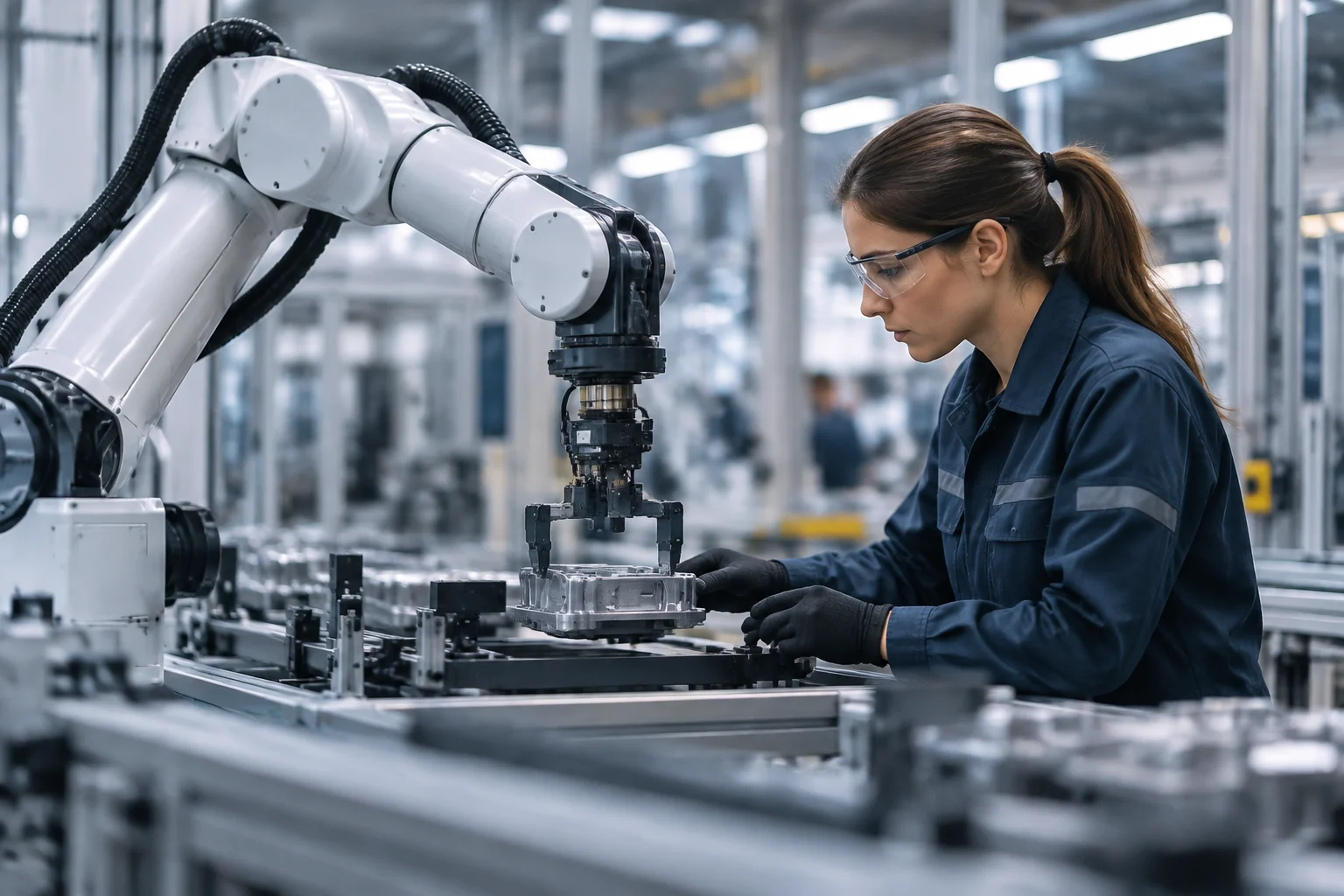
The convergence of the two disciplines is driving collaborative robotics in production environments. By combining AI’s learning capabilities with robotics’ mechanical precision, companies can adapt production lines to changes in demand more nimbly. This combination is significant because it links information analysis with the execution of movements and tasks, allowing automation to respond to changing conditions rather than being limited to a fixed sequence.
This approach enables more flexible production: systems do not merely repeat movements, but can adjust their behaviour in real time based on sensory data. Information captured by sensors provides reference points about the environment and helps guide the system’s response. Real-time adaptation does not remove the human role or mean that every industrial line operates autonomously; it describes a design possibility that expands the ability to adjust processes when conditions vary.
The role of semiconductors in digital sovereignty
The efficiency of robotic and AI systems depends critically on the availability of advanced semiconductors. These components enable digital technologies to process information and function, so their supply affects the ability to deploy industrial applications. They are the backbone of high-value sectors such as automotive, telecommunications and energy, as well as being essential to the devices that underpin automation and data analysis.
In Europe, dependence on external suppliers has prompted a coordinated strategic response to secure supply and foster local innovation in microelectronics. The issue is not limited to having chips available at a particular moment: it also concerns supply-chain resilience and the capacity to sustain technological activity. That is why semiconductor development is linked to digital sovereignty and to the ability of European industry to deploy its own solutions.
The European Chips Act, in force since September 2023, establishes the framework for strengthening the EU’s position in this industry. Its aim is to help make supply chains more resilient and position Europe as a leader in developing chips that are secure, energy-efficient and powerful. The Act places microchip production within a broader industrial and digital strategy, in which strengthening European capabilities is key to reducing vulnerabilities.
This technological infrastructure is one of the foundations of Europe’s Digital Decade, since it enables the deployment of AI and robotics applications. The availability of suitable components supports both the systems that process information and the machines that perform tasks. The link between chips and automation explains why semiconductor strategy is directly connected to industrial modernisation: without components, the technologies that depend on them cannot be scaled with the same degree of strength.
European strategies and public funding
To close the gap with major global technology players, the European Union has promoted the SEMICOM Semiconductor Coalition, made up of nine countries, including Spain. The coalition has delivered a joint declaration to the European Commission that prioritises the alignment of public and private funding, the development of specialised talent, and cooperation between SMEs and large companies. Its priorities are designed to coordinate resources and capabilities rather than address each industrial need in isolation.
Aligning funding aims to bring coherence to public and private efforts; developing talent addresses the need for specialised knowledge; and business cooperation links the capabilities of companies of different sizes. Together, these strands can create a more coordinated industrial ecosystem. The aim is to strengthen the viability of the entire European value chain, from available resources and expertise to cooperation among the actors involved in the semiconductor industry.
In Spain, the creation of the Spanish Society for Technological Transformation (SETT) marks a milestone in managing these investments. The organisation was established by transforming the State Society for Microelectronics and Semiconductors and manages more than €16.4 billion from the Recovery Plan. Its creation consolidates the management of these resources within an instrument intended to bring disruptive digital technology into multiple sectors.
SETT’s aim is to coordinate public investment to support this technological adoption and ensure a medium-term vision for the structural transformation of the economy. The scale of the funds indicates the scope of the task assigned to it, but the stated purpose is broader than financing a single sector: it encompasses digital transformation across different fields. Coordinating investments is intended to maintain that direction and connect resources with lasting changes in the Spanish economy.
Social impact and ethical challenges
The uneven deployment of robotics and AI is a source of social controversy, particularly in Europe, where a competitive lag is perceived. Data governance and efforts to reduce negative perceptions of these technologies are key areas of action. The debate, therefore, is not limited to how many machines are installed or which tasks they automate: it also considers how data are managed and how society responds to technological change.
These are not merely technical questions; they call for reflection on the impact of the robotics revolution on employment, culture and ethics. The creation of artificial intelligence systems raises the need to reconsider social conventions and examine how the effects of these changes are distributed. The social dimension of automation helps explain why acceptance and trust form part of the debate alongside efficiency and technological capability.
Integrating these technologies calls for an approach that combines scientific and technical considerations with organisational and cultural ones. As literature on the culture of technology points out, success depends not only on the machine but also on how organisations and society adapt to it. Adopting a system also means thinking about work routines, the skills required and the ways in which people interact with technology.
This means training workers to collaborate with robots and ensuring that technological innovation contributes to sustainable development and a tangible improvement in quality of life, beyond mere production efficiency. Training connects the adoption of tools with the ability to use them in everyday work, while attention to quality of life broadens the criteria used to assess their impact. The conclusion is that industrial transformation is measured not only by what machines produce, but also by how people and organisations can benefit from their integration.