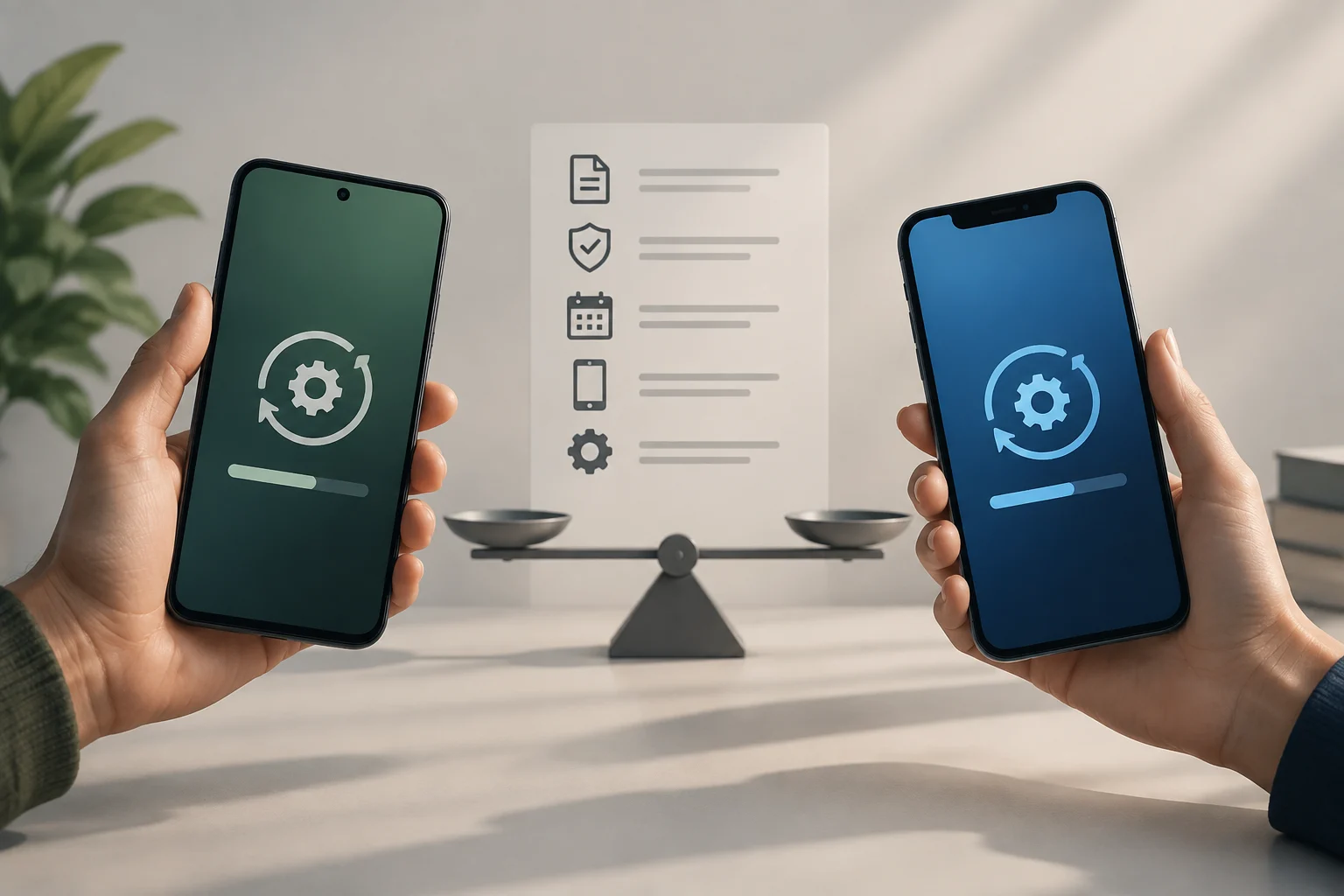
A useful comparison starts with the model, not the operating system
The question “Does Android or iOS get more updates?” sounds simple, but it combines two different levels. iOS is the operating system for iPhones; Android, by contrast, is a platform used by devices from different manufacturers. A comparison that assigns the schedule of a single brand to all of Android therefore does not necessarily describe what someone buying another phone will receive. The general Android page included in the research introduces the platform, but does not set out support commitments for specific models. Source: Wikipedia.
For a buying decision, what matters is the exact model and its variant, together with the country where it is sold. A policy may cover a device family, certain generations or specific markets. Without identifying those limits, an isolated figure—for example, a number of years—is not enough to conclude how long a particular phone will receive support. This is a reading guideline, not a claim that any specific policy covers a particular list of models.
It is also worth distinguishing a buying comparison from a news story. The research provided does not substantiate a recent announcement by Apple or an Android manufacturer that changed a support commitment. The responsible approach is therefore not to present an unconfirmed development as fact, but to explain what information is missing to compare current policies and where it should be checked before publishing a conclusion.
What Apple’s documentation says—and does not say
The available official Apple source is an implementation guide about software updates for Apple devices. Its purpose is to document aspects of updates in that context; the research material does not, by itself, provide a quantified promise of years of support for each iPhone or a table of models and end dates. Apple guide.
That distinction matters: explaining how updates are managed or deployed is not the same as guaranteeing how long they will be offered for each model. To turn general documentation into a buying answer, one would need to find an official statement that explicitly addresses duration, scope and the devices covered. If those elements are absent, the gap should not be filled with an estimate published by a third party.
The research also includes an Apple announcement dated September 2026 whose title says that major updates to its software platforms are available. That announcement can confirm that Apple communicated the availability of updates on that date, but it does not show how long a particular model will receive updates and is not, by itself, a commitment to future support. Apple announcement. The availability of a version and the duration of support are different questions.
With Android, compare the manufacturer and device family
Android does not, by itself, identify a uniform update policy for every phone using the platform. To assess a specific device, consult the manufacturer’s documentation and check that the commitment applies to the relevant model or family. The general Android description in the available sources does not provide that detail or allow the same duration to be attributed to every brand. Android overview.
A Samsung page included in the research concerns security changes to the lock screen associated with One UI 9.0. This is documentation specific to a feature or security policy; the material does not show that it establishes the full operating-system update schedule for a range of phones. It would therefore be incorrect to use it as a substitute for a model-specific support policy. Samsung page.
The comparison should be repeated for every real alternative the buyer is considering. It is not enough to choose a striking figure from one brand and set it against a general figure for Apple: verify that both figures describe the same type of update, the same starting point and a comparable scope. Without that match, the result can look precise without actually being so.
Operating system, security and start date: three details not to conflate
Before comparing, find out exactly what “update” means in the statement being consulted. It may refer to new operating-system versions, security fixes or both; if the source does not clarify its scope, do not assume that a promise about one category covers the other. The available Apple guide addresses software updates in its implementation context, but the evidence supplied does not make it possible to establish a complete equivalence between its categories and the policies of all Android manufacturers.
The second detail is the promised duration and the third is when the clock starts. A time reference tied to an announcement, commercial launch or another milestone is not interchangeable with one using a different date. For a valid comparison, the primary source should specify the start of the period or make it possible to identify without speculation. If it does not, the conclusion should say that this point remains unresolved rather than turning an approximate date into an official commitment.
A useful checklist for each model would include: exact name, variant and market; the official wording of the commitment; the types of updates covered; duration and start date; any explicit exceptions; and the date checked. Keeping these fields separate makes it easier to spot when two manufacturers describe different benefits using similar language.
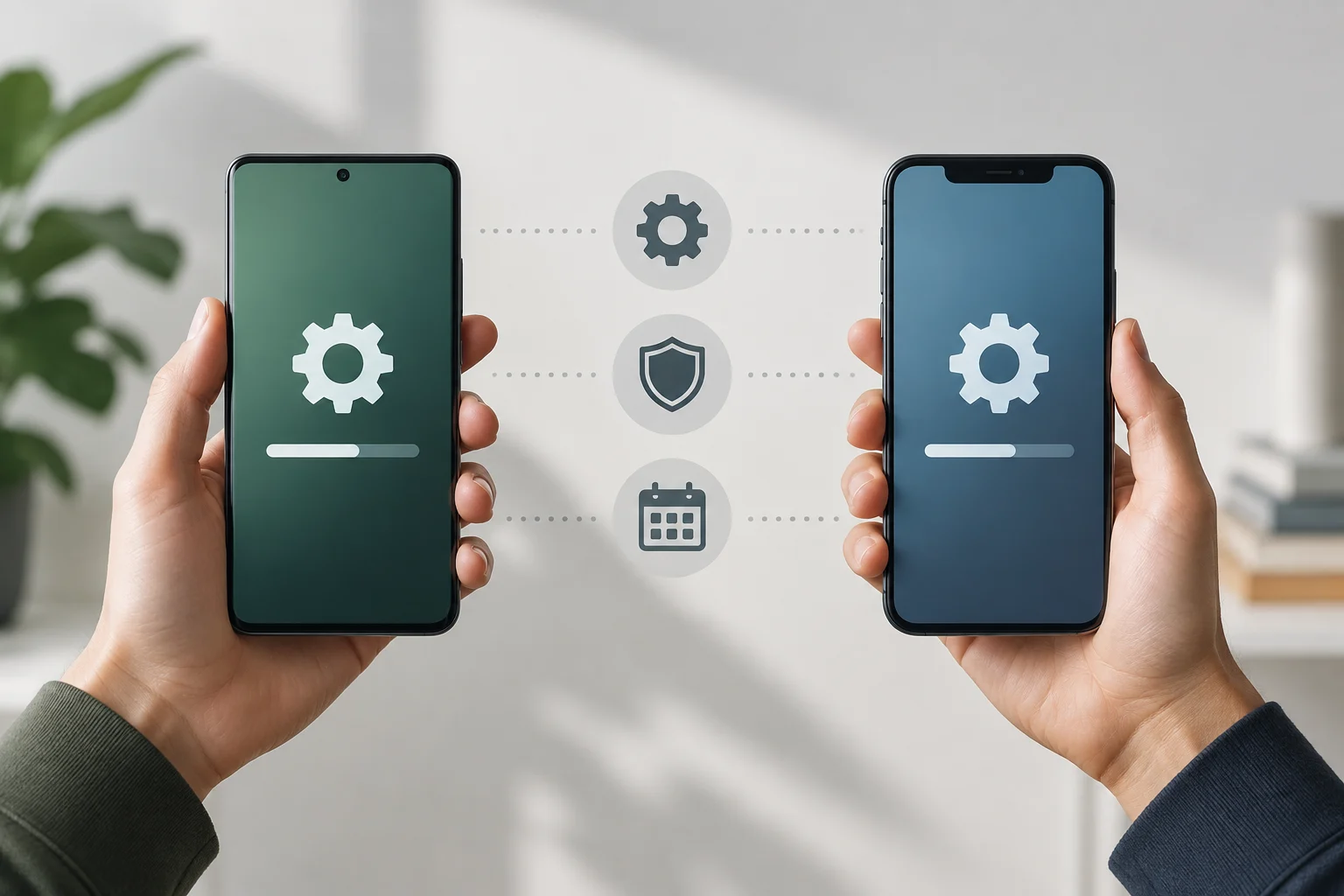
How to assess sources and avoid overstated conclusions
The primary source should be the manufacturer or authority publishing the commitment. A news story, commercial comparison or phone list may help guide the search, but it does not replace the original document when the claim concerns an official obligation or promise. The research includes iPhone-versus-Android comparison articles and a secondary list of phones with updates, but these materials are not enough to attribute a contractual condition or a specific duration to a model without checking it against the primary source.
The date checked matters too. Policies can be updated, and a page may describe an earlier generation. An article intended to reflect the current position should retain the URL consulted and record which models and markets it covers. If the documentation is undated or does not explain its scope, that should be stated. A figure repeated in several articles does not become an official promise through repetition.
When assessing independent analysis, check how it reached its conclusion: whether it links to the original policies, distinguishes operating-system updates from security updates, and identifies the models examined. A secondary source can help locate discrepancies, but where sources conflict, the manufacturer’s published text for the specific device is the reference to investigate. The available material does not contain a complete primary-source comparison of Apple and Android models that would support naming a winner for support duration.
A practical decision for someone buying a phone
If long-term support is a priority, the soundest decision is not to choose an ecosystem based on its general reputation, but to compare two or three specific models with their official policies in front of you. Before paying, check that the promise covers the variant and market of your unit, distinguishes the updates you care about and explains when the period begins. If any of these details is missing, treat the information as incomplete.
Then keep a copy of the manufacturer’s page and the date you consulted it. That helps if the policy changes or a retailer presents a summary figure that does not match the original wording. It also avoids confusing software support with other factors—such as repairability, parts availability or the commercial warranty—which require their own sources and comparisons.
Editorial conclusion: the available evidence cannot substantiate a story about a recent change or provide a reliable quantitative comparison of support duration between iOS and Android. It does support saying that the comparison must be made by model, manufacturer, update type and start date, and that the sources examined do not cover all those fields. Before publishing a table of commitments, the current official policies of Apple and each included Android manufacturer would first need to be verified.