The Technical Boundary Between Wellness and Diagnosis
In the current wearable market, there is a persistent confusion between wellness sensors and medical devices. This distinction is not merely semantic but regulatory and technical. A wellness sensor, such as a basic PPG, measures physiological signals to provide general trends in activity or rest. In contrast, a medical device must demonstrate, through rigorous clinical trials, that its reading is precise enough to influence a clinical decision or the treatment of a pathology.
This distinction is vital because the end user often interprets an 'irregular rhythm' notification as an arrhythmia diagnosis. However, most health features in smartwatches are designed as signal detection tools, not diagnostic instruments. Official documentation from manufacturers and regulatory agencies like the FDA clearly marks this line: what has not undergone an authorization process (510(k) or De Novo) should not be used to make autonomous medical decisions.
Sensor Specifications: PPG, ECG, and SpO2
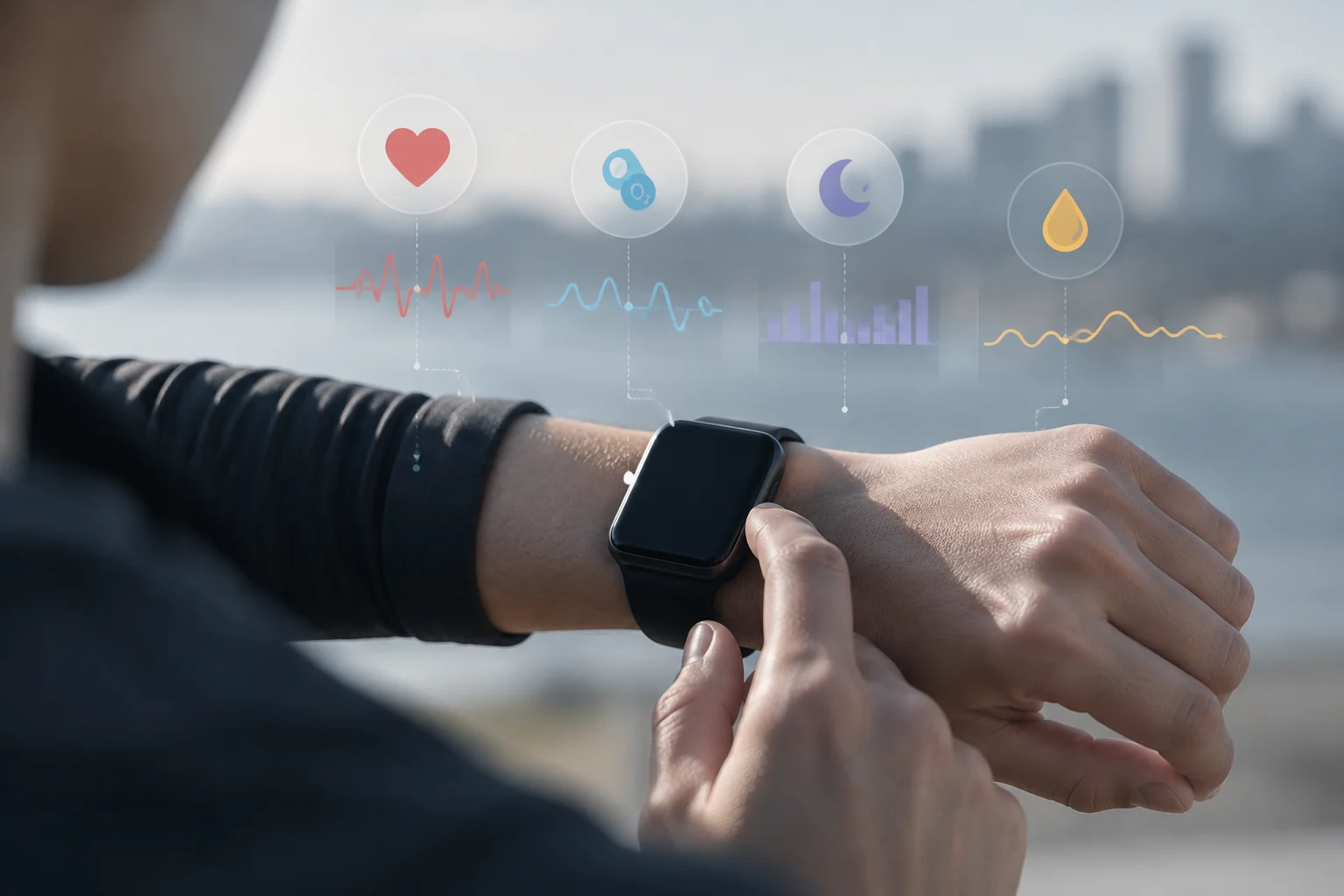
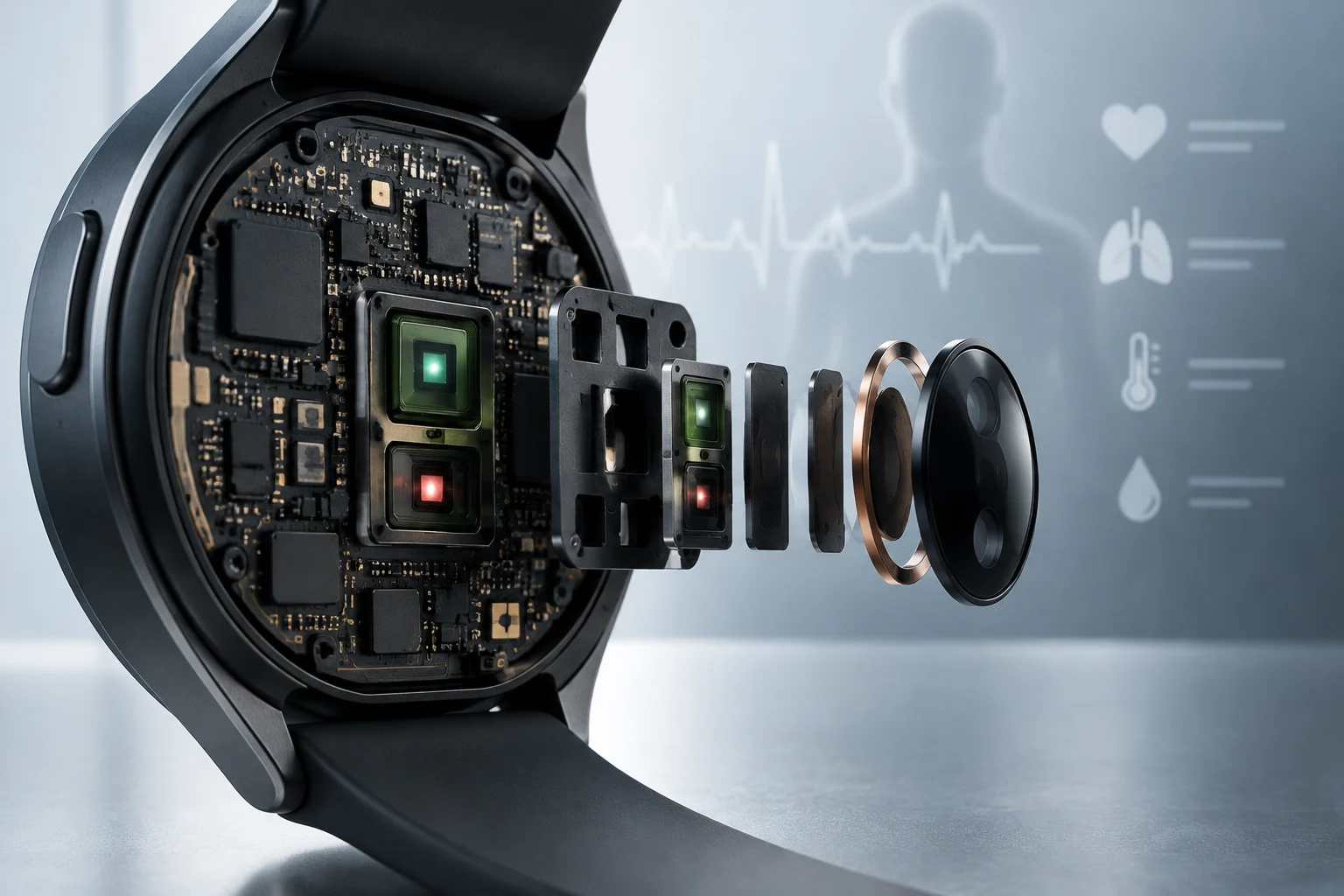
Leading models from 2025-2026, such as the Apple Watch and Samsung Galaxy Watch, integrate high-precision photoplethysmographic (PPG) sensors. PPG measures blood volume in blood vessels using light, allowing the calculation of heart rate and, in some cases, oxygen saturation (SpO2). However, SpO2 in wearables is an estimate that can be affected by movement, skin temperature, or skin tone, meaning it does not replace a clinical finger oximeter.
The single-lead electrocardiogram (ECG), available in Apple Watch Series 4 and later and in Galaxy Watch, offers a more detailed view of heart rhythm. Unlike continuous PPG, the ECG requires the user to keep their finger on the watch crown to close the electrical circuit. This technology allows identifying specific patterns, such as atrial fibrillation (AFib), but with important limitations: it does not detect myocardial infarctions or other complex arrhythmias, and its use is restricted to users over 22 years old without prior diagnoses of other arrhythmias.
Regulatory Status: What the FDA Has Validated
The U.S. Food and Drug Administration (FDA) has granted specific authorizations to health features in wearables, creating a global reference standard. In 2018, Apple received De Novo classification for its ECG app and irregular heart rhythm notification, becoming the first direct-to-consumer product to offer ECG from the wrist. This authorization allows the feature to be sold without a prescription, but with clear warnings about its informational use.
Samsung has followed a similar trajectory. In May 2023, the FDA authorized the irregular heart rhythm notification feature in Galaxy Watch, and in February 2024, it granted De Novo authorization to the sleep apnea detection feature. The latter is pioneering: it allows detecting signs of moderate to severe obstructive sleep apnea in undiagnosed users, based on the analysis of heart rate variability and oxygen saturation during sleep. Fitbit, under Google, also has five FDA-authorized features, including AFib detection and heart rate variability (HRV) measurement as a stress biomarker.
Limitations of SpO2 and Heart Rate Variability
Although SpO2 and HRV are popular metrics, their clinical interpretation in consumer wearables is limited. The FDA has issued specific warnings about the use of devices not evaluated for diagnostic purposes. For example, the agency warned in 2024 about the use of smartwatches or smart rings claiming to measure blood glucose without piercing the skin, noting that none of these devices have been authorized for that purpose. The risk of inaccurate measurements can lead to serious errors in diabetes management, such as incorrect insulin doses.
Heart rate variability (HRV) is often used as an indicator of stress or recovery, but its validation as a diagnostic tool is less robust than that of the ECG. Manufacturers present it as a wellness metric to help users manage stress, not as a strict cardiovascular health indicator. Official documentation from Apple and Samsung emphasizes that these metrics are informational and should be interpreted in the context of a professional medical evaluation.
Practical Guide for Users: How to Interpret Warnings
To distinguish between reliable data and entertainment metrics, users must pay attention to legal warnings in health apps. A feature with FDA authorization or CE marking as a medical device will include a clear statement of its intended use, eligible populations, and known limitations. For example, Apple's ECG app specifies that it is not recommended for users with other known arrhythmias and that the data is informational only.
If a feature does not mention a specific regulatory authorization, it is likely a wellness metric. In these cases, the data may be useful for identifying trends or patterns but should not be used to diagnose or treat medical conditions. The practical recommendation is to bring wearable health records to a medical consultation as a starting point for conversation, not as definitive evidence. The doctor can use these data to decide if more precise diagnostic tests, such as a Holter or polysomnography, are needed.
Practical Decisions: What Data to Bring to the Consultation
The practical decision for the user is clear: rely on metrics with regulatory validation for detecting risk signals, and treat the rest as wellness tools. The ECG and AFib detection features in Apple Watch and Galaxy Watch are the most robust and have solid clinical backing. Sleep apnea detection in Galaxy Watch is a recent innovation that can help identify undiagnosed cases, but it must be confirmed with a clinical sleep test.
For blood pressure, the situation is more complex. Although some wearables offer blood pressure estimates, most do not have FDA approval for that purpose. The FDA has noted that cuffless blood pressure devices are optical estimates that have not demonstrated the same accuracy as cuff-based devices validated by organizations like the British and Irish Hypertension Society (BIHS). Therefore, for blood pressure monitoring, cuff-based devices remain the reference standard.