The Inflection Point of Business Automation
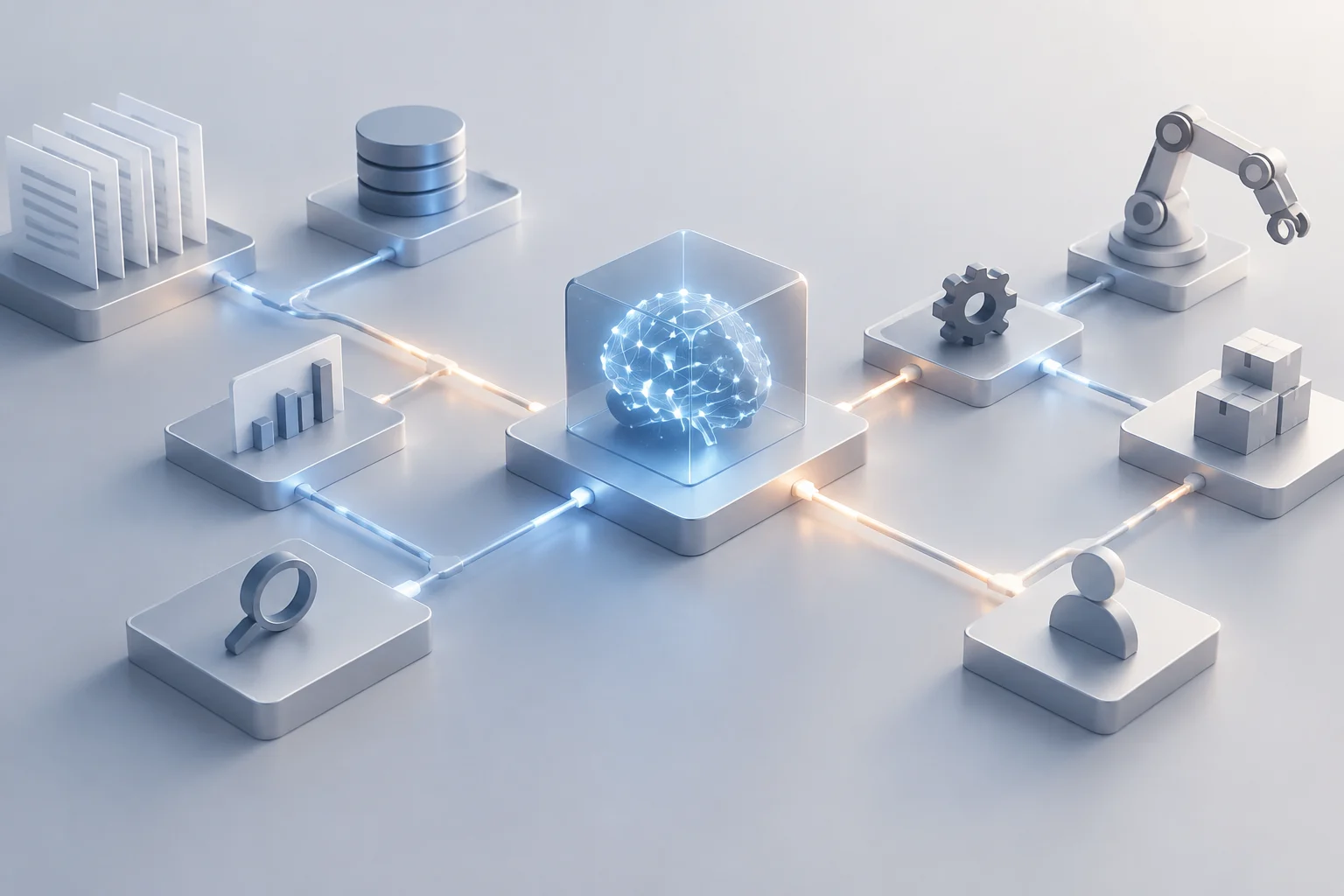
The forecast that half of all companies will use intelligent automation technologies in 2026 is not merely an optimistic projection, but the result of accelerated technological convergence. According to analysts at Information Services Group (ISG), this massive adoption will allow the interconnection of disparate applications in public and private cloud environments, improving efficiency and reducing operational errors. This trend marks the end of isolated automation and the beginning of an integrated ecosystem where artificial intelligence ceases to be a complement and becomes the central engine of operations.
The current context is defined by the need for operational excellence and digital risk management. Gartner has noted that organizations face an uncertain environment that demands responsible innovation. In this scenario, intelligent automation not only accelerates efficiency but also generates tangible commercial value in the short term. For executives, this implies stopping viewing automation as an isolated IT project and treating it as a business strategy that redefines competitiveness.
Technical Definition: Beyond Traditional RPA
Intelligent automation is defined as the layer that combines generative models, integration tools, and mandatory human supervision gates. Unlike traditional Robotic Process Automation (RPA), which executes deterministic rules on interfaces and breaks when an input field changes, AI understands intent and reasons about context. This distinction is crucial: while RPA is reliable but does not 'think', generative AI is flexible but not always 100% precise.
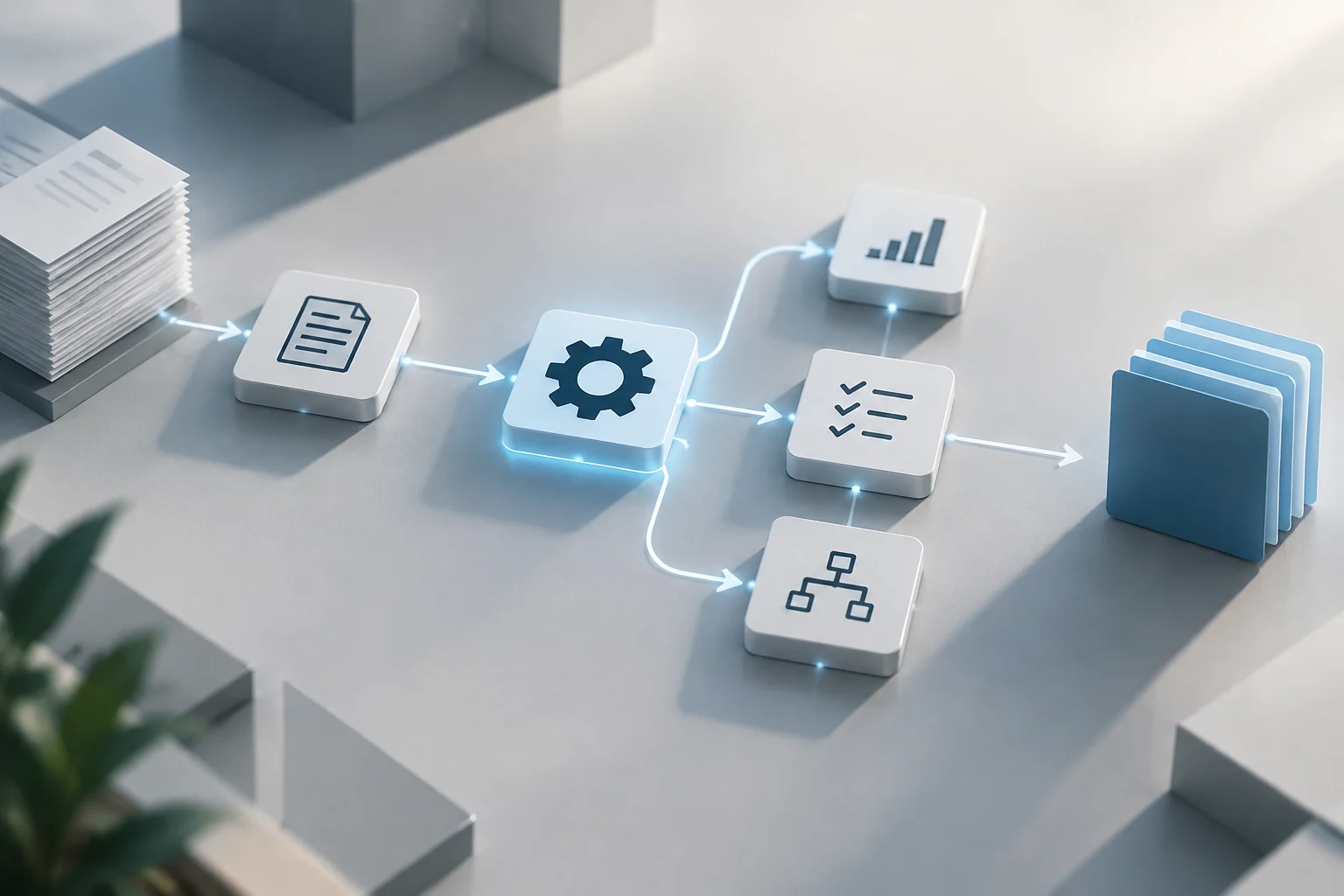
The combination of both technologies allows automating processes that were previously impossible to digitize. For example, in heterogeneous invoice management, RPA can extract structured data, but AI is necessary to interpret concepts in free fields or handle changes in document design. This synergy is often called intelligent automation and represents the operational standard that companies are adopting to scale without proportionally increasing headcount.
AI Agents and Low-Code Platforms: The Engines of Change
The deployment of autonomous AI agents is the most prominent trend for 2026. These systems are not generic chatbots, but specialized agents trained to execute specific tasks such as classifying tickets, extracting contract clauses, or managing complex schedules. The selective adoption of this technology allows companies to recover artificial intelligence projects that did not achieve expected results, using process intelligence to sustain automation.
In parallel, low-code and no-code platforms are democratizing the creation of workflows. According to Gartner's report on technology trends, these AI-native platforms allow creating software using natural language, reducing dependence on traditional development teams. This is especially relevant for SMEs, which can implement custom solutions without large investments in technical infrastructure, accelerating the innovation cycle and adaptation to market needs.
Measurable Benefits and Real Use Cases
The benefits of intelligent automation are tangible and measurable. SMEs that combine AI agents with human supervision are reporting operational cost reductions of up to 30% and the release of dozens of weekly hours of repetitive work. In the financial sector, the automation of flows and decisions already surpasses machine learning as the main use case, with a 31.4% adoption rate among Spanish companies according to the INDESIA Barometer 2026.
A clear success case is email processing with context. AI interprets the content, classifies the intent (inquiry, incident, order), and extracts relevant information, while RPA creates tickets and updates management systems. This division of roles allows for higher precision than any technology alone. Furthermore, the reduction of human errors in repetitive processes improves customer service quality and frees staff to focus on higher value-added activities, such as resolving complex problems.
Implementation Challenges and the Need for Supervision
Despite the benefits, implementation is not exempt from risks. The biggest obstacle is not the technology itself, but knowing where to apply it first and managing data quality. Gartner warns that by 2027, only 30% of organizations will have sufficient data quality to fully leverage advanced AI capabilities. The lack of adequate data and insufficient post-implementation planning are the main causes of acquired AI features being underutilized.
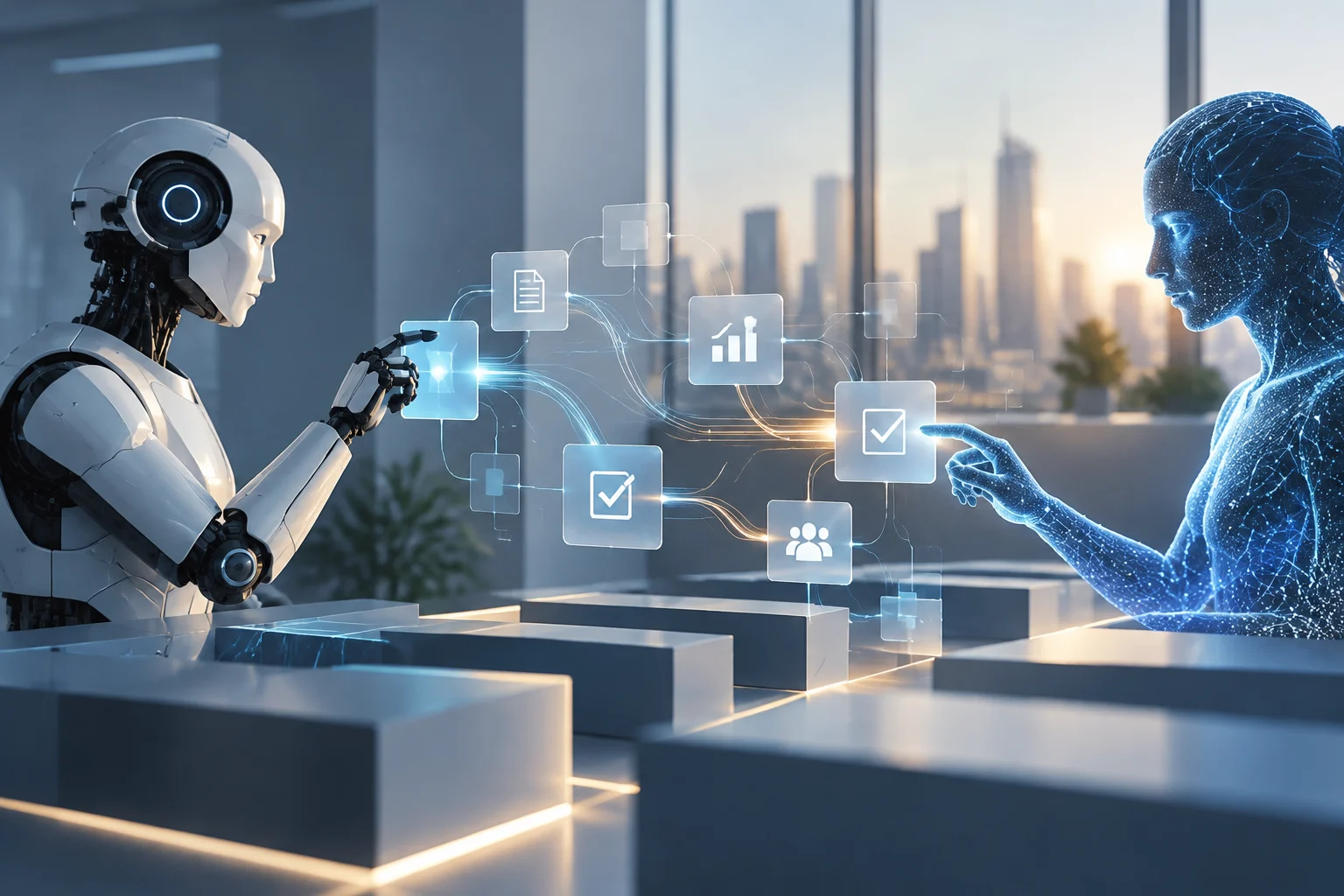
Human supervision is a fundamental pillar to mitigate these risks. Intelligent systems must operate within a defined perimeter, escalating to a person when the decision exceeds their reasoning capacity. This governance is not just a security measure, but a quality guarantee. Companies that integrate human-AI collaboration in a structured way will avoid 'change fatigue' and ensure that automation aligns with the business's strategic objectives.
From Competitive Advantage to Operational Standard
Intelligent automation is ceasing to be an exclusive competitive advantage of large corporations to become a necessary operational standard. The adoption gap between mid-sized companies and micro-enterprises still exists, but the learning curve is accelerating. For SMEs, the practical decision is clear: start with high-volume and low-cognitive-complexity processes, where the return on investment is faster and the risk of error is lower.
The future of automation is not the total replacement of humans, but the symbiotic collaboration between software agents and workers. Organizations that manage to integrate these technologies responsibly, with solid governance and a clear data strategy, will be prepared to lead their sector in the next decade. Automation is no longer an option; it is the foundation on which 21st-century digital efficiency is built.