From theoretical standard to practical implementation
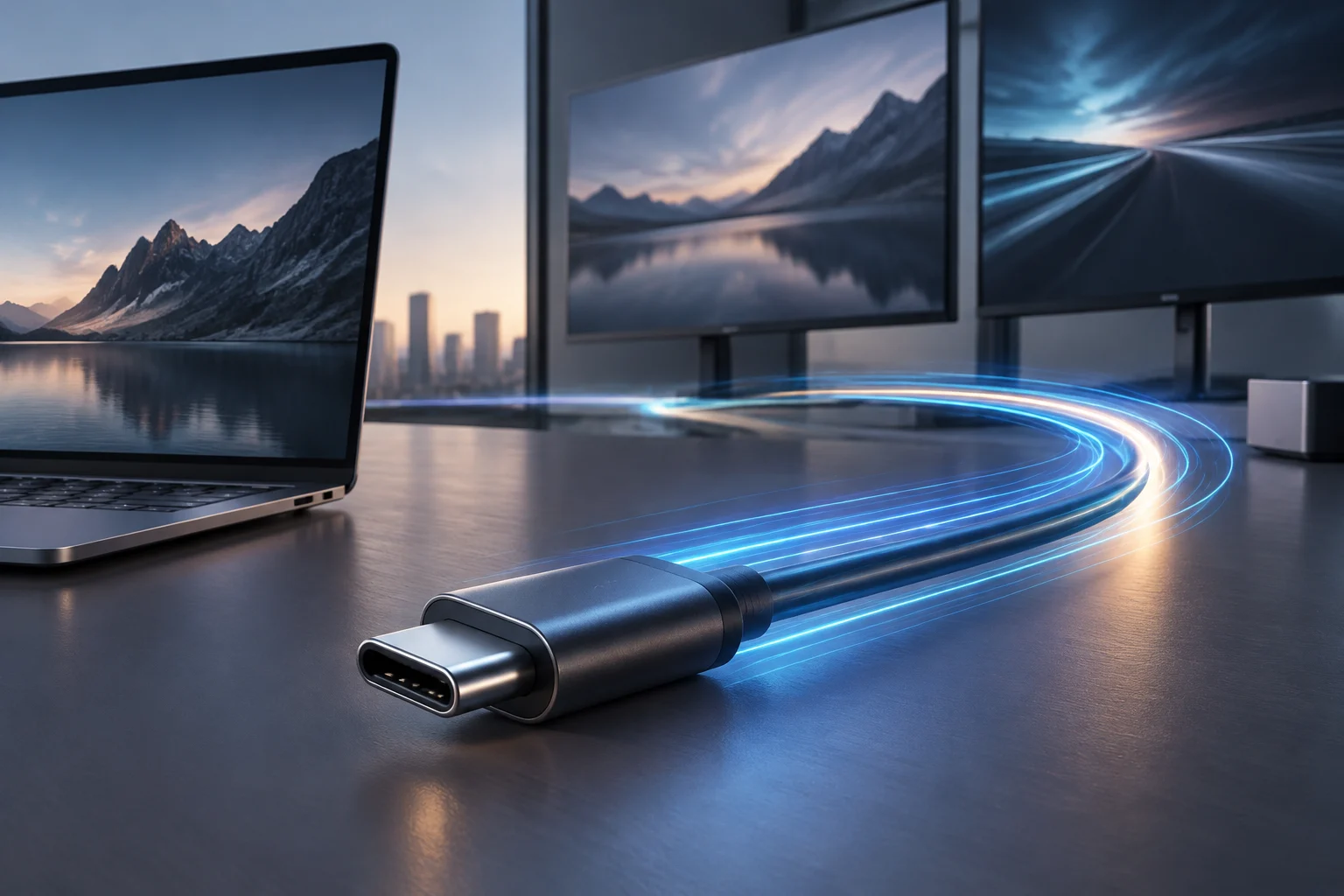
Thunderbolt 5 is not a simple incremental upgrade over Thunderbolt 4; it redefines what a single USB‑C port can do. Intel keeps the physical USB‑C connector but doubles the bidirectional bandwidth to 80 Gbps and introduces Bandwidth Boost that allows reaching 120 Gbps in one‑way mode when high‑volume video traffic is detected. This architecture lets a single cable handle data, high‑resolution video, and up to 240 W of power—something Thunderbolt 4 and USB4 40 Gbps cannot match with the same efficiency.
The transition from 2024 to 2026 marks ecosystem maturity. In 2024 the standard was a technical promise; by 2026 manufacturers of docks, cables, and peripherals have consolidated a commercial offering that lets users move from theory to practice. The key is understanding that the cable and host are equally important: a Thunderbolt 5 port on a laptop will not unlock its 80 Gbps if a Thunderbolt 4 or standard USB‑C cable is used, which limits speed to 40 Gbps or less.
Key technical specifications: bandwidth, video, and power
The core of Thunderbolt 5’s specification lies in data transfer. In standard bidirectional mode the port offers 80 Gbps, double that of Thunderbolt 4 and USB4 40 Gbps. The most significant innovation is Bandwidth Boost, which dynamically reallocates bandwidth to video output when needed, reaching 120 Gbps one‑way. This is crucial for high‑resolution, high‑refresh monitors because it keeps a stable data link while streaming 8K or 16K video.
Regarding video, Thunderbolt 5 supports up to 8K at 60 Hz or 16K at 60 Hz on a single monitor, and up to three 4K displays at 144 Hz simultaneously. Power delivery also leaps forward: the standard supports charging up to 240 W via USB Power Delivery 3.1, enabling high‑performance laptops or compact workstations to be powered through the same port used for data and video. This combination of bandwidth, video, and power in one cable is what sets Thunderbolt 5 apart from generic USB‑C alternatives.
Compatible hardware in 2026: which devices ship with Thunderbolt 5
Thunderbolt 5’s presence in 2026 is led by Apple and Intel. In Apple’s ecosystem, Macs with M4 Pro, M4 Max, M5 Pro, M5 Max, and M3 Ultra chips include Thunderbolt 5 ports as standard. This covers the 14‑inch and 16‑inch MacBook Pro (2024+), the Mac mini Pro (2024+), and Mac Studio (2025+). On the PC side, laptops and desktops with latest Intel CPUs that integrate Thunderbolt 5 in the chipset provide native support, though adoption is more limited than on Macs.
It’s important to distinguish between a Thunderbolt 5 port and a USB4 40 Gbps port. Many 2026 laptops with high‑speed USB‑C only support USB4 40 Gbps, which is compatible with Thunderbolt 4 but not the 80 Gbps speeds of Thunderbolt 5. To fully leverage the standard, the host must have an Intel‑certified Thunderbolt 5 port. Users upgrading to a Thunderbolt 5 dock or SSD should verify their device has the correct port; otherwise peripherals will operate in compatibility mode at 40 Gbps or less.
Peripherals that take advantage of the new standard: docks, SSDs and monitors
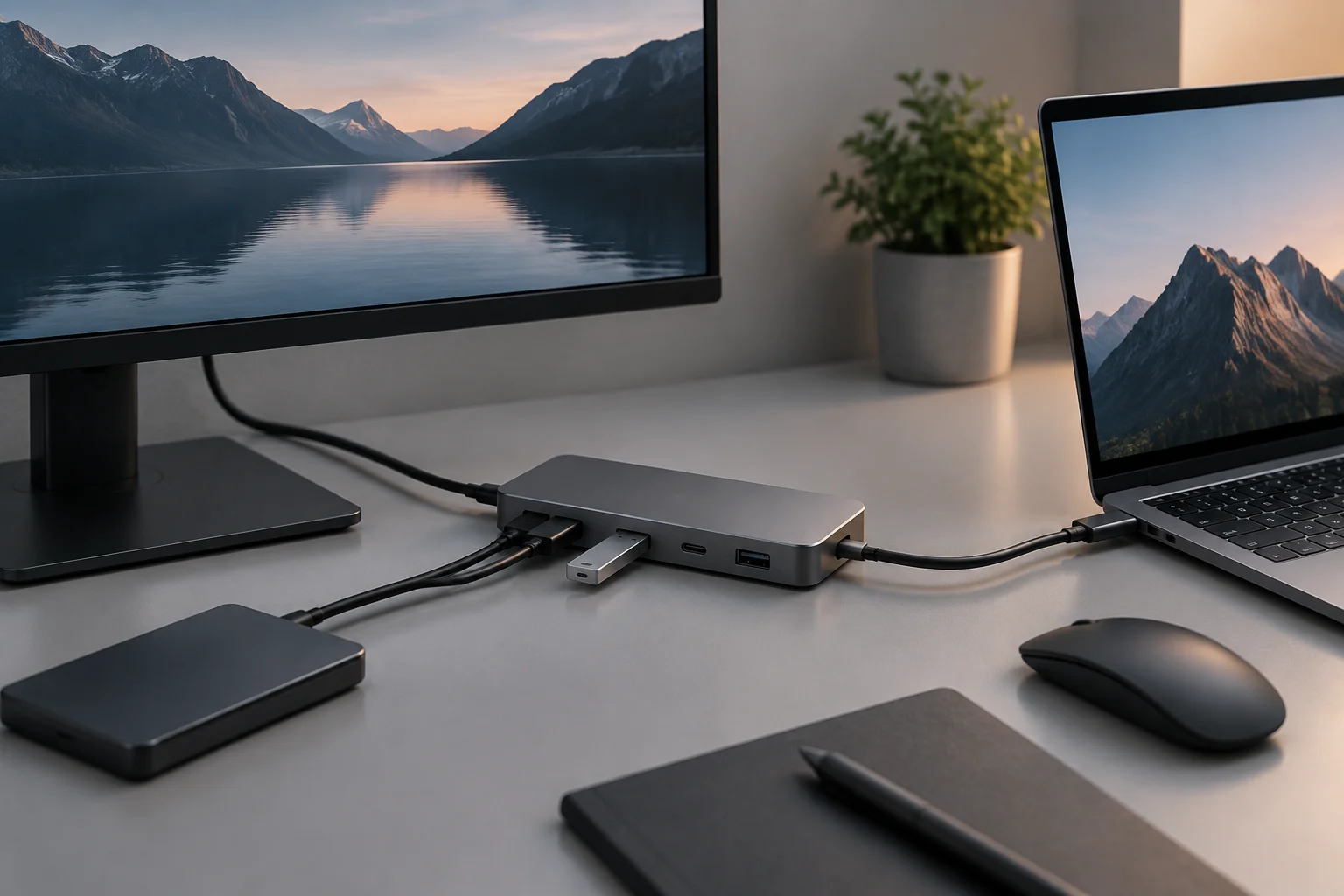
The 2026 Thunderbolt 5 dock market offers a wide range, from entry‑level to professional workstations. Models like CalDigit TS5 Plus provide 20 ports, 10 GbE, support for four displays, and 140 W charging, while the UGREEN Maxidok 17‑in‑1 includes M.2 SSD expansion and 17 ports. These docks exploit the 80 Gbps bandwidth to deliver ultra‑fast data transfer speeds, especially on external NVMe SSDs that can reach near 64 Gbps in PCIe 4.0.
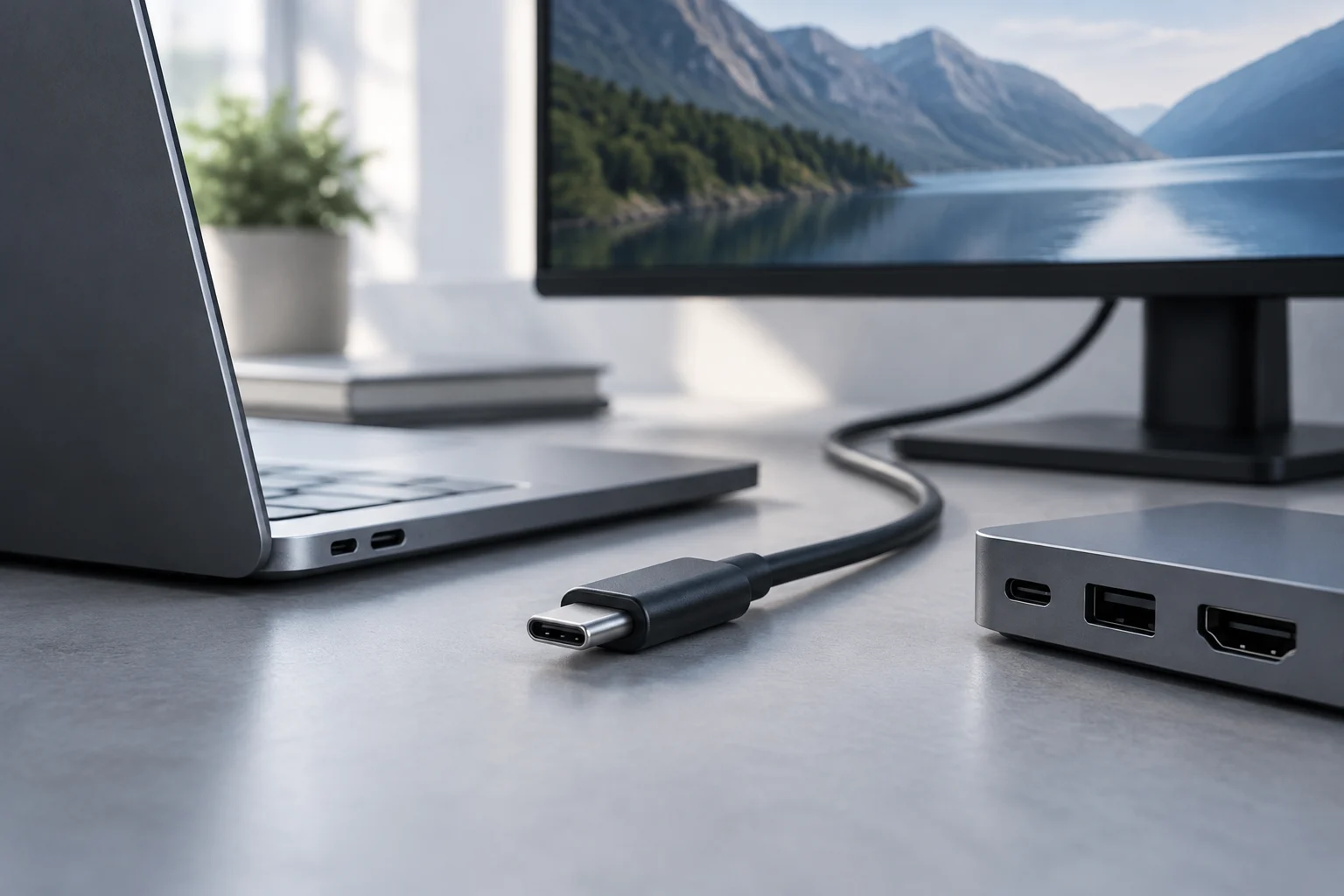
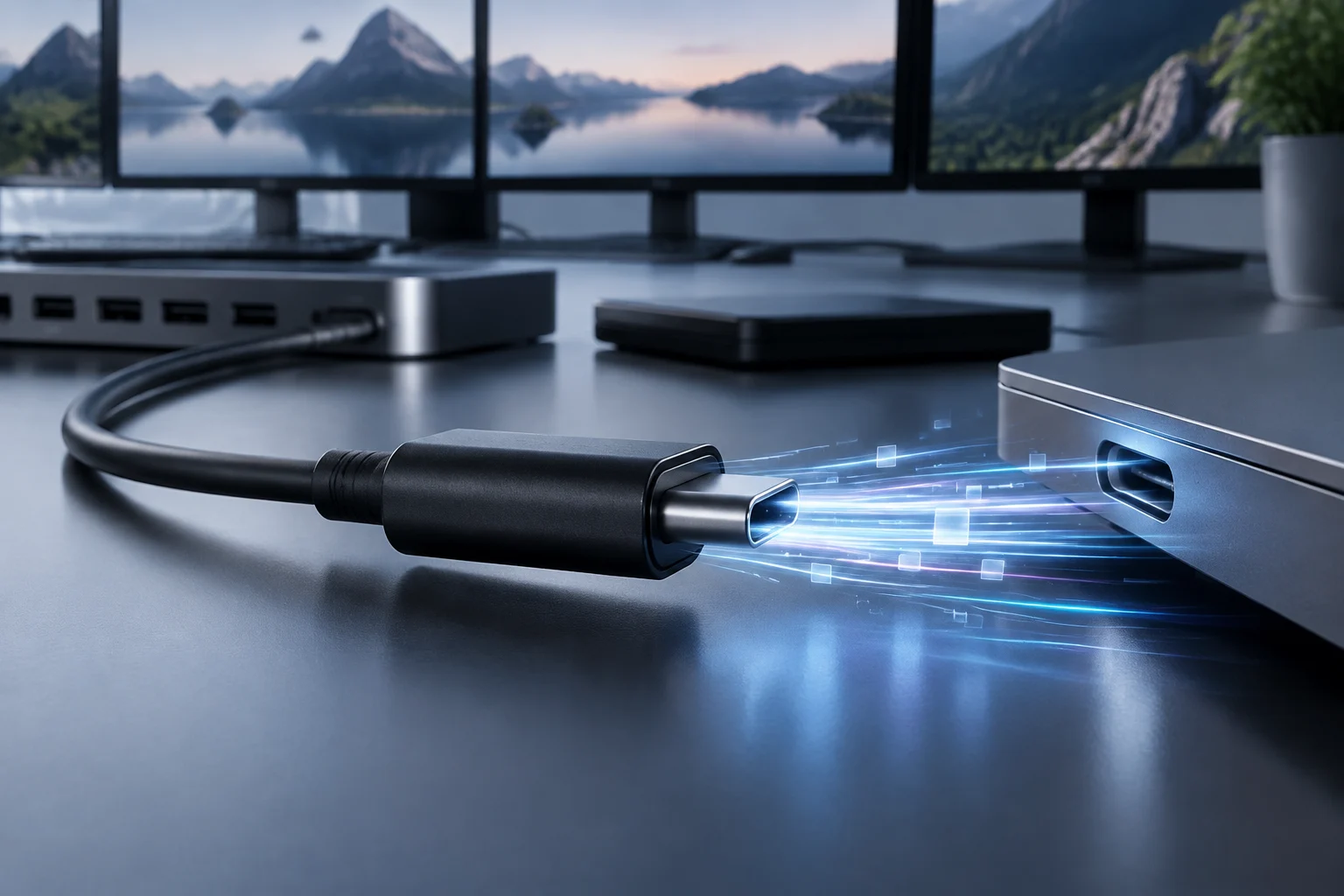
Cables are also critical. An Intel‑certified Thunderbolt 5 cable is required to unlock full 80 Gbps and 120 Gbps speeds. Passive cables up to one meter are common, but longer distances need active cables. Monitors that benefit from Thunderbolt 5 are those with 8K resolution or high refresh rates (480 Hz+), which require the extra bandwidth only this standard can provide. Combining a Thunderbolt 5 dock, an external NVMe SSD, and an 8K monitor creates a workflow impossible with Thunderbolt 4 or USB4 40 Gbps.
Practical limitations and comparison with USB4 40 Gbps and standard USB‑C
While Thunderbolt 5 offers clear advantages, it has practical limits. First is cost: docks, cables, and peripherals are significantly more expensive than their Thunderbolt 4 or USB4 counterparts. A Thunderbolt 5 dock can cost between €300 and €750, whereas a mid‑range Thunderbolt 4 dock hovers around €150–€250. Second is host availability: not all 2026 laptops have Thunderbolt 5 ports, so many users cannot fully exploit the standard without upgrading hardware.
Compared to USB4 40 Gbps, Thunderbolt 5 delivers double the bidirectional bandwidth and a boost mode up to 120 Gbps—critical for high‑resolution video. Compared to standard USB‑C (USB 3.2 Gen 2x2 at 20 Gbps or Gen 2 at 10 Gbps), the difference is even greater. However, for most users who do not work with 8K video, terabyte‑scale files, or multiple high‑refresh monitors, Thunderbolt 4 or USB4 40 Gbps suffice and offer better value. Investing in Thunderbolt 5 should be driven by specific bandwidth needs, not mere availability.
Conclusion: when it makes sense to invest in Thunderbolt 5 today
Thunderbolt 5 is worthwhile for 8K video creators, engineers handling massive files, and professionals needing multiple high‑refresh monitors with high power draw. For these users, the jump from 40 Gbps to 80 Gbps and the boost mode to 120 Gbps represent tangible productivity gains. For the average user, however, Thunderbolt 4 or USB4 40 Gbps remain the rational choice, delivering 90% of capabilities at a lower cost.
The practical recommendation is verify host compatibility before buying Thunderbolt 5 peripherals. If a laptop or desktop lacks an Intel‑certified Thunderbolt 5 port, the peripheral will run in compatibility mode at 40 Gbps or less, diminishing its value. For users already owning a Mac with M4/M5 Pro or Max, or a PC with Intel Thunderbolt 5, upgrading to a Thunderbolt 5 dock or SSD is a logical step that unlocks full hardware potential. In short, Thunderbolt 5 is a mature, powerful standard in 2026, but its adoption should be strategic and based on real bandwidth demands.