What it can offer—and what it cannot guarantee
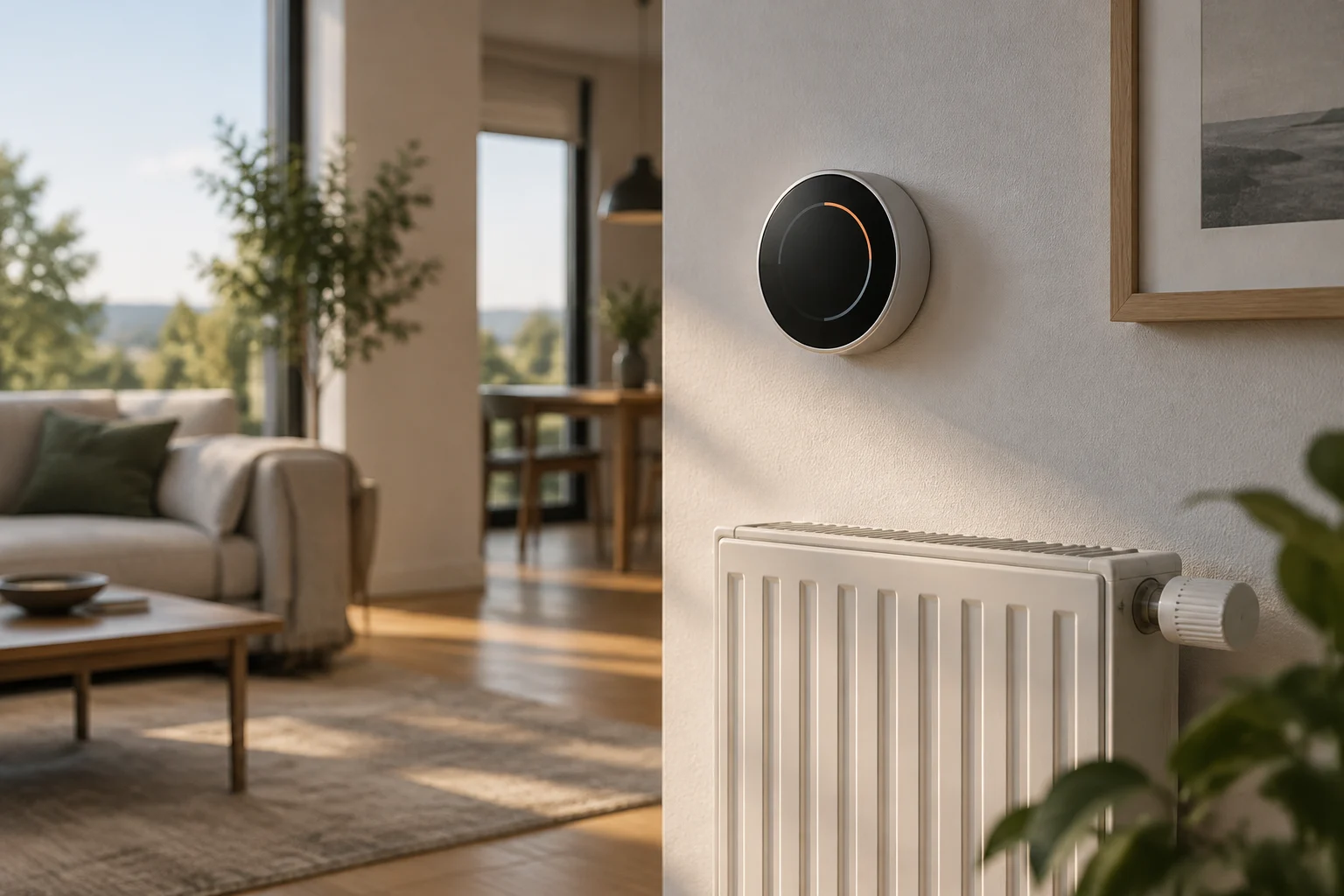
A smart thermostat lets you adjust the target temperature and, depending on the model, schedule operating times or change settings remotely. Its main purpose is to help adapt heating or cooling operation to the household’s schedule and needs. If it prevents the system from running when it is not needed, it may contribute to more efficient use; that is not the same as a guaranteed amount of savings or an automatic improvement in comfort.
The outcome depends on factors the device cannot control by itself: the type and condition of the system, insulation, climate, room layout, schedules and chosen temperatures. Installation and configuration matter too. For that reason, advertised savings figures should not be read as promises that apply to every home. The sensible approach is to compare verifiable features with your own needs, rather than buying on the basis of a single percentage. The IDAE recommendations guide offers general context on household energy savings, but does not attribute a specific result to any thermostat model. IDAE
Start by identifying your system and checking compatibility
Before comparing apps or designs, find out which equipment you want to control. It could be a boiler, a zoned heating system, a heat pump or another type of climate-control system. Note the equipment’s make and model, the type of control currently in use and, if possible, the model of the existing thermostat. A photograph of the connections and the appliance label may help when contacting an installer or manufacturer, but it does not replace technical confirmation when there is any doubt.
The word “compatible” does not always mean the same thing for every system. It might mean that a manufacturer includes a system on a list, that a particular connection is possible, or that an accessory, receiver or specific configuration is required. Use the manufacturer’s compatibility tool to check the exact model of your equipment and the proposed thermostat. For example, tado° publishes its own compatibility and installation page; this is a reference for its product range, not proof that every thermostat works with every boiler. tado°
Do not infer compatibility from the shape of the old thermostat, the apparent number of wires or a generic retailer description. Ask whether the new device directly replaces the current control, whether it needs a receiver and whether it supports the features you already use. If the documentation does not resolve the question, ask the manufacturer or a professional to confirm before buying. A mismatch can turn an apparently simple purchase into an extra cost or an installation that does not meet expectations.
Compare controls that fit your schedule
Scheduling is often the easiest feature to assess: if the model and system allow it, you can set operating periods or different target temperatures at different times. Ask yourself whether your routine is stable or changes frequently. A fixed schedule may be convenient when your days are similar; with changing schedules, ease of adjustment may matter more than the number of menu options. Either way, set only what you intend to maintain: a sophisticated feature that is never configured or is abandoned offers no practical advantage.
Remote control lets you change settings away from home when the device has connectivity and the relevant app. This is not the same as automatic presence detection, and it does not guarantee that the system will respond without internet access. Check which features depend on the app, whether you need to create an account and which controls remain available on the thermostat itself. Also consider whether remote operation is a genuine need or simply an appealing feature in a product listing.
Sensors can measure conditions where they are installed. Some products offer additional sensors or room-by-room control, but the options vary. A sensor in a space that does not represent the needs of the main area may provide a reading that is not useful for your purpose. Before paying for sensors or multi-zone control, check what additional equipment they require, which rooms they control and whether your installation can regulate those rooms independently. A temperature sensor is not, by itself, a zoned heating system.
Installation, power and connectivity
Check what installation includes and who can carry it out. Replacing a thermostat is not always a matter of removing one device and fitting another: there may be wiring, a receiver, power requirements or equipment-specific settings. The model documentation should explain what is required and what is not included in the box. If it is unclear, ask before buying and consider using a qualified installer, especially if there are questions about electrical connections or boiler compatibility.
Check the power supply for the thermostat and accessories—for example, whether they need batteries, a mains connection or an additional module. Do not assume that the existing wiring provides the required power. It is also worth checking wireless coverage at the installation location and the internet connection requirements. Losing Wi-Fi may affect remote access or connected services; find out which local controls and schedules remain available offline. The answer depends on the specific product, so confirm it in its manual.
Before buying, also check the app’s ongoing support and the availability of customer assistance in your market. Ask whether essential features require a subscription, whether the product relies on a cloud service and what alternatives are available when your phone is unavailable. There is no need to assume that every smart thermostat stops working without internet; equally, do not assume the opposite. The useful question is exactly which functions remain operational during a network outage and how settings are restored when the connection returns.

How to read savings claims and energy information
A manufacturer may highlight automation, scheduling or control from a phone, but these describe product capabilities, not the savings every household will achieve. To assess a figure, look for the calculation conditions: the system used, the home, the period, occupant behaviour, the comparison made and whether the result comes from measurements or an estimate. If these details are missing, treat the percentage as a commercial claim that cannot be transferred directly to your bill.
Do not confuse an efficiency measure for the heating system as a whole with the isolated effect of the thermostat. Household use and the heating system affect consumption, and a valid comparison would require comparable conditions before and after. Without that information, it is not possible to responsibly forecast a payback period. IDAE publishes general household energy-saving recommendations, which help put temperature management among other usage decisions, but its page does not demonstrate how much a specific product saves. IDAE
European ecodesign rules apply to energy-related products within their scope and establish relevant requirements for regulated categories. This does not mean that a thermostat label certifies a particular reduction in energy use in a home. Consult the EU’s official information to understand the framework and check which product category each requirement covers. European Union The practical conclusion is to keep three things separate: declared features, applicable regulatory requirements and usage outcomes that depend on individual circumstances.
Checklist before deciding
A brief comparison can prevent a secondary feature from distracting from what matters. Before paying, confirm the following points in the manufacturer’s documentation and, where appropriate, with the installer:
- System: make and model of the equipment you want to control, and type of control currently in use.
- Compatibility: confirmation for that exact combination; required accessories, receiver and supported features.
- Use: scheduling, remote control and sensors you actually need, not just those shown in advertising.
- Installation: power supply, wiring, difficulty, cost and who will carry out the work.
- Connectivity: Wi-Fi, account or app requirements, and features available without internet.
- Total cost: device price plus any necessary accessories or installation; do not compare unit prices alone.
- Advertised savings: the conditions and method behind any figure, without treating it as a household guarantee.
If the home has predictable schedules and a compatible conventional control, simple scheduling may meet the need without paying for features that will go unused. If you need to adjust the temperature while away, remote access may be a priority, provided connectivity and local operation are clear. For several rooms, first check that the installation can regulate them separately; adding sensors does not create that capability by itself. There is no universally best setup: it depends on how the home is used and the system installed. The final criteria should be confirmed compatibility, an affordable total cost and useful features under the home’s normal conditions.