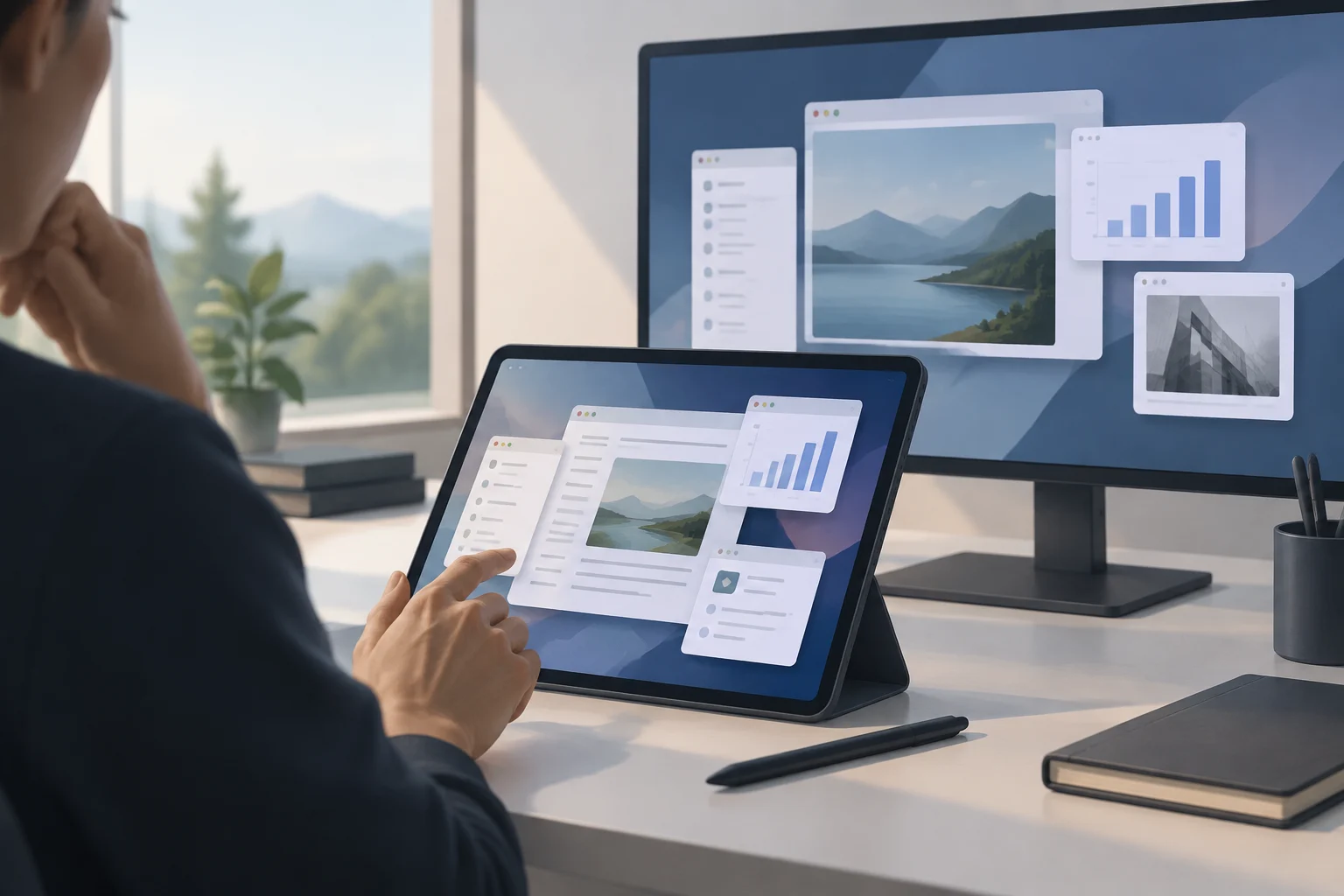
The multitasking change has not been substantiated
The useful question is not only whether you can install iPadOS 27, but whether the version changes how you work with several windows. Apple publishes a support page about iPadOS 27 updates, but the material retrieved for this research does not let us verify a specific overhaul of the iPad windowing system. For that reason, we do not treat as confirmed any changes that the sources reviewed do not substantiate. For anyone who organizes their work around several apps, that distinction matters: general compatibility with an update does not, by itself, tell you how windows will behave.
Apple’s support page is titled “About iPadOS 27 Updates”, but the excerpt provided contains no substantive details about multitasking changes. The responsible conclusion is limited: the available material does not confirm specific multitasking additions for this version. That does not prove that the experience is identical in every detail; it means we should not present as confirmed something that could not be verified. (Apple Support)
What the documentation lets you check
Apple publishes a guide to turning Stage Manager on or off on iPad. The page title confirms the guide’s purpose, but the available excerpt does not let us verify its setup steps, the exact location of the setting, or the iPadOS version it applies to. So it is best not to assume that its instructions describe the iPadOS 27 configuration without changes. Before following them, check your device’s version and model and consult the full page. (Apple Support)
The difference between system compatibility and feature availability matters when deciding how to work, but the material reviewed does not include details of which models support each multitasking mode. Apple publishes a page titled “iPad models compatible with iPadOS 27”. That reference can help you check system compatibility; on its own, it cannot tell you which window options each model offers. (Apple Support)
App compatibility matters too
System features do not guarantee that every app will behave the same way when opened alongside another app. Apple provides developer documentation titled “Supporting multiple windows on iPad”. It covers multiple-window support from a development perspective, but does not determine how a particular app behaves. Before reorganizing your workflow, check the apps you use every day: whether they allow multiple instances, retain their state when you switch windows, and keep their important tools accessible in the layout you choose. (Apple Developer Documentation)
It is best not to turn that dependency into a universal claim about every app. Developer documentation on multiple windows does not determine how a specific app works, nor does it guarantee that a system update will resolve limitations that belong to the app itself. iPad compatibility and each app’s functional compatibility are separate things to check. For a critical task, verify the name and version of the app you actually use. If you rely on more than one app, check each separately: support for windows in one app does not let you infer support in another.
External display: check the model, not just the connector
Anyone who works with a monitor should consider several questions separately: whether the iPad supports the multitasking features they need, whether it can be used with an external display in the desired mode, and whether the chosen adapter or cable will connect it. The Stage Manager guide included in the research confirms that Apple provides instructions for turning the feature on or off, but the excerpt reviewed does not verify its external-display requirements or model compatibility lists. Do not assume that a feature available on a device guarantees all the others.
If the monitor is essential to your work, check the exact model in Apple’s documentation for the installed version and see which options appear on the device. Check the monitor, cable and work apps as well. A physical connection alone does not prove that the window features you need are available, and the sources reviewed do not support a promise of identical behavior across models. This is a checklist, not a claim that a particular iPad, monitor and cable combination has been tested. (Apple Support)
A sensible check before installing
Before updating, note your iPad’s exact model and check whether it appears among the devices compatible with iPadOS 27. Apple publishes a page identified as a list of models compatible with that version. Next, identify the multitasking mode you use and what you need to keep: two apps visible, several windows from the same app, Stage Manager, or working with a monitor. The system-compatibility page alone is not enough to confirm each of those capabilities. (Apple Support)
Read the official release notes and update guidance before installing. Make a backup and set aside time to check your priority apps afterward. The support page included in the research is titled “About iPadOS 27 Updates”, although the retrieved content does not let us verify specific recommendations about performance, battery life, or differences by region and model. Reviewing your usual apps and accessories after updating lets you assess the change in relation to your workflow, without treating capabilities absent from the available material as confirmed. (Apple Support)
What can be concluded, and what remains open
The sources reviewed confirm that Apple maintains a page about iPadOS 27 updates, a guide to turning Stage Manager on or off, and a page titled “iPad models compatible with iPadOS 27”. Apple also provides developer documentation about support for multiple windows on iPad. The material retrieved does not confirm specific multitasking changes in iPadOS 27, the behavior of every app, or external-display compatibility requirements by model. Each reference has a different scope: a page about system compatibility should not automatically be used to infer window features. (Apple Support; Stage Manager guide; developer documentation)
The recommendation is simple: if you need to update for security or other features, make your decision using the compatibility information for your model and keep a backup. If your main reason is an alleged improvement to windowing, wait until Apple documents it explicitly or it has been verified on the version and device you care about. This is not a prediction about future features, but a limit of the evidence examined. Not confusing lack of confirmation with proof of absence keeps this guide useful without attributing changes to the system that the sources do not substantiate.