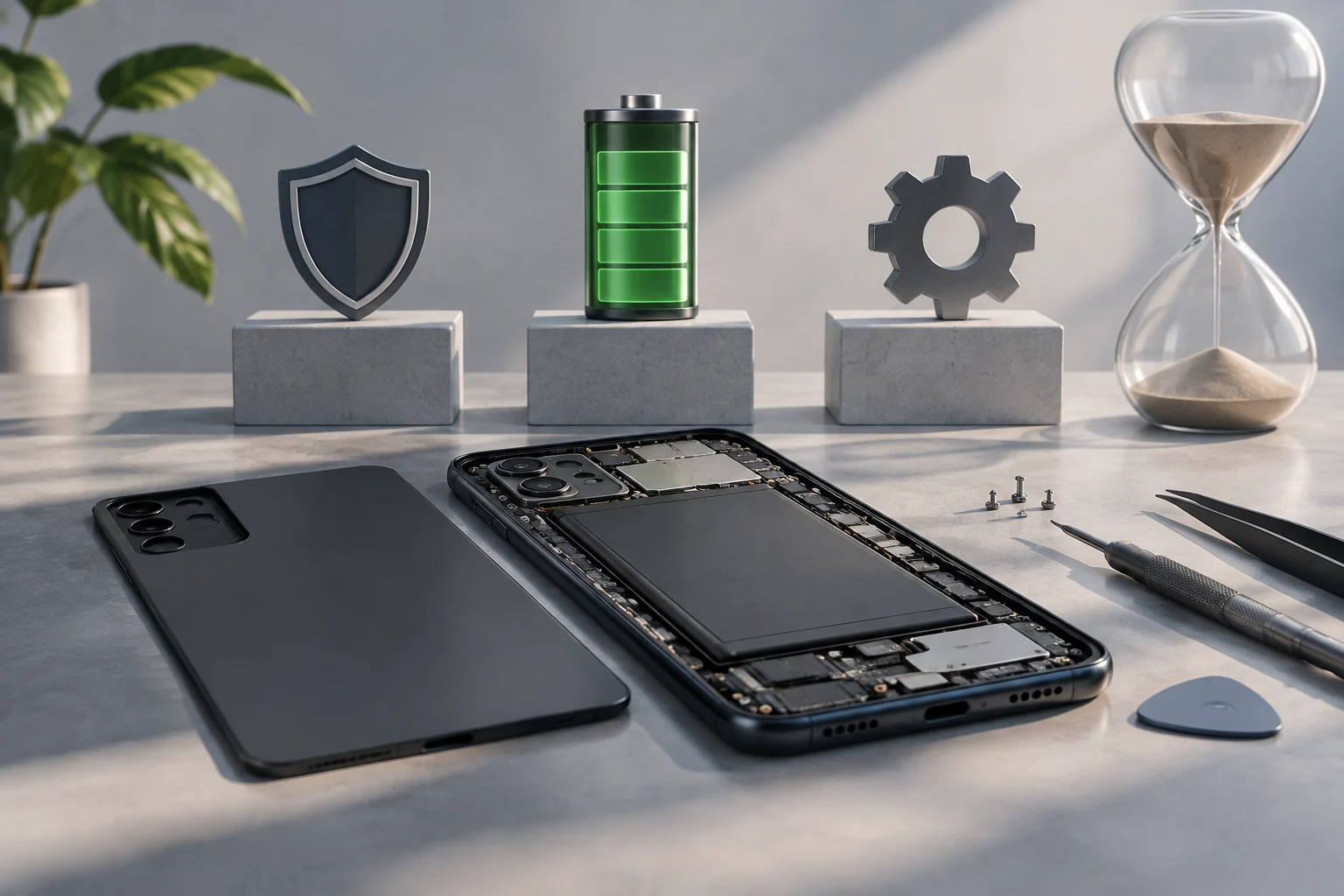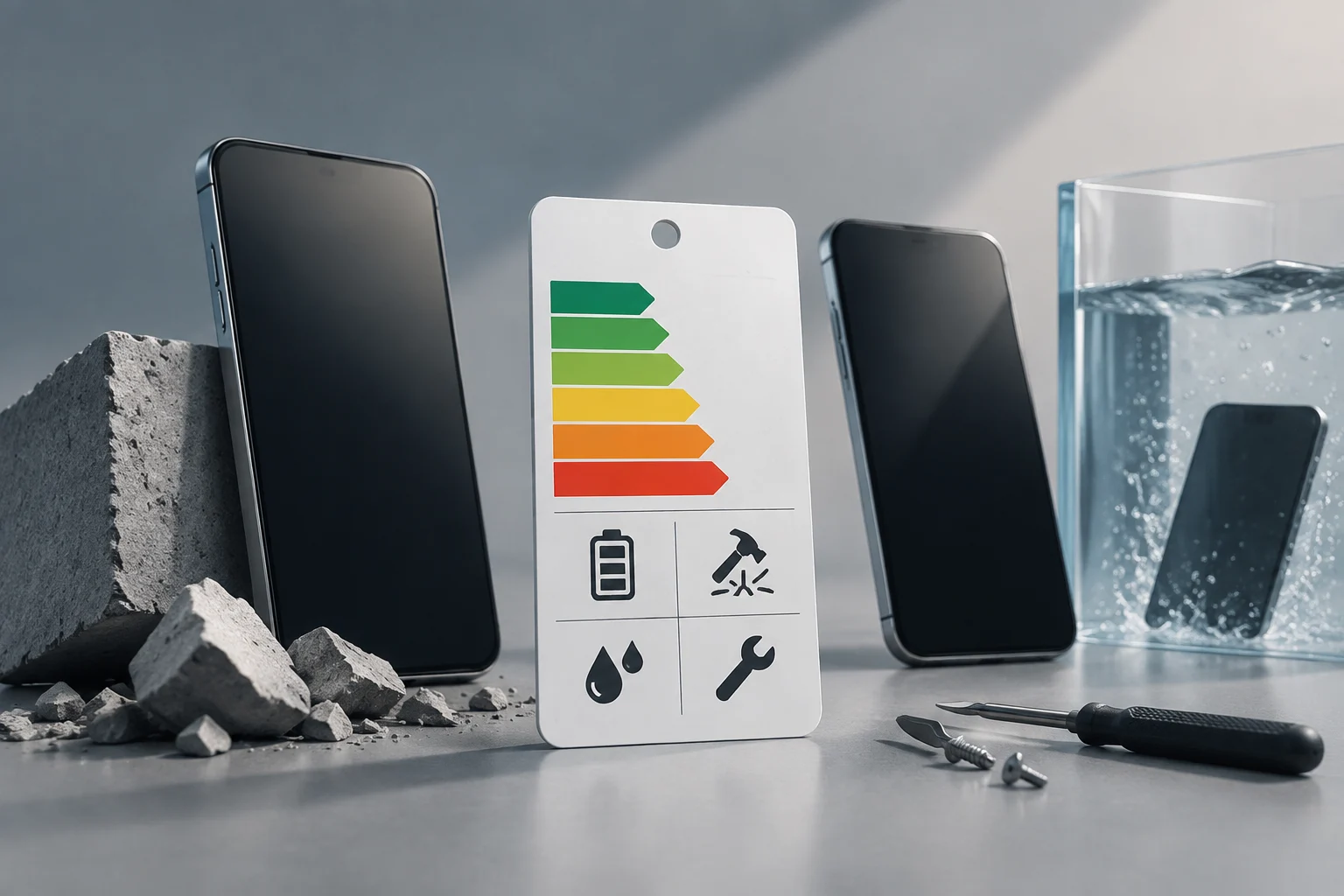
Seven years does not mean the same thing for every brand
Support duration has become a useful factor when choosing a phone to keep for several years, but a number on its own is not enough. It may refer to operating-system updates, security patches, or a combination of the two. It also matters which models the promise covers and the date from which the period is counted. Before comparing brands, clarify three points: what gets updated, which devices are included, and how the time is counted. Without those distinctions, two announcements showing the same number may describe different commitments.
It is also useful to separate the announced duration from the way updates are delivered. A period says how long a manufacturer expects to provide certain updates; it does not necessarily mean that every update arrives at the same time or that every new feature reaches every device in a product family. To interpret a policy, read both the figure and the description that goes with it. The question is not only how many years a brand states, but also what kind of update applies during that period and which model the commitment covers.
The scope also differs between a system update, a security fix and a new feature. Google describes a seven-year period for Pixel 8 and later that includes Android and security updates and may include features through Pixel Drops. Samsung documents seven generations of operating-system updates and seven years of security updates for the Galaxy S25 series. In Apple’s case, the sources consulted do not present a general seven-year commitment for iPhone; the company publishes, among other things, compatibility lists and security-release records. Turning all of these details into one directly comparable figure would therefore oversimplify the picture.
Google Pixel: the period is counted from US availability
Google says Pixel 8 phones and later receive updates for seven years from the date each device first became available in the US Google Store. The support page specifies that this period includes operating-system and security updates; it also says new or improved features may arrive through Pixel Drops. This is a policy defined for a group of devices, with an explicit starting point: the clock does not start on the day an individual owner buys or activates the phone.
That starting point makes comparisons more precise, but it also changes how to think about a phone bought at a discount several years after launch. If the period began with the phone’s first availability in Google’s US store, a later buyer does not receive seven new years from the date of purchase. To find the time remaining, identify the model’s availability date and compare it with the announced period. The commitment therefore describes a support window for the device, not an individual duration that resets for each owner.
Google also notes that update rollouts can depend on the device and carrier, and that releases may be gradual. The promised duration does not mean every phone receives every update on the same day. If you are checking a particular handset, the fact that an update has appeared on another phone is not enough to conclude that yours should already have it: the model and carrier may affect the rollout. Keep the total support period separate from the delivery schedule for a particular update.
Samsung Galaxy: distinguish system generations from security years
For the Galaxy S25 series, Samsung announces seven generations of operating-system updates and seven years of security updates from the global launch date. This matches the duration figure for Pixel 8 and later, but the terms are not interchangeable without qualification. A number of system generations describes how many major updates are promised; a number of security years expresses a period of time. Keep both units visible when comparing the policies instead of reducing them to “seven updates.”
The difference between generations and years matters when assessing what a device will receive and when. The generations count refers to the operating-system updates included in the commitment; the years indicate how long security updates are to be provided. Although both figures are seven in the S25 announcement, they are not two identical ways of measuring the same thing. Preserving that distinction avoids attributing a broader scope to the policy than its wording establishes.
Samsung’s US support page explains how to find and install updates, but it does not replace the support documentation for each model: the company’s instructions warn that features and options can vary by model, carrier and connectivity. For a particular purchase, verify that the exact model is covered by the cited policy and check its launch date. Do not automatically extend the S25 commitment to the whole Galaxy family, earlier generations or variants sold in other markets. The practical rule is to tie each figure to the device named by the source. That prevents a product-family name from turning, without evidence, into a promise for every member.
Apple: compatibility history is not a universal promise
Apple presents a different picture. Its compatibility page shows which iPhones can install a particular version of iOS; its security-release record lists published updates and the devices that receive them. This is verifiable and useful information for assessing models already on the market, but it does not by itself amount to a general commitment that every iPhone will receive seven years of every type of update. The absence of a uniform figure does not prove that a phone will stop receiving support before or after a particular period.
These tools answer specific questions about the present: whether a model appears among the devices compatible with an iOS version, or whether it appears in the list of devices that received a security release. A compatibility list describes a particular version, while a security record reports updates that have been published; neither element, on its own, sets a universal future period for the entire range. When comparing Apple with a policy that announces a duration for named models, it is important to recognize that the available evidence is not the same kind.
In a document about product longevity, Apple describes major-update compatibility that has historically reached up to six years from original launch in some examples, and notes that it may publish critical security updates after a device is no longer compatible with the latest major version. That document provides context and historical examples, not an identical guarantee for every future iPhone. The most rigorous comparison is therefore asymmetric: for certain Pixel and Galaxy models there are published duration commitments; for Apple, the sources consulted make it possible to verify compatibility and security releases, but do not establish an equivalent universal period.
What the period can tell you about long-term value
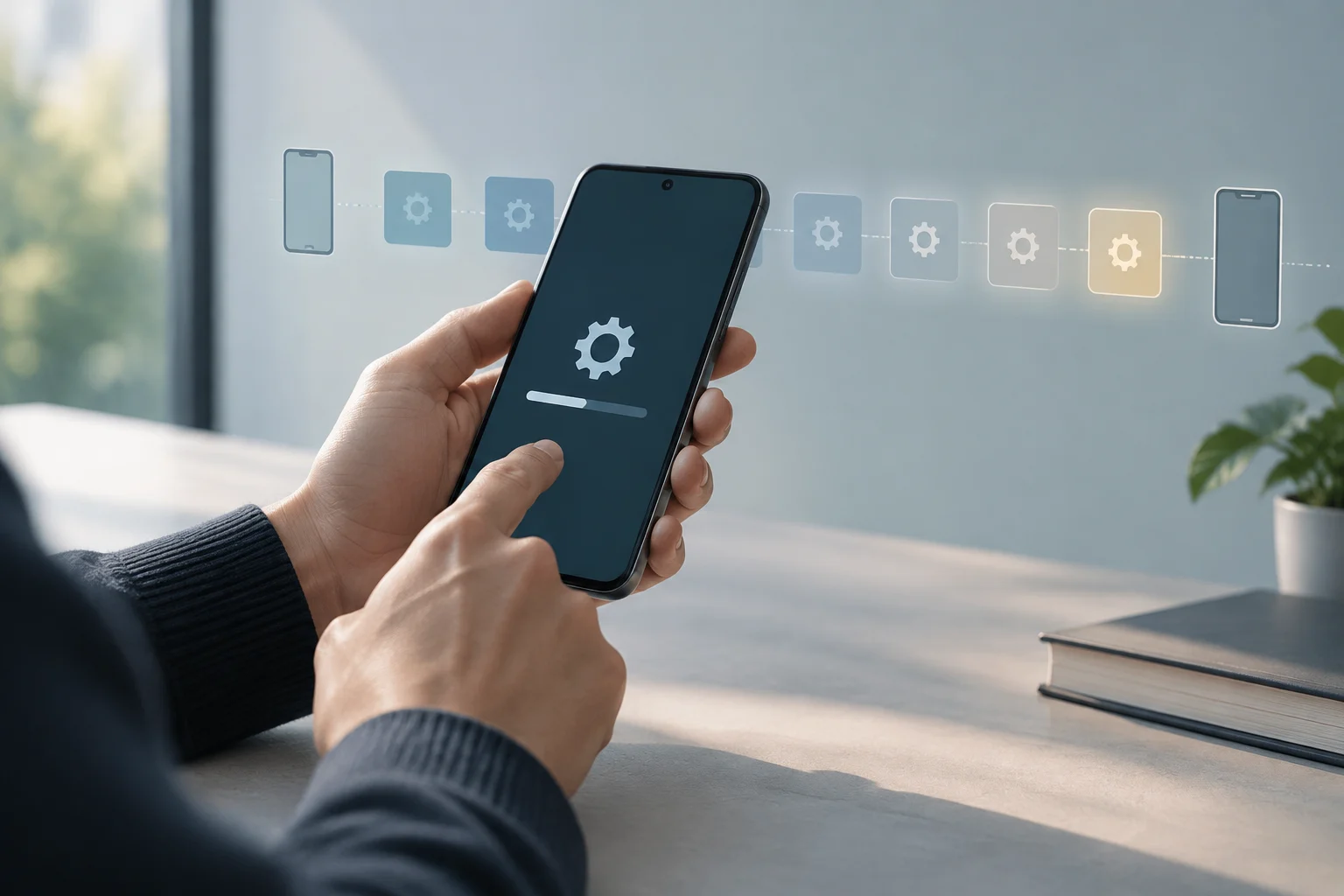
A clearly stated support period helps estimate how long a manufacturer expects to provide certain updates. It may be especially relevant to someone who prioritizes security fixes or wants to avoid replacing a phone solely because software support has ended. It also makes explicit commitments easier to compare when considering keeping a device for several years. However, it does not by itself prove that a phone will perform equally well throughout that time, that its battery will retain its capacity, that repair parts will be available, or that every new feature will work on the device. Software support and physical lifespan are different dimensions.
This distinction matters because “receiving updates” does not fully describe the user experience. A policy informs you about one aspect of the device and its updates, but it cannot determine by itself what physical condition the phone will be in later. You can use the period as one part of your assessment without treating it as a complete prediction of the device’s condition. In other words, the commitment helps establish the documented support expectation; it does not turn that expectation into a guarantee about every characteristic of the product.
Nor can resale value or total cost of ownership be inferred automatically. Purchase price, device condition, repairs, battery, app compatibility and the owner’s needs also matter. The US Federal Trade Commission advises consumers to check directly how long a manufacturer will update a device and what happens when updates end. Its guidance concerns smart products in general; it does not rank phones or turn a support policy into an absolute security guarantee. The reasonable conclusion is limited: a clear policy improves the information available for a decision, but it cannot settle every question about longevity on its own.
A documentation checklist before buying or continuing to use a phone
First, note the full model name and regional variant, not just the brand or product family. Then look for an official page that explicitly connects that model to the support period. Check whether the figure includes operating-system, security and feature updates, or whether each category has a different duration. If the source refers to system generations, do not silently convert them into years; if it refers to years, identify the starting date it uses. For Pixel 8 and later, Google specifies first availability in the US Google Store; for the Galaxy S25, Samsung specifies the global launch.
Next, confirm that the page applies to the model you are considering, rather than a different device with a similar name or an entire product family. Read the policy wording with its limits: the duration, the update categories and the starting point. This simple check prevents you from comparing, for example, a promise stated in years with a number of generations as though they were the same unit. It also helps avoid attributing a broader period to a brand than the source expressly names.
Finally, separate the future commitment from the device’s current status. Check its security patch level and whether an update is available in the relevant region and with the relevant carrier. For iPhone, consult the compatibility list and security-release record without inferring a guaranteed end date from a single update. Save the official URL and the date you checked it: policies, model lists and support pages can change. This check cannot predict how long the phone will physically last, but it can help you compare what each manufacturer has documented and prevent a striking headline figure from taking the place of the details.