
A package of announcements, not a single launch
On September 23, 2026, YouTube announced changes for viewers, creators, and live streams at its Made on YouTube event. The announcements range from organizing Shorts into seasons and episodes to assisted editing tools and new ways to go live with other channels. These features do not all share the same launch date or availability: some are beginning to roll out, others are being tested, and several are planned for 2027. (YouTube Blog)
The practical distinction matters: “announced” does not mean a feature is already active for every account, region, or device. YouTube describes rollout dates and stages in broad terms, but does not publish a complete schedule, eligibility requirements, or exhaustive list of markets for every tool. This guide therefore separates what the company says is starting now from what it has announced for later, without treating its aims as proven results.
For viewers: serialized Shorts and more activity on TV
The new feature with the clearest start date is Shorts series: YouTube says rollout to creators begins on September 23, across the web, mobile devices, and TVs. Creators can arrange Shorts into seasons and episodes, and the platform mentions custom thumbnails and sequential playback to help viewers follow a story. Availability is beginning to roll out; that does not guarantee that every account can already see the option. (YouTube Blog)
On TV, YouTube also says viewers can already post comments using voice input. By contrast, community posts on TVs are expected over the coming months; on web and mobile, the company says it will recommend posts from the Shorts feed. The potential benefit is bringing conversation to the big screen, although the announcement does not specify which TV models or app versions will receive each change first. (YouTube Blog)
The platform supports these changes with figures about microdrama viewing, but those are figures shared by YouTube, not an independent evaluation of the new feature. That context does not prove that arranging videos into episodes will increase any particular channel’s audience. For viewers, the practical test will be whether they can find an organized series and continue watching it sequentially; creators will need to check when the option appears on their channel.
Assisted editing and YouTube Studio tools
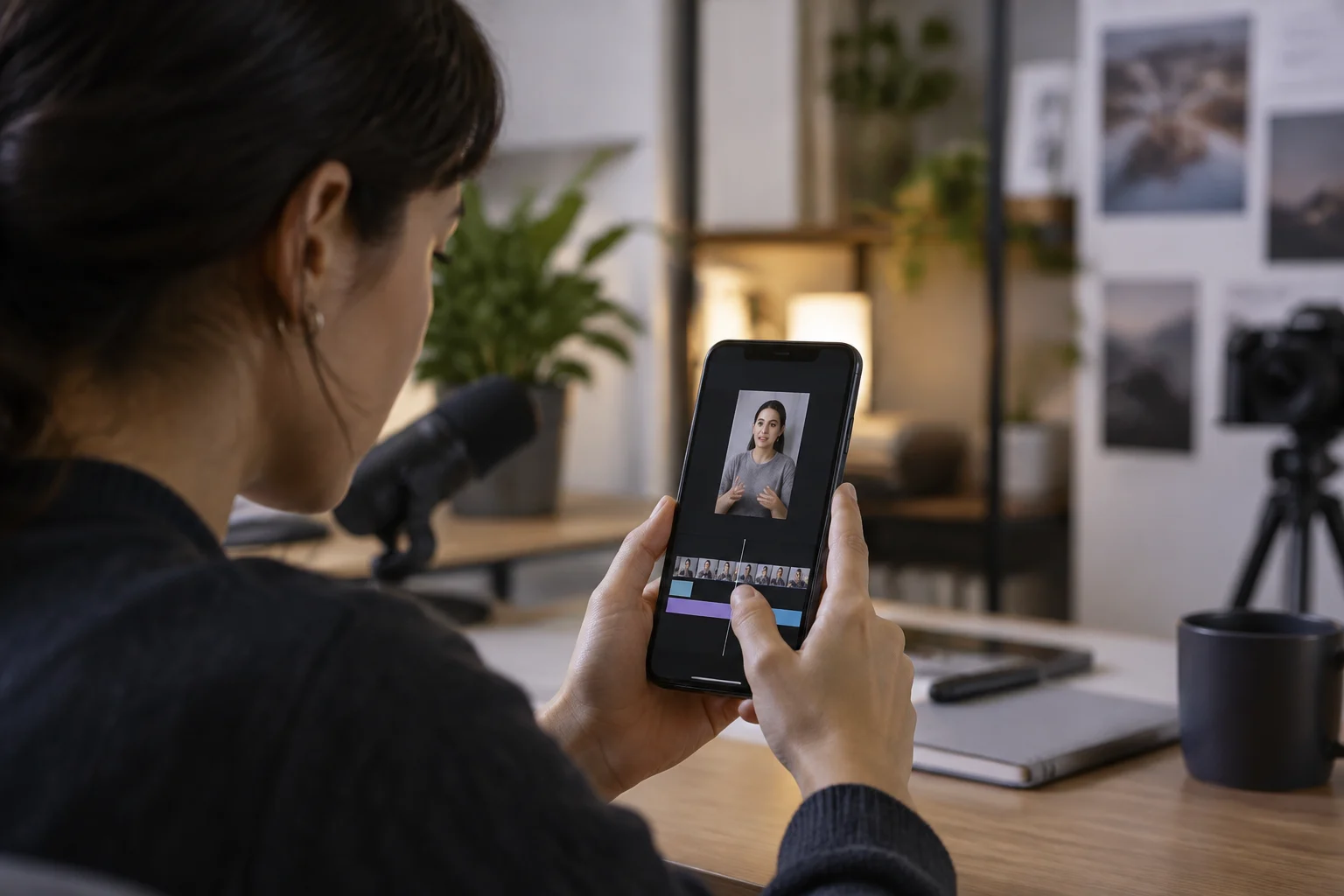
YouTube announced a conversational editing tool for Shorts and the YouTube Create app. According to the company, it will let users request a first draft and suggest actions such as trimming pauses, reordering clips, or syncing music; users will also be able to make manual adjustments. The announcement provides no universal availability date and does not specify every language, device, or access requirement. It is best understood as production assistance, not a guaranteed replacement for editorial judgment. (YouTube Blog)
In Studio, YouTube announced personalized feedback on drafts, channel-matched thumbnail generation, and tests of up to three video cuts. It also described dynamic thumbnails that can be shown to different audience segments. These tools are intended to inform decisions and compare variations; they do not, by themselves, prove that a thumbnail or edit will improve performance. The company says its A/B testing for titles and thumbnails has accumulated more than 40 million experiments since launching in 2024: a company-reported figure, not independent evidence of effectiveness. (YouTube Blog)
AI-assisted comment moderation is being tested as an optional feature and, according to YouTube, can adapt to a channel’s style. Image detection will also become accessible from the mobile app, and the company plans to combine voice and image signals to identify matches more accurately. This detection should not be confused with a guarantee that all synthetic content will be removed or prevented from being posted. The announcement describes detecting matches and enabling action, but gives no accuracy rates or operational limits. (YouTube Blog)
Live streams: reactions, matching, and future dubbing
Watch With will expand from certain live streams to eligible long-form videos. YouTube says the rollout begins later in 2026. According to its description, the creator reacting to a video keeps the ad revenue and fan support from their live stream; the original video’s creator receives attribution, a view credit in Studio, and control to exclude their videos. These are conditions announced by the company, not independent verification of how they will apply in every case. (YouTube Blog)
For collaborative streams, YouTube plans a system for early 2027 that will let creators find others who are already live or join an automatic matching queue. It also announced Live showdowns, challenges between hosts in which chat, gifts, and Super Chats contribute to an on-screen score. The platform places these features in 2027, so users should not expect to find them active on announcement day. (YouTube Blog)
Real-time automatic dubbing is also expected to begin as a pilot in early 2027. The proposal is to translate a broadcaster’s voice while they stream so viewers can listen in another language. The announcement does not specify which languages will be included, how much latency there will be, or how errors involving translation, proper names, or overlapping conversations will be handled. Those details matter when assessing usefulness, especially in live streams where a mistranslation can change the meaning of what is said. (YouTube Blog)
Recommendations, shopping, and community tools
Among the content-discovery updates, YouTube plans to let users request personalized feeds using conversational instructions—for example, recommendations for a commute or help finding new creators. The company also announced that it will expand “Ask YouTube” as a product guide. Both features are described as future updates or expansions; no general launch date, criteria for building recommendations, or explanation of how sponsored results, if any, would appear has been provided. (YouTube Blog)
For creators, YouTube says it will expand its Shopping affiliate program to 35 countries before the end of 2026 and add partners, including Amazon in international regions. It also announced that product tags will be able to show localized offers based on a viewer’s location. These are commercial plans whose scope may change as rollout progresses: the announcement does not list every country, partner, or participation requirement. (YouTube Blog)
YouTube also mentions members-only spaces and AI-assisted comment moderation as part of its community initiatives. It helps to distinguish monetization tools, discovery features, and safety controls: they address different problems and may have different requirements. The published information is not enough to conclude that all of them will be available at the same time or that recommendations will benefit every channel equally.
What can be taken as given, and what remains to be checked
As of this article, the official description classifies Shorts series as beginning rollout on September 23, 2026; voice comments on TV as available; community posts on TVs as expected in the coming months; and several live-stream tools as having explicit dates in 2026 or 2027. For other features, such as conversational editing and personalized feeds, the post does not provide a complete schedule. “Beginning to roll out” also does not mean simultaneous availability for everyone. (YouTube Blog)
The coverage consulted is based mainly on YouTube posts: the direct source for what the platform announces, but also an interested party when describing benefits. The sources consulted provide no independent evidence validating audience growth, AI accuracy, or commercial results. That limitation is reflected in the wording: claims are attributed to YouTube, and available, rolling-out, testing, and planned features are distinguished. For creators and viewers, the concrete sign will be the option appearing in their account, together with published terms and scope—not merely its inclusion in a presentation.