A product page, not a dated announcement
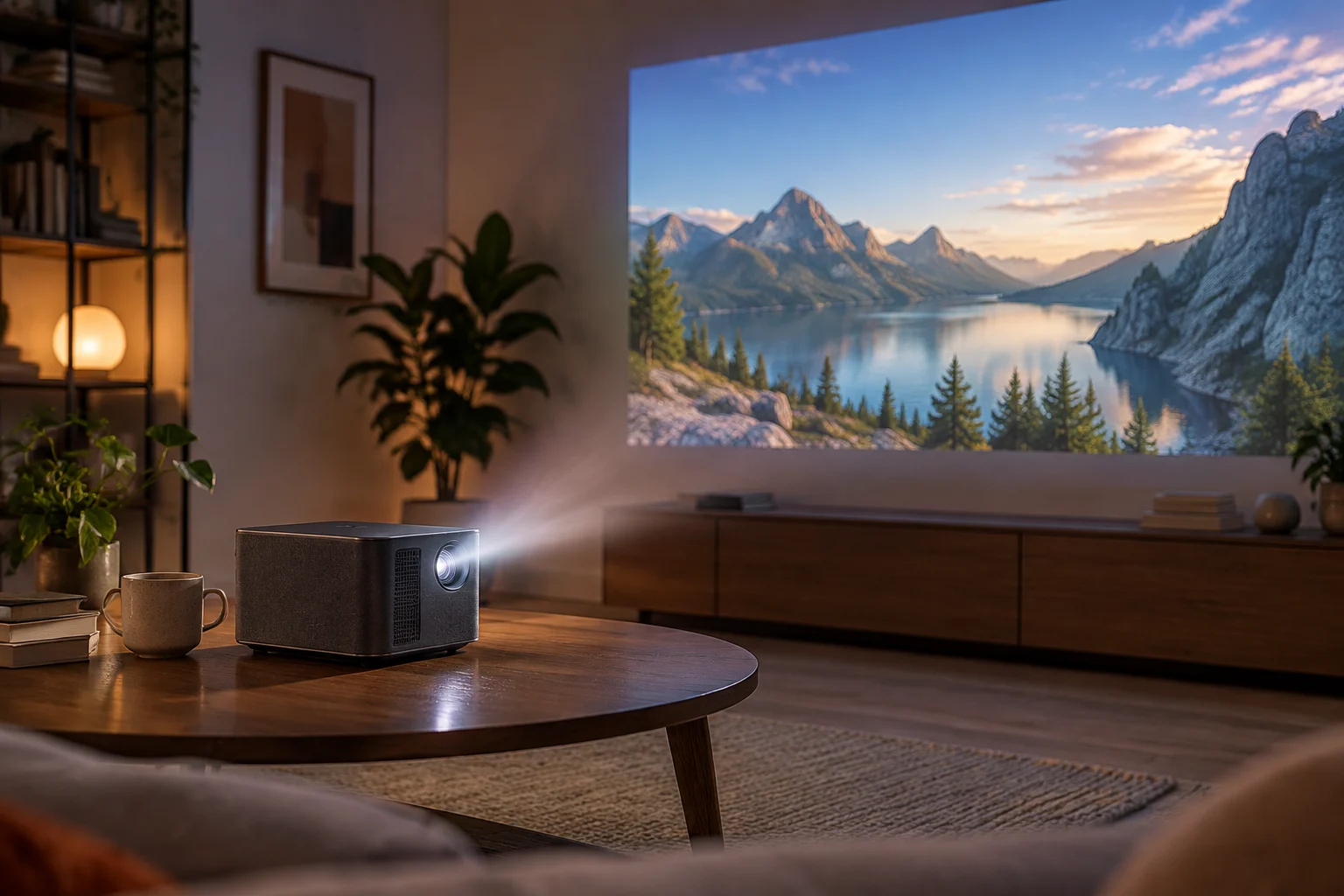
Epson’s Spanish website identifies the model as the Lifestudio Pop EF-61G and presents it as a portable smart projector. In the product title and description, the manufacturer associates it with Full HD 1080p resolution, 700 lumens, Google TV, Sound by Bose audio and an image of up to 150 inches. These details make it possible to describe the product’s advertised proposition, but they do not turn the page into a launch announcement or an independent assessment. A product listing tells readers what the brand says the device offers; it does not, by itself, document how it performs in a home or under controlled test conditions.
That distinction matters because a product page and a launch story answer different questions. The former is useful for consulting characteristics stated by the brand. On its own, it does not establish when the device was announced or went on sale, or whether a particular retailer currently has stock. The material gathered for this article provides no basis for saying that the EF-61G has just reached the market. The careful approach is to treat it as a model documented in Epson’s catalogue, without assigning it a date that the available evidence does not substantiate. That is a limit on what can be claimed here, not evidence that the projector is or is not available.
What the specifications say—and what they do not
Full HD 1080p describes the resolution Epson attributes to the projector. It is a useful reference for anyone comparing equipment, but it does not, by itself, tell us about perceived sharpness, colour reproduction, contrast or image processing. Those qualities also depend on the video source, projection surface, distance and lighting conditions. A resolution figure should therefore be read as one specification among several, rather than as a complete description of picture quality. The product page consulted is not a laboratory measurement or a viewing test, and it does not establish how the image will look in a particular room.
The 700-lumen figure should likewise be read as a value published by the manufacturer, not as a guarantee that the image will look the same in every room. Perceived brightness changes with projected image size, ambient light and the screen or wall used. Although Epson mentions a diagonal of up to 150 inches, that advertised maximum does not support the conclusion that this size will produce a satisfactory image in every situation. A room’s brightness and the viewing conditions matter when interpreting both figures. The stated lumen figure and advertised image size need practical context before they can support a recommendation.
Google TV and the integrated-audio claim
Epson includes Google TV among the EF-61G’s highlighted features. The presence of the platform suggests that the product is intended to offer an experience beyond simply connecting an external source, but the page reviewed does not, by itself, establish which specific apps are available, how they perform or what connection requirements may apply. Nor does the listing amount to a test of the system or a verification of every feature in the Spanish market. These questions require information beyond the brief claims on the product page, so they should not be treated as confirmed simply because the platform is named.
The manufacturer also associates the projector with Sound by Bose. That name identifies a feature of the product’s commercial proposition, but it does not by itself disclose output power, tonal balance, maximum volume or acoustic quality in a room. Without measurements or an independent test focused on sound, it would not be appropriate to turn the collaboration name into a claim about performance. Sound can be experienced differently depending on the room and listening conditions, and the supplied documentation does not evaluate those factors. The associated brand is a product-page detail; the acoustic experience is a question that requires assessment.
What is missing to decide whether it suits your home
For a portable projector, the specification sheet is a starting point, not a complete answer. Someone planning to use it mainly with the lights on would benefit from tests that document brightness under reproducible conditions. Anyone prioritising films in a dark room should also look for information about contrast, uniformity and colour reproduction. These are distinct aspects of image performance, and a resolution or lumen figure does not settle them. The evidence available for this article does not provide those measurements, so it cannot establish how the EF-61G compares in those respects.
Planning an installation also calls for practical details about projection distance, image adjustment, focus and placement. Those details are not established by the product-page information used here. Before buying, it is sensible to look for information that reflects the intended room and viewing habits, rather than relying only on the maximum screen size or a single specification. A useful decision combines the manufacturer’s stated characteristics with evidence relevant to the actual setup. The checks below identify questions to verify, not shortcomings that have been demonstrated in the product.
How to cross-check the product page before buying
- Picture: Look for tests that explain their methods and conditions, and distinguish resolution from brightness, contrast and colour.
- Room: Confirm projection distance, a workable image size and how easily the projector can be positioned in the intended space.
- Everyday use: Check connections, smart features and network requirements in the complete documentation for this model.
- Sound: Consult an independent assessment if built-in audio is important; do not infer its quality from the Sound by Bose name.
- Purchase: Check the price and stock with a specific retailer on a specific date; these cannot be inferred from the manufacturer’s product page.
This checklist does not mean that the product lacks any of these features. It identifies aspects that cannot be confirmed from the evidence available for this article. Performance may also depend on settings, content, surroundings and the commercial version being sold. The absence of an independent measurement in the gathered documentation does not prove a good or bad result; it simply prevents us from presenting a tested conclusion about the real-world experience. Treating unknowns as unknowns keeps the distinction clear between an advertised specification and an independently verified result.
Conclusion: stated specifications, performance still to be verified
The verifiable conclusion is specific: Epson presents the Lifestudio Pop EF-61G as a portable Full HD 1080p projector with 700 lumens, Google TV, Sound by Bose audio and an advertised diagonal of up to 150 inches. The product page helps identify the model and its main claims, but it does not, on its own, provide independent picture or sound tests or assess whether the projector is suitable for a particular room. Its specifications can inform a shortlist, but they should not be mistaken for a complete review.
A price, launch date or current availability in Spain is also not confirmed here. It is therefore not possible to place the projector confidently against alternatives on the basis of cost, or to claim that it is already sold through a particular channel. A reasonable next step for a purchasing decision is to compare the official page with the model’s manual, an independent test with a clear methodology and a retailer’s offer at the time of purchase. Those sources address different parts of the decision and should be checked for the same model. What is confirmed describes the product page; performance and commercial conditions require separate checks.