The search does turn up a recent announcement, but not an available product
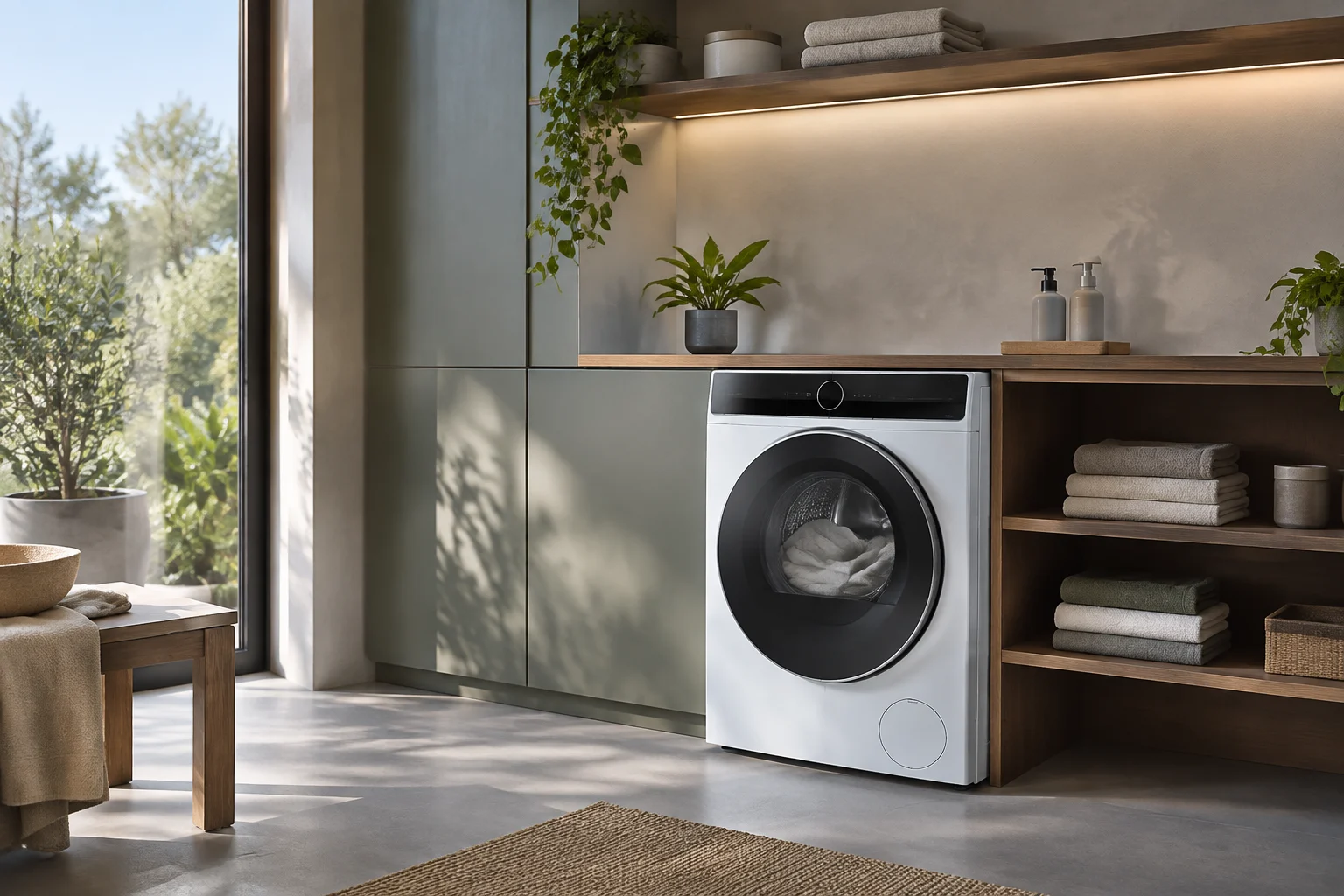
The evidence reviewed does not support the conclusion that there is no verifiable news. Among retail pages, regulatory references and current-affairs results is a BSH press release dated 2 September 2026, ahead of IFA 2026. The company says its Bosch and Siemens brands are presenting new products at the show and highlights a Bosch Serie 8 washer-dryer with a heat pump. There is therefore a recent announcement attributable to a primary source. What is missing is a complete product listing that would justify treating the appliance as a model already available to buy.
That distinction matters to anyone looking for practical information. Announced does not mean on sale: BSH says the washer-dryer is planned for launch in spring 2027. It can be covered as a product preview, provided the future timing is retained and the details not disclosed in the material reviewed are made clear. It would be inaccurate to present the appliance as a current buying option or to turn a projected launch into a guaranteed date. The announcement establishes what the company has said, not that sales have started or that the schedule cannot change.
What BSH says about the washer-dryer
According to the company’s announcement, the new appliance combines washing and drying in a standard-sized unit and uses a heat pump. BSH also says it is manufactured in Spain. These are attributes reported by the manufacturer: the available information does not give an exact retail model number, a complete technical specification, a price or a precise sales date for each country. Without those details, it is not possible to identify a specific variant with confidence or establish whether the planned timetable applies in every market.
The announcement attributes savings of up to 20 litres of water and 55% of energy to the appliance compared with conventional condenser models. It also says the product would achieve energy class A in the combined wash-and-dry cycle and use 20% less energy than the class A limit in the washing cycle. These figures are manufacturer claims, and the comparators are described only in general terms in the excerpt; they are not findings from an independent assessment published in the evidence reviewed. They should not be presented as measurements verified by BytePreview or as a guarantee applying to every programme and household use. The supplied material does not provide test conditions or further detail with which to qualify those comparisons.
Connected functions: distinguish the technology from the product
BSH’s communication also mentions i-DOS, which automatically adjusts the amount of detergent and fabric softener, and an Energy Assistant that, through Home Connect, lets users schedule the start of a cycle. The announcement attributes a reduction of up to 38% in detergent use to i-DOS. As with the energy-saving figures, that number must remain attributed to the manufacturer. The documentation supplied does not specify the calculation conditions, the reference load or the programmes used for comparison, so it does not support a more precise interpretation.
For readers, these functions do not replace the missing information about the appliance itself. Effective compatibility, connection requirements, features available in each market and integration with other systems are not clarified here. Connectivity alone does not mean full automation: the information reviewed supports only the statement that BSH describes an option to schedule a cycle’s start through Home Connect. Broader claims about remote control, interoperability or energy management should be avoided unless supported by specific documentation. Nor should the presence of a named feature be taken as confirmation that every detail of its operation or availability is the same across regions.
Why retailers and general information pages do not confirm a new development
The search results also include sales catalogues, promotions, a commercial search engine and a general press page. These may help locate products or check offers at a particular moment, but they do not by themselves establish that a recent innovation announcement has been made. A retailer’s listing reflects the offer published by that seller; it does not show when a product was unveiled, whether its features are new or whether it is generally available. Promotions can also change quickly and are not the same as technological developments.
The search also includes a Ministry for the Ecological Transition page about energy labelling which, according to its title and the information recorded, concerns a change that took effect in 2021. That is regulatory context, not evidence of a recent reform in 2026. To claim that the applicable rules have changed, one would need to find a current act or announcement from the competent authority and specify the appliances, dates and obligations it covers. An older reference may still be useful, but it should not be presented as current news simply because it appears in a search.
How to report the announcement without overstating its scope
The strongest verification starts with the source of the announcement. In this case, BSH’s press release is sufficient to attribute the announcement, the stated product features and the planned launch to the company. Independent coverage may add context or identify gaps, but it does not replace primary confirmation of product details. Cocina Integral’s coverage of Bosch and Siemens news at IFA 2026 is a secondary reference; for specific details about the washer-dryer, BSH remains the direct source.
Before updating a product story, it is worth checking at least the date and author of the announcement; the actual launch status; the model or retail reference; and the market to which availability applies. If savings figures are included, the comparator should also be retained and the figures explicitly attributed. This research contains no model number, substantiated price or sales date more precise than the season stated by the company, so those fields should not be filled in by conjecture. Clear attribution lets readers distinguish confirmed reporting about what BSH announced from information that remains unavailable.
The editorial conclusion is more nuanced than the working headline: there is a recent development verifiable as an announcement, but there is not enough evidence to present the appliance as already available or to independently validate its performance. The useful story is a clearly attributed preview that states the planned timing and makes the limits of the available information visible. If BSH updates the announcement, retail listing or launch terms, those details should be checked again before describing the product as available. Until then, the distinction between a company’s plan and a confirmed sale remains essential.