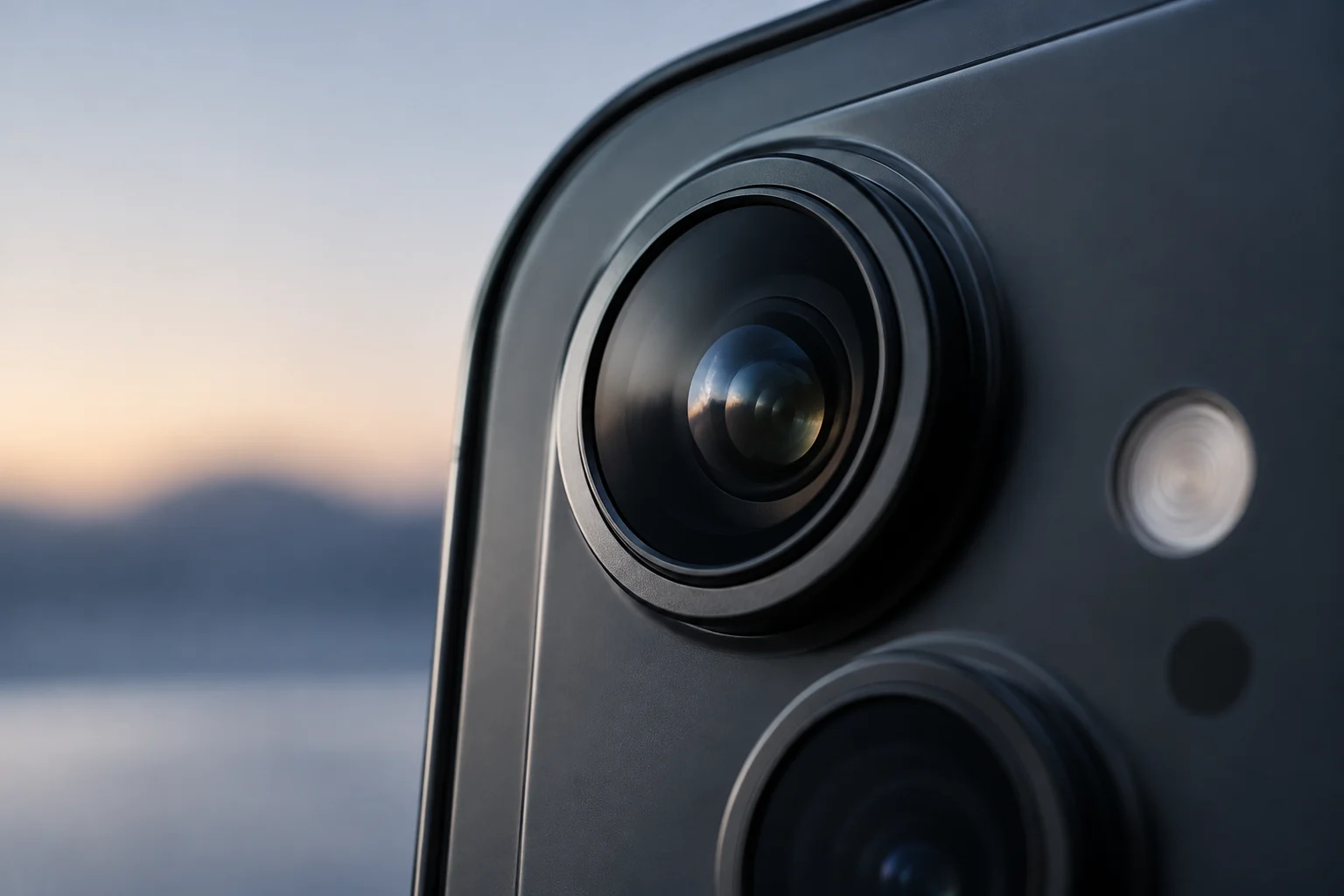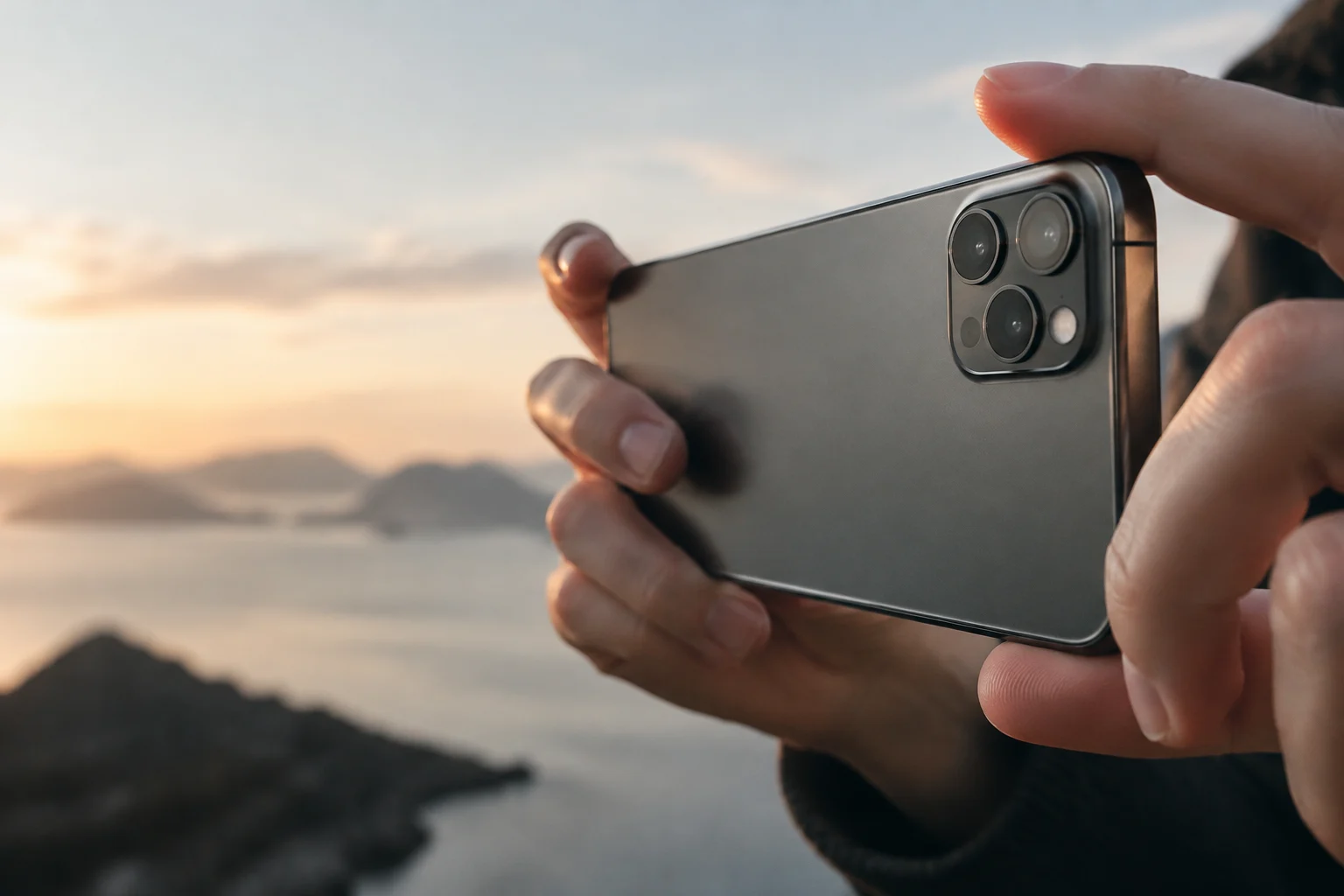
Two concepts, not two launches
At MWC 2026 in Barcelona, Honor and Tecno put forward two ideas that move beyond the usual smartphone-camera design. One explores a camera with movement built into the phone; the other adds and removes magnetic components depending on the task. The distinction matters: these are conceptual proposals, not two available phones that can be compared as commercial products.
Event coverage described Honor’s Robot Phone as a prototype and Tecno’s system as a working modular setup demonstrated at the show. That supports discussion of mechanisms and aims that were shown or reported, but not of independently tested image quality, durability, price or availability. The useful distinction is therefore between a physical demonstration and a product promise: seeing a component move or attach does not yet establish how it will work in everyday use. Photolari
The show also featured more conventional camera phones and other industry announcements, but these two cases stand out because they change the relationship between a phone and photographic equipment. They are not equivalent solutions: Honor builds movement into the camera assembly, while Tecno explores interchangeable components. From here, it is worth separating what each company has confirmed from interpretations of possible professional uses. RedShark News
Honor Robot Phone: a camera that moves
Honor’s proposal combines a phone with an articulated camera module designed to orient the shot and follow a person or another subject. Newsshooter describes it as a concept with a camera that unfolds and moves in a gimbal-like way; Photolari also reports seeing the prototype operating at the show. This supports the view that movement was central to the demonstration, but it is not enough to establish how it would behave away from the stage or what limits its tracking might have. Newsshooter Photolari
Honor and ARRI announced a strategic technical collaboration to bring ARRI’s image science to next-generation consumer devices. The cinema company said ARRI technology would debut in the upcoming ROBOT PHONE. The announcement confirms the joint work and its intended destination, but does not specify a feature set, color profiles, codecs, recording formats or controls that would make it comparable to a professional cinema camera. The partnership alone does not turn the phone into an ARRI camera. ARRI announcement
Some reporting about the prototype mentions a 200-megapixel camera and compact mechanical stabilization with four degrees of freedom. However, those figures appear in secondary coverage, not in ARRI’s collaboration announcement. Until Honor publishes a complete technical specification, they should be treated as details attributed to the prototype, not confirmed commercial specifications. There is also not enough information to assess effective resolution, low-light performance, battery life while moving or the mechanism’s durability. Videolinea
Tecno and the logic of adding accessories
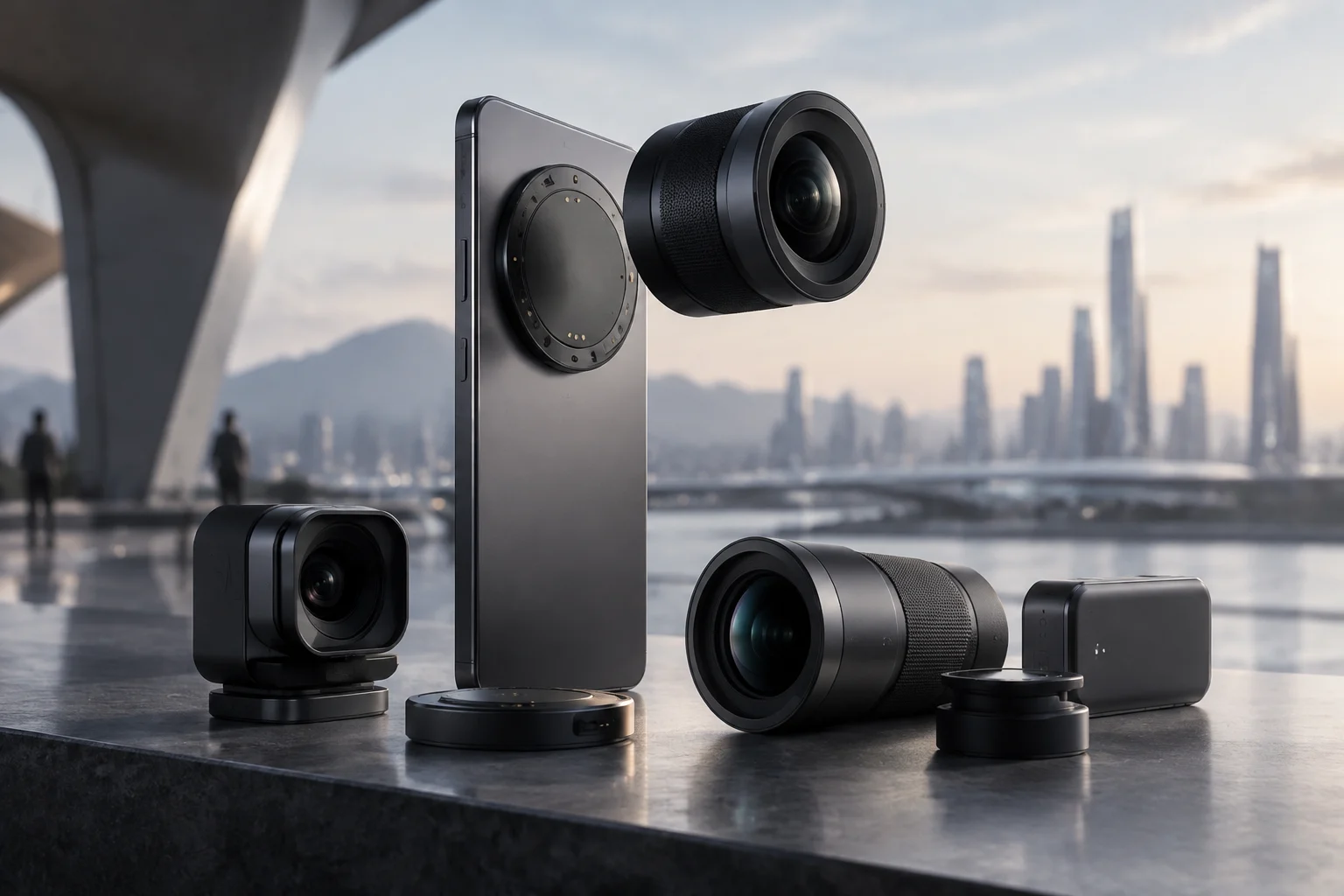
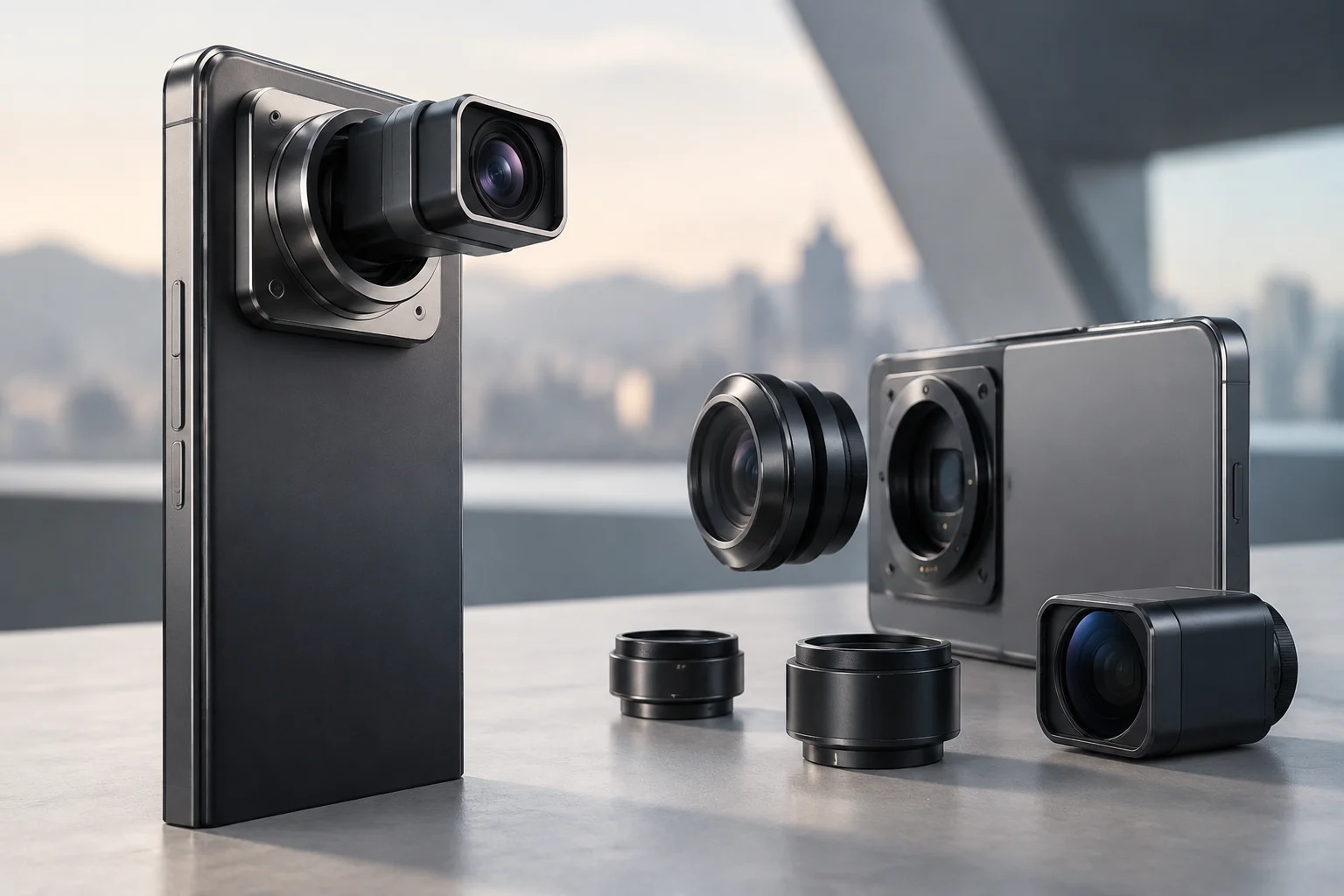
Tecno presented magnetic modular interconnection technology and a suite of components that, according to GadgetMatch’s coverage, includes stackable batteries, action cameras and telephoto lenses. The idea is to expand a phone’s capabilities through attachable accessories rather than permanently integrating every component. This is broader than an interchangeable camera: the same approach encompasses power and image capture. GadgetMatch
Modularity could be appealing if it means carrying only the accessory needed: more battery for a long day, or a capture module for a particular use. But the available information does not establish which sensors or lenses each module contains, how data and power are transmitted, or which phones will be compatible. GadgetMatch says the setup appeared compatible with the POVA series, but presents that as an impression, not an official specification; compatibility with any particular model therefore cannot be considered confirmed. The system was shown as a concept, with no confirmed price or sales date in the sources consulted. GadgetMatch
Photolari’s coverage describes Tecno’s prototype as functional and reports transformations into camera or action-camera configurations, as well as the possibility of adding batteries. That establishes a demonstration in the context of the show, not the performance of a finished product. For photography, the promise would depend on questions that remain open: secure attachment, balance while recording, latency, thermal management and continuity of software between the phone and each accessory. Without specifications or extended-use tests, modularity is a design direction, not an advantage that has been quantified. Photolari
What changes compared with a built-in camera
With a conventional phone, the manufacturer fixes in advance the combination of cameras, optics and processing that can fit in the device. Honor and Tecno’s concepts propose two different exceptions: Honor seeks to make the camera assembly orient and act; Tecno proposes that some of the equipment can be attached or removed. Neither removes the phone’s physical limitations; instead, they explore different ways of addressing them. Newsshooter GadgetMatch
For a creator, the Robot Phone’s potential value would lie in tracking and stabilization without holding a separate camera; Tecno’s would be in adapting the kit to a shoot. That is an inference based on the design, not a comparative assessment: the available sources provide no controlled tests against Apple or Samsung phones, action cameras or dedicated stabilizers. Nor do they support a claim that these concepts currently deliver superior image quality. Practical value will depend on real integration between hardware, app and workflow.
The ARRI collaboration has a different significance from modularity. One brings image expertise and cinematic processes; the other seeks physical flexibility through accessories. In both cases, moving from demonstration to a working tool requires reproducible specifications and clear compatibility. For professionals, the question is not just whether the concept is striking, but whether it allows reliable control of exposure, focus, stabilization, color and file transfer. None of those capabilities should be taken for granted on the basis of the announcements.
Availability, costs and limits of what is known
The sources consulted provide no confirmed price, sales date or commercial availability for the Robot Phone or Tecno’s modular suite. ARRI places its technology in an upcoming ROBOT PHONE, but that is not a launch date or a complete handset specification. In Tecno’s case, the MWC presentation describes concepts and accessories without a verifiable commercial schedule. There is no basis for recommending a purchase or comparing costs. ARRI GadgetMatch
Essential details for assessing professional use are also missing: total weight with accessories, strength of magnetic connections, battery life, transfer speeds, availability of replacement parts and software support. For Honor, the announced partnership does not yet explain how ARRI’s image science will translate into concrete tools. For Tecno, coverage mentions several types of modules but does not provide a complete technical list or confirm compatibility. These specification gaps limit any conclusions about reliability and value.
The editorial distinction is straightforward: Honor and ARRI’s joint work has been officially announced, and Tecno did show a modular ecosystem at MWC according to the coverage consulted; performance and commercialization details remain pending. Keeping those levels separate avoids turning potential into a promise. Before assessing these designs as alternatives to built-in cameras or existing accessories, the brands will need to publish a finished product, verifiable features and availability terms.
An interesting trend, still to be proven
The announcements point to two forms of specialization: integrated movement from Honor and expansion through modules from Tecno. Both challenge the idea that advances in mobile photography depend only on sensors and algorithms, but neither proves that one architecture will prevail. Their value will depend on whether the added complexity leads to better captures or more convenient workflows without compromising size, cost and reliability.
For advanced mobile photographers, the practical approach is to wait for tests of final hardware and verify which functions actually reach the market. With Honor, it will be important to learn what specific controls and results ARRI brings and how the mechanism behaves while recording. With Tecno, compatibility, connection stability and the availability of each module will need confirmation. Until then, MWC 2026 leaves us with two lines of experimentation, not two tools ready to replace photographic equipment.