Panel Architectures: Localized Backlighting vs Autonomous Emission
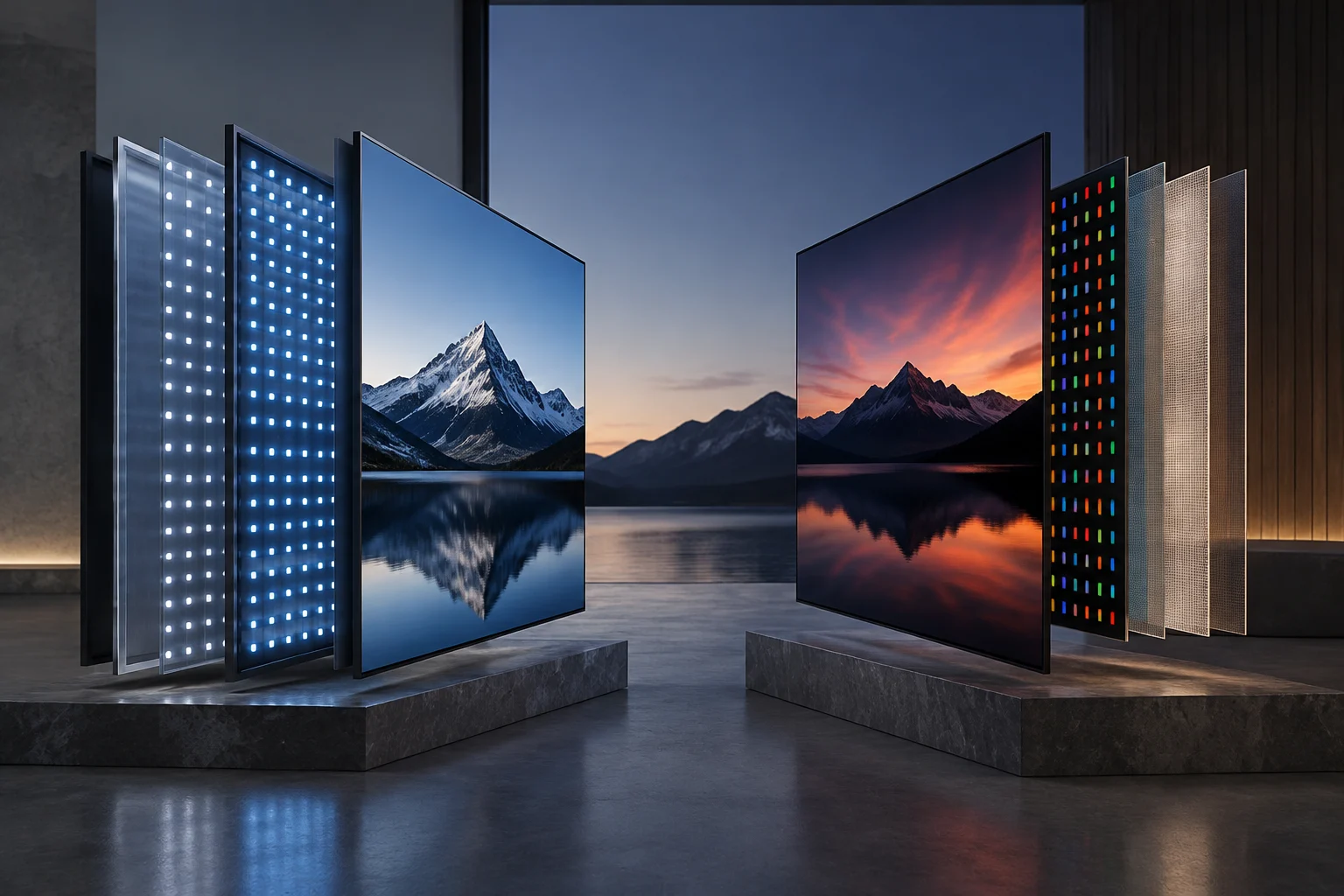
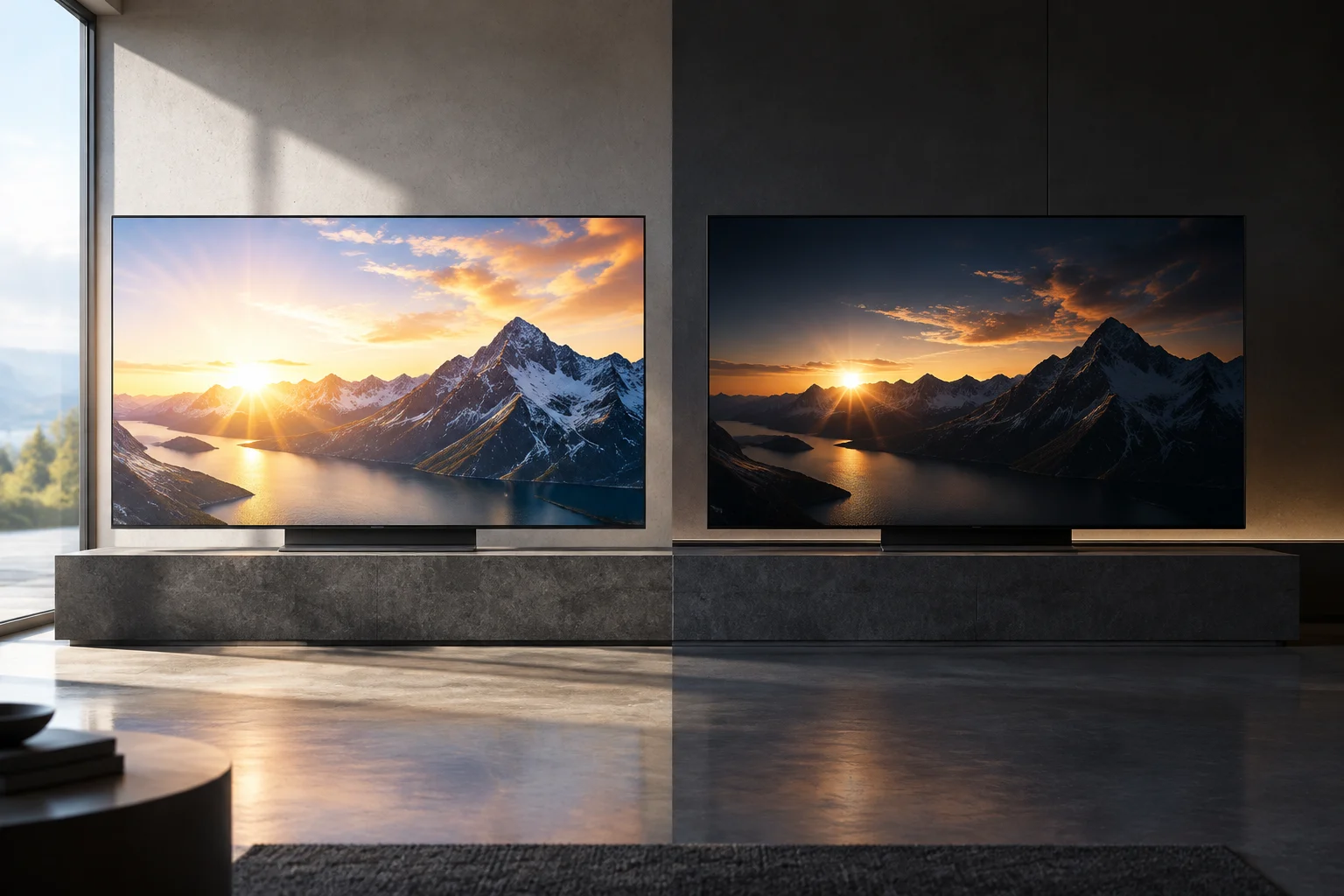
The fundamental distinction between these two technologies lies in the light source. Mini LED panels utilize a matrix of reduced-size LED diodes as backlighting behind a liquid crystal layer, allowing for more precise control over brightness and contrast than traditional LEDs. In contrast, OLED panels employ self-lit pixels, where each point generates its own light and color, eliminating the need for a rear light source.
This structural difference defines the capabilities and limitations of each format. By not relying on backlighting, OLED can completely turn off a pixel to display an absolute black, achieving infinite contrast. Conversely, Mini LED depends on the capability of its local dimming system to simulate deep blacks, a process that, although highly advanced, remains a physical approximation rather than a total absence of light.
Structural Advantages of Mini LED
- Granular control: each zone can be adjusted independently.
- Higher maximum brightness: backlighting is concentrated in specific areas.
- Lower burn-in risk: LEDs are inorganic and do not degrade over time.
Structural Advantages of OLED
- Absolute black: turned-off pixels consume zero energy.
- Linear response curves: better color reproduction in dark scenes.
- Physical flexibility: curved or flexible panels can be manufactured.
Degradation Risk: Permanent Burn-in vs Halo
The main argument in favor of Mini LED durability is the absence of permanent burn-in risk. In OLED panels, the degradation of organic materials can cause static images, such as TV channel logos or interface bars, to be permanently imprinted on the screen. Recent studies indicate that improvements in burn-in resistance have not been as significant as initially expected, keeping this risk as a critical factor for users with static viewing habits.
In the case of Mini LED, the primary risk is not panel degradation but the phenomenon known as blooming or halo. This visual effect consists of a glow around bright objects on dark backgrounds, caused by the physical limitation of dimming zones. Unlike burn-in, the halo is a reversible optical artifact and does not represent a loss of functionality or device lifespan in the long term.
Risk Factors by Usage
- Prolonged static use: higher degradation risk in OLED.
- High static contrast content: possible blooming in Mini LED.
- Mixed and dynamic use: balanced risk in both technologies.
Mitigation Strategies
- In OLED, shift pixels or reduce logo brightness.
- In Mini LED, optimize zone distribution to minimize halo.
Sustained Brightness and Long-Term HDR Capability
Sustained brightness is a key determinant of the long-term viewing experience, especially in HDR content. Mini LED panels usually offer higher brightness levels in full-screen scenes, frequently outperforming OLED in this parameter. This capability allows maintaining image intensity without needing to reduce brightness to protect components, translating into a more consistent experience in rooms with abundant natural light.
In OLED panels, maximum brightness is often limited by the degradation of organic materials. To mitigate this, manufacturers implement brightness management systems that reduce intensity in full-screen scenes. Although new generations, such as Tandem OLED, have improved lifespan and sustained brightness, the ability to maintain high HDR levels for hours remains a structural advantage of Mini LED in terms of perceived durability.
Figure Comparison
| Technology | Max Brightness (cd/m²) | 10-min Sustention |
|---|---|---|
| Mini LED | 1,200–2,000 | >80% |
| OLED | 600–900 | ~60% |
Impact on Visual Perception
- HDR: Mini LED maintains vivid colors without dimming.
- Cinema: OLED offers deep blacks but with lower sustained brightness.
Energy Efficiency and Five-Year Operational Cost
Energy efficiency is a determining factor in the total cost of ownership of a television. OLED panels usually consume less energy than Mini LED in dark scenes, as turned-off pixels do not consume electricity. However, in full-screen or high-brightness scenes, OLED consumption can equal or exceed that of Mini LED, depending on backlight efficiency and brightness management.
To estimate the five-year operational cost, it is necessary to consider average TV usage and regional electricity prices. Although hourly consumption differences may be small, they accumulate significantly over a five-year horizon. Specific consumption data varies by model and size, so it is recommended to consult energy labels and independent consumption measurements for each specific model.
Efficiency Criteria to Consider
- Standby mode consumption: minimal differences between technologies.
- HDR content consumption: variable depending on brightness management.
- Energy label: standardized reference for comparing models.
Simplified Calculation Example
| Model | Avg Consumption (kWh/month) | Monthly Cost (€) |
|---|---|---|
| Mini LED 55" | 15 | 1.50 |
| OLED 55" | 13 | 1.30 |
Cost Conclusion
The operational cost over five years may vary by 90 to 120 € additional for Mini LED compared to a similar-sized OLED, depending on the usage pattern.
Priority Technical Specifications for Purchase
When evaluating long-term durability, buyers must prioritize certain specifications in the technical sheet. In Mini LED panels, the number of backlight zones is the most direct indicator of local dimming quality and, therefore, of halo effect minimization. A higher number of zones allows for more granular light control, reducing visual artifacts and improving perceived contrast.
In OLED panels, the panel type (WOLED, QD-OLED, or Tandem OLED) and the factory warranty against burn-in are critical factors. Factory warranty varies between manufacturers and models, and is a direct indicator of the manufacturer's confidence in the durability of their technology. Additionally, the presence of burn-in mitigation functions, such as pixel shifting or logo brightness reduction, is essential to minimize degradation risk in static uses.
Comparative Table of Key Specifications
| Specification | Mini LED | OLED |
|---|---|---|
| Backlight Zones | 64–256 | N/A |
| Panel Type | N/A | WOLED / QD-OLED / Tandem |
| Burn-in Warranty | N/A | 2–5 years |
| Halo Mitigation | Advanced Software | N/A |
| Burn-in Mitigation | N/A | Pixel shift, dimming |
Final Decision Based on Usage Environment
- Dark rooms and cinema: OLED offers superior image quality, with deep blacks and precise colors.
- Bright rooms or mixed use: Mini LED provides greater versatility, less concern about long-term degradation, and better HDR performance.
Practical Recommendations
- Verify the number of zones in the Mini LED technical sheet.
- Ask about the burn-in warranty and mitigation functions in OLED.
- Compare energy labels to estimate real consumption.
- Consider your viewing pattern: static, dynamic, or mixed.
Five-Year Perspective
In a five-year horizon, durability translates into lower risk of permanent artifacts and a more stable visual experience. Mini LED stands out for its resistance to burn-in and sustained brightness, while OLED remains competitive when appropriate mitigation strategies are employed.