A map of AI across cultural industries
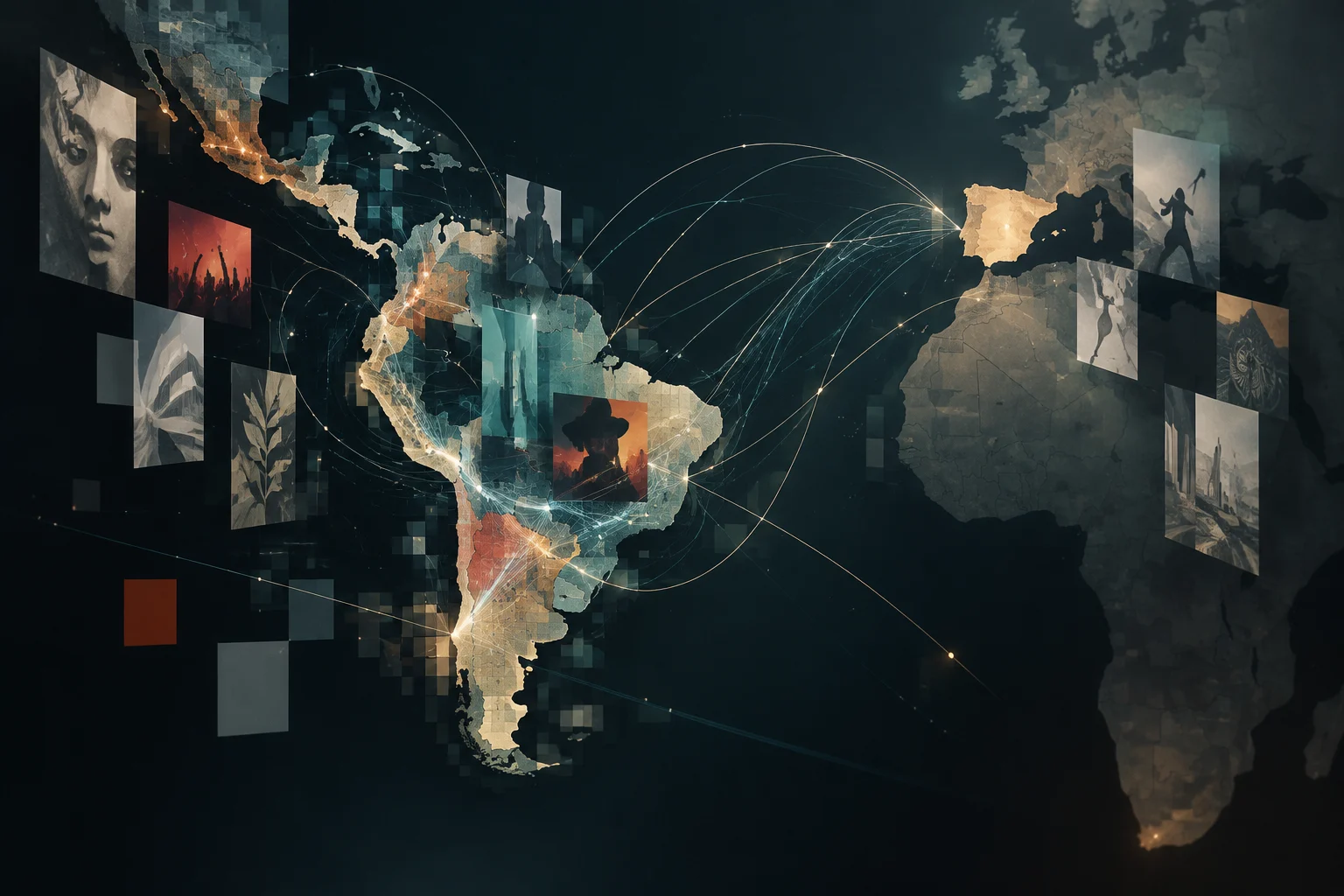
The AC/E Digital Culture Yearbook 2026 devotes its central study to “Mapping the use of AI in Spanish-language digital creation.” Acción Cultural Española (AC/E) presents the work as an analysis of how these tools are being adopted in cultural industries and how they relate to creative processes and distribution. Its focus is on cultural uses, rather than on technology in isolation.
The study covers visual and performing arts, film, books, music and video games. Looking across different disciplines helps distinguish their practices, formats and ways of reaching audiences. AC/E connects the study with the production, formats and markets of Spanish-language digital culture.
The publication is part of a series AC/E has produced since 2013 to reflect on culture’s digital dimension and support organisations and professionals. Each yearbook combines specialist articles on technological trends applied to different disciplines with a Focus devoted to a specific subject. In 2026, that subject is AI in Spanish-language digital creation; the publication is not a guide to choosing a commercial application.
What the Focus studies and how to understand its scope
The title sets out the subject: the use of AI in Spanish-language digital creation. AC/E’s description links the study to the implementation of tools in the sector and to the production, formats and markets of Spanish-language digital culture. It does not cover every use of AI, but rather practices connected with cultural industries.
The mapping sits alongside other articles in the yearbook. Topics AC/E highlights for this edition include geopolitics and technological sovereignty, intellectual property, simulation and authenticity, narrative trends and media, as well as the role of algorithms in consumption. These subjects broaden the context, but should not be mistaken for specific findings of the central study.
The structure makes it possible to read the volume as a combination of sector-specific analysis and cross-cutting reflections. The Focus covers several cultural industries, while other articles address questions that may affect each practice differently. A variety of topics does not imply a uniform answer about AI’s benefits or risks, nor does it show that every discipline is adopting the same tools.
Creation: different choices in different disciplines
The inclusion of visual and performing arts, film, books, music and video games brings diverse practices into view. A tool used in music production does not necessarily serve the same purpose as one applied to an image, a stage work or a video game. The task and context matter when assessing what is produced, which decisions remain with creative teams and how creators’ contributions are recognised.
AC/E says the report incorporates perspectives from specialists in these fields and identifies AI tools used in the sector, grouped under the phrase “standard cultural AI kit.” The analysis includes a mapping of uses across different industries, placing tools within varied cultural practices rather than treating them as a single, uniform category.
For artists, production companies and cultural managers, this perspective makes it possible to ask comparable questions without assuming that one answer fits every discipline. It can inform discussions about a tool’s function, human involvement and cultural management. The yearbook provides context, not instructions to adopt particular solutions or recommendations about suppliers.
Distribution, algorithms and relationships with audiences
Distribution features explicitly in the description of the Focus: the yearbook examines how AI relates to creative processes and the circulation of Spanish-language cultural content. The edition also includes an article on the role of algorithms in digital discovery and consumption, alongside pieces about newsletters and other channels for engaging with audiences.
For creators and institutions, making a work and getting it to its audience are connected, but distinct, concerns. A work may incorporate tools during its creation and later circulate through platforms or channels that shape how it is discovered. The volume addresses both scales: cultural processes and the ways content connects with audiences.
The discussion of algorithms broadens the context of the Focus, but does not establish that all recommendation systems work in the same way or produce identical effects. The edition treats digital discovery as a cultural issue and considers it alongside other communication channels. For an organisation, this encourages consideration of distribution alongside production, without assuming that a single technology determines which work each audience encounters.
Preserving works and cultural memory
Digital preservation has its own place in the yearbook. This edition includes reflections on digital facsimiles, new ways to store cultural memory and the preservation of video games; in the latter area, it also addresses issues related to consumer rights. The continued life of a digital work is distinct from its initial creation or publication.
These subjects extend the discussion beyond immediate circulation. A digital facsimile, a cultural-memory archive and a video game each raise different needs for documenting, preserving and keeping content accessible. The edition brings these perspectives together without presenting them as one technical solution. Preservation depends on the kind of work and its context, a point relevant to institutions managing digital collections.
For video games, the yearbook connects preservation with consumer rights. This intersection draws attention to the conditions that make it possible to maintain access to a work over time. For people working with digital heritage, preservation is not only about storing files: depending on the medium and its requirements, it may also involve considering how works can be consulted or experienced again.
Who may find the yearbook useful and how to access it
The volume may interest artists and professionals assessing uses of AI, cultural institutions developing digital strategies, and teams working on the distribution of Spanish-language works. It also offers readers a framework for following debates connecting creation, intellectual property, algorithms, audiences and preservation. Its usefulness depends on the specific question: broad conclusions do not automatically apply to every project.
Acción Cultural Española makes the AC/E Yearbook 2026 available to read and download on its website. The organisation says the series is published in Spanish and English, in PDF and EPUB formats, under a Creative Commons licence.
A productive way to read the yearbook is as a map of issues and perspectives, rather than as a definitive manual. For an institution or creator, it can help organise questions about which tool is used, at what stage of the work, how a work is distributed and what its preservation requires. The decision is not to adopt AI as a matter of principle, but to assess its function and implications for authorship, audiences and the continuity of content.