Preorders open, with deliveries expected in 2027
Framework opened preorders for the Wireless Touchpad Keyboard on November 17, 2026. The company requires a fully refundable $50 deposit to reserve one and expects to ship the first batches during the first quarter of 2027 to the regions it serves. This is not an immediately available product or a sale announced for every market.
The official page lists an initial configuration with a US English ANSI layout. Framework invites customers to express interest in other languages. Those who prefer Spanish key legends should note that the first announced layout is US English.
The announced timeframe applies to the first batches, not a guaranteed individual delivery date for every preorder. According to Framework, customers can cancel before shipment for a full refund, so the deposit is not the final price and does not mean the product will be available at a local retailer.
A compact keyboard for controlling devices remotely
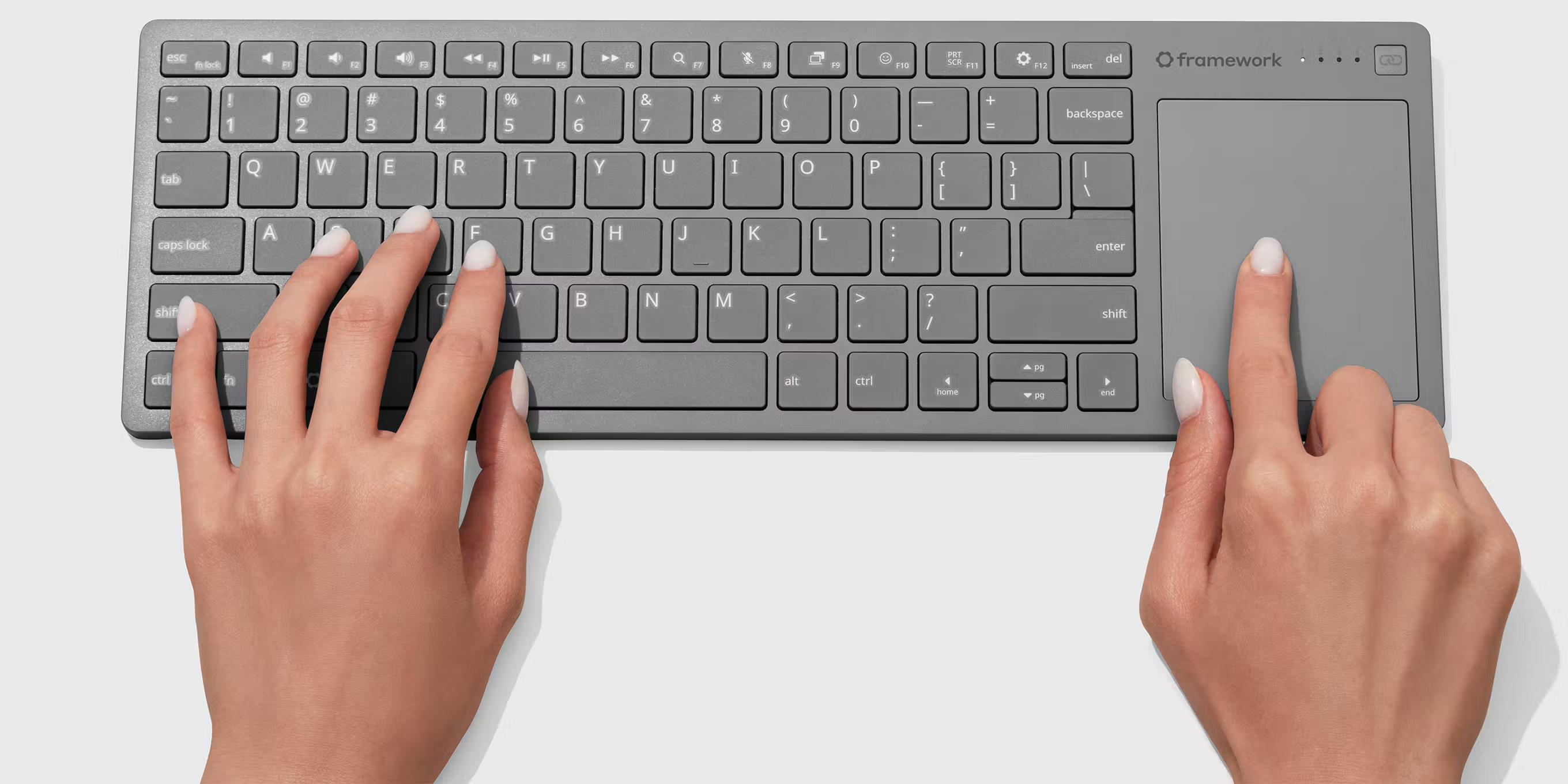
The keyboard and touchpad are integrated into a single chassis. Framework positions it for TVs and media devices, as well as setting up a server, Raspberry Pi, or mini PC when no keyboard is permanently connected. Its main purpose is to control a device from the couch or during setup, without adding a separate mouse.
The company says the touchpad measures 68.8 × 85.6 mm and supports multitouch gestures in Windows, macOS, and Linux. Framework says a 0.8 mm steel plate beneath the keys adds rigidity for lap use. These are manufacturer-stated specifications and features, not independent assessments of comfort, touchpad accuracy, or typing feel.
The design may also suit a narrow desk or a simulator, where users need to operate menus and controls from their seat. Framework has published surface CAD files to help people create accessories such as mounts. That could be useful for custom setups, but it does not mean every accessory already exists or that a custom mount is included.
Four wireless profiles and a wired connection
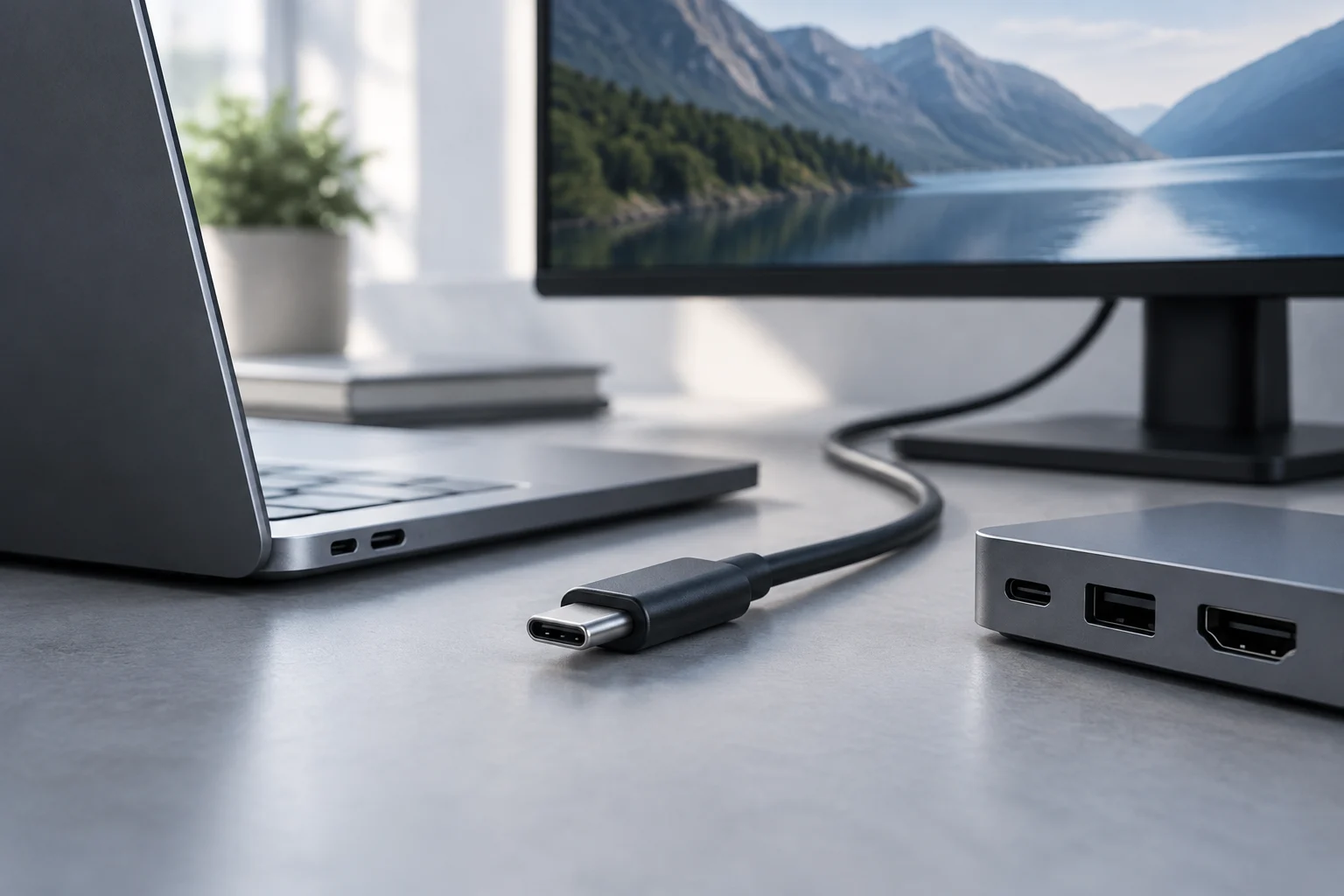
The keyboard includes a USB-A receiver and three additional Bluetooth profiles: four wireless devices in total, with switching handled by a button. It can also connect over USB-C for wired typing and battery charging. This makes it possible to switch between, for example, a living-room PC and a laptop, provided each device supports the selected connection.
Framework says the USB-A receiver and wired mode work from startup, so they can be used to enter a computer’s BIOS setup. For macOS, the company advertises a dedicated mode activated by a key combination, which it says adapts shortcuts and touchpad gestures. Compatibility depends on the device and mode used; the manufacturer’s broad compatibility list does not guarantee identical features on every TV, console, or operating system.
Framework says the USB-C connection supports an 8 kHz polling rate. That figure describes wired communication; it is not a touchpad refresh rate or proof of lower latency on every device. The receiver can be stored on the keyboard’s rear, according to the company. A USB-A expansion card for some Framework computers is planned separately for early 2027.
Claimed battery life and a replaceable battery
Framework specifies a 1,200 mAh battery and claims more than a month of daily use or over a year of occasional use. The company ties the latter estimate to low power consumption in its lowest-power connected state and cautions that battery life varies with usage. These are manufacturer estimates, not independent test results; typing frequency, touchpad use, and idle time can affect real-world runtime.
The battery recharges over USB-C and is designed to be replaceable. Framework says it plans to sell replacements through its Marketplace. This feature may matter to people who want to keep a peripheral in service for longer, but that benefit depends on replacement parts remaining available and on regional sales conditions.
The manufacturer also describes the device as repairable, with replaceable parts, but that does not mean every component is already sold separately. The control board, based on a Nordic nRF54LM20A microcontroller and featuring 28 GPIO pins according to Framework, will be sold separately for custom keyboard projects. It is aimed especially at people who reuse components or develop hardware, rather than being necessary for everyday keyboard use.
CAD files published; firmware is not yet on GitHub
There is a distinction between the open resources already published and those still to come. Framework’s repository contains CAD files for the chassis, battery, and control board, as well as schematics and pin assignments for that board. The listed license is Creative Commons Attribution 4.0 (CC BY 4.0), which allows reuse under its terms, including attribution.
The repository warns that some information is preliminary and subject to change. It also says the touchpad configuration and pinout, along with schematics for the keyboard board and USB-A adapter interface, have not yet been published. The available CAD therefore does not amount to complete documentation for every module or establish that the entire electronic design can currently be reproduced.
Framework has announced firmware derived from ZMK and says it will publish it on GitHub, but describes that release as forthcoming. The firmware should not be considered publicly available until the announced code is posted. The official page does mention using ZMK Studio to remap keys; that is different from having the complete firmware source code publicly available.
What to consider before preordering
The product combines two features that are often useful at a distance: a keyboard and a touchpad. Its four wireless profiles, USB-C connection, and replaceable battery may appeal to people switching between devices, managing a PC without permanent peripherals, or prioritizing repairability. The initial US layout may be a drawback for those who prefer Spanish legends, while the claimed battery life remains a manufacturer estimate.
Preordering makes the most sense for people who already value the integrated design and CAD resources and are willing to wait for the announced shipping window. The option to cancel before dispatch reduces the commitment associated with the deposit, but does not eliminate the wait or guarantee when a particular unit will arrive. A useful distinction is between published features, availability plans, and real-world performance that has not been independently assessed.
In short, the announcement does not make this keyboard a universal replacement for every keyboard-and-mouse setup. It describes a peripheral aimed at media devices and compact systems, with flexible connections and repair options that may suit some users. The practical choice depends on whether those benefits outweigh the wait, the initial US ANSI layout, and reliance on battery-life figures supplied by Framework.