What Apple’s announcement really means
Foundation Models is Apple’s framework that lets apps access generative models built into its operating systems. In its WWDC26 session about the framework’s updates, Apple announced that it will open-source the framework and introduced new ways to combine models and create tool-enabled experiences. The announcement is about the framework and its APIs, not a blanket declaration that all Apple models will become open source. Apple Developer, WWDC26
There is an important distinction for technical teams: publishing the code for an interface or infrastructure does not mean publishing a model’s trained parameters, training data, or weights. The cited official materials describe opening the framework, but do not establish that Apple’s proprietary models will be distributed under an open license. The cautious interpretation, then, is that developers will be able to inspect and reuse more of the software connecting their apps to models, without assuming they can download any Apple model and run it on any machine.
Timing matters, too. The session is from WWDC26 and discusses a future release; by itself, it does not prove that the code has already been published as of this article’s date. The documentation and announcement should be treated as evidence of Apple’s stated direction; the actual status of repositories and their licenses would need to be checked independently when integrating the framework. An announcement is not the same as general availability.
Capabilities apps can integrate
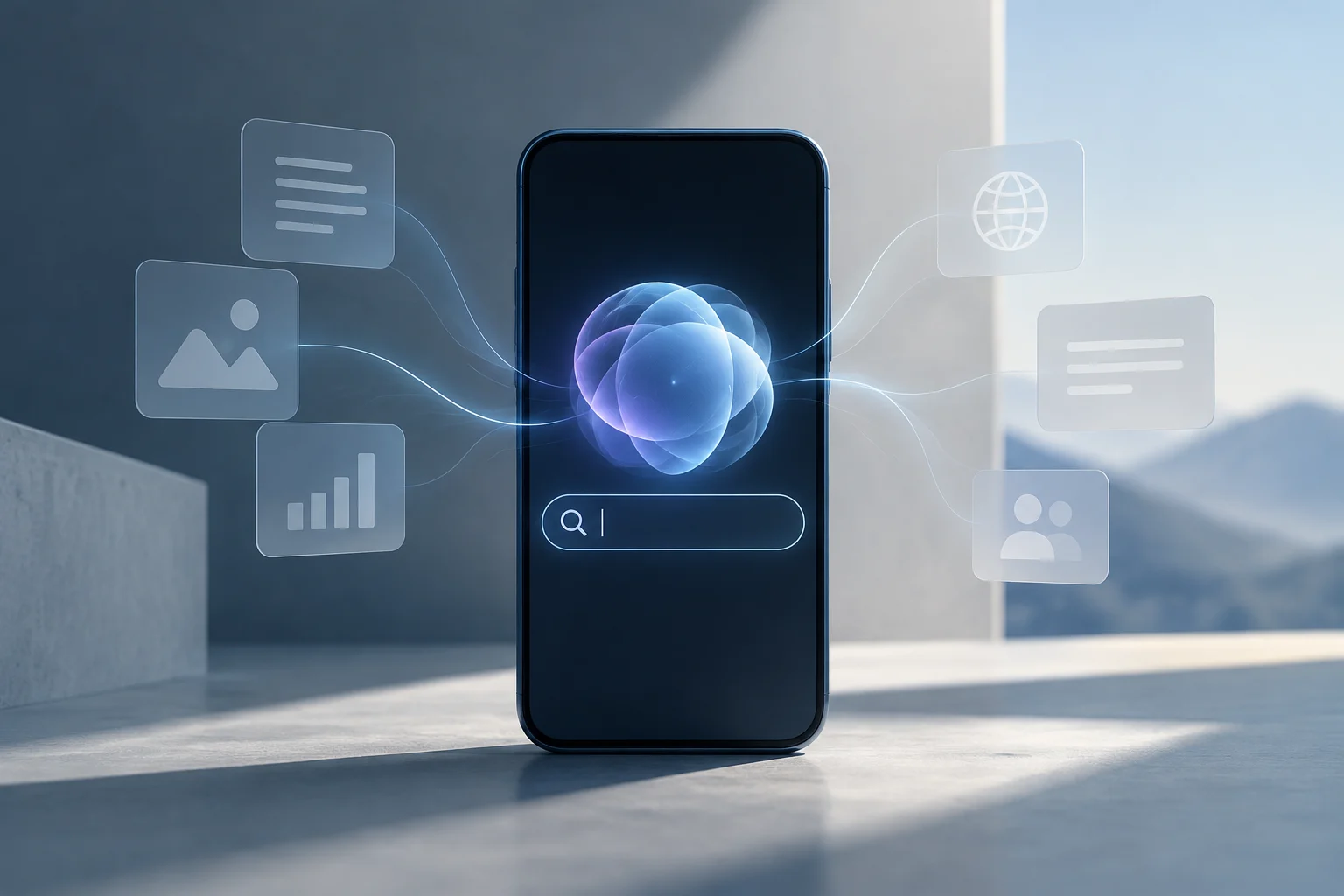
The framework gives developers a way to add text generation and structured responses, as well as mechanisms for a model to call tools defined by the app. Apple’s session also presents image-analysis capabilities, built-in semantic search, and APIs for managing context. This broadens possible use cases beyond a chat box: for example, summarizing content, classifying information, or guiding a sequence of actions. Apple Developer, WWDC26
The session mentions dynamic profiles and primitives for agentic experiences, but those terms do not mean an app receives unrestricted autonomy. Developers still define which tools exist, what data reaches a model, and what actions can be taken. In a productivity app, a tool might search authorized documents; in a support app, it might organize a response using local information. These are design possibilities, not guaranteed results: quality, latency, and usefulness depend on the model, task, and implementation.
The public documentation cited here describes a technical toolkit, but does not provide a complete compatibility matrix by device, operating system, language, or region. Before committing a feature to a product, teams should check the current SDK documentation and plan an alternative for unsupported devices or versions. The API makes integration easier; it does not remove product work, evaluation, permissions, or error handling.
Local, private, and cloud-based are not equivalent
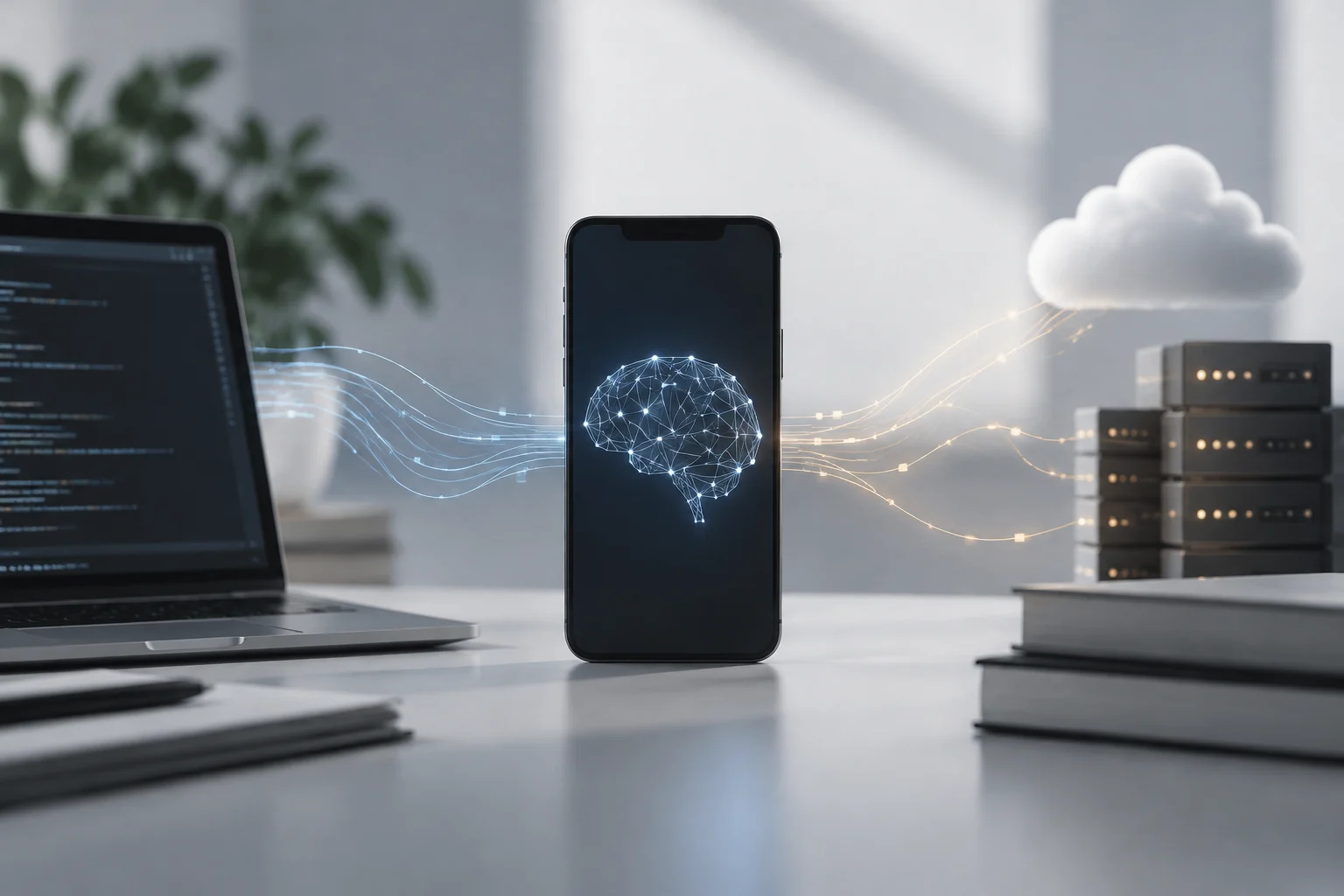
The prospect of running a model on-device can reduce the need to send every request to a server, but that should not be extrapolated to every framework capability. Apple’s presentation itself includes integration with Private Cloud Compute, third-party models, and system tools alongside the local model. In other words, the platform supports different paths; each app and feature may follow a different data flow. Apple Developer, WWDC26
Apple has previously described both local and server models for Apple Intelligence, including Private Cloud Compute. That precedent confirms that the company’s architecture is not limited to entirely offline processing. Calling Foundation Models “private” without specifying where inference happens and what data leaves the device would therefore be imprecise. Relevant decisions include which model is selected, whether there is a network connection, what content is transmitted, and what controls the app provides. Apple Machine Learning Research
The WWDC26 session also details the option to connect third-party models and use server-side intelligence. Claude’s documentation, for example, describes a package for using Claude as a remote model through an API compatible with Foundation Models; requests are sent to Anthropic and usage is billed according to its API. This is a useful contrast: the programming interface may look similar while the provider, data path, and cost change. A shared API does not make privacy guarantees equivalent. Claude documentation
Access, cost, and practical requirements
The available evidence does not justify claiming that all access is free in every configuration. A framework included in the development ecosystem may not charge per call in the same way as a commercial API, but integrating third-party hosted models can bring API keys, quotas, and billing. Anthropic’s documentation confirms charges associated with its API; Google, in turn, documents access to Gemini through Firebase AI Logic and provider features. Claude · Firebase AI Logic
It is also unwise to publish a list of compatible A- or M-series chips based on these sources: the linked session does not provide a complete hardware-requirements table. Compatibility may depend on the specific model, operating-system version, and feature being used. When planning an app, teams should review current SDK notes and test whether a capability is available at runtime, rather than inferring support from the presence of a chip from a particular family.
A cost assessment needs to include more than the framework’s license. Account for development, context storage, battery and memory consumption when inference is local, and calls or quotas when a remote service is used. In sensitive apps, it also matters how much work can be completed offline. “Free to get started” does not necessarily describe the total operating cost, especially when multiple providers are involved.
Apple versus Google and other models
Opening the framework does not turn Foundation Models into a neutral catalog where every option can be swapped without changes. Apple presents a set of integrations and abstractions for its platforms; external providers retain their own models, policies, availability, and billing terms. Firebase documentation, for example, describes Gemini tools and connections to external services from within Apple’s development framework. Firebase AI Logic
Google and Apple announced a multi-year collaboration under which future generations of Apple models will be based on Gemini models and Google cloud technology, according to the statement published by Google. The statement adds that Apple Intelligence will continue to run on Apple devices and Private Cloud Compute. This shows a relationship involving infrastructure and models, but does not prove that every user request is processed in Google’s cloud or that the local model will disappear. Joint statement published by Google
The useful comparison for developers is not a brand race, but the distinction between model, runtime, and provider. A local model can work offline and limit data transfers, but it is constrained by device resources and capabilities. A remote model may enable more demanding tasks or access to up-to-date services, in exchange for dependence on connectivity and the provider’s terms. Apps should explain this distinction whenever it affects privacy, cost, or availability.
What development teams can do now
For apps focused on writing, organization, or information retrieval, the new capabilities may reduce the effort required to build language features into the app. The image input described in the session also opens up ways to interpret visual content alongside instructions. Even so, a capability demo is no substitute for evaluation using representative data: the system must be tested in the languages, formats, and situations where it will actually be used. Apple Developer, WWDC26
A sensible preparation plan before adopting the framework includes these steps:
- Define data boundaries: identify what information can be processed locally and what, if anything, may be sent to an external service.
- Design a fallback: decide what people will see if the model is unavailable, the device is unsupported, or the connection fails.
- Evaluate results and actions: test incorrect answers, ambiguous instructions, and tool calls with meaningful consequences.
- Verify licensing and status: confirm what code has been published, under which license, and in which SDK version it is available.
The announcement’s main implication is greater flexibility for building with Apple APIs and, according to the roadmap presented, an opening of the framework’s code. It is not sufficient evidence to promise open models, automatic privacy, zero cost, or universal compatibility. Technical decisions should be made by inference path and use case, not by the label “Apple AI”.