The C3 already exists, but a new family in September has not been confirmed
The premise of an announcement for a new C3 family in September 2026 is not supported by the sources consulted. Hisense Spain’s website presents a Hisense C3 with TriChroma laser technology and UHD 4K resolution, while the retail information describes a specific model—not a European range with confirmed variants.
The date matters: on 13 February 2026, Notebookcheck reported that the C3 was available in Germany and noted that the model had debuted in China in 2025 as the Vidda C3. The Spanish product page was also published under the C3 URL. Presenting the arrival of a new European family as a September novelty would therefore confuse retail availability with a recent launch.
A post from Hisense Iberia’s Instagram account attributes the official presentation of a “new family” to IFA 2026 and mentions 5,000:1 contrast, an adjustable iris and optical zoom. However, the post does not identify models, variants or complete specifications, and those details do not match the description of the specific C3 on the Spanish product page. That is not enough to claim that the European C3 is a new family announced in September.
Confirmed specifications of the C3 that is available
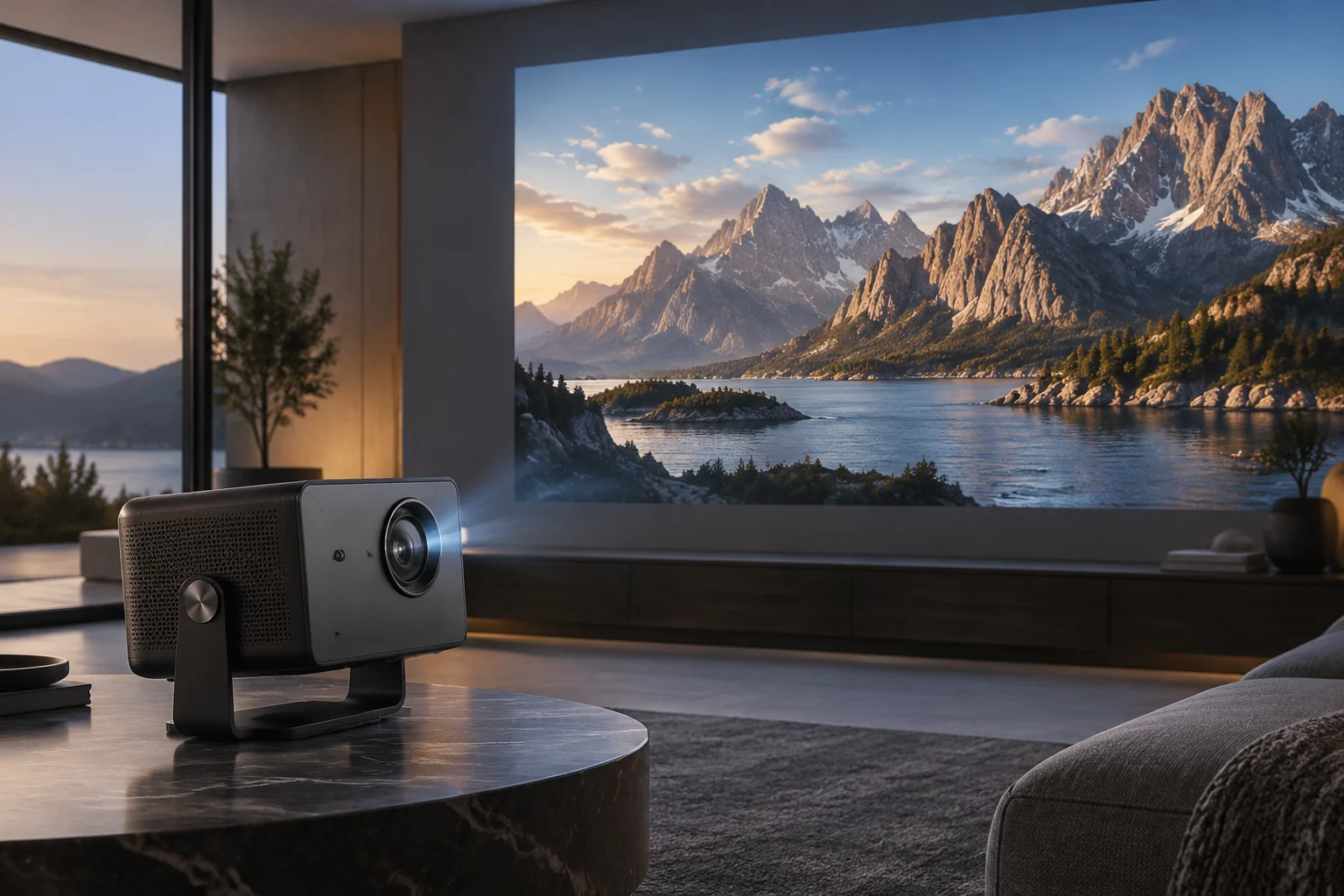
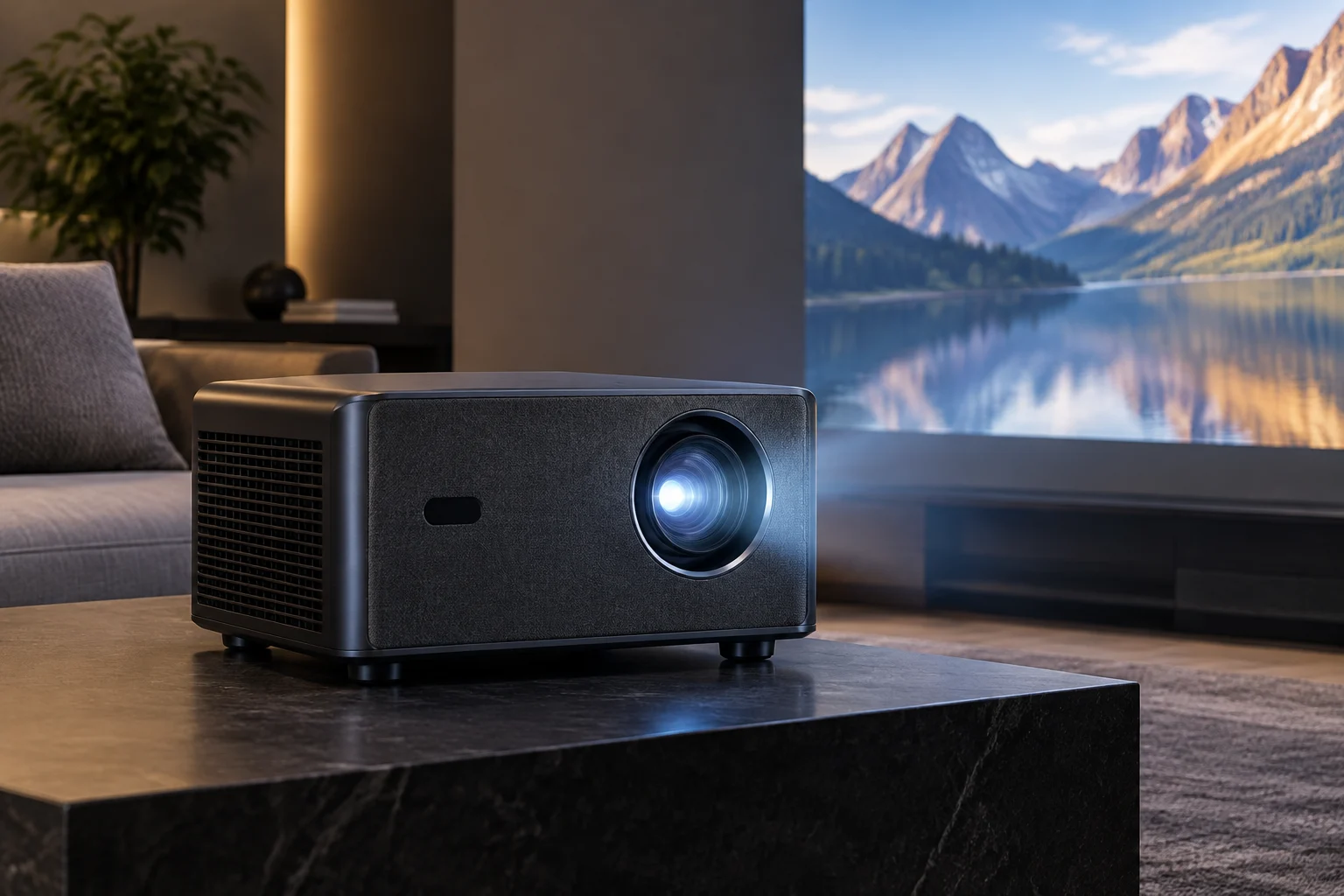
Hisense Spain’s product page identifies the device as a TriChroma UHD 4K laser projector and advertises projection up to 300 inches and 2,500 lumens. Notebookcheck’s coverage adds a resolution of 3,840 × 2,160, a three-colour laser light source, a 1.0–1.3:1 optical zoom and an integrated adjustable stand. These specifications describe the specific C3, not a complete family with verified European variants.
Notebookcheck also lists support for Dolby Vision, HDR10+ and IMAX Enhanced, the Vidaa U9 system, two 10 W speakers, HDMI 2.1 connections—including one with eARC—and USB 3.0. The official Spanish page confirms the 4K and TriChroma positioning, but not all those details appear in the available extract of its specifications. Check the regional configuration and the seller’s manual before buying, particularly if available apps or exact connections matter to you.
The published brightness figure should not be read as a guarantee of equally visible images in every room. Screen size, ambient light, projection surface and picture mode all affect the practical result. Nor is an advertised lumen figure equivalent to an independent measurement conducted under a defined test method. For home cinema, controlling room light and image size can matter as much as comparing nominal resolution.
C3 and XR10: different names, different evidence
The XR10 appears in a Hisense Spain article about ISE 2026, where it is described as a European demonstration of RGB laser projection. That article supports the claim that the model was shown at the event; it does not establish that it is a C3 variant, that the two share specifications, or that the XR10 is the new European name for the series.
By contrast, the available C3 information links it to the Vidda C3 previously sold in China and to its subsequent availability in Europe. The fact that both products use laser technology or belong to Hisense’s catalogue is not enough to treat them as one product. There is not enough evidence to merge the C3 and XR10 or compare figures that the sources do not unambiguously attribute to each model.
This distinction helps avoid a common mistake when buying technology sold under regional names: verify the exact product reference, the specification sheet for the destination market and the seller. A trade-show presentation is evidence of a demonstration, not necessarily of a launch, availability, price or equivalence with another model. In this case, the material consulted provides no model number or MPN that would establish a C3–XR10 correspondence.
Availability and price: what the available information supports
Notebookcheck put the C3 on sale in Germany for €1,699 in an article dated 13 February 2026. That figure is a price observed in a specific market on a specific date, not a current recommended price for all of Europe or a current Spanish quotation. Hisense Spain’s official page confirms that the product exists, but the material consulted provides no verifiable Spanish price.
UK retailer Visunext listed the C3 at £1,572.99 and as immediately available when the page information was collected. This is a reference from a UK retailer, not the European Union, and it should not be converted or directly compared with the German price without accounting for taxes, shipping and the observation date. Since retail details can change, confirm the final price and delivery time before deciding.
The available sources do not provide an official Spanish price or a reliable timetable for expansion to other European countries. For that reason, it would be irresponsible to present an estimated Spanish price as if Hisense had announced it. Import costs, applicable warranty and local support availability can change the real value of an offer even when the specifications appear identical.
How to assess the C3 against other home-cinema options
The sources gathered do not support a current, like-for-like technical comparison with BenQ or XGIMI models: they include no comparable tests and do not identify specific rivals measured under the same conditions. As a result, there is no basis for declaring the C3 better or worse in performance, picture quality or value for money. General projector lists are no substitute for an independent, side-by-side test of the model.
When comparing alternatives, start with installation requirements: the distance between projector and screen, image size, whether the unit can be angled and the zoom range. The C3 described by Notebookcheck has an adjustable stand and 1.0–1.3:1 optical zoom—useful features for adapting placement, but they do not remove the need to calculate the available space. Optical zoom adds framing flexibility; it should not be mistaken for an increase in resolution.
Next, check which HDR formats, streaming system, latency, connectivity and audio you need. The published C3 specifications include several HDR formats, Vidaa U9 and HDMI 2.1, but whether these suit you depends on your use and local configuration. If gaming is the priority, look for independent latency measurements in the mode you would use; for films, prioritise tests of contrast, colour and uniformity as well as resolution.
What to check before buying
The practical conclusion is straightforward: the C3 is documented as a 4K laser projector available in Europe, while the claim that a new family was announced in September is not demonstrated by a complete specification sheet or a detailed official announcement among the sources consulted. The XR10 should remain separate from the C3 until Hisense explicitly states how the two are related.
Before paying, confirm these points with the seller’s product page and, if necessary, with Hisense:
- Exact model and market: product name, reference and warranty applicable in the country of purchase.
- Final price: currency, taxes, shipping and the offer’s validity date.
- Installation: throw distance, screen size and available zoom range.
- Intended use: HDR formats, local apps, connections and independent latency measurements if gaming is a priority.
- Actual availability: in-stock status and delivery time, not just an indexed product page.
With those details, you can decide whether the C3 suits a particular room and whether its price makes sense compared with verified alternatives. The useful news is not that a new range appeared in September: it is that the C3 already has documentation and European retail availability, while the alleged expansion of the family and its relationship to the XR10 remain insufficiently specified.