A European debut is not the same as a product launch
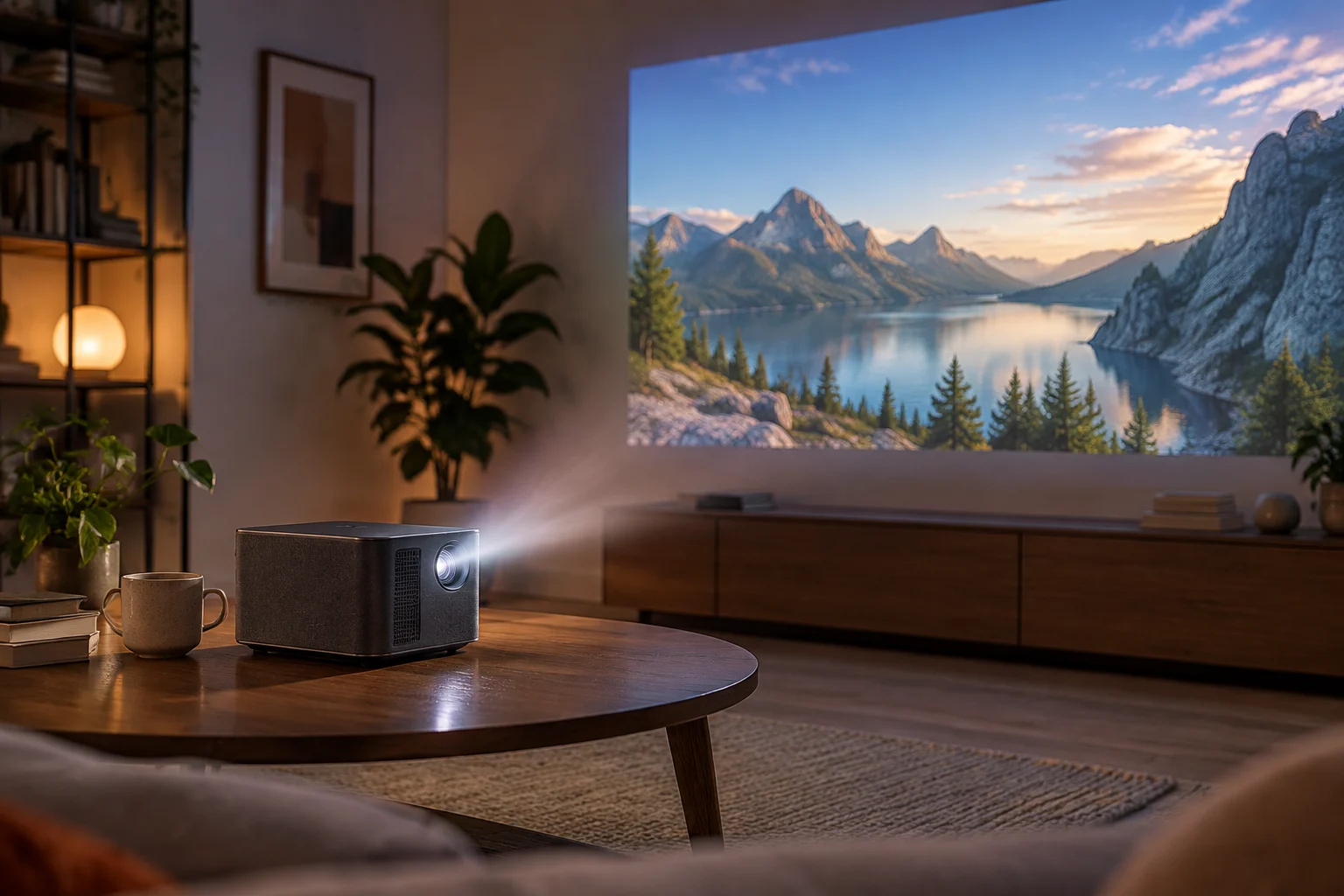
Hisense presented the XR10 at ISE 2026, the audiovisual trade show held in Barcelona, as one of its high-end laser projection offerings. The company describes it as a European debut; that presentation confirms it was exhibited, not that the product is already officially on sale in every European country. Hisense source
The distinction matters to anyone considering a purchase or professional installation. A trade-show demonstration provides insight into the product’s positioning, but does not confirm distribution dates, local warranty coverage, after-sales support or regular availability. Those details need to be checked market by market, and the Hisense Spain announcement cited here gives neither a sales date nor a European price.
It is also worth distinguishing the brand’s announcement from information published by retailers and media outlets. In March 2026, Notebookcheck reported pre-orders in the United States and third-party offers in the United Kingdom and Germany; that suggests a commercial presence through those channels, but does not demonstrate uniform official distribution across Europe.
RGB triple laser, 4K and a high brightness rating
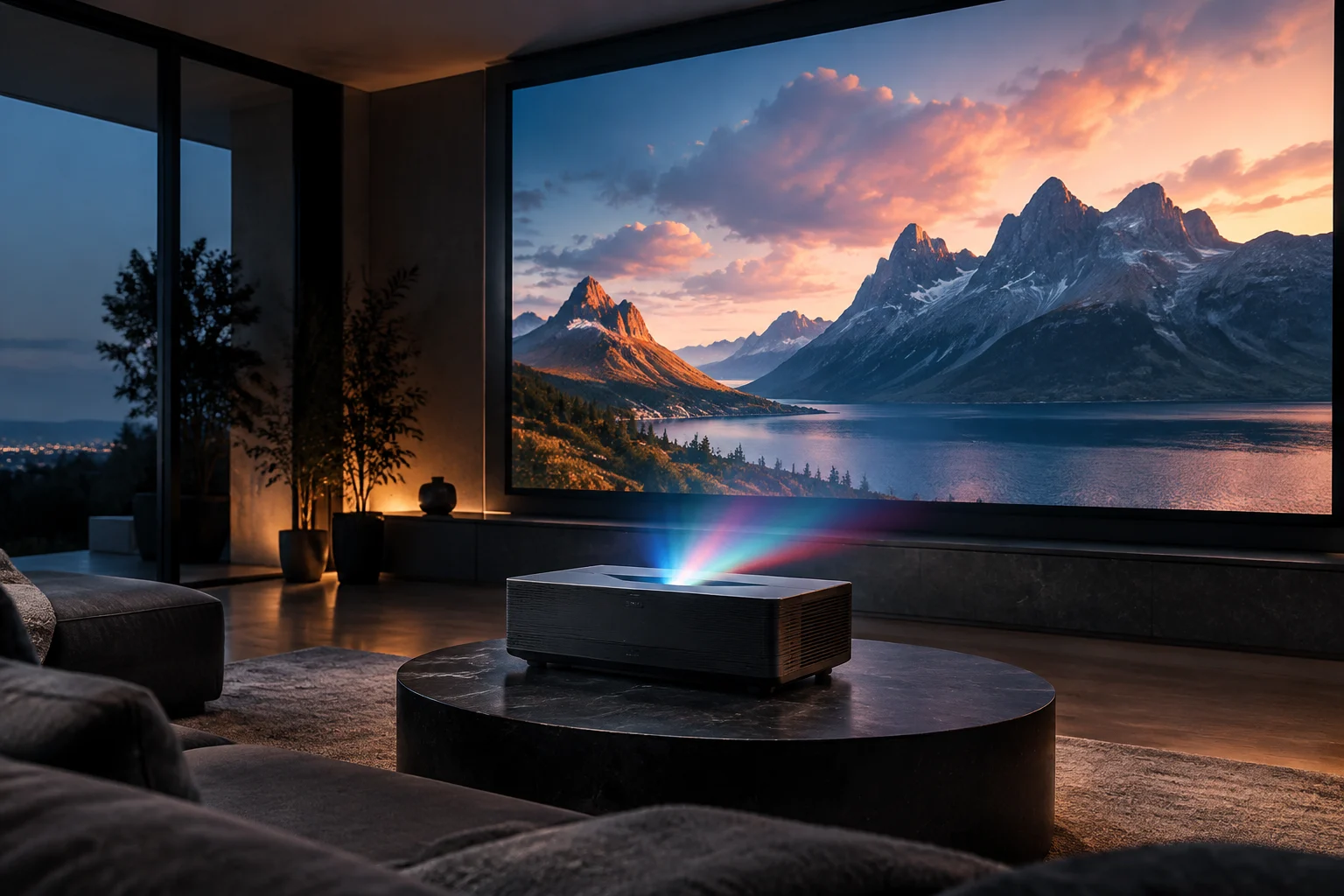
The XR10 uses an RGB triple-laser light source and offers 4K UHD resolution, according to specifications compiled by Notebookcheck. The combination points to a high-performance home projector: the system generates red, green and blue separately, while the stated resolution is 3,840 × 2,160 pixels. Notebookcheck
The published brightness figure is up to 6,000 ANSI lumens. That specification is relevant in rooms that cannot always be made completely dark, but it does not by itself guarantee an optimal picture in ambient light: the screen, projection distance, image size, colour settings and room conditions also have an effect. Manufacturers’ or media outlets’ maximum figures are no substitute for an installation assessment.
The image size can reach 300 inches, according to the same report. That maximum describes projection capability, not a universal recommendation: as the diagonal grows, light is spread over a larger surface, and perceived brightness depends on the screen and surroundings. A useful screen size is determined by distance and luminance, not just the advertised maximum.
Notebookcheck also attributes a 0.84–2.0:1 throw ratio and 2.39× optical zoom to the XR10, along with lens shift. These features may make it easier to adapt the projector to different rooms, although they do not remove the need to check dimensions, mounting and screen compatibility before planning an installation.
What it offers compared with Hisense’s C3 family
The C3 family helps place the XR10 within Hisense’s own range, but it is not a direct substitute in every case. A Notebookcheck report describes the C3 Pro, C3 Ultra and C3 Ultra Max as RGB 4K projectors with image sizes up to 300 inches and stated brightness levels of 3,000, 4,000 and 5,000 ANSI lumens, respectively. Notebookcheck on C3
Based on those published figures, the XR10 exceeds the C3 Ultra Max in maximum brightness: 6,000 versus 5,000 ANSI lumens. The comparison should be treated cautiously: it does not establish that both devices were measured under the same conditions, or that their image quality, contrast, optics or acoustic performance are equivalent. One specification alone does not constitute a performance ranking.
The C3 coverage highlights an integrated gimbal stand, whereas the XR10 specifications mention optical zoom and lens shift. These are different approaches to aiming and positioning a projector. In a home, convenience will depend on the available placement and the adjustment required, rather than on which solution appears more advanced on paper.
Commercial schedules are not interchangeable either. Notebookcheck said Hisense placed the global launch of the C3 Ultra and Ultra Max in September 2026, with the C3 Pro to follow; for the XR10, the same publication described pre-orders and retailer offers. Each model has its own status and market, so the availability of one should not be inferred from that of another.
Epson at ISE points to different use cases
A comparison with Epson requires distinguishing the home-cinema segment from professional audiovisual equipment. At ISE 2026, MuyComputerPro described the EB-XQ2030B as a 30,000-lumen 4K projector intended, among other uses, for events, immersive spaces and large-format installations. Its brightness figure far exceeds the XR10’s, but that does not make it an equivalent competitor for a home cinema room. MuyComputerPro
The same report presents the EB-870Ei as an interactive ultra-short-throw projector for education. Notebookcheck attributes 4KE resolution, up to 5,000 lumens and an image up to 130 inches wide to it. Its function and intended setting differ from those of a long-throw home projector, and the source said that its on-sale date had not yet been confirmed. Notebookcheck on Epson
Epson therefore illustrates the breadth of laser projection rather than providing a basis for declaring a single winner. The XR10 is positioned as a high-brightness home-cinema product; the cited Epson models are aimed at professional or educational installations. Budget, optics, size and intended use are more useful criteria than comparing lumens alone.
Price and availability: separate market signals
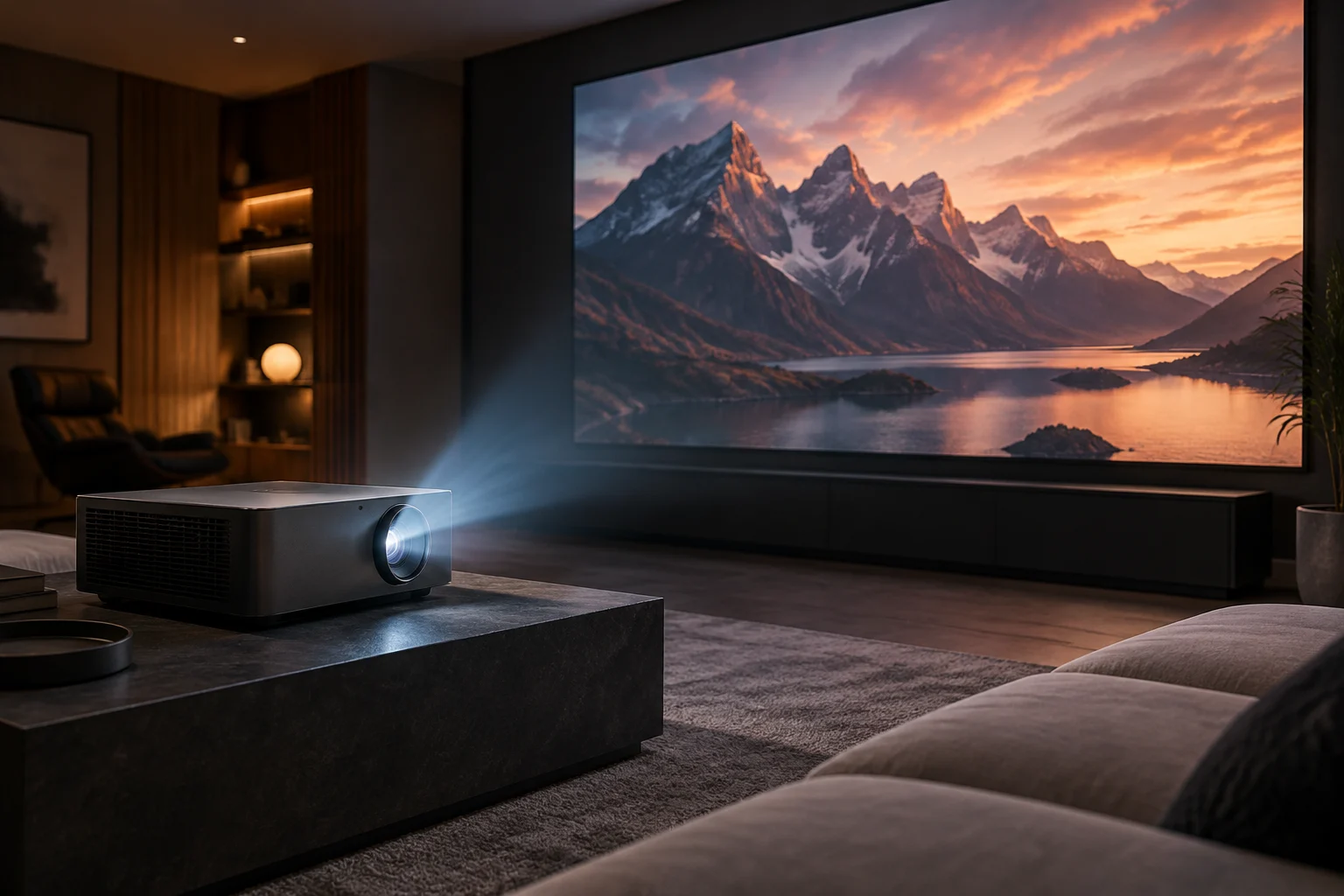
As of 16 October 2026, the information available for this article does not confirm an official European price published by Hisense. The brand’s ISE announcement reports the debut but provides neither a price nor a local sales date. In the United States, Notebookcheck reported a pre-order price of $5,299.99 against a recommended price of $6,999.99; those amounts are US-market references, not prices applicable to Spain.
The same report listed third-party offers of £5,999 in the United Kingdom and €4,999 in Germany. These prices were attributed to specific retailers by an independent outlet; they are not an official Hisense European price list. They can change and do not necessarily indicate shipping terms, taxes, warranty coverage or availability in other countries. Notebookcheck, 27 March 2026
Before buying, it is worth checking three points directly with the seller:
- Exact model and market: confirm that it is the XR10 and identify which version will be supplied.
- Warranty and service: check who is responsible in the country of purchase and how repairs are handled.
- Total cost: review taxes, shipping, the returns policy and included accessories.
An offer visible in another country can help estimate the product’s market positioning, but it cannot establish the total cost of a local purchase.
What an advanced buyer can conclude
On paper, the XR10 brings together ambitious home-cinema specifications: 4K UHD, RGB triple laser, up to 6,000 ANSI lumens and a stated maximum image size of 300 inches. The most distinctive figure is the claimed brightness, although the final experience will depend on the optics, screen and room, and the available sources do not provide an independent laboratory comparison between the XR10 and its competitors.
Its European debut at ISE confirms that Hisense presented it in Spain, while March reports recorded pre-orders and third-party offers in other markets. The evidence is not sufficient to claim uniform official availability or a recommended price for Spain. A presentation, a commercial offer and local distribution are different states that buyers should verify separately.
For a purchase decision, the specification sheet should be a starting point, not the finish line: check the actual throw against the room’s dimensions, assess a reasonable screen size, confirm the required connections and obtain the warranty terms in writing. For a professional installation, it is also worth comparing the XR10 with equipment designed for that purpose, without automatically equating brightness, format and total cost.