A report that redefines AI's role in culture
The AC/E Digital Culture Yearbook 2026 does not merely catalog tools; it proposes a paradigm shift. Artificial intelligence is no longer viewed as a threat or a simple auxiliary but as a cultural agent that redefines sovereignty and intellectual property. This edition, published by Acción Cultural Española (AC/E), marks a turning point in how Spanish public institutions approach the relationship between technology and heritage.
The publication, which continues a series started in 2013, focuses on the production, distribution, and preservation of culture in the digital environment. Unlike previous editions that might have centered on the digitization of archives, this version highlights active creation mediated by algorithms, a crucial aspect for understanding the future of creative industries in the Spanish-speaking world.
Presentation and document structure
The report was officially presented on May 19, 2026, at the Espacio Fundación Telefónica in Madrid. The event featured debate tables addressing AI's impact on creation, the battle for attention through algorithms, and the challenge of preserving the digital legacy. The yearbook's structure is divided into two main blocks: a first part with general trend analysis and a second part dedicated to the Focus 2026.
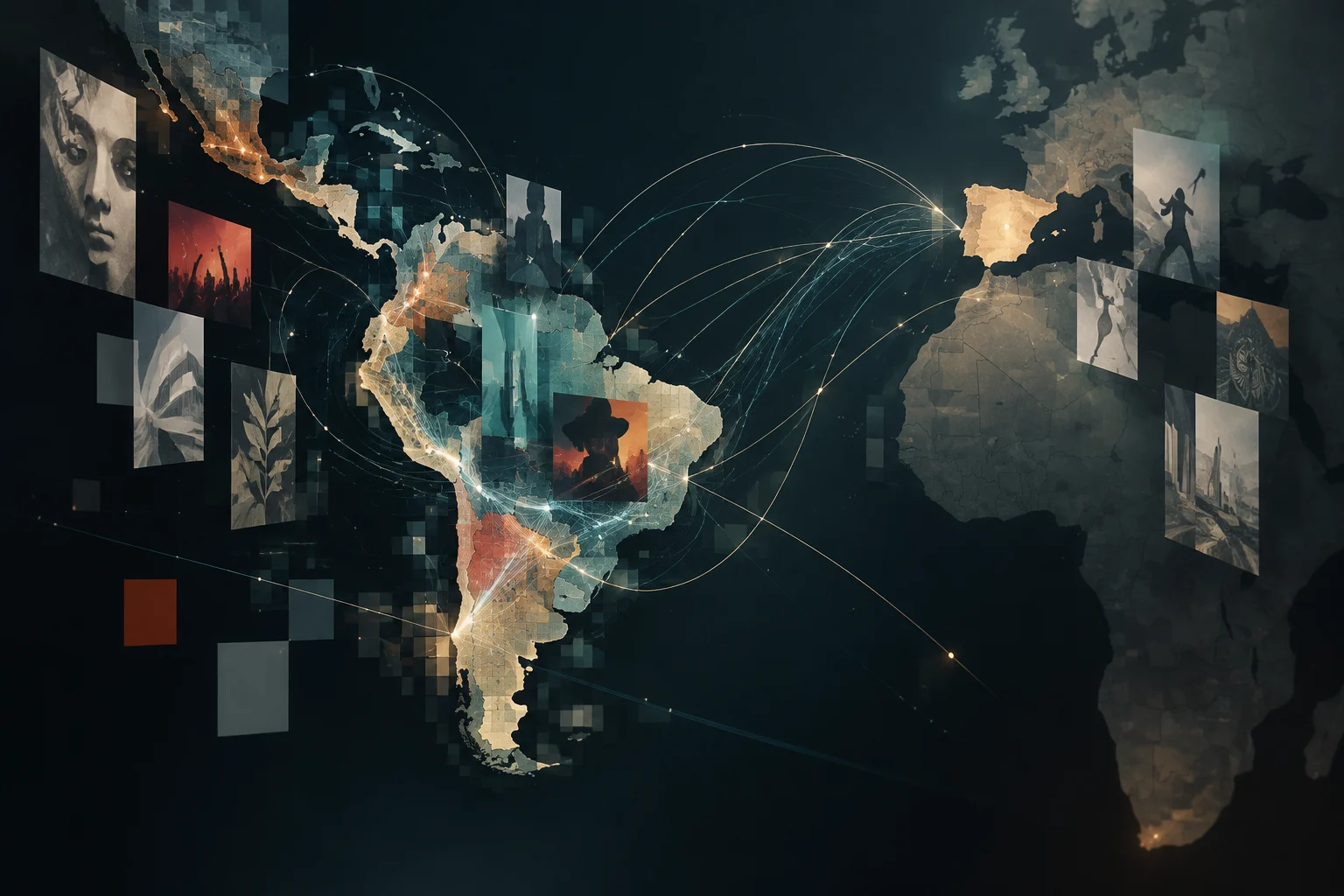
The first part analyzes cross-cutting themes such as the geopolitics of cultural supremacy, simulation versus authenticity, and audience fragmentation. The second part, the core of this edition, is a specific study titled 'Cartography of AI use in digital creation in Spanish,' which offers a detailed mapping of how these technologies are being integrated into specific disciplines.
Focus 2026: cartography of AI in Spanish
The yearbook's central study identifies what the authors call a «standard cultural AI kit». This concept groups the tools and workflows becoming generalized in sectors such as visual arts, performing arts, cinema, music, books, and video games. It is not a software list but an analysis of how these tools modify creative and distribution processes.
The cartography examines the new geopolitics of digital power, analyzing technological sovereignty strategies against the hegemony of major Anglo-Saxon markets. The report suggests that AI dominance is not only technical but linguistic and cultural, making Spanish a strategic asset for maintaining cultural diversity in the algorithmic era.
From threat to innovation lever
One of the document's central theses is that AI has stopped being perceived as a threat to become a structural asset. Experts consulted, including professionals from the publishing sector and audio industry, argue that technology enhances human sensitivity rather than replacing it. This view contrasts with the catastrophist discourse that often dominates conversations about generative AI.
The yearbook positions the cultural manager as an essential mediator in this new era. If AI generates content at scale, the human role shifts toward curation, ethics, and contextualization. This redefinition of roles has direct implications for professional training and the management of cultural institutions seeking to adapt to digital reality.
Implications for cultural sovereignty
The report addresses cultural sovereignty from a practical perspective. By mapping AI use in Spanish, the yearbook highlights the technological dependencies of Spanish-speaking creative industries. This allows institutions to identify where gaps occur and where local or regional solutions can be developed to protect cultural identity.
Digital heritage preservation is also affected by this dynamic. Articles included in the yearbook, such as those dealing with the 'Stop Killing Games' initiative or the protection of playful heritage, point out that AI not only creates but can also contribute to obsolescence or format loss if digital memory is not properly managed.
Information limits and sources
It is important to note that the yearbook is an analysis and reflection document, not a quantitative adoption survey. Statements about AI use are based on expert views and qualitative mapping, so they should not be interpreted as definitive market penetration statistics. The primary source is the official AC/E website, which offers the report in eBook format.
The event presentation and debate table summaries are available on the Espacio Fundación Telefónica website and cultural portals like KulturKlik. For a complete understanding, it is recommended to read the full document, which includes contributions from authors such as Lucía Velasco, Henar León, and Jordi Pérez Colomé, who address everything from the reconfiguration of global power to the era of newsletters.