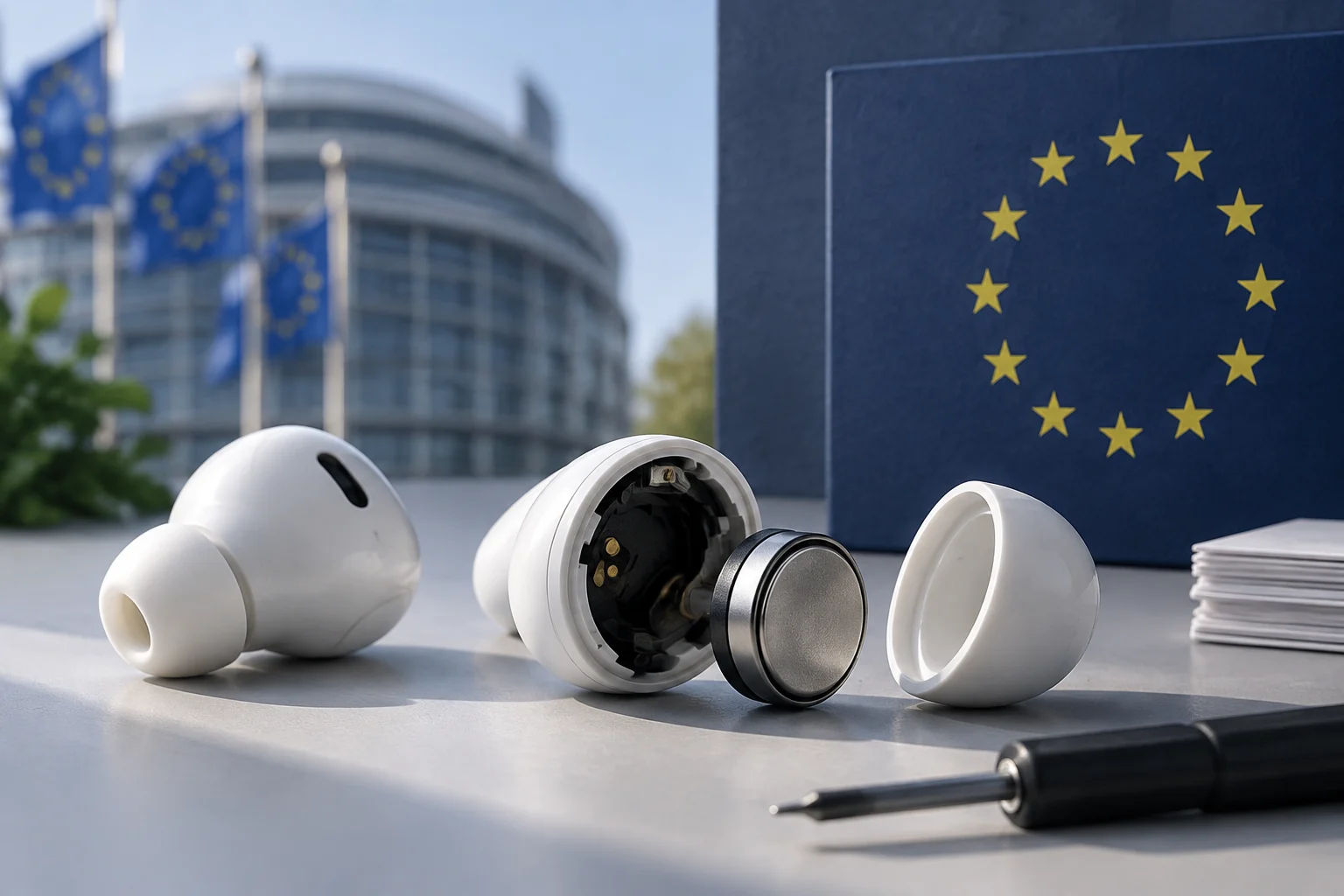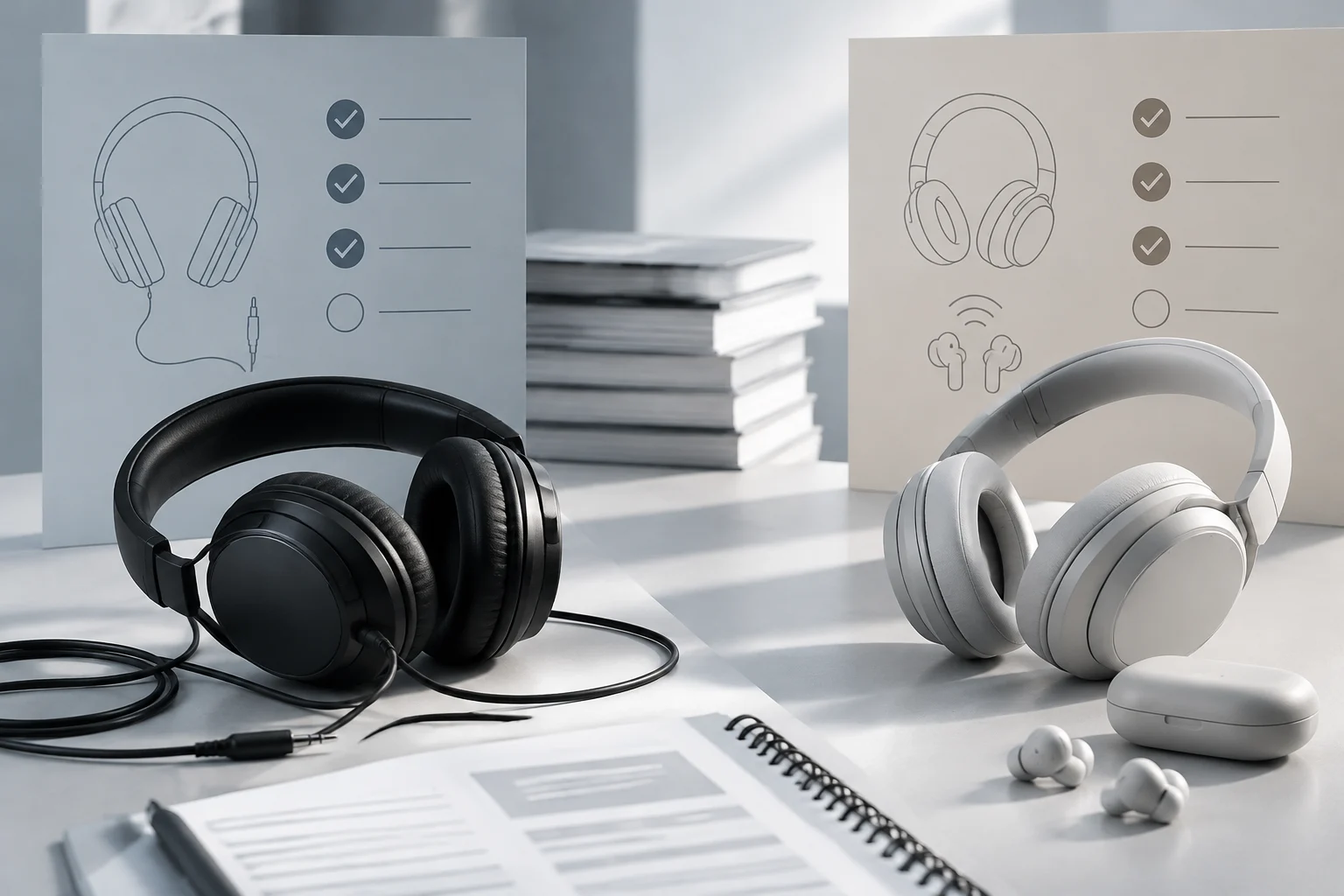
The question is whether there was a dated announcement, not which headphones to buy
Looking for headphone news in October 2026 requires specific evidence: a manufacturer identifying a model and stating when it announced it. A list of recommendations does not answer that question, even if it was updated this year or includes recent models.
The sources consulted contain no official announcement dated in October that would confirm a headphone launch. This is a conclusion limited to the material available: it does not prove that no announcements appeared through other channels or outside this selection. The distinction matters because an absence of evidence is not proof that nothing happened.
Buying guides describe options, not product launches
Several of the supplied pages are commercial or editorial buying guides. A September 2026 guide lists models and features, while other articles group recommendations for office work, sports or wireless listening. Their purpose is to help readers choose among products, not necessarily to document when each one was announced.
Such content may also combine different generations, availability information and features without providing a launch timeline. So a model appearing in a selection titled “of 2026” does not establish that it is new in October or that it was unveiled that month. The guide’s publication date belongs to the guide; it does not automatically apply to the products it mentions.
Social posts call for even greater caution. A reel might recommend categories or promote a giveaway, but a date or the word “launch” is not enough on its own to establish the announcement of a specific model. Identify who is speaking, which product they name and what verifiable document supports the claim.
What evidence would confirm a new product announcement
The most direct check is a dated announcement hosted by the manufacturer that names the product unambiguously. It should distinguish the model from a broader product family and specify what was announced. An official product page can supplement that evidence with features and variants, although an undated page does not by itself establish when the announcement was made.
It is important to separate three moments that are often confused: announcement, pre-orders opening and retail availability. Apple’s official announcement about AirPods Max 2, for example, is dated 16 March 2026 and distinguishes pre-orders, scheduled for 25 March, from availability, announced for early the following month. It is a verifiable example, but not an October launch.
For a specific news report, an editorial check should record at least:
- Manufacturer and exact model, with a link to the primary source.
- Announcement date, separate from pre-order and sales dates.
- Markets and variants, if specified by the source.
- Which details come from the manufacturer and which from independent coverage.
An announcement is not proof of performance
A manufacturer may announce a feature such as active noise cancellation, battery life or translation, but that alone does not demonstrate how it works in real-world conditions. A news report can accurately attribute those features to the announcement; claims that they have been measured or tested require published tests and an identifiable method. A marketing promise should not be turned into an independent result.
Specialist coverage provides context and can compare technologies, but it should be read with attention to its purpose and date. An October article about headphone features in 2026 may describe category trends without being a product announcement. Likewise, buying lists can include recommendations and commercial links; that does not make them invalid guides, but it does limit what they prove about a recent unveiling.
This distinction also helps buyers: if the aim is to find out what has just come out, chronology and local availability matter; if the aim is to choose a product, fit, connections, compatibility, price and comparable tests matter. These are different questions and require different sources.
Conclusion: insufficient evidence for an October launch story
The material consulted does not identify a headphone launch officially announced in October 2026. It includes guides published during the year, social posts and an earlier official announcement, but no primary source dated in October that supports the proposed launch story. Those recommendations therefore should not be presented as product news.
This conclusion is limited, not universal: there may be announcements that are not reflected in the sources received. To report a specific new product, a verifiable primary reference naming the manufacturer, model and date is still needed, along with clarification of when sales begin. Until then, the rigorous approach is not to attribute a recent launch or infer one from an annual guide.