Focus shifts from chatbots to acting robots
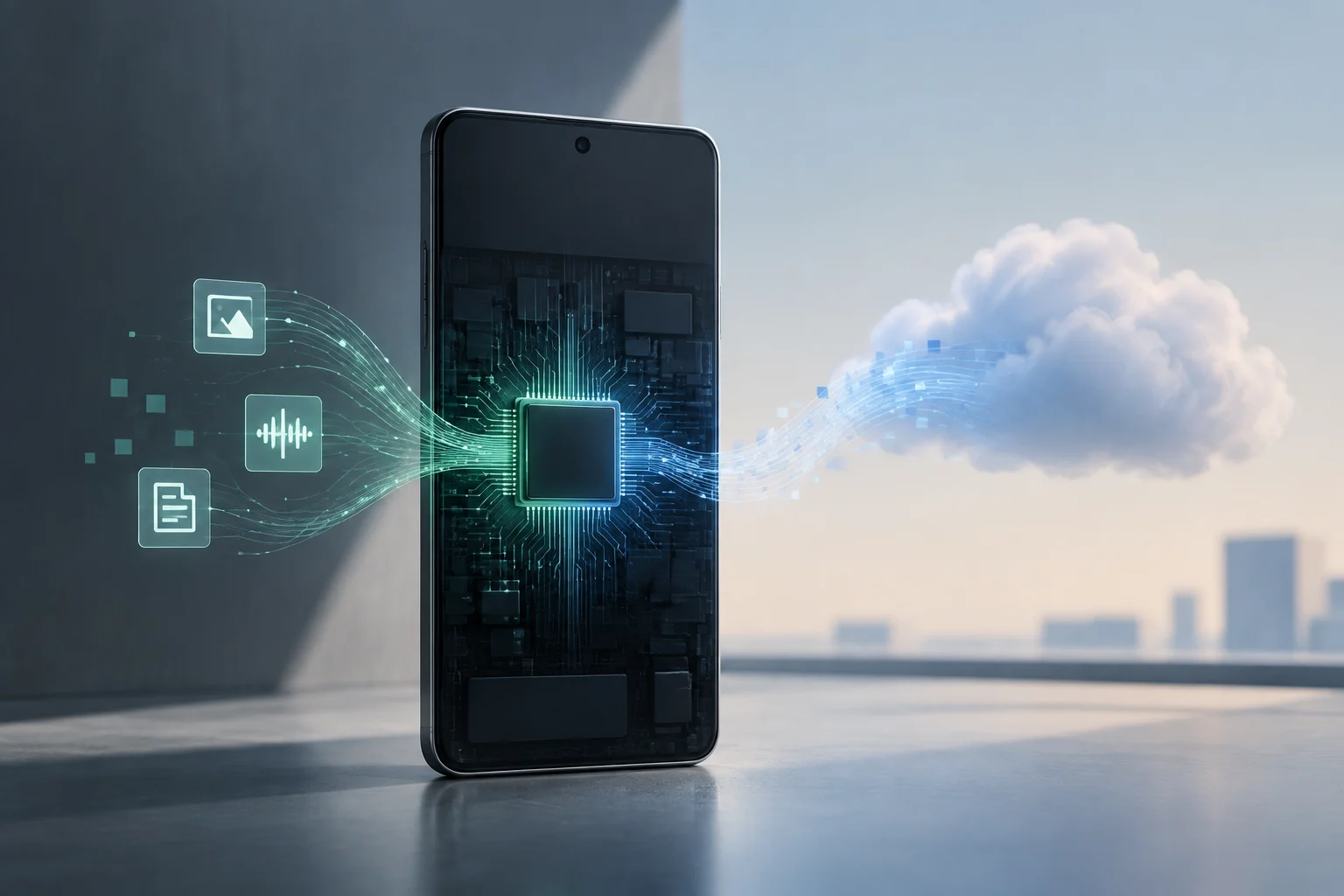
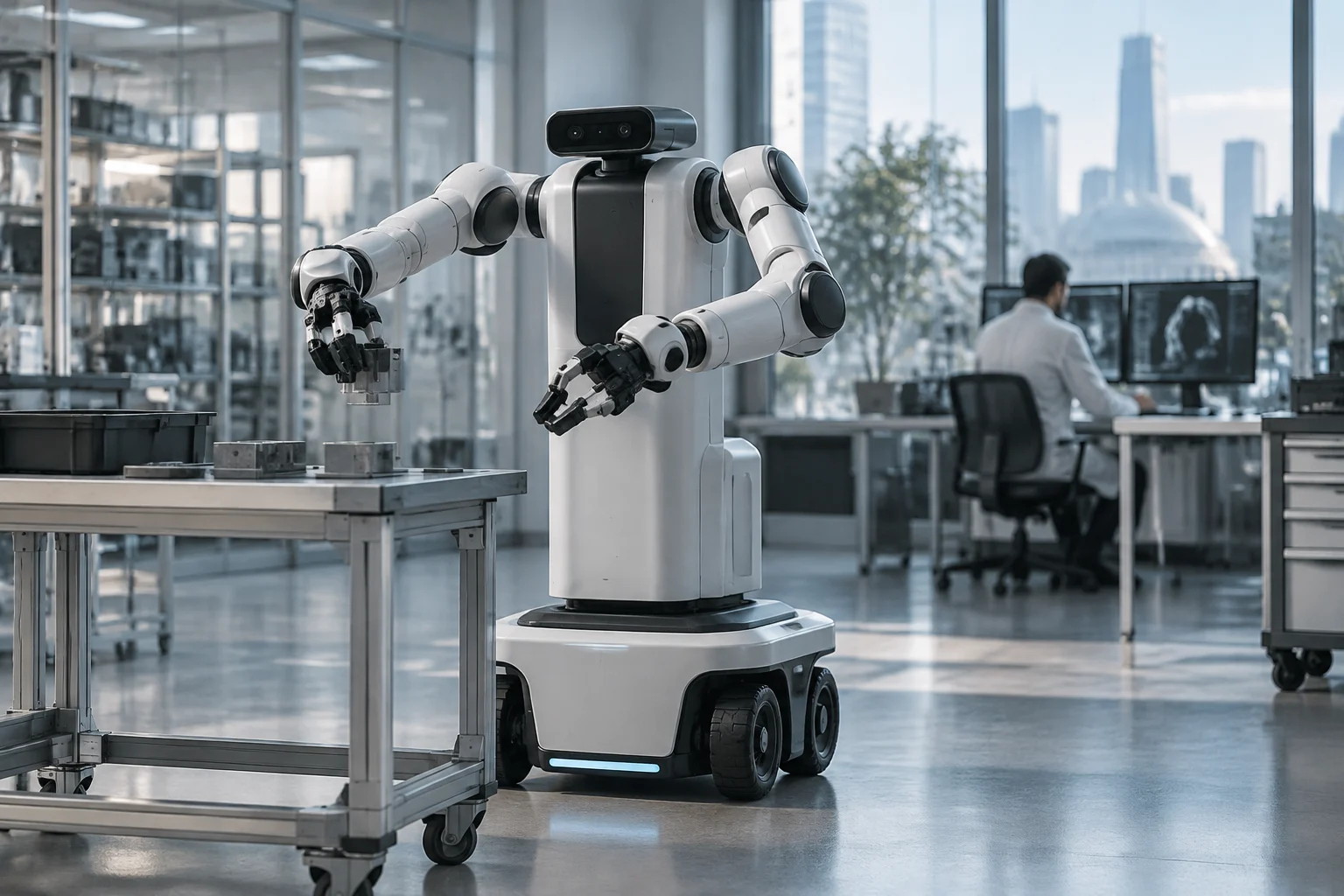
At CES 2026, part of the conversation about artificial intelligence shifted from digital assistants to systems that perceive and act in physical environments. The fair gathered robotics and automation demonstrations; among them, Franka presented a mobile dual-arm platform for embodied AI research. The key change is the location of inference: in some demos, the model runs on the robotic system, not as a request dependent on a cloud service. Franka Robotics described this capability for Mobile FR3 Duo.
It is important to separate the trend from a broader claim. A machine executing an AI policy onboard does not mean it is a consumer-ready home robot, nor that it can operate generally in any environment. The available evidence documents a reference platform and a demonstration, oriented toward robotic learning and real-world data collection, not retail sales or widespread deployment.
What Franka presented and what 'onboard' means
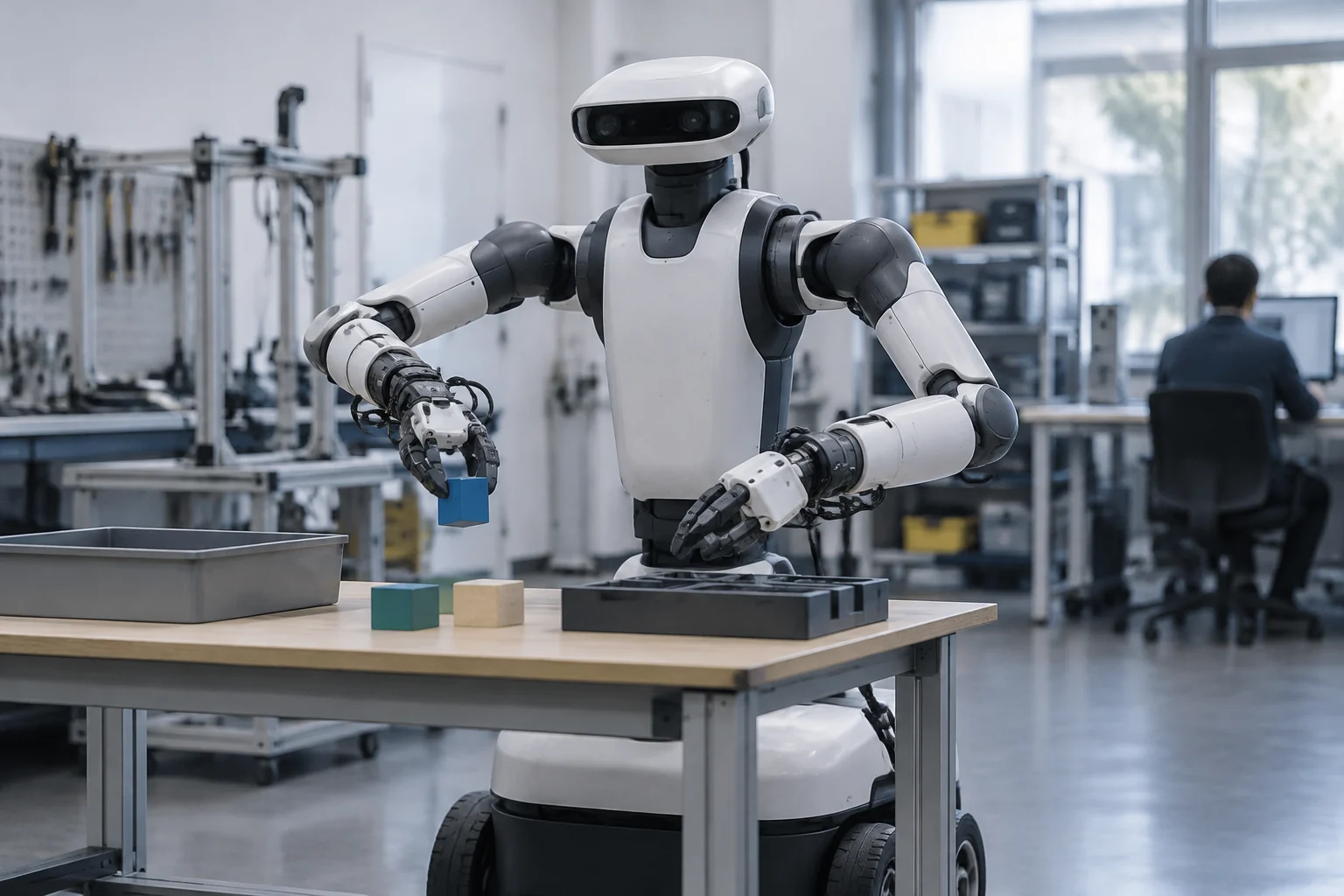
Franka described Mobile FR3 Duo as a mobile dual-arm platform for robotic learning activities. According to the company, it supports teleoperated demonstrations, real-world data collection, onboard model deployment, and local real-time inference. This combination aims to facilitate the transition from training or testing a behavior to executing it on physical hardware, without every decision needing to be sent to a remote server. These are capabilities announced by the manufacturer, not results from an independent evaluation published in the consulted sources.
The company also indicated that it would showcase an AI policy based on NVIDIA GR00T N1.6 on FR3 Duo. Its description states that the model processes the full flow from perception to movement, without needing to program each task via a fixed instruction sequence. This allows understanding what was intended to be demonstrated: coordinated behavior in a real robot, guided by a model. It does not, by itself, provide public metrics on success rate, speed, power consumption, safety, or performance in unexpected situations. Franka's publication also identifies the showcase as the first public demonstration of GR00T N1.6.
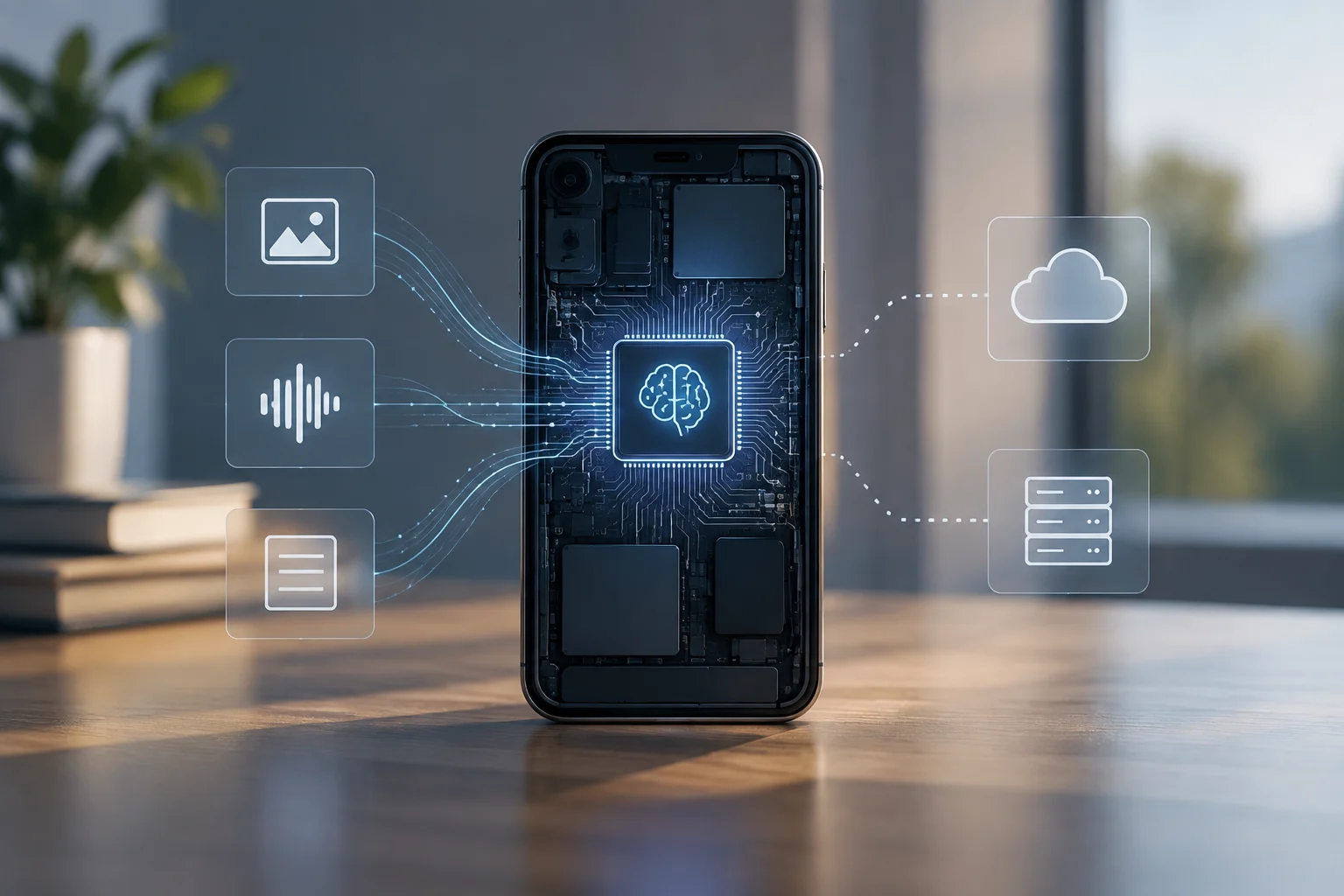
In practical terms, onboard describes where processing is executed, not an absolute guarantee that the robot functions without external communications for all its functions. The source mentions local inference and model deployment; it does not detail in the available fragment which tasks require connection, which hardware executes them, or how updates are managed. Therefore, the precise way to summarize it is local inference demonstrated on a robotic platform, not a “robot completely independent of the cloud”.
Why local inference may matter
If the model processes data on the robot, the architecture can reduce dependence on constant back-and-forth with a server. In physical tasks, a response with less intermediation can be useful for coordinating perception and movement. It may also limit the transmission of data captured by sensors, although this depends on what is recorded, what is transmitted, and how the system is configured. Local execution does not automatically equal privacy: details on storage, telemetry, permissions, and data processing are needed to support that conclusion.
Franka’s demonstration connects to a broader CES 2026 trend toward AI applied to machines and devices. NVIDIA described its presence at the fair as a showcase of AI solutions in various sectors, while its event coverage highlighted the Rubin platform and the Alpamayo family of open models for autonomous vehicle development. These are announcements from different domains: they should not be mixed with the specific FR3 Duo test nor interpreted as evidence that a single model serves all robots. NVIDIA’s coverage of CES provides this context, but does not independently validate Franka’s capabilities.
There is also a difference between executing inference on the device and training the model there. Franka speaks of real-world data collection and local deployment, two steps in the development cycle; it does not state in the cited information that all training of GR00T N1.6 occurs inside the robot. This distinction matters because the expression “local AI” can range from a decision executed onboard to a complete training and storage process, and the sources do not justify attributing that maximum scope here.
The demonstration does not resolve deployment challenges
A tech fair allows observing a capability under prepared conditions, but it does not replace prolonged tests in different spaces, with varied objects and people present. Franka’s page does not publish comparable metrics, safety protocols, sustained use results, or certifications in the cited text. The absence of such data does not invalidate the demonstration; it limits what can be concluded about it. For research teams, the announcement signals an experimentation platform; for buyers, it does not constitute a product sheet with confirmed availability, support, and price.
Safety is particularly relevant when a system controls physical movement. Available sources describe the architecture and demonstration, but do not specify how force limits, emergency stops, responses to perception failures, or protection against malicious inputs are verified. Alias Robotics, also linked to CES 2026, announced it would bring cybersecurity solutions for robots, a reminder that robotic systems require attention to both physical behavior and software components. That announcement does not prove that Franka’s platform incorporates those solutions. Alias Robotics documents its own participation and offer, not an evaluation of FR3 Duo.
Before considering a demonstration as proof of commercial readiness, it is advisable to seek concrete information on operation, maintenance, and limits: in which spaces it was tested, what tasks it completed, what human supervision it required, and how it behaved under failures. It also matters to know if the model can be updated, audited, and safely stopped. Without that data, the responsible conclusion is narrower: CES showed a plausible technical route, not a guarantee of general performance in homes, factories, or hospitals.
What can be concluded and what remains open
The most concrete data point is that Franka presented Mobile FR3 Duo as a reference platform for embodied AI and announced a demonstration of NVIDIA GR00T N1.6 executing onboard for tasks spanning perception and movement. This makes the fair a visible example of integration between models and robotic hardware. It does not turn the exhibition into a consumer product nor allow claiming that robotic autonomy is resolved.
For developers and institutions, the interest lies in the possibility of gathering teleoperated demonstration, data collection, and local inference on a single platform. For end users, the decisive factor will remain less the name of the architecture and more the evidence of safety, reliability, support, and cost. With the cited information, price, public sale date, or commercial availability of Mobile FR3 Duo cannot be confirmed; nor is there sufficient data to compare its performance with other platforms.
The most solid reading of CES 2026 is therefore moderate: physical AI is advancing through platforms that bring models to robots capable of interacting with the environment, but demonstrations still need to translate into reproducible tests and clear deployment conditions. The useful headline is not that robots already operate without limits, but that onboard inference begins to appear in real robotic systems, while their specific advantages and restrictions still require documentation.