Terminology confusion: Micro LED, Mini LED and OLED
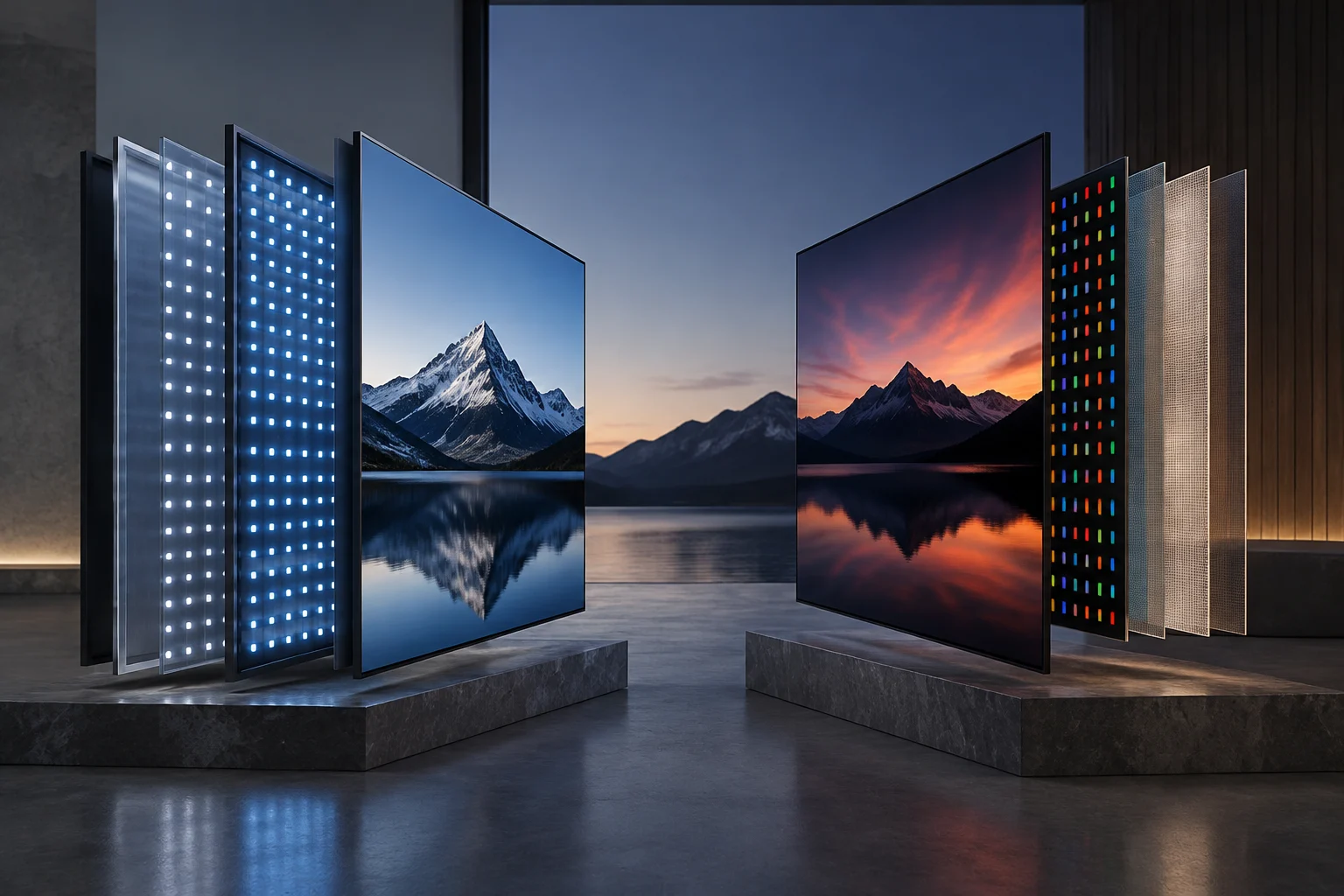
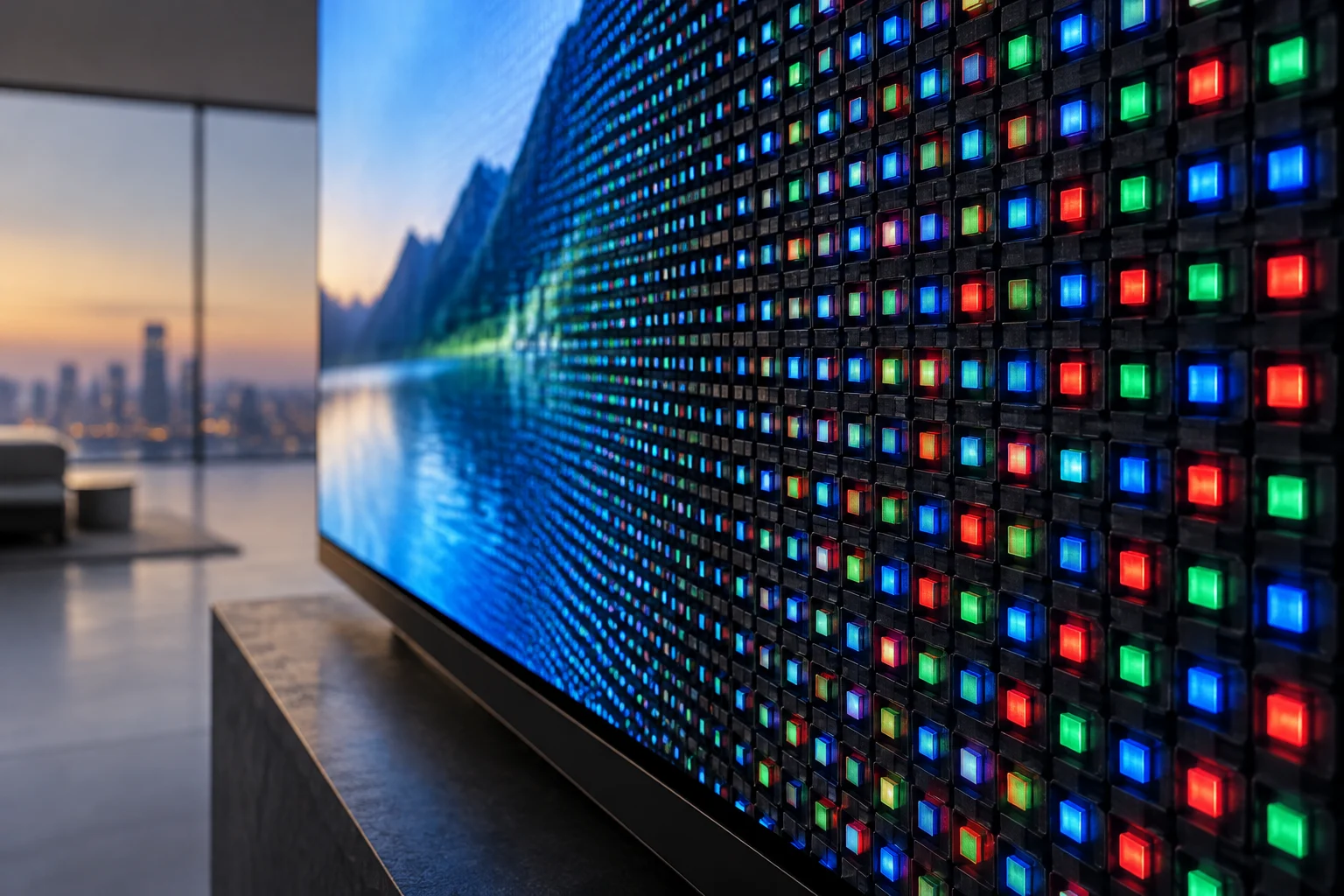
In TV marketing, the term Micro LED is often used imprecisely, creating confusion with other technologies. Unlike OLED, which uses organic compounds that degrade over time, Micro LED uses microscopic inorganic gallium nitride (GaN) LEDs, generally smaller than 100 microns. This fundamental difference means that each pixel emits its own light, enabling perfect blacks and infinite contrast without the image-burn risk associated with organic panels. In practical terms, the distinction is not just a matter of naming: it describes which component produces the light and how each point in the image is controlled. That is why it is worth distinguishing the display technology from the type of screen before comparing models or prices.
Because it emits light independently at each pixel, Micro LED can switch off the areas that should appear black completely, rather than relying on a shared light source. This explains its infinite contrast and the absence of the burn-in risk associated with organic panels, although it does not mean that every screen with a similar label works in the same way. Precise terminology matters especially in a category where closely related terms can describe different technical solutions.
By contrast, Mini LED is not an emissive technology but an improvement to the backlighting in LCD screens. It uses thousands of tiny LEDs to control the backlight more precisely, delivering higher brightness and better contrast than standard LED, but not the infinite contrast of Micro LED. Understanding this distinction is crucial to avoid paying a premium for a technology that does not provide the theoretical advantages of direct emission. Mini LED can improve LCD performance, but its pixels do not produce light independently.
The comparison, then, should not come down to which name sounds more advanced. Micro LED and OLED are self-emissive technologies, whereas Mini LED remains a form of LCD backlighting. That technical difference helps explain both the advertised visual advantages and the gap in price and availability between these options in 2026.
The market in 2026: prototypes versus real products
Despite spectacular demonstrations at trade shows such as CES or ISE, commercial availability of Micro LED TVs for consumers remains extremely limited. Market data projects the Micro LED segment to grow from $1.1 billion in 2026 to $13.56 billion in 2033, but that growth is concentrated in the commercial sector and ultra-high-end homes. Most products shown at trade shows are prototypes or signage displays that are not available for retail purchase. A product appearing in a demonstration, therefore, is not enough to establish that it is a conventional buying option.
The growth forecast describes the expected size of the segment, but it does not mean that Micro LED TVs will be within reach of the average buyer. The market’s concentration in commercial installations and ultra-high-end homes explains how major announcements can coexist with limited retail availability. The figure should be read alongside the types of products driving that expansion, not as a sign of widespread adoption in homes.
Models genuinely sold on the market, such as Samsung’s modular wall solutions or TCL’s large-format displays, are niche devices. The barrier to entry is not only price, but also installation complexity and the minimum available size. For the average buyer, Micro LED remains a cutting-edge technology rather than a practical option, while Mini LED and OLED dominate the high-end market with much better value for money.
It is also important to distinguish between a product being marketed and a product that is easy for any household to acquire. Modular or large-format solutions can exist on the market while still requiring unusual amounts of space, budget and installation work. Real availability is therefore not measured solely by whether a model exists: its format and installation process must also suit the user’s needs.
Trade shows remain useful for seeing how the technology is evolving, but a screen on display may be a prototype or a signage product, not a TV available in stores. The relevant test for buyers is whether it is a marketed model and whether its format can be installed in the intended space. This distinction prevents public visibility from being mistaken for practical availability.
Technical specifications and costs
Micro LED’s main technical advantage is its ability to deliver brightness and contrast at the same time, without compromises. Unlike Mini LED, which can suffer from blooming (light halos around bright objects against dark backgrounds), Micro LED controls every pixel individually. That precision comes at a cost: Micro LED TVs currently available typically exceed $100,000, putting them beyond the reach of most households, even in the premium segment. The balance between performance and price is central to assessing a purchase: pixel-level control does not eliminate the cost of manufacturing and installing a large-format screen.
Blooming is visible when light from a bright object spreads around it against a dark background. Individual control in Micro LED avoids this limitation of the backlighting described for Mini LED by allowing each pixel to be regulated. The difference is visible in scenes with bright points next to dark areas, though the technical advantage must be weighed against the price and how the TV will be used.
The price of more than $100,000 puts available models in a very different category from ordinary TVs, even for buyers looking for a premium option. Cost is not a secondary consideration beside picture quality: it determines who can realistically access the technology and helps explain why Micro LED remains a niche.
In terms of size, tiled technology makes it possible to build large-format screens whose cost grows linearly with size, unlike standard LCD and OLED displays, whose cost increases exponentially. This makes Micro LED particularly appealing for screens of 110 inches or more, intended for dedicated home cinemas or commercial spaces. Below 85 inches, the technology is not economically viable compared with existing alternatives.
A modular design makes it possible to combine modules into a large viewing surface. In that context, the fact that cost grows linearly with size can be an advantage compared with the exponential increase attributed to standard LCD and OLED displays. Screen size changes the economics: the feature makes more sense when the goal is a screen of 110 inches or more, not a conventional TV of smaller dimensions.
Below 85 inches, the cost is not economically viable compared with existing alternatives. Between that threshold and the very largest formats, the appeal depends on the purpose of the installation: a tiled screen may suit a dedicated home-cinema project or a commercial space, but that alone does not make Micro LED a mainstream consumer option.
Practical limitations for consumers
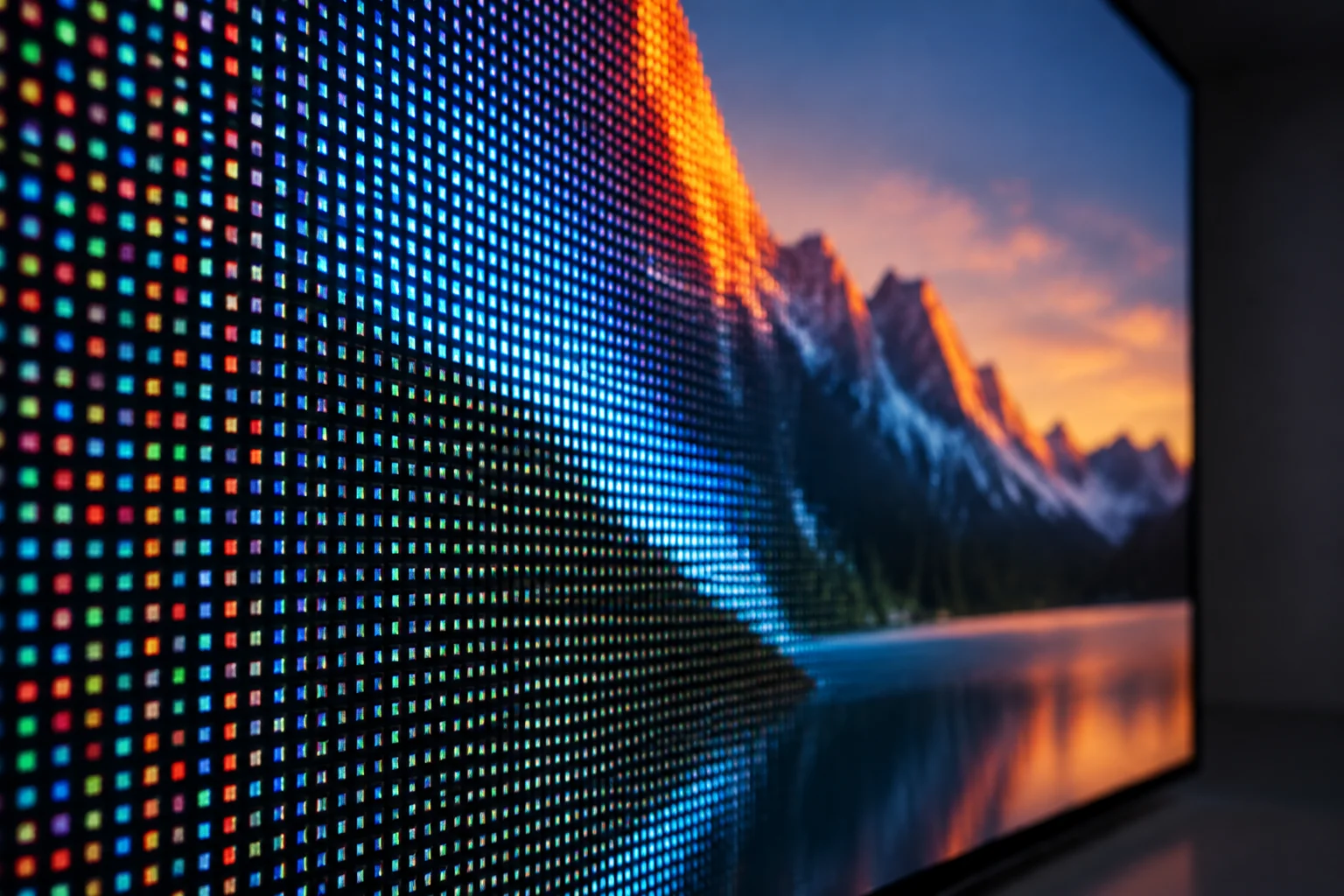
Beyond price, buyers should consider HDR content compatibility and estimated lifespan. Although Micro LED theoretically offers a longer lifespan than OLED, content optimized for its extreme brightness levels remains limited. Most streaming and film content is graded for brightness ranges that do not make full use of these panels’ capabilities, reducing the perceived advantage in everyday use. As a result, a screen’s promised peak performance does not automatically translate into an equally obvious difference in every film or programme.
A longer theoretical lifespan than OLED is presented as an advantage, but it is not the only criterion for a purchase. The content being watched and how it is graded matter too. If a production does not use the panel’s extreme brightness levels, some of its capability goes unused during ordinary playback, even though the screen can technically deliver it.
HDR compatibility should not be understood as a TV specification alone. The experience depends on whether content is available that is prepared to use the available brightness levels. Because most streaming and film content is graded for ranges that do not fully exploit those capabilities, the potential benefit may be less noticeable in daily use than peak figures suggest.
Installation is also a decisive factor. Unlike a traditional TV that can sit on a cabinet or be mounted on a wall, large-format Micro LED systems require advance architectural planning, including the support structure and heat management. This logistical complexity makes them a poor fit for users looking for a simple purchase and setup, reserving the technology for professional integration projects.
Advance planning includes deciding how the screen will be supported and how heat will be managed; it is not simply a matter of choosing a wall and plugging in the unit. Professional integration addresses that requirement and distinguishes these installations from buying a traditional TV, which can normally be placed on furniture or wall-mounted without the same level of preparation.
That is why available space and the nature of the project are part of the decision just as much as picture specifications. If a buyer wants an easy installation and quick setup, the size and logistics of a Micro LED system may matter more than its technical advantages. Practical complexity limits its suitability for the average home, even if it is an attractive proposition for a dedicated room or professional project.
Alternatives: Mini LED and OLED in 2026
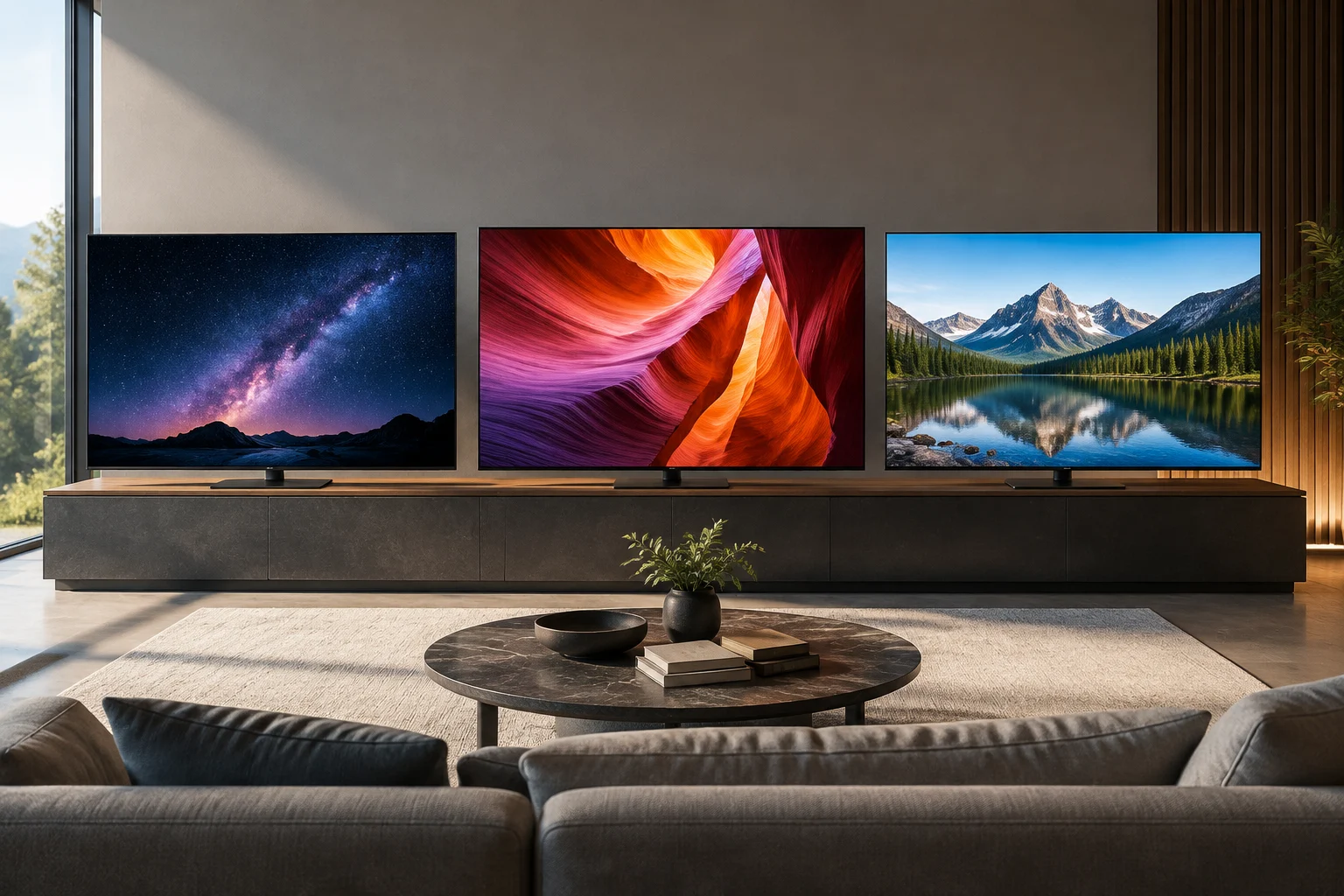
For most users, high-end Mini LED and OLED technologies offer better value for money. Mini LED TVs, such as Samsung Neo QLED or TCL models, reach brightness levels of 1,000 to 3,000 nits, making them suitable for bright environments and HDR content, at a fraction of Micro LED’s cost. OLED panels, including QD-OLED variants, remain the gold standard for contrast and colour fidelity at standard sizes. The comparison does not mean these alternatives are identical; rather, they tend to meet common needs more effectively without requiring the budget and installation demands of Micro LED.
In a bright room, the 1,000 to 3,000 nits cited for Samsung Neo QLED or TCL Mini LED TVs are particularly relevant, as well as beneficial for HDR content. These models cost a fraction of Micro LED and use LCD backlighting, not individual light emission from every pixel.
OLED, including QD-OLED variants, stands out at standard sizes for contrast and colour fidelity. It need not be assigned the same characteristics as Micro LED to recognize its position: it is a high-end alternative suited to more common picture and format priorities, with more favourable value for money for most people.
The practical choice depends on the user’s profile. If the goal is an immersive cinema experience in a dedicated room and budget is no constraint, Micro LED is the most futuristic and durable option. However, for most homes, a high-end Mini LED or latest-generation OLED TV will provide a significant picture-quality improvement without the disproportionate investment or installation limitations associated with Micro LED.
In short, use case and budget determine the choice. Micro LED can make sense in a dedicated room when a large-format screen is wanted and money is no object, but installation requirements remain part of the project. For most homes, high-end Mini LED or OLED offers a major picture improvement without that disproportionate outlay.
Choosing between the alternatives also means deciding which benefit matters most: brightness in well-lit environments with Mini LED, or contrast and colour fidelity at standard sizes with OLED. There is no single answer for everyone, but the balance of price, format and ease of installation explains why both technologies remain more practical for most consumers in 2026.