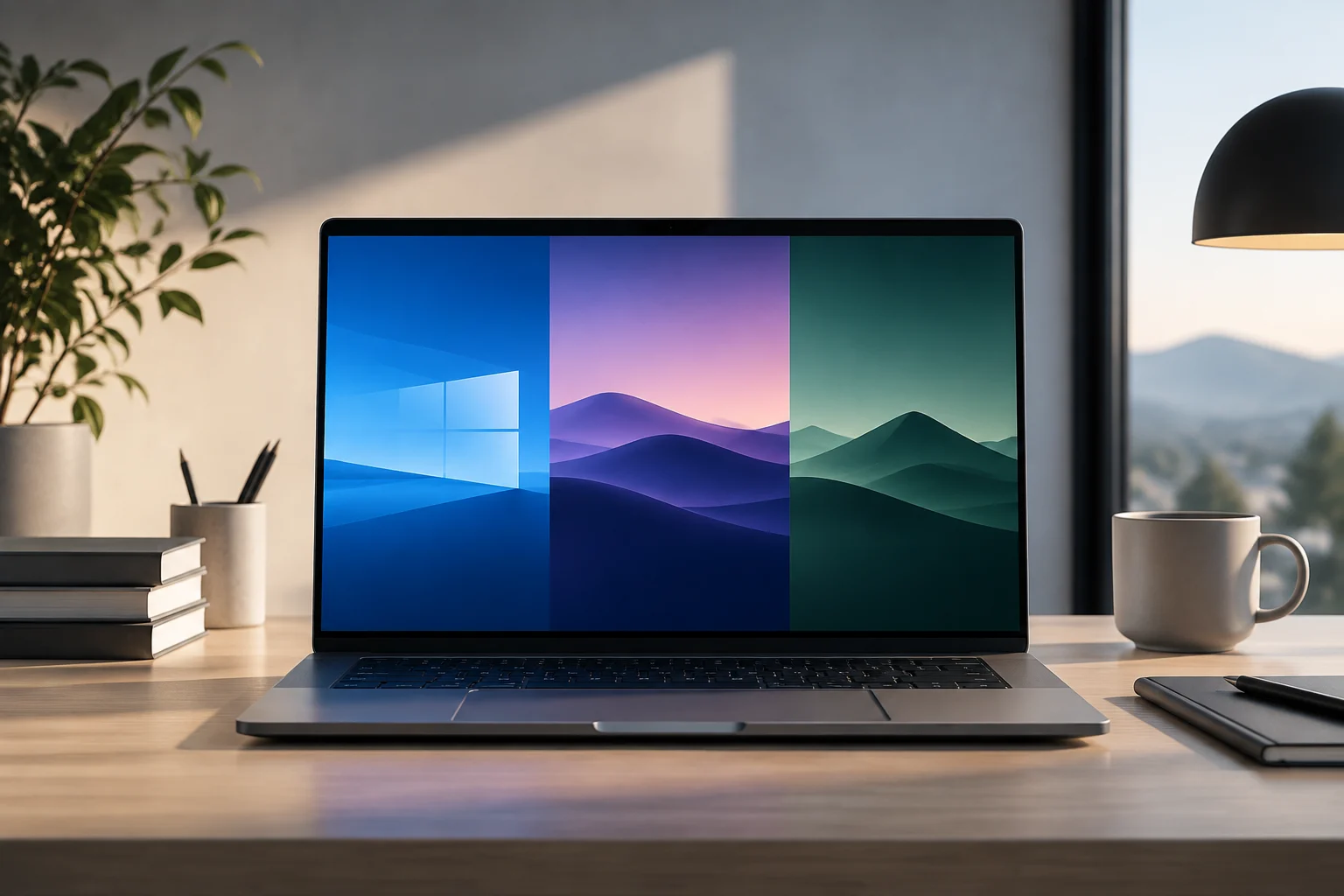
The operating system is the foundation, not the whole computer
An operating system coordinates the work between hardware and applications. It manages resources such as the processor, memory and storage, and provides services that programs use to run. It also supplies the interface through which a person launches applications, organizes files and adjusts the computer. Without this layer, each program would have to manage many common tasks and interactions with physical components on its own. Its primary role is to make using the computer possible and coordinate that use, not to guarantee that every application or peripheral will work on every computer.
The term “operating system” covers different products and projects. Windows and macOS are platforms associated with their respective providers; Linux, by contrast, usually reaches users as distributions that combine the Linux kernel with additional tools and programs. So asking simply whether a computer “has Linux” does not necessarily identify which distribution, version or environment it includes. The name is a starting point: for a practical decision, you need to be specific about the device and how you plan to use it. This guide compares everyday selection criteria; it is not a performance test or a universal ranking.
First, check that your applications and devices are compatible
The most useful check is usually a specific one: make a list of the applications you need and confirm that a compatible version is available for the operating system and type of computer you plan to use. It is not enough for an application to appear in a store or an old article: check the requirements for its current version and whether it offers all the features you need. For professional software, it is also worth confirming with the provider which editions, add-ons or associated services are supported.
Do the same for printers, audio interfaces, scanners, accessibility devices and other important peripherals. Check the manufacturer’s documentation to see whether the exact model has drivers or support for the system you have chosen. With Linux, also verify the relevant distribution and version: a device working with one distribution does not automatically prove that it will work with all of them. Compatibility for the exact model matters more than a platform’s general reputation. A useful preliminary filter is to write down what you need, look for documentary confirmation, and resolve any critical uncertainty before buying or migrating.
Requirements, versions and support: a time-sensitive check
A system’s minimum requirements do not, by themselves, describe the experience a person will have. Microsoft publishes the requirements and specifications for Windows 11; before buying a PC or trying to upgrade one, consult that documentation and check the specific features of the computer. A device meeting the requirements also does not confirm that every application, accessory or feature you care about will be available. Suitability depends on the combination of hardware, software and needs, not merely on passing a list of minimums.
For macOS, consult Apple’s current documentation for the version and Mac model you are considering. The security release list can help you check which versions receive security releases, but it does not replace compatibility requirements. For Linux, add the specific distribution, its version and the support policies of the project or provider to your review. For example, Ubuntu describes Expanded Security Maintenance as an extended security maintenance option within Ubuntu Pro; it should not be interpreted as a promise that applies equally to every distribution. Record the version and the date you checked: support changes, and a general page does not guarantee that every version is still covered.
Security: maintenance matters, but it is no absolute guarantee
An operating system may include security mechanisms and receive fixes, but the presence of these features does not prove that a computer is free of risk. Effective maintenance depends, among other things, on whether the version in use is still covered and whether relevant updates are released and installed. Apple maintains a security releases page; Microsoft documents the Windows lifecycle; Canonical explains the conditions of its extended maintenance offer for Ubuntu. These sources let you check policies and releases, but do not, by themselves, establish which platform is “the most secure.”
For Linux, distinguish the kernel from the installed distribution: Linux kernel security documentation covers technical security areas of the project, but it does not define the entire support lifecycle of every distribution. On any system, check the support status of the exact version and who distributes its updates. Consider applications, permissions and usage practices as well. Security information published by a provider is evidence of what that provider documents, not an independent comparison of incidents or outcomes. Therefore, avoid turning a particular feature or update policy into a sweeping conclusion about everyday security.
Choose for your use case, not for a label
There is no universal winner among Windows, macOS and Linux for every person and task. If an essential program or peripheral is compatible with only one platform, that requirement may settle the choice before secondary preferences come into play. If you are buying a computer, also examine which system is installed and whether the specific model supports the alternative you are interested in. If you plan to migrate a computer already in use, first check that your applications are available, determine the status of your files and make sure you can restore the previous system.
You can organize the decision around these questions: Do my essential applications and peripherals work? What support does the version I will use have? What work do I want to do, and how much maintenance am I willing to take on? Then compare specific models and versions, not just platform names. The official sources cited are useful for checking requirements, releases and each provider’s own policies; a general explanation or commercial article does not replace the documentation from the maker of an application, peripheral or computer. This guide also does not measure performance, ease of use or relative security: reaching those conclusions would require comparable tests with a defined scope. The strongest choice is the one that meets your verifiable needs and preserves a clear support path.