The battery as a limiting factor in a phone’s useful life
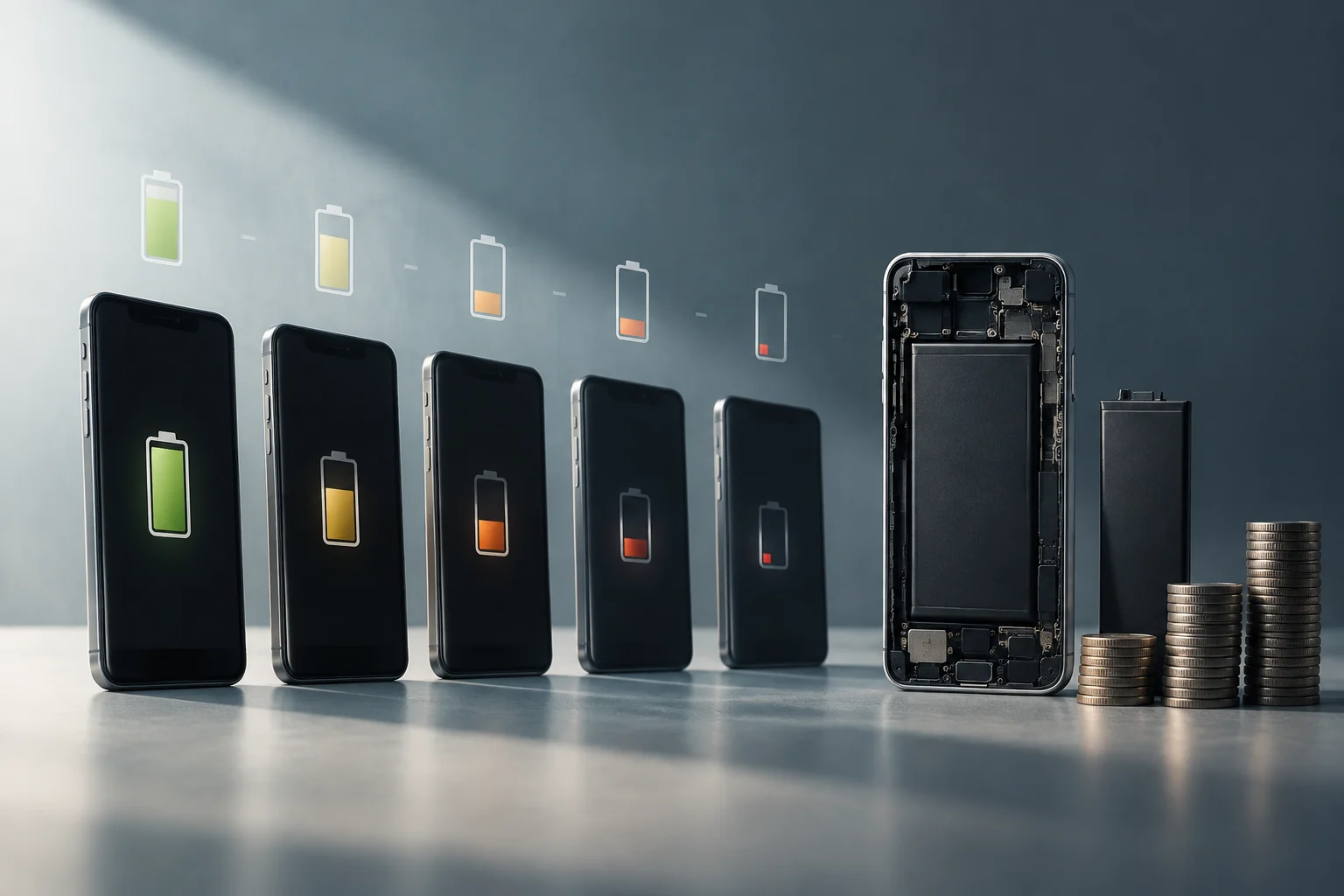
A smartphone battery is a chemical component that inevitably degrades over time. This process, based on oxidation-reduction reactions, causes its capacity to decline gradually and reduces the device’s battery life between charges. Unlike failures in other components, battery degradation is not caused solely by manufacturing defects: it is also a consequence of everyday use, making it the main constraint on a phone’s perceived useful life.
Industry studies and analyses indicate that lithium-ion batteries begin to lose capacity measurably after the first year of use. With standard use involving approximately 360 charge cycles a year, it is common for actual capacity to fall below 80% of rated capacity after two or three years. This loss affects not only how long a charge lasts; it can also influence overall operating-system performance, since the system may sometimes limit power to compensate for reduced energy efficiency. A battery’s ageing can therefore affect the whole device, not just its time away from the charger.
Specifications and rated capacity: more than a number
When assessing a smartphone in 2026, rated capacity in milliampere-hours (mAh) is an important specification, but it is not the only one. Today’s mid-range and high-end models typically fall within a range of 4,000 to 5,000 mAh, designed to provide a full day of moderate use. However, system efficiency, screen refresh rate and processor power determine how many hours of actual screen time that capacity delivers. The mAh figure alone cannot predict real-world battery life, because the other components and software also draw power.
Fast-charging technology has changed how people use their phones, making it possible to restore much of the charge in less than an hour. Nevertheless, if it is not managed properly, fast charging can slightly accelerate heat-related degradation. For users seeking to extend a battery’s useful life, charging habits matter more than the headline mAh figure: avoiding complete discharges to 0% and prolonged charging at 100% can help. In the long term, battery health depends more on usage habits than on its initial specification.
Repair costs: replacement prices and availability
The cost of replacing a battery is a major factor in deciding whether to repair or replace a phone. Prices for original batteries vary by model and manufacturer. For example, replacement batteries for recent models such as the iPhone 16 Pro Max and Samsung Galaxy S25 can cost between 50 and 100 euros, depending on whether they are bought through official channels or third-party specialists in replacement parts. The part’s price is only one element of the decision, but it provides a useful starting point for estimating repair costs.
Availability of these parts has improved significantly thanks to new European rules. Specialist shops and authorised service centres increasingly offer original replacement options, reducing reliance on unauthorised repairers. However, the final repair bill includes not only the part but also labour, which can vary considerably between manufacturers and regions. It is crucial to compare the total repair cost with the phone’s residual value to decide whether the investment makes financial sense. A repair is worthwhile only in relation to the device’s remaining value and expected service life.
Statutory warranties and support policies in the EU
Since January 2022, European rules have provided a three-year statutory warranty for new products bought in the European Union. This warranty covers manufacturing and material defects, but explicitly excludes normal wear and tear, such as a battery gradually losing capacity over time. A battery that holds less charge as a result of normal use is therefore not covered by the statutory warranty, unless the degradation is abnormal and a manufacturing fault can be demonstrated. The three-year period does not mean that every decline in battery performance is covered.
Manufacturers such as Samsung and Apple offer additional commercial warranties that may extend coverage or include maintenance services. Samsung, for example, offers the option of extending the warranty to two years in some markets, although the three-year statutory warranty remains the minimum standard. It is important to distinguish between the statutory warranty, which is a consumer right, and commercial warranties, which are voluntary offers from a brand. Knowing which type of warranty applies helps consumers understand what they can claim and when.
The right to repair and new European rules
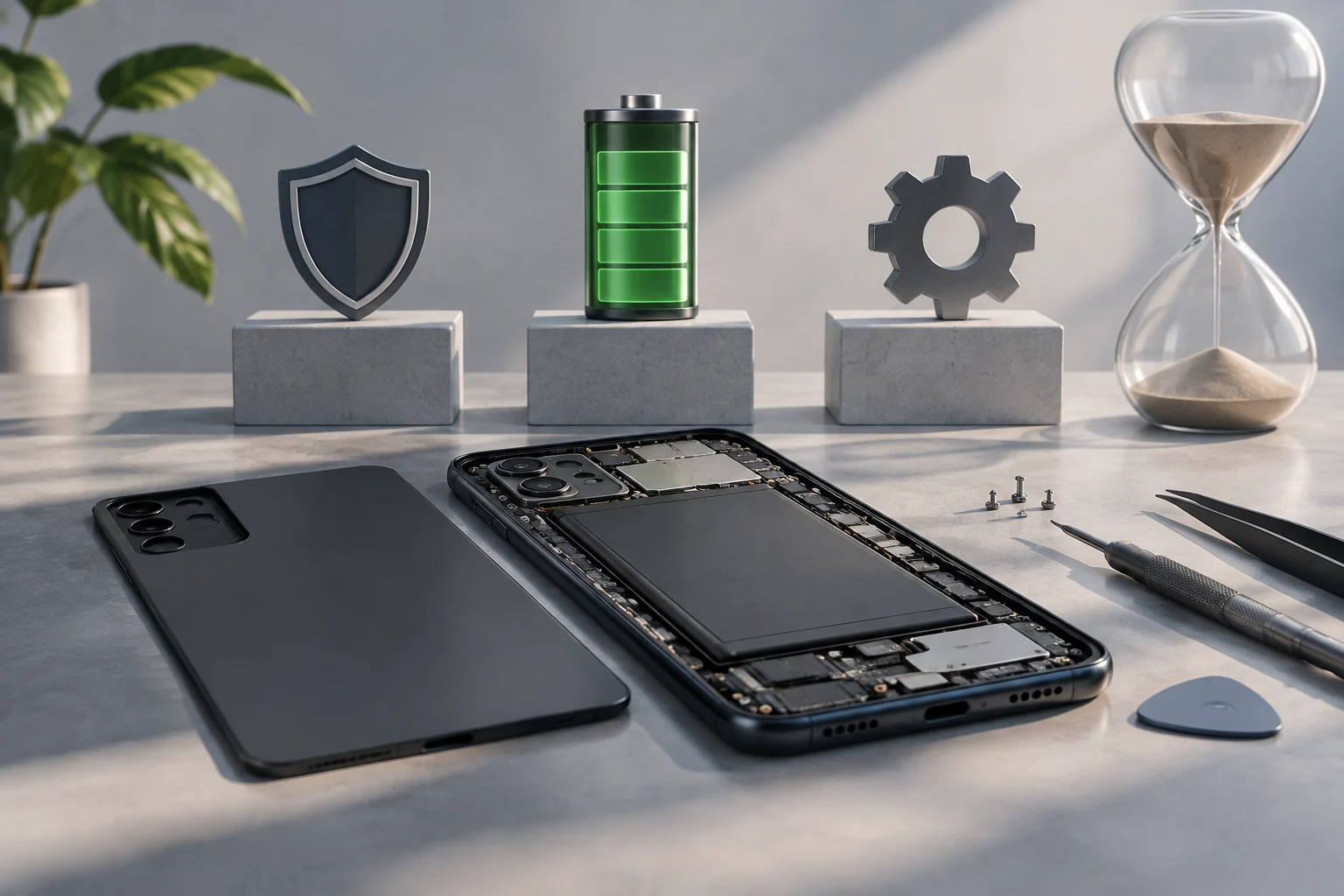
The European Union has promoted a change in approach through its Right to Repair Directive, whose transposition deadline ended on 31 July 2026. The rules require manufacturers to ensure the availability of spare parts, repair manuals and the software needed to keep devices repairable for a minimum period. For smartphones, this means users have more ways to get their devices repaired without relying exclusively on official channels. Access to parts and repair information is central to making repair a practical option.
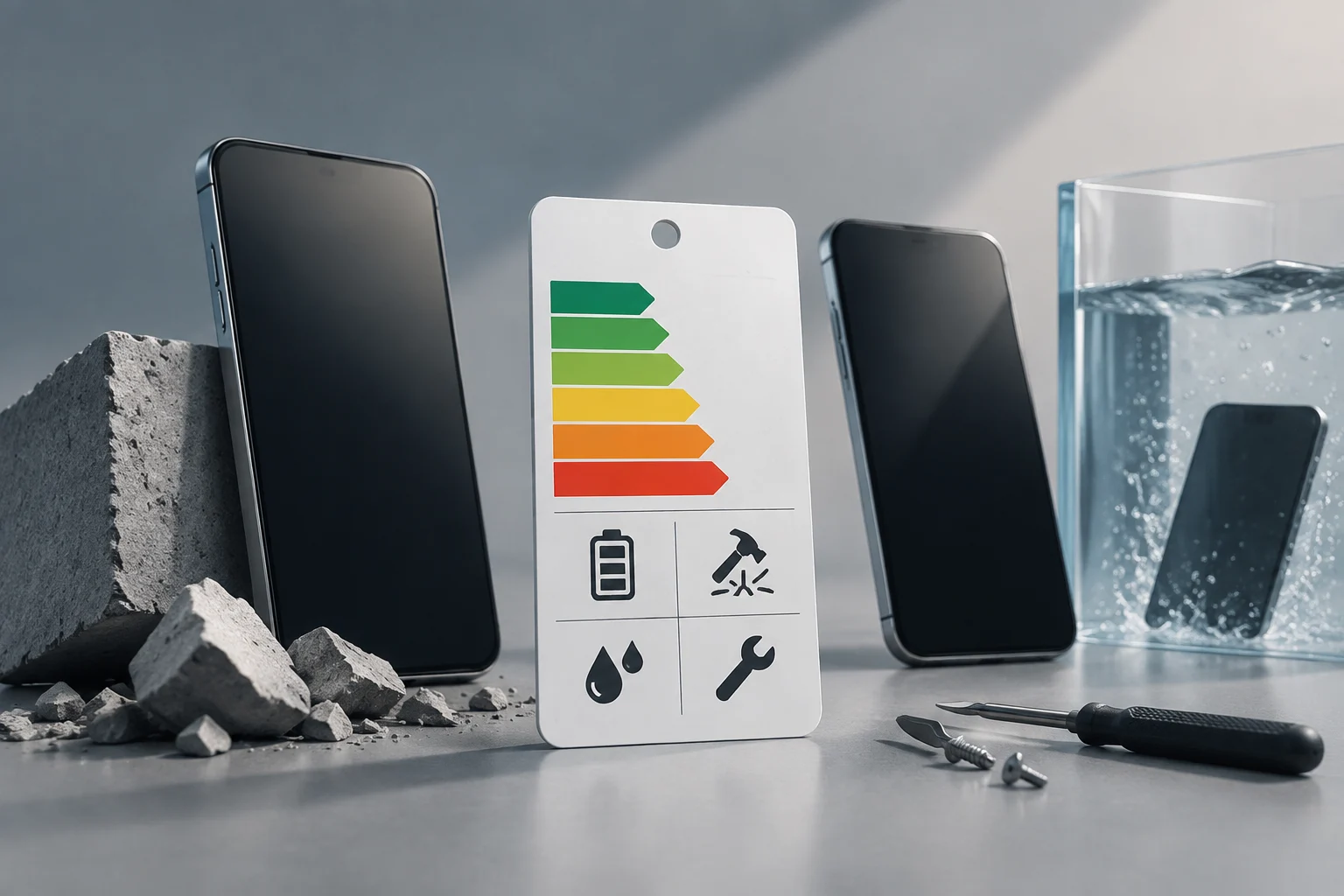
In addition, since June 2025, smartphones sold in the EU have been subject to new ecodesign requirements, including ease of battery replacement and the availability of information about battery health. These measures are intended to extend devices’ useful lives and reduce environmental impact. For consumers, they mean greater transparency and the possibility of more affordable repairs at independent workshops, provided those workshops comply with safety and quality rules. The measures connect repairability with clearer information for buyers and owners.
Calculating the total cost of ownership over three years
To assess whether a smartphone is good value, it is necessary to calculate its total cost of ownership (TCO) over three years. This calculation includes the initial purchase price, the estimated cost of replacing the battery if necessary, and the device’s residual value at the end of the period. A high-end phone with a higher-capacity battery and a robust service policy may justify a larger upfront investment if it retains a high residual value and its repair costs are predictable. The purchase price by itself does not show the full cost of ownership.
For example, an 800-euro smartphone that needs an 80-euro battery replacement in its second year and has a residual value of 200 euros after three years has a TCO of 680 euros (800 + 80 - 200). By contrast, a 400-euro mid-range model that needs no repair and has a residual value of 50 euros has a TCO of 350 euros. The right choice depends on intended use: if someone needs a high-performance device for work or gaming, the higher TCO may be acceptable; for basic use, a less expensive model may be better value in the long run. The calculation makes the trade-off between performance needs and overall cost explicit.