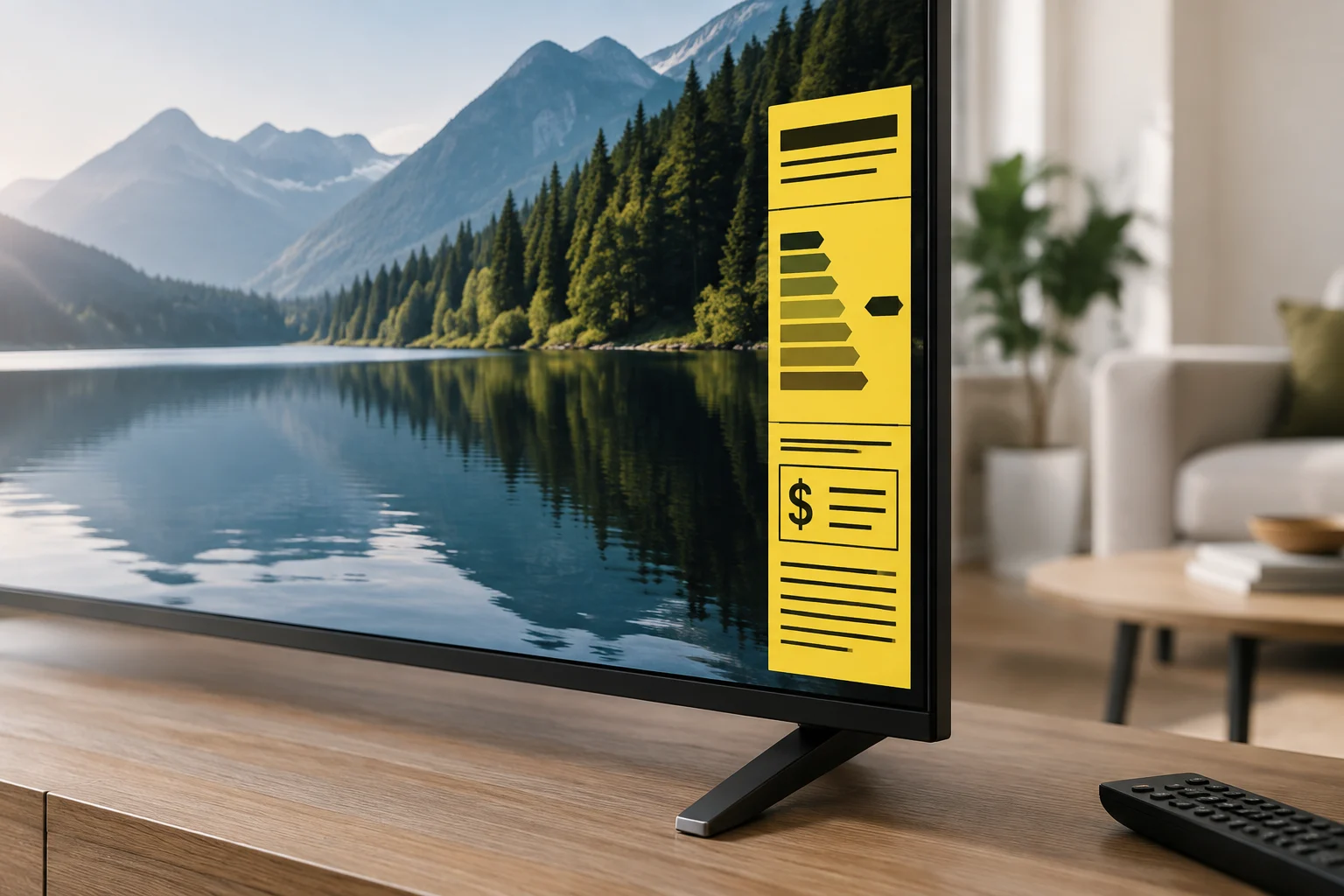
What information the label provides
EnergyGuide is the yellow-and-black label that helps consumers compare the estimated energy use or cost of certain products in the United States. For televisions, it identifies the model and shows an estimated annual cost, a cost range for models with similar screen sizes, and estimated annual electricity consumption. It is not an overall quality rating or a seal guaranteeing that a television is the most efficient in its category. Instead, it is a reference for comparing energy figures presented using a common method. (ftc.gov)
It is useful to read the dollar figure together with the electricity figure, which is expressed in kilowatt-hours (kWh). The cost depends on an assumed electricity price and on usage conditions set for the calculation. The scale provides context for comparable models, not for every television on the market or every screen size. Before drawing conclusions, check the screen diagonal shown and make sure you are comparing models of similar dimensions. The label offers a straightforward way to place one model alongside others; it does not replace a comparison of features such as picture quality, connectivity, or purchase price. (search.ftc.gov)
How to identify an updated label
The most practical change for shoppers does not require identifying the year the television was made: simply read the sentence explaining the electricity price used in the estimate. The FTC says the older label states that the calculation is based on 12 cents per kWh, while the updated label gives 16 cents per kWh. The agency also notes that updates reflect changes to energy-use testing and to the electricity costs used. During the transition, televisions may be found with either version; seeing an older label does not, by itself, mean there is anything wrong with the product. (ftc.gov)
This difference matters because a dollar amount does not have the same starting point when it has been calculated using different electricity rates. The FTC explicitly warns that comparing the cost on an older label with the cost on an updated one does not help compare the models’ energy costs. So do not treat a lower figure on an older label as proof that the television will use less energy than another model with a newer label. First check the reference rate; if the methods or versions differ, regard the comparison as not equivalent. This is a limitation of the available figures, not a reason to reject the television automatically. (ftc.gov)
The printed cost does not predict your bill
The annual figure is intended to make comparisons easier under shared assumptions, not to predict exactly what each household will pay. The FTC describes EnergyGuide estimates as based on typical use and a national average energy price, and says actual costs depend on how the product is used and on local prices. On a television label, the warning also states that cost depends on utility rates and usage. The estimate can inform a purchase, but it should not be read as a promise of savings or as a charge that will necessarily appear on your bill. (consumer.ftc.gov)
Daily hours of use and your local price per kWh are two direct reasons your personal expense may differ from the printed figure. Differences in brightness or picture settings may also matter, but the label does not break down how much each setting contributes for a particular pattern of use. That effect should therefore be treated as a practical consideration, not as a measurement published on the label or a difference quantified here. If you want a closer household reference, you can use the annual consumption figure as a starting point and take your rate and habits into account. The result would still be an estimate, not a measurement of the television in your home. (consumer.ftc.gov)
A fair comparison between two televisions
Start by confirming that both sets fall within the comparable screen-size range shown on the scale. Then look for the same EnergyGuide version on both: check whether the reference sentence says 12 or 16 cents per kWh. If the labels use different reference rates, do not compare the dollar amounts directly. Instead, note the annual kWh figures, when available, and check whether the other testing assumptions are comparable. This step cannot magically make labels based on different methods equivalent, but it helps prevent you from mistaking a difference in the assumed rate for a difference in the television’s energy consumption. (ftc.gov)
Next, compare the model’s figure with the printed range for similar televisions, and look at the complete label rather than just its largest number. The scale helps place the product in context, the kWh figure communicates estimated energy use, and the annual price converts that estimate using a particular rate. For online purchases, the FTC says that retail webpages offering a price, ordering information, and a detailed description must display the label or clearly disclose its information alongside the product; it is worth checking the image if the listing includes a link. If the label is missing or unreadable, the seller or manufacturer may be another place to look for it. (ftc.gov)
Energy use is one consideration, not the only one
For your final decision, use EnergyGuide as a way to screen models alongside price, the size you need, and the features you actually value. If two options have comparable labels, annual consumption can help identify which has the lower estimate under the stated assumptions. But it is not enough to calculate the total cost of ownership: you also need the purchase price, your electricity rate, and expected usage. Nor can the label by itself tell you how the picture will look, how long the television will last, or which features it has. Keeping these questions separate helps avoid drawing conclusions the label was not designed to answer. (ftc.gov)
In short: identify the rate used, compare models of similar screen size, check annual consumption, and remember that the printed cost describes a reference scenario. The updated version uses 16 cents per kWh, compared with 12 cents on the older one; the FTC warns that their costs should not be compared directly. Your bill, by contrast, depends on the rate you pay and how you use the television. This careful reading is more useful than treating a single figure as an absolute ranking of televisions: it explains what the label can tell you and, just as importantly, what it leaves out. (ftc.gov)