What Panther Lake is and when it arrived
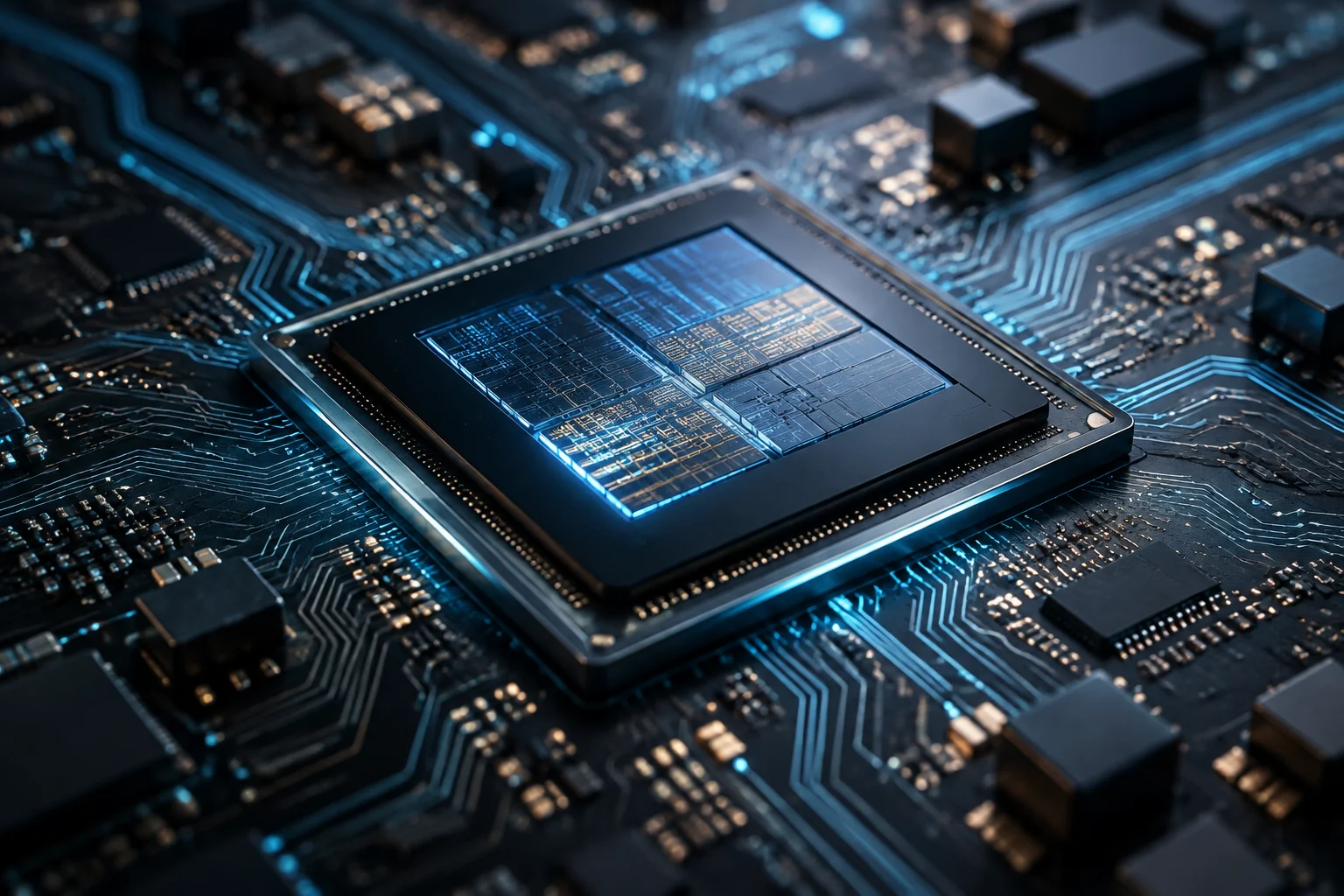
Panther Lake is the code name for Intel Core Ultra Series 3, a family of client processors combining CPU resources, graphics and artificial intelligence acceleration. Intel introduced the architecture on October 9, 2025, and launched the family at CES in January 2026. These are separate milestones: the technical unveiling and the commercial launch.
In its CES press kit, dated January 5, 2026, Intel set January 27, 2026 as the start of mobile-system availability through retailers and manufacturers. That date describes the announced beginning of sales, not a guarantee that every configuration is currently in stock in every country.
Architecture: different blocks, different jobs
Intel describes a scalable multi-chiplet architecture and links this generation to its Intel 18A process. The CPU handles general system tasks; the GPU handles graphics and can accelerate some computing workloads; the NPU targets AI operations. Having all three resources on the platform does not mean an application uses them in the same way.
Intel's published family maxima help define its scope, but they are not the specifications of every variant. Before comparing two computers, identify the exact processor rather than relying on the Core Ultra label alone.
| Resource | Intel's announced maximum | How to read it |
|---|---|---|
| CPU | Up to 16 cores | A family maximum, not every model |
| Intel Arc graphics | Up to 12 Xe cores | Graphics configuration depends on the variant |
| AI acceleration | Up to 180 platform TOPS | Not 180 TOPS from the NPU alone |
What 180 TOPS means
TOPS means trillions of operations per second—10¹²—in a particular form of computation. Intel specifies platform TOPS, so the figure is neither a count of neural cores nor a direct speed rating for every AI application.
For transcription software, a local model or an editing feature, the relevant questions are which engine the program uses, which precision it supports and how much of the workload it can accelerate. A peak operations figure alone does not tell you a model's tokens per second, task completion time or laptop energy consumption.
How to compare laptop performance
The processor is only part of the computer. Memory, cooling, power limits and manufacturer configuration can affect sustained behaviour. A demonstration or manufacturer figure does not replace a test of the laptop you intend to buy.
A useful comparison uses the same application, an equivalent task and known conditions: software version, battery or mains power, performance mode and test duration. For games, resolution, settings and frame consistency matter; for local AI, consider the model, its size and available memory.
Price and availability: check the exact system
Core Ultra Series 3 is a family, not a laptop with one universal price. Compare the full computer reference, installed processor, RAM, storage, display and warranty terms. Two systems with similar CPU names may serve different needs.
Intel's announced schedule does not replace local sales information from the manufacturer or retailer. Check the final price, taxes, configuration and stock for the specific offer, without applying one system's conditions to the entire family.
As one integration example, Lenovo's New Zealand page identifies the 14-inch Yoga 9i 2-in-1 Aura Edition, Gen 11, with Core Ultra Series 3 processors. This is a manufacturer's product reference, not independent comparative testing or a guarantee of availability in other markets.
What to check before choosing
- Identify the exact CPU model and graphics configuration.
- Check whether your applications use the GPU or NPU for the tasks you need.
- Look for tests of the actual laptop with conditions and consumption described.
- Compare memory, display, connections, warranty and final price.
Panther Lake brings general processing, graphics and AI resources together. The practical choice depends on how the complete computer handles your tasks, not on adding peak figures or turning a theoretical capability into a universal performance promise.