What the European rules cover
Since 20 June 2025, ecodesign requirements have applied to smartphones, other mobile phones, cordless phones and slate tablets placed on the EU market. Energy-labelling requirements have applied from the same date to smartphones and slate tablets. The date concerns when a product is placed on the market, not each individual purchase.
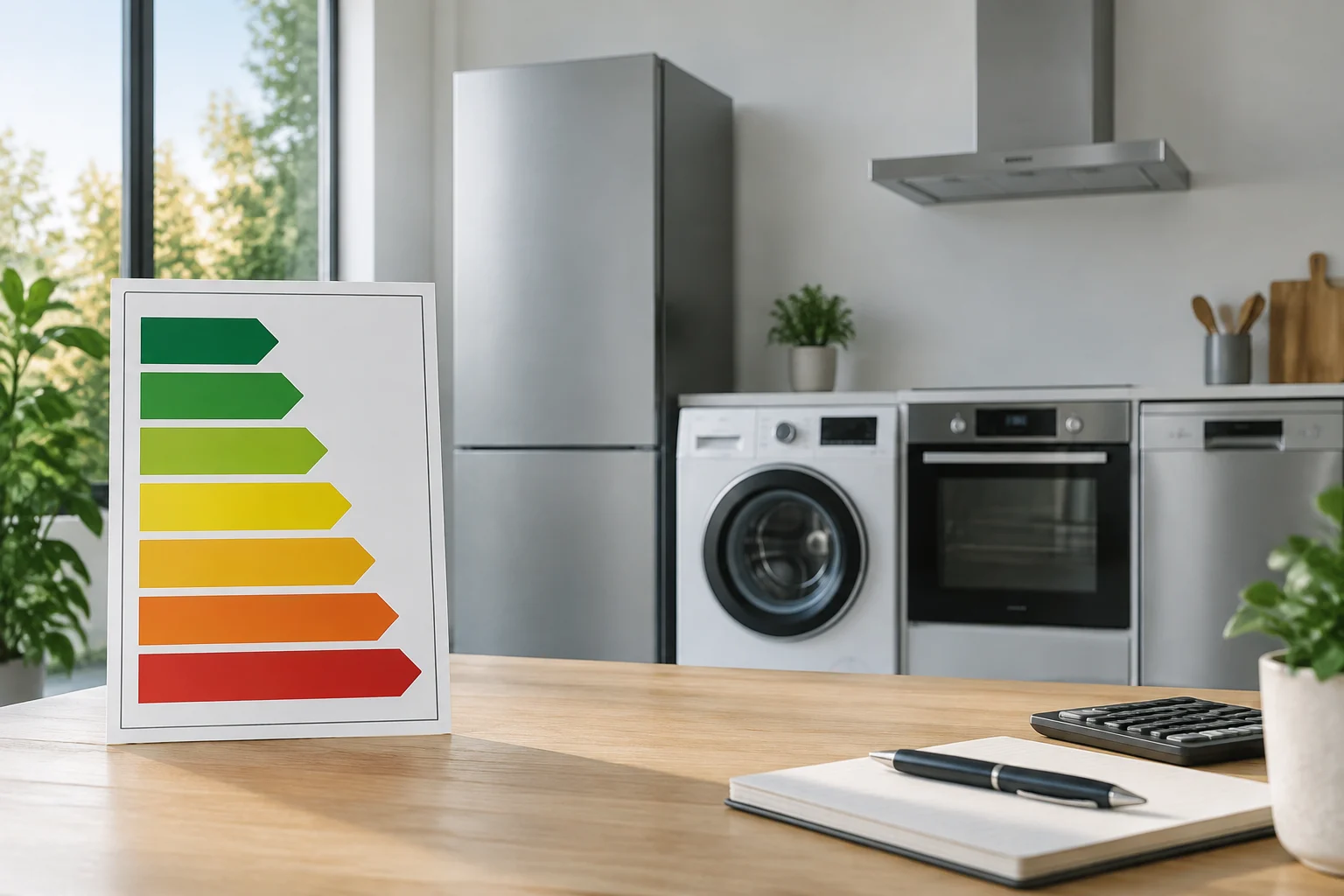
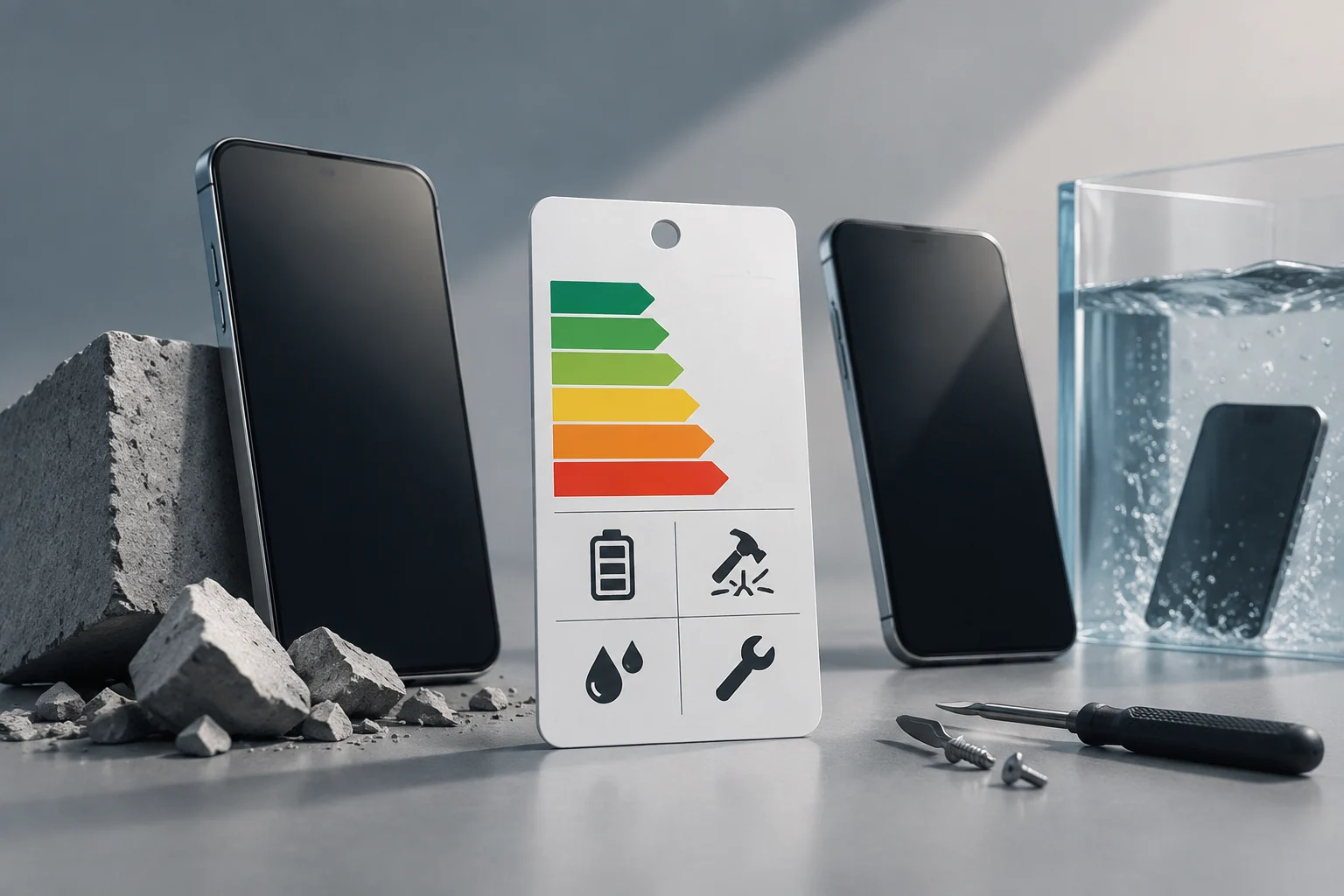
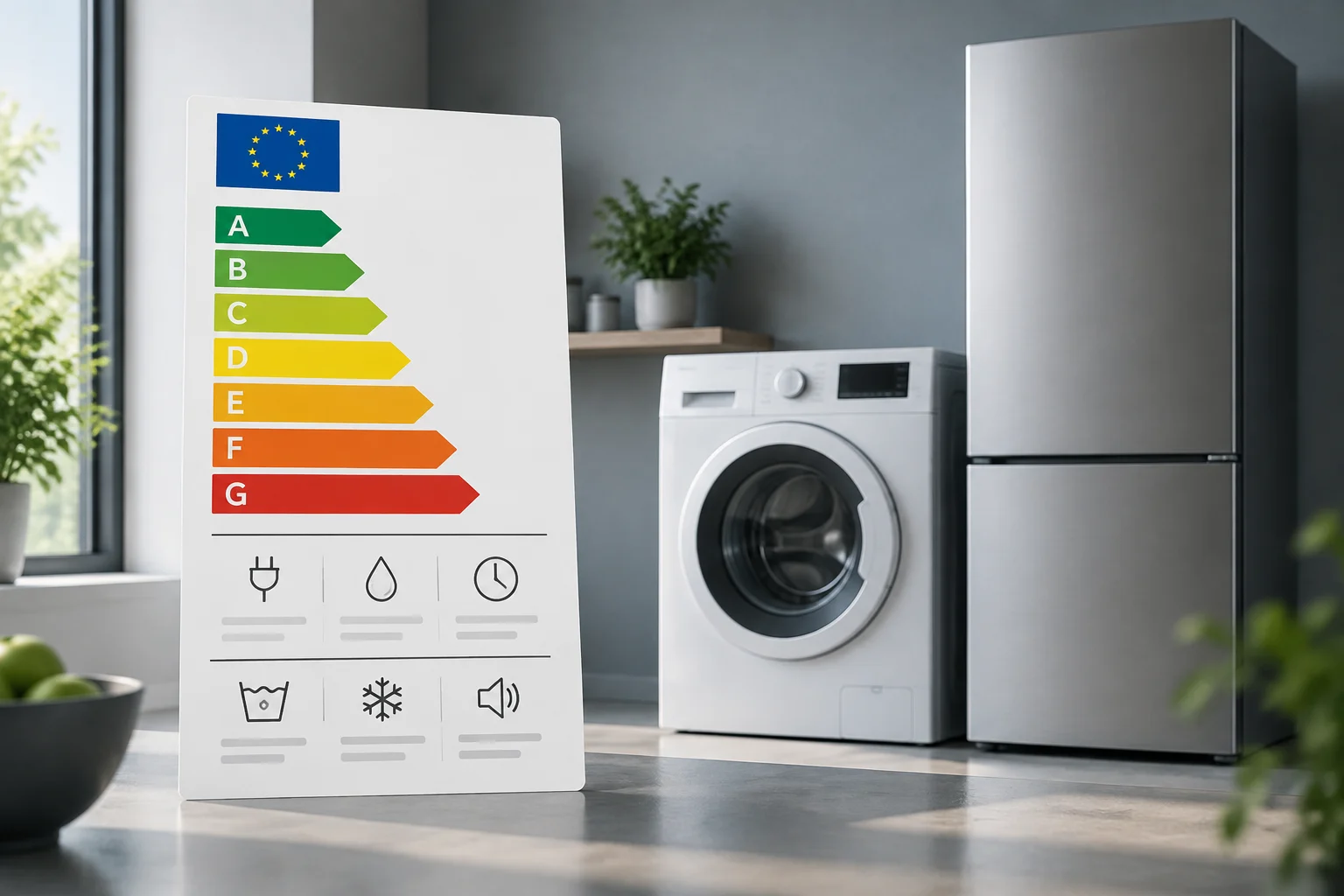
The label brings together information about energy efficiency, battery, protection against dust and water, resistance to accidental drops and repairability. The energy-efficiency class uses a scale from A to G; the repairability class runs from A to E. The label provides information; ecodesign sets minimum requirements for products covered by the rules.
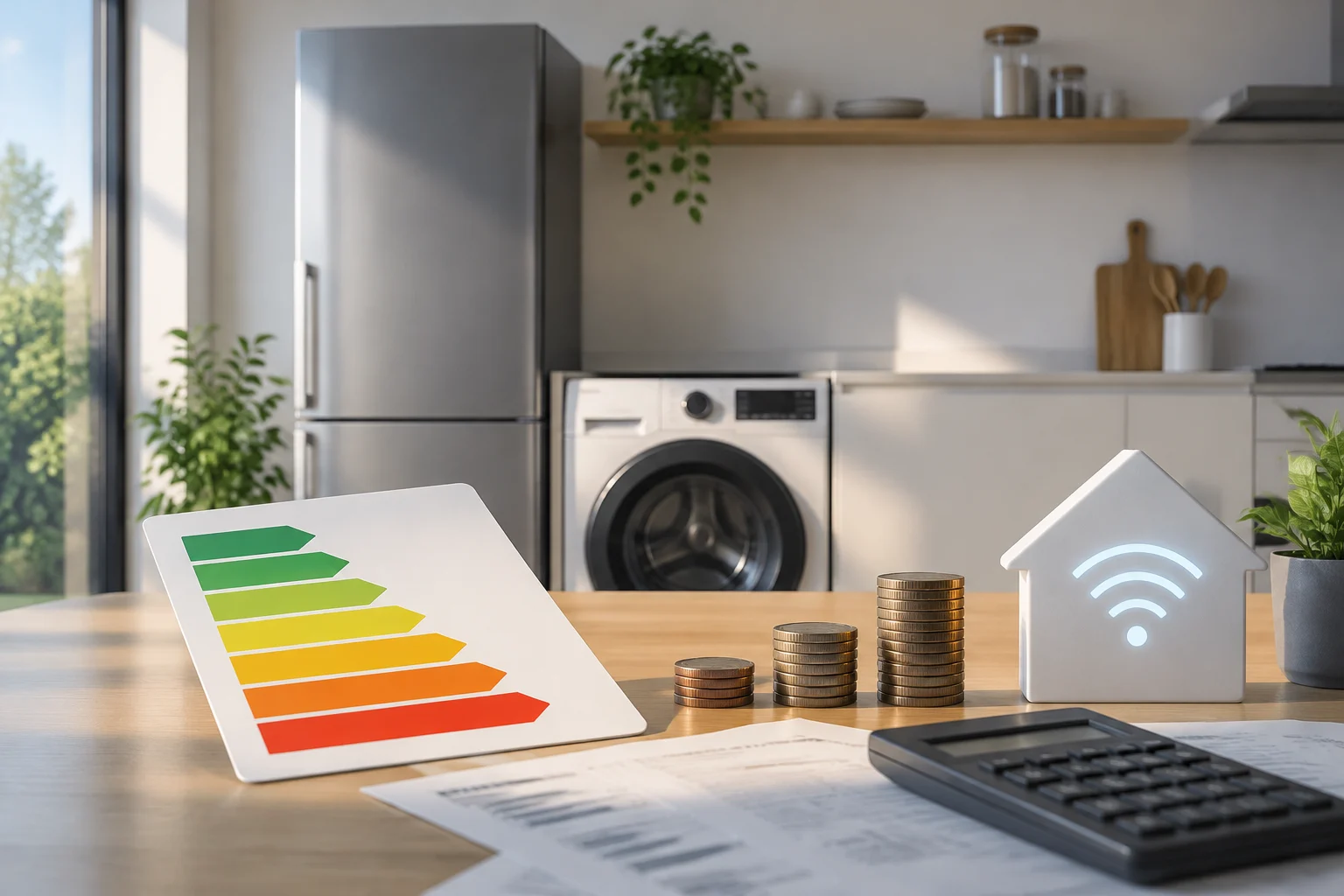
The European Commission estimates that the measures as a whole will save 2.2 TWh of electricity in 2030 compared with a scenario without them. This figure includes savings associated with greater energy efficiency in smartphones and tablets, as well as savings resulting from standby-power limits for cordless-phone bases and cradles. The Commission also projects that device-purchasing costs will be €20 billion lower in 2030, mainly because longer product lifetimes would reduce how often people buy new devices. After adding lower energy costs (€600 million) and higher repair costs (€800 million), projected total expenditure savings amount to €19.8 billion—not a promise for every buyer.
How to read the label indicators
Each indicator answers a different question. Energy efficiency is shown on a scale from A to G. The label also provides information about battery life per cycle, battery endurance in cycles, drop resistance, IP protection and repairability class. It is more useful to compare each figure according to your needs than to reduce the decision to a single letter.
Battery life per cycle indicates how long the battery lasts from a full charge until it needs recharging. It is based on a standardised test designed to reproduce a typical usage scenario. Endurance in cycles indicates how many charge-and-discharge cycles the battery can withstand before its usable capacity falls to 80% of its rated capacity when new.
The repeated free-fall reliability class depends on the number of drops a device withstands without functional problems in a standardised test. A is the most robust class and E the least robust. The result allows models to be compared under that test, but does not guarantee that a phone will not be damaged in an everyday drop.
The IP rating describes how well the enclosure is sealed against solid particles and moisture. The first digit refers to the ingress of solids and dust, from 0—no protection—to 6—dust-tight. The second refers to water ingress, with values ranging from 0—no protection—to 9—protection against high-temperature, high-pressure water and steam. Check the model’s IP rating to understand its protection level; the code alone does not guarantee performance under every condition of use.
What the repairability class means
The repairability class ranges from A, the most repairable, to E, the least repairable. The European Commission’s Joint Research Centre (JRC) explains that it is based on a scientific method that considers priority components and factors affecting repair possibilities.
The six factors considered include disassembly depth, fasteners, tools required, spare-parts availability, software updates and repair information. The assessment combines these parameters into a score shown on the label. The letter is useful for comparison, but it does not describe every repair that may be possible for a model.
The public EPREL database provides more details about registered models. Its information can be accessed through the label’s QR code, and repairability parameters can be consulted in the model’s detailed record. This information expands on what the letter conveys, but the score does not guarantee a repair price, the availability of a service near your home or the outcome of a particular repair.
Ecodesign requirements for batteries and repairs
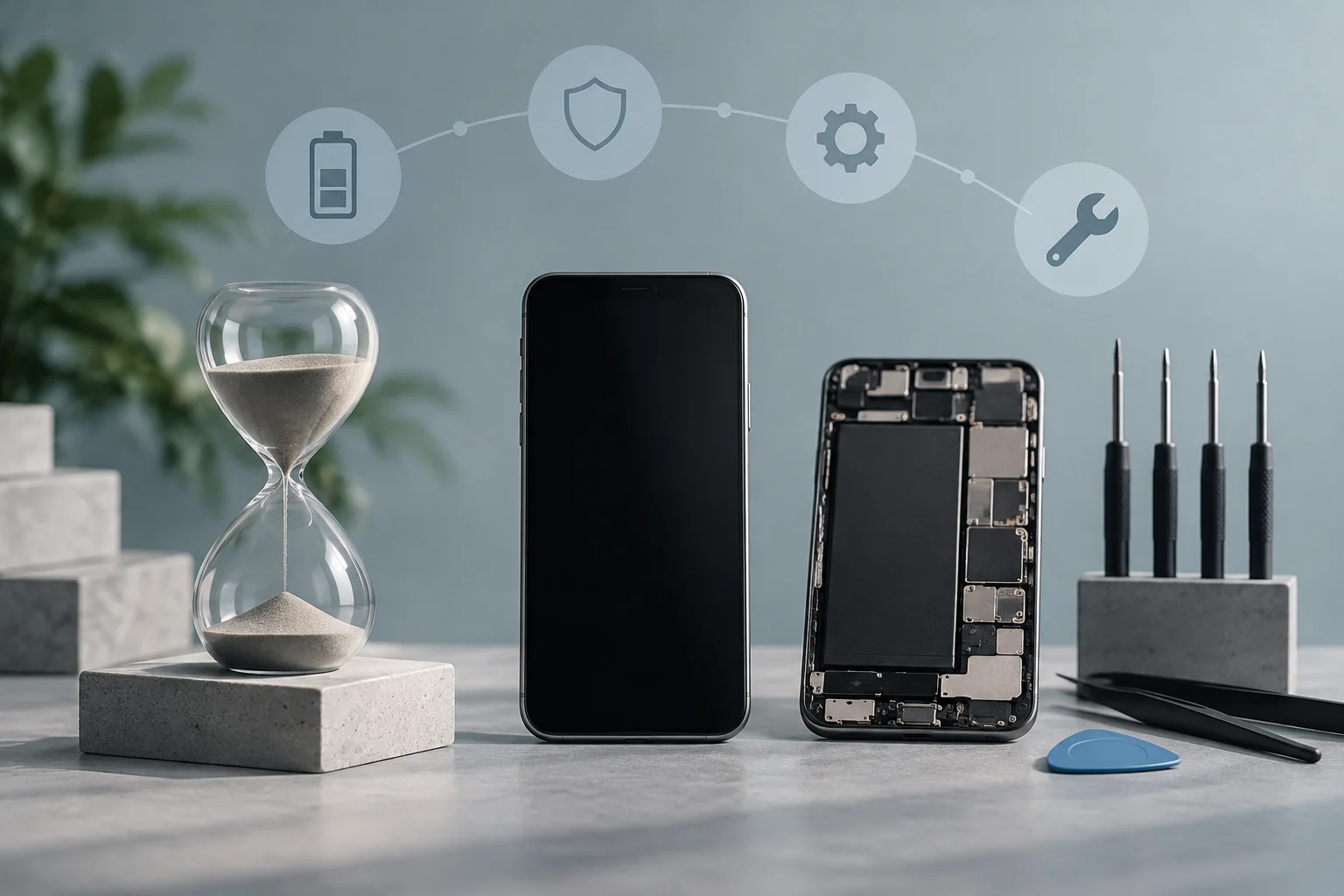
Ecodesign rules require batteries to withstand at least 800 charge-and-discharge cycles while retaining at least 80% of their initial capacity. This is a minimum requirement for products subject to the rules, not an exact forecast of how long a battery will last in a particular person’s use.
Producers must make critical spare parts available to repairers within 5 to 10 working days and for at least 7 years after sales of the model end on the EU market. Operating-system updates must also be available for at least 5 years from the date the last unit of the model is placed on the market.
The rules also require professional repairers to have non-discriminatory access to the software or firmware needed for replacements. These requirements support repair, but do not mean that every fault can be repaired, that service will be free or that costs will be the same across models.
Which devices are covered
Ecodesign rules cover smartphones, other mobile phones, cordless phones and slate tablets. A slate tablet has a screen measuring between 7 and 17.4 inches, has no physically attached keyboard and uses an operating system similar to that of a smartphone, such as iOS or Android. The energy label described here applies to smartphones and slate tablets.
The Commission distinguishes slate tablets from tablet computers, which generally use an operating system similar to that of a desktop or laptop computer, such as Windows, and may have a detachable keyboard. The rules do not apply to tablets of that kind, products with a main flexible display that can be rolled up, or smartphones intended for high-security communications. The marketing name is not enough: coverage depends on the device’s characteristics and category.
How to use the label when choosing a phone
Start by identifying your priorities. If you need to use your phone for many hours away from a charger, compare battery life per cycle. If you care about how well the battery retains its capacity, also check its endurance in cycles. To assess resistance to impacts, compare the drop class; check the IP rating separately if dust or water is a concern.
Next, compare the repairability class and open the model’s EPREL record using the QR code. The letter summarises an assessment based on several factors; the details can show which aspects of repair have been considered. They do not replace checking specific conditions, such as cost or local service availability.
Finally, interpret the figures as comparable results from defined tests and criteria, not as an exact prediction of an individual experience. Usage and wear can vary, and the label does not guarantee the outcome of a repair. It helps you compare standardised information, while ecodesign requirements establish minimum conditions for products covered by the rules.