
What a connected V16 does and what changes on the road
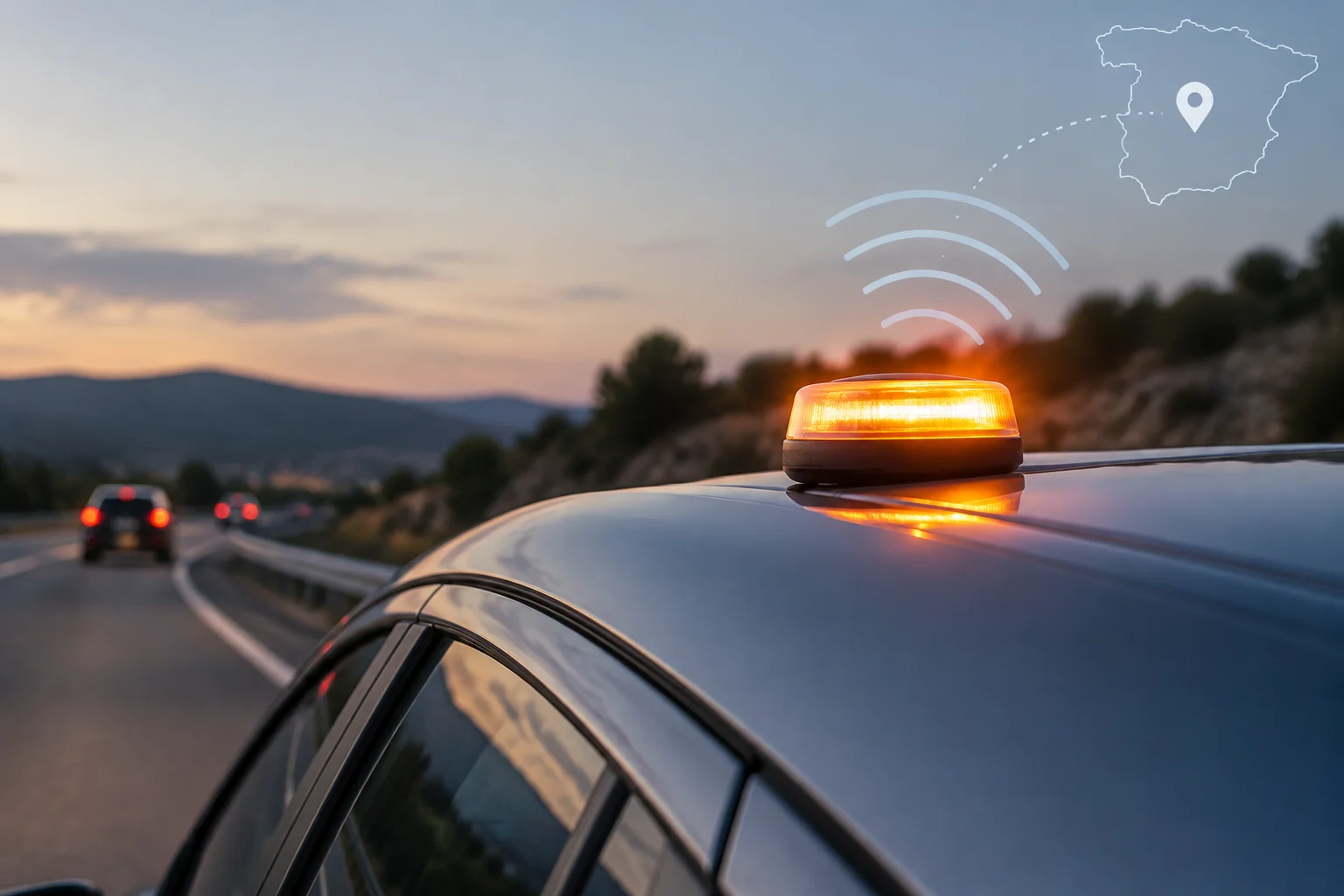
The V16 beacon is a light-emitting advance-warning device designed to alert other road users that a vehicle has become immobilised. The connected version also automatically sends the vehicle’s location when activated, so the warning does not depend solely on other drivers seeing the light. Its function combines a visual warning with communication about the incident.
The practical reason for this system is to reduce the need to leave the vehicle to place warning triangles in a dangerous situation. The DGT explains that the beacon is kept inside the car and placed, preferably, on the roof; when activated, it emits light and communicates the vehicle’s position to DGT 3.0. This safety advice does not replace official instructions on what to do in each emergency.
When buying, the relevant distinction is not simply whether a device looks like a beacon or emits yellow light: there are V16 devices without connectivity and connected V16 devices. The regulations provide that, from 1 January 2026, the connected version is the regulatory means of signalling immobilised vehicles. An older V16 that only emits light should therefore not be assumed to be a valid substitute for a connected one.
First, identify the exact model in the DGT list
The most useful check before paying is to search for the specific make and model on the DGT’s official V16 device page. The page organises information about certified models and also includes models whose certificates have expired. The match must be for the model, not just the brand. If a manufacturer sells several versions, the appearance of one in the list does not prove that the others are certified.
Compare the name shown in the advert with the name in the official list. If the box or product information displays a certificate code, compare that too with the data published by the DGT and with the marking on the device. If the commercial name does not clearly match or identifying information is missing, ask the seller for a legible photograph of the label or contact the manufacturer before buying; do not infer the identity from similar names.
Certification applies to the device that was assessed and its documentation, not to generic phrases such as “approved”, “valid for 2026” or “DGT 3.0 compatible” in a shop description. The DGT states that certified models must have been certified by authorised laboratories, including IDIADA or LCOE. A promotional claim does not replace the official register. If the model cannot be found, the prudent course is not to treat it as verified.
Technical requirements worth checking
The information published by the DGT describes a connected beacon with a yellow flashing light visible through 360 degrees, capable of operating for at least 30 minutes, and with a battery or cell with a minimum useful life of 18 months. It also states that, when activated, the beacon communicates the vehicle’s location to DGT 3.0. These are useful reference points when reviewing the product information, but registration of the exact model on the official list remains the key check. One technical box ticked is not enough.
Connectivity is part of the regulatory device: it does not mean the user has to pair it with a phone or install an app to send the location. The DGT explains that communication takes place when the beacon is activated. Before buying, look for a clear explanation in the packaging or manufacturer’s documentation of the connectivity included, its duration and any applicable conditions; do not infer those details from the word “IoT” alone.
The regulatory framework is based on Royal Decree 159/2021 and its amendment by Royal Decree 1030/2022, as well as subsequent changes to the General Traffic Regulations. For a specific purchase, it is more practical to use the DGT page, which brings together the list and related regulations, than to try to infer compliance from an isolated product listing. The rules and the official register complement each other: the product information explains the device; the DGT lets you verify the model.
How to check connectivity, included service and labelling
Not every connectivity detail is settled by a “connected” label. Check how long the manufacturer includes the service for, whether any later payment is required and which communication elements are built in. The DGT states that the beacon transmits the location when activated; the specific connectivity terms for a model must be checked in that product’s documentation, not extrapolated from other brands or versions.
Also check that the make and model shown on the box, on the device itself and in the official listing are consistent. If there are differences—for example, a variant with a different suffix—do not assume it is the same certified unit. The exact reference matters more than the outer appearance. Keep the receipt and retain the packaging or instructions with the identifying details, especially if the retailer’s description is incomplete.
Privacy often raises questions because the device communicates a location. The information note published by the Spanish Data Protection Agency in collaboration with the DGT explains that the beacon does not transmit data while it is inactive; when activated, it sends its location and a technical device identifier which, according to that explanation, is not associated with a person’s identity or a registration number. This describes the intended processing; it is not an independent audit of every product.
Buying mistakes to avoid
The first mistake is confusing a non-connected light-emitting V16 with a connected one. The fact that a device emits light, has a magnet or is advertised as “approved” does not prove that it includes communications or corresponds to a model on the current list. From the date the requirement takes effect, connectivity and model certification are decisive for this regulatory function.
Another mistake is relying on third-party lists or a validity date mentioned in a comparison without checking official information. Commercial articles can help shoppers discover products, but they can become outdated or mix up product references. The DGT itself advises consulting official sources and provides a page with certified models and certificates whose validity has ended. If the seller uses a different name, resolve the discrepancy before paying.
Finally, do not confuse a promise about how long connectivity is included—for example, “included until” a particular year—with certification, or assume that a subscription will be needed just because the product uses a mobile network. These are separate questions: first verify the model with the DGT; then read the manufacturer’s terms on service and costs. Do not extrapolate specifications between similar products.
Final checklist before buying
A brief review reduces the risk of buying the wrong version. Make these checks in this order:
- Search for the exact model on the DGT V16 device page; also check whether its certificate is listed as expired.
- Compare the brand, model name and, where available, certificate number in the list, on the packaging and on the device.
- Confirm in the official product information that it is a connected V16, not an older light-only version.
- Review information about operation, battery life and included connectivity; ask the seller if the description does not clarify conditions or costs.
- Keep proof of purchase and the instructions so you can identify the version you bought.
The date for buyers in Spain to bear in mind is 1 January 2026, when the connected V16 became the legal device for signalling immobilised vehicles. Since the list and certificate status can be updated, check just before buying and revisit the DGT page if you have questions about a model you already own. This guide does not recommend a particular brand: it offers a verifiable way to choose without relying solely on the advert.