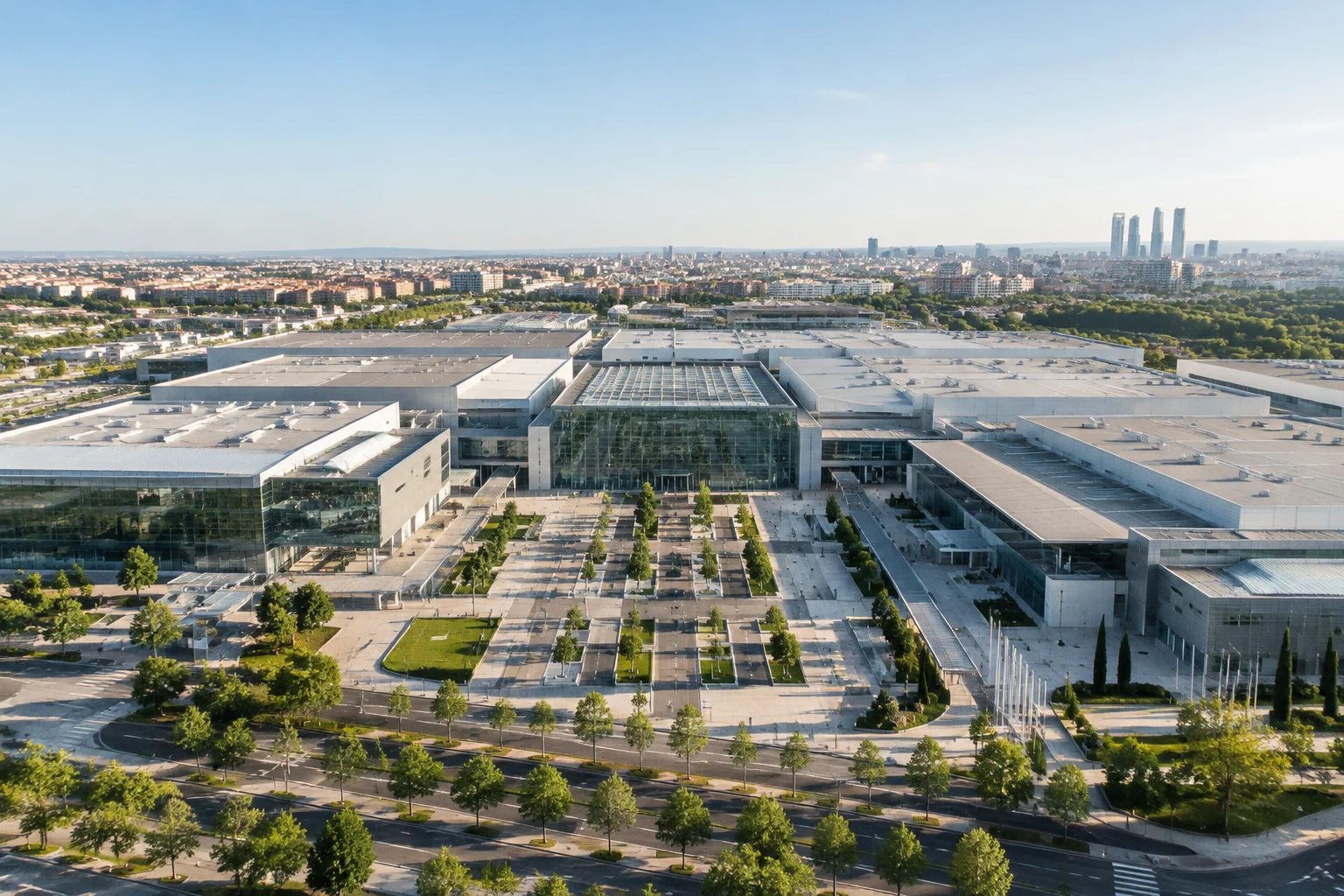
What IFEMA Madrid is
IFEMA Madrid is the public name of the Madrid Trade Fair Institution, established as a consortium with its own legal personality. It is neither a conventional private company nor a municipal department without a separate legal identity: its bylaws state that it has its own legal capacity and capacity to act, assets and liability, separate from those of its founding members.
The consortium is made up of Madrid City Council, the Community of Madrid, the Official Chamber of Commerce, Industry and Services of Madrid, and the Obra Social and Monte de Piedad Foundation of Madrid. The four participating entities jointly hold IFEMA’s institutional representation. Governance is organized through the consortium’s own bodies and statutory rules.
IFEMA’s bylaws describe its purpose as promoting, fostering and developing trade, industry and services. They also assign it responsibility for organizing fairs, congresses and other activities, managing the works and services needed for them, and maintaining its assets. Its role therefore extends beyond managing exhibition venues to organizing events.
What it does and which venues it manages
IFEMA’s bylaws assign it responsibility for organizing and managing trade fairs, exhibitions, congresses and other events, both in person and online. They include commercial and sector-specific activities, as well as cultural, entertainment and sporting proposals that fit its purposes and are approved by the relevant bodies. Events may be organized by IFEMA or promoted by third parties, with different arrangements in each case.
The institution may also carry out or manage works, services and supplies needed for its events, and preserve and maintain its assets. In addition to organizing events, it may authorize third parties to use its facilities for activities, subject to the bylaws and any applicable fee. For an event organizer, the practical distinction is that booking a venue does not necessarily mean commissioning IFEMA to deliver the entire production: the scope must be specified in each agreement.
Activities take place at more than one location. IFEMA’s institutional documentation identifies the Exhibition Centre and the Municipal Conference Centre as venues it manages; its offering can cover trade fairs, congresses and leisure events. It is therefore useful to check the specific venue for each event: “IFEMA Madrid” does not refer to a single hall or building, and access, setup and operational requirements can vary by venue and event.
How the consortium is governed
The bylaws name two governing bodies: the Governing Board and the Executive Committee. The Governing Board is the highest collegiate body; its responsibilities include approving strategic plans, the annual budget, accounts and management report, as well as events and the annual calendar of trade fairs and exhibitions. It may also approve internal regulations and important decisions concerning assets and organization.
The bylaws identify the Governing Board and Executive Committee as IFEMA’s governing bodies. The Governing Board is the highest collegiate body and, among other duties, approves strategic plans, the budget, accounts, events and the annual calendar of trade fairs and exhibitions. It also decides on matters referred to it by the Executive Committee.
The bylaws list the Secretary General as an appointed position whose appointment and removal are the responsibility of the Governing Board, alongside the main executive roles specified there. An officeholder should not be confused with a governing body: the bylaws name the Governing Board and the Executive Committee as the governing bodies. To find out who holds a position on a particular date, current institutional information is needed, since the bylaws describe responsibilities rather than permanent officeholders.
How it differs from a private operator
A useful comparison starts with each entity’s legal nature and governing rules. IFEMA has a consortium structure and is subject, insofar as applicable, to the provisions of Title I of Law 19/2013. Comparing it with a private operator therefore means looking at the legal form and rules that apply in each particular case.
| Aspect | IFEMA Madrid |
|---|---|
| Legal form and members | Consortium made up of four entities, with its own legal personality |
| Governance | Governing Board and Executive Committee, under the bylaws |
| Purpose and activities | Promoting trade, industry and services; organizing fairs and events and managing venues |
| Transparency | The bylaws provide for the application, where relevant, of Title I of Law 19/2013 |
This structural overview describes IFEMA’s legal form, governance and statutory framework.
The consortium structure alone does not show that all revenue comes from subsidies or that every service is free. The bylaws provide for a budget, accounts and assets, and allow a fee to be charged for certain uses of facilities. Exhibitors and event promoters should therefore review the financial and contractual terms of the specific event rather than infer them solely from IFEMA’s institutional status.
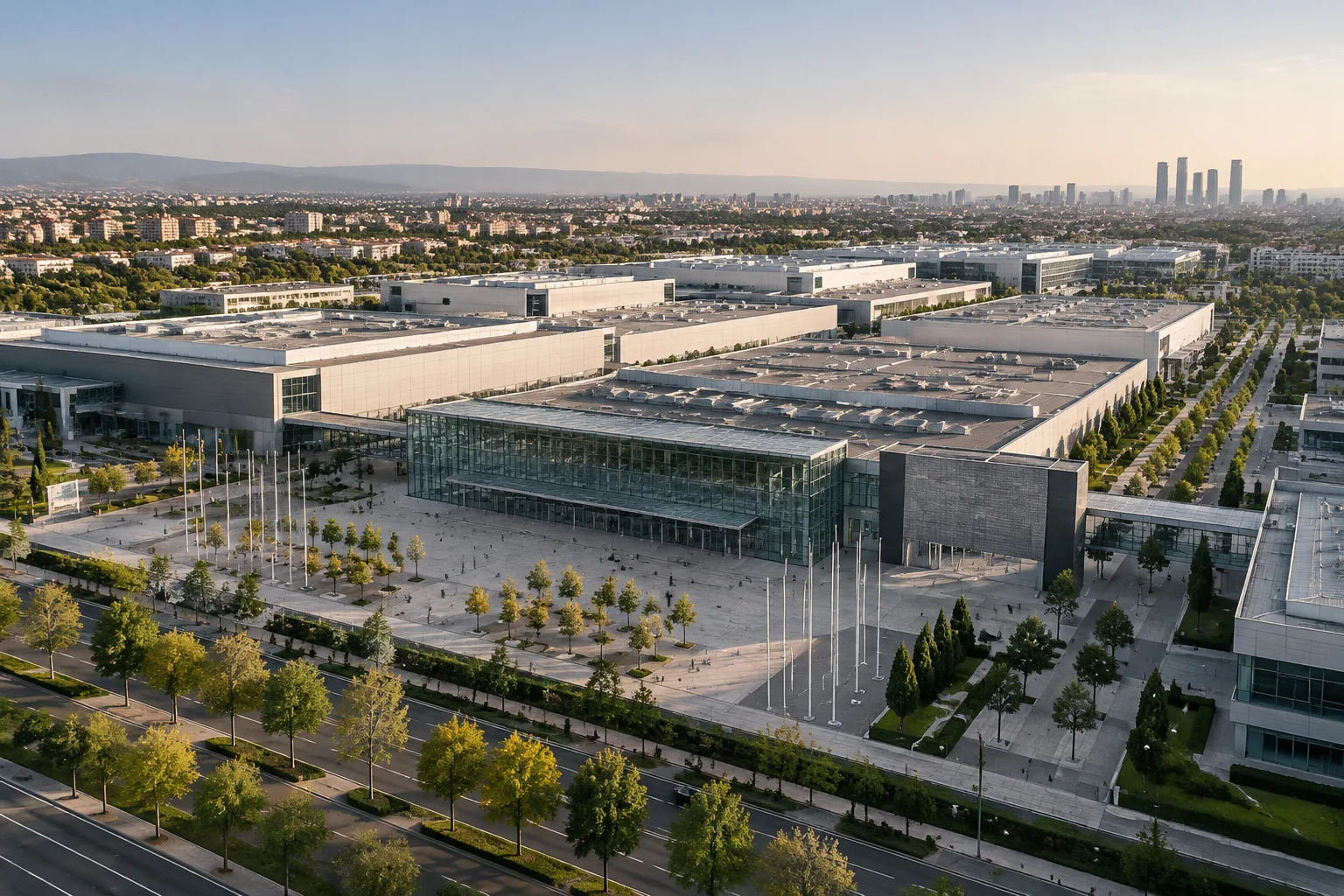
Legal framework, transparency and contracting
IFEMA’s bylaws, dated 25 March 2024, define the institution’s composition and operation and state that it is subject, insofar as applicable, to Title I of Law 19/2013 on transparency, access to public information and good governance.
For a particular tender, check its documents for the applicable requirements, terms, deadlines and evaluation criteria.
The bylaws give the Governing Board responsibilities for approving, contracting, supervising and settling works, services and supplies, on a proposal from the Executive Committee. For suppliers, this places procurement within IFEMA’s internal governance, but does not replace tender documents. IFEMA also has an internal reporting channel for concerns about possible breaches of the law, its code of conduct or internal rules. The channel is a compliance mechanism, not a guarantee that breaches never occur.
What this means for organizers and visitors
For an external organizer, IFEMA can be both a trade fair operator and a venue manager. Its bylaws allow third parties to promote activities, and the institution offers services related to organizing fairs and events and making facilities available. Responsibilities depend on the contract: organizers should distinguish venue rental or use from technical services, production, accreditation, security and other tasks, and confirm who provides each one.
For exhibitors, IFEMA’s consortium status does not by itself determine the price of a stand, participation terms or included services. Those depend on the fair, its organizer and the relevant commercial documentation. If a third party organizes an event at an IFEMA venue, the contractual contact may not be the same entity that manages the building. Identifying the organizer and each service provider helps avoid confusion about payments, schedules and incidents.
The program can include commercial events, congresses and leisure activities, and access is governed by the conditions of each event. Consortium status does not guarantee that every activity is public, free or open without registration: each event sets its own access conditions.
Limits of the definition
IFEMA Madrid is best understood as a consortium institution that organizes activities and manages facilities, rather than simply as a venue or a private company with no institutional ties. This definition clarifies its membership, governance and the transparency framework set out in its bylaws, but does not by itself determine the rules for every procurement, contract or event.
It is also important to distinguish a general legal description from the operational situation on a particular date. The bylaws describe responsibilities and governing bodies; they do not, by themselves, establish who currently holds each position, which services are delivered directly at each event, or the terms of a specific contract. For decisions, the relevant document is the one governing the particular fair, venue or procedure.
In short, the consortium explains who constitutes and governs IFEMA, while contracts and event-specific rules explain how its activities work in practice. This distinction makes it possible to compare IFEMA with private operators without turning institutional differences into absolute claims about funding, procurement or services.