Bosch's announcement and supply chain position
Bosch has officially launched its third-generation silicon carbide (SiC) chips, a fundamental technology for power electronics in electric mobility. The company has begun supplying samples of these new devices to automotive manufacturers worldwide, marking a significant step toward the mass adoption of this technology in next-generation electric vehicle platforms. This move not only confirms Bosch's strategy but also establishes a new benchmark for suppliers of critical components in the sector.
This move reinforces Bosch's position as one of the leading suppliers of power semiconductors for the automotive industry. According to Markus Heyn, a member of the Bosch Board of Management and head of the Bosch Mobility business area, these chips are "one of the key drivers of electric mobility" because they control the flow of energy in the most efficient way possible, allowing customers to launch more powerful and efficient vehicles. The statement underscores the strategic importance of these components in the overall architecture of the electric vehicle.
Technical specifications and performance improvements
The main novelty of this third generation is a performance increase of approximately 20% compared to the previous generation. This improvement is achieved through an optimization of Bosch's proven trench architecture, which advances the balance between efficiency and thermal robustness, critical factors for demanding applications such as traction inverters. The trench architecture allows for better management of internal electric fields, resulting in cleaner switching and less heat loss during continuous operation.
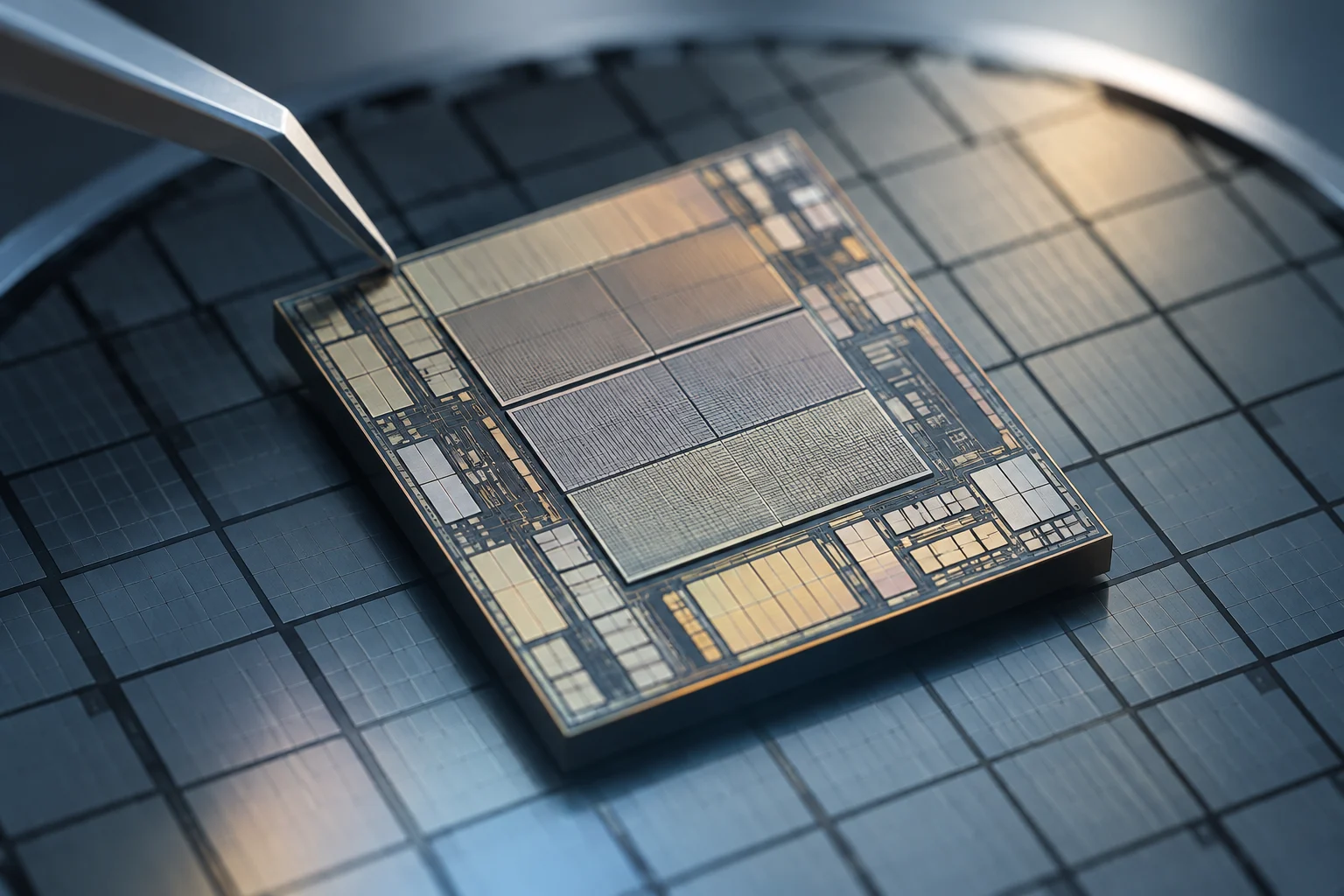
In addition to performance, miniaturization is a decisive factor. The new chips are significantly smaller than those of the previous generation, allowing a greater number of devices to be manufactured per wafer. This size reduction not only improves power density but also reduces production costs, facilitating industrial scalability and making the technology accessible to a wider range of vehicle models. By increasing performance per unit area, Bosch achieves an economy of scale that benefits both manufacturers and end consumers.
How SiC semiconductors work in power electronics
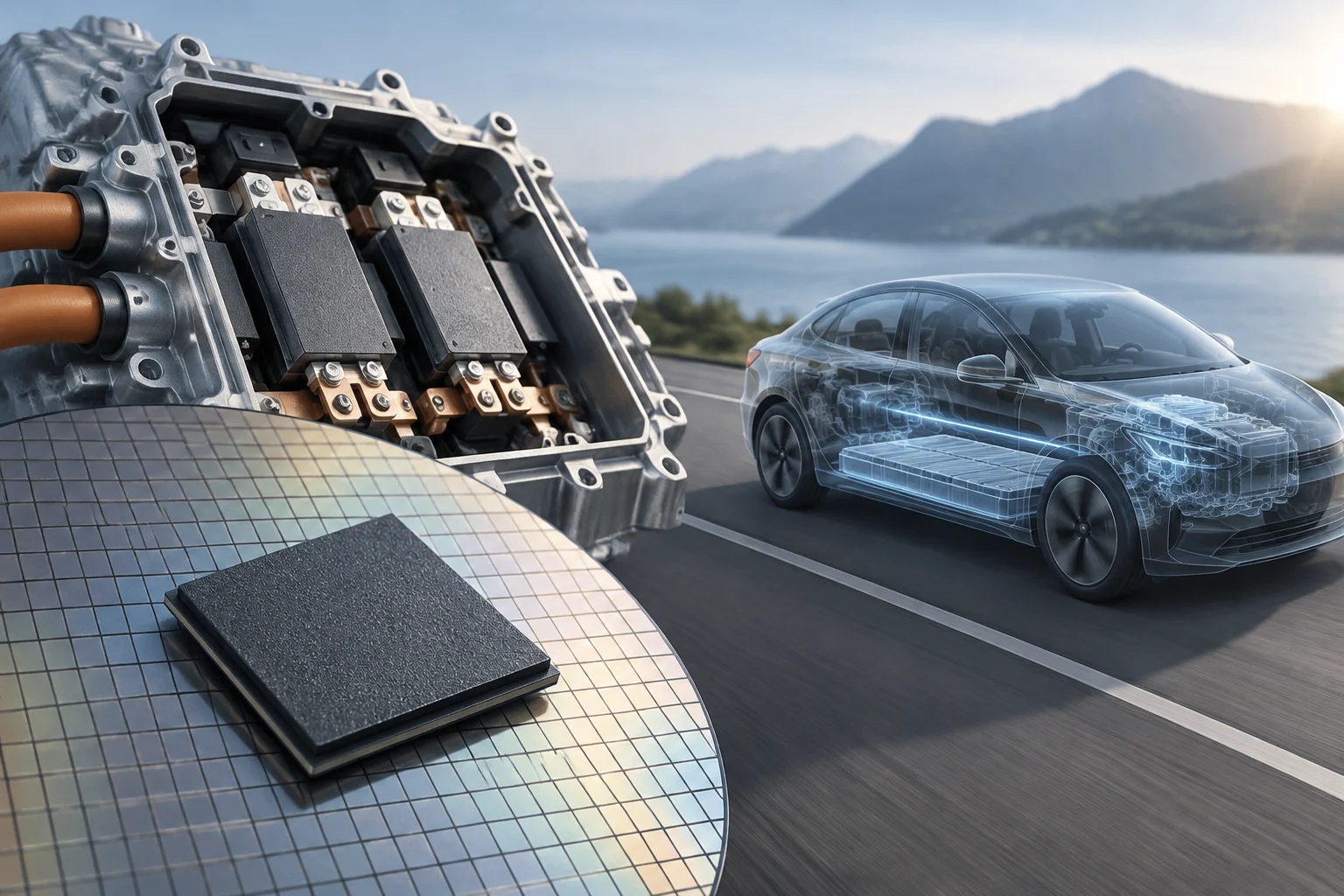
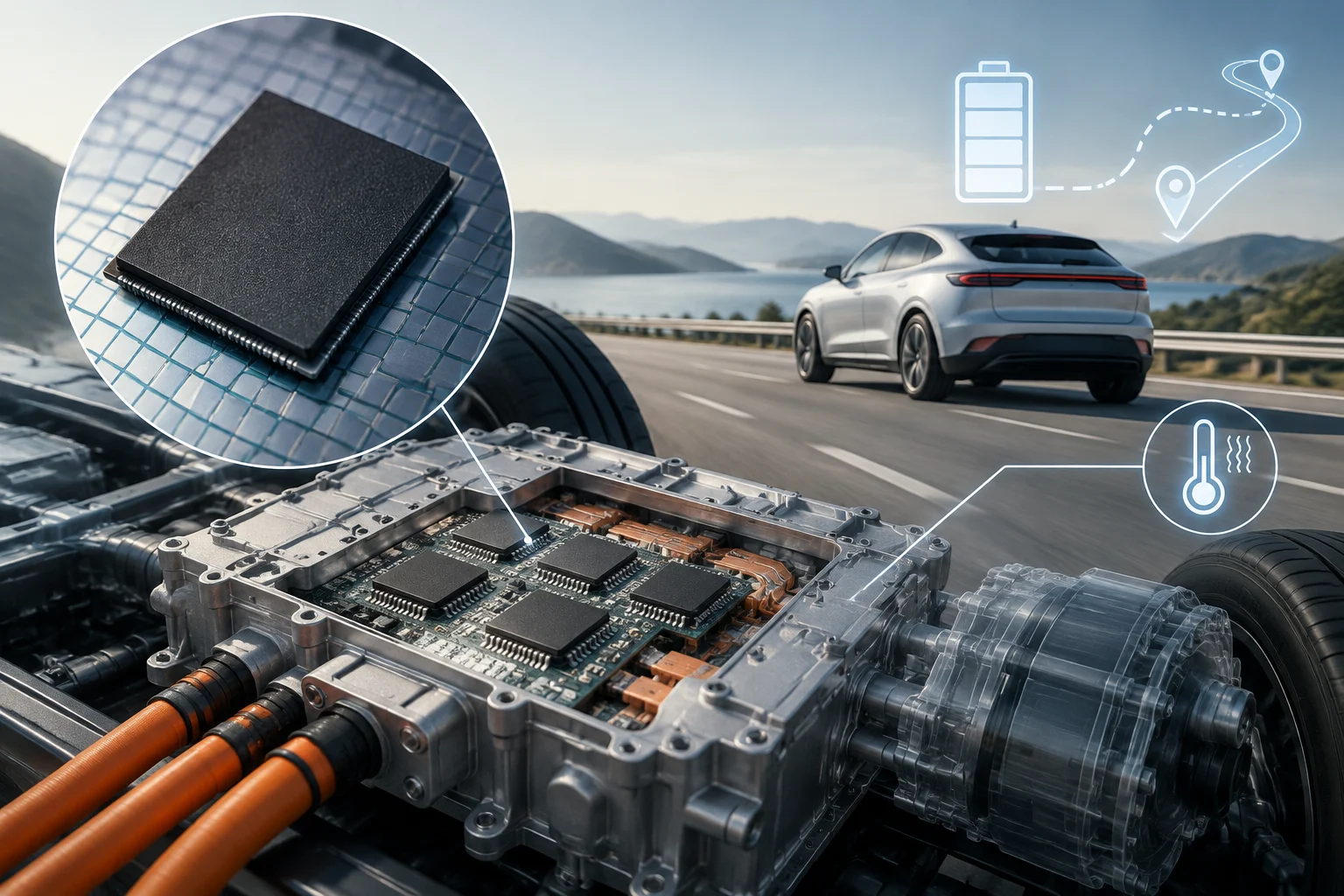
Silicon carbide semiconductors are essential in the propulsion system of electric vehicles, specifically in the inverter. This component acts as the link between the battery, which operates on direct current (DC), and the electric motor, which runs on alternating current (AC). SiC chips ensure that battery energy is converted into motor power with maximum possible efficiency, minimizing losses in each switching cycle. This precise conversion is vital for maintaining propulsion system stability under various driving conditions.
Compared to traditional silicon semiconductors, SiC devices offer faster switching speeds, lower energy losses, and higher power density. These characteristics enable more compact and efficient power electronics systems, which directly translates into better overall vehicle performance and more effective thermal management of the drivetrain. The ability to operate at higher frequencies without a proportional increase in heat dissipation is a key technical advantage that distinguishes SiC technology.
Impact on the vehicle: range and thermal management
For the end user, the efficiency improvement in SiC chips translates into tangible benefits. The main advantage is greater driving range without the need for larger batteries. By reducing energy losses in power conversion, the vehicle makes better use of the energy stored in the battery, improving its utilization and reducing the total cost of ownership in the long term. This means that each stored kilowatt-hour is used more optimally, extending the distance traveled between charges.
Furthermore, the improvement in thermal efficiency allows for more robust management of the propulsion system. This is crucial for maintaining electric motor performance under sustained load conditions, preventing overheating and ensuring consistent vehicle response. The ability of SiC chips to withstand higher temperatures and voltages than traditional silicon also contributes to the durability and reliability of the propulsion system, ensuring stable performance even in demanding operating environments.
Market context and sector growth
Bosch's bet comes at a time of strong growth for the SiC semiconductor market, driven by demand for electrified mobility solutions. According to industry forecasts, the SiC semiconductor market will quadruple by 2029, positioning this technology as one of the segments with the highest growth potential in the mobility industry. This projected growth reflects the sector's confidence in the ability of wide-bandgap materials to solve the efficiency and performance challenges of modern electric vehicles.
Bosch has made significant investments to support this growth, including around €3 billion through Europe's IPCEI program to expand its semiconductor manufacturing capabilities. The company has production facilities in Reutlingen (Germany) and Roseville (California, USA), and has delivered over 60 million SiC chips worldwide since 2021, demonstrating its proven expertise in manufacturing power semiconductors for automotive applications. This global infrastructure allows Bosch to respond to growing demand with a resilient and diversified supply chain.
Implications for the industrial maturity of electromobility
The introduction of the third-generation SiC chips by Bosch marks a milestone in the industrial maturity of power electronics for electromobility. The combination of performance improvements, miniaturization, and cost reduction indicates that SiC technology is transitioning from a premium option to a standard component in new-generation electric vehicles. This transition is fundamental for democratizing access to cutting-edge technology, allowing the benefits of energy efficiency to reach a wider range of vehicles.
This evolution is crucial for the scalability of electric mobility, as it allows manufacturers to offer vehicles with greater efficiency and range at more competitive prices. Bosch's ability to scale production through chip miniaturization and investment in global manufacturing infrastructure reinforces supply chain resilience and accelerates the mass adoption of SiC technology in the automotive industry. Ultimately, these technical and economic advances are decisive for achieving the sector's decarbonization goals.