A portable battery, not a whole-home power source
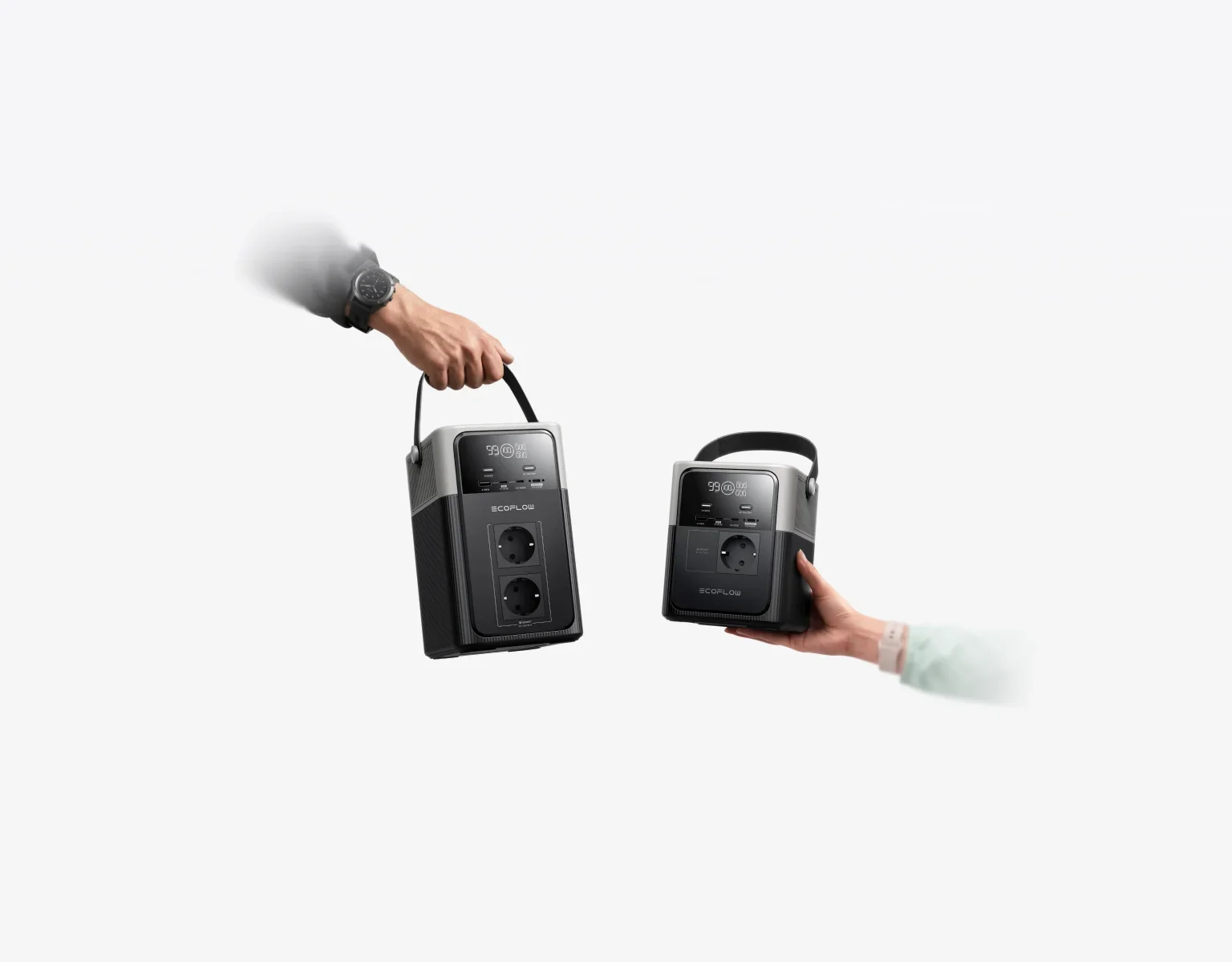
The RIVER 260 Gen4 is a portable power station with a 256 Wh battery and 300 W of AC output. EcoFlow positions it among the compact models in its RIVER Gen4 series and lists its weight at about 3 kg. That combination is aimed at trips, camping and short-term backup for small devices—not replacing a high-capacity home battery.
The key is the difference between energy and power. The 256 Wh figure describes how much energy the battery stores; 300 W is its rated AC output. A 60 W load would therefore run for just over four hours in an ideal calculation, before accounting for conversion losses, the station’s own power use and variations in the connected device. This is a mathematical estimate, not a guaranteed runtime.
EcoFlow also advertises X-Boost, which can provide up to 600 W for selected devices. The company says the feature adjusts output voltage and advises against using it with voltage-sensitive equipment or appliances with strict power requirements. It does not amount to a continuous 600 W output: check an appliance’s power demand, motor or power-supply type, and the manufacturer’s compatibility guidance before connecting it.
What 256 Wh can power
The capacity may be enough to recharge several electronic devices or run a small load for part of the day, but not all of the stored energy should be treated as usable. Converting battery power to AC involves losses, and actual consumption varies with the connected equipment, surroundings and battery condition. The 256 Wh figure is a comparison point, not a promise of a specific runtime.
As a rough guide, a phone with an 18 Wh battery would yield about 14 theoretical charges by simple division. EcoFlow’s product page gives a lower estimate of 11.5 charges and notes that its runtime estimates assume one device is connected at a time. Use the manufacturer’s estimate as a more cautious guide, while allowing for conversion losses, cables and any simultaneous loads.
Output power also limits which appliances can run. A device drawing more than 300 W may exceed the station’s rated AC output, although X-Boost can run some compatible devices. Lights, phones, cameras, small accessories and other low-power equipment are a better fit. A portable refrigerator may work, but compressor startup and cycling mean runtime depends on the model and conditions of use.
Charging, ports and solar input
EcoFlow specifies a maximum AC input of 330 W and advertises a 0–80% charge in 42 minutes under laboratory conditions. The station can also charge via USB-C and solar power. The 42-minute figure is not universal: EcoFlow says charging time can vary with temperature, battery level, input voltage and product settings.
The station has a bidirectional USB-C port rated for up to 140 W, another USB-C port rated for up to 65 W, USB-A rated for up to 36 W, and an AC outlet. EcoFlow lists a maximum combined output of 505 W, but that total does not raise the individual AC outlet’s rated output above 300 W. Port ratings and maximum combined output are different specifications.
For solar charging, EcoFlow lists a maximum input of 110 W and estimates a 0–80% charge in two hours under suitable conditions. The company mentions its 60 W portable panel as an option, though actual output depends on sunlight, panel orientation and cabling. An adapter may be needed if the panel does not have a USB-C output. Check panel compatibility and included accessories for the specific package being purchased.
Backup power: useful for brief outages, with caveats
EcoFlow advertises a UPS function for the Gen4 series, with a switchover time of up to 10 ms based on its internal laboratory tests. That quick transfer may help with non-critical household devices such as a router, but it does not automatically make the station a professional uninterruptible power supply. EcoFlow says it is not suitable for applications requiring 0 ms switchover and recommends checking compatibility with connected equipment.
The company explicitly excludes medical devices, life-support equipment and appliances whose interruption could cause personal injury or property damage. Do not use it as medical or life-safety backup. For office or network equipment, also check that sustained power demand stays within the station’s output and that the switchover will not disrupt the device.
EcoFlow’s Spanish product page also describes an emergency power mode that, according to the company, can provide an additional 5–10% charge to an iPhone 17 Pro after the station’s display reaches 0%. This is an internal test result specific to that phone and those conditions; it should not be relied on for emergency communications or treated as guaranteed usable energy.
Battery life and the limits of the claims
The series uses LiFePO₄ cells. EcoFlow states that the battery can retain 70% of its initial capacity after 6,000 cycles under specified laboratory conditions, and calculates a theoretical lifespan of more than 15 years based on one cycle per day. That is not a guarantee that every unit will last that long: actual results depend on use, temperature, charging and other operating conditions.
EcoFlow also advertises more than 40 battery-management protections and tests for drops, impacts, vibration and salt spray. These are manufacturer specifications and test claims. The product page lists UN38.3 certification, which relates to the transport of lithium batteries; it does not replace safety instructions or, by itself, establish that the product is suitable for every environment.
EcoFlow promotes the RIVER 260 Gen4 as smaller and lighter than comparable products. Its methodology notes say those comparisons draw on internal analyses and selected models within defined capacity and output ranges. Treat such leadership claims as manufacturer comparisons, not as an independent ranking of the entire market.
Who it suits and what to check before buying
The RIVER 260 Gen4 is a better fit for people who prioritize weight and size over capacity: short trips, photography, camping or backup for low-power electronics. At about 3 kg and 256 Wh, it may be easier to carry than a larger station, but it offers less reserve for extended use and high-power appliances.
Before choosing it, check three things: the device’s rated and startup power; how much energy you need for the intended period; and which accessories are required for your preferred charging method. For sensitive electronics or network backup, also confirm that a switchover time of up to 10 ms is compatible with the device.
The series also includes the RIVER 520 Gen4, which EcoFlow lists at 512 Wh, 500 W of rated AC output and about 4.6 kg. The trade-off is clear: the RIVER 260 Gen4 favors portability, while the 520 Wh model offers more reserve for higher-power loads or longer use. Actual runtime still depends on the connected equipment and how it is used.
RIVER Gen4: two sizes compared
The two models trade portability for battery capacity and rated AC output.
| RIVER 260 Gen4 — battery capacity | 256 Wh |
|---|---|
| RIVER 260 Gen4 — rated AC output | 300 W |
| RIVER 260 Gen4 — approximate weight | About 3 kg |
| RIVER 520 Gen4 — battery capacity | 512 Wh |
| RIVER 520 Gen4 — rated AC output | 500 W |
| RIVER 520 Gen4 — approximate weight | About 4.6 kg |
Manufacturer specifications; actual runtime depends on the connected load and conditions.