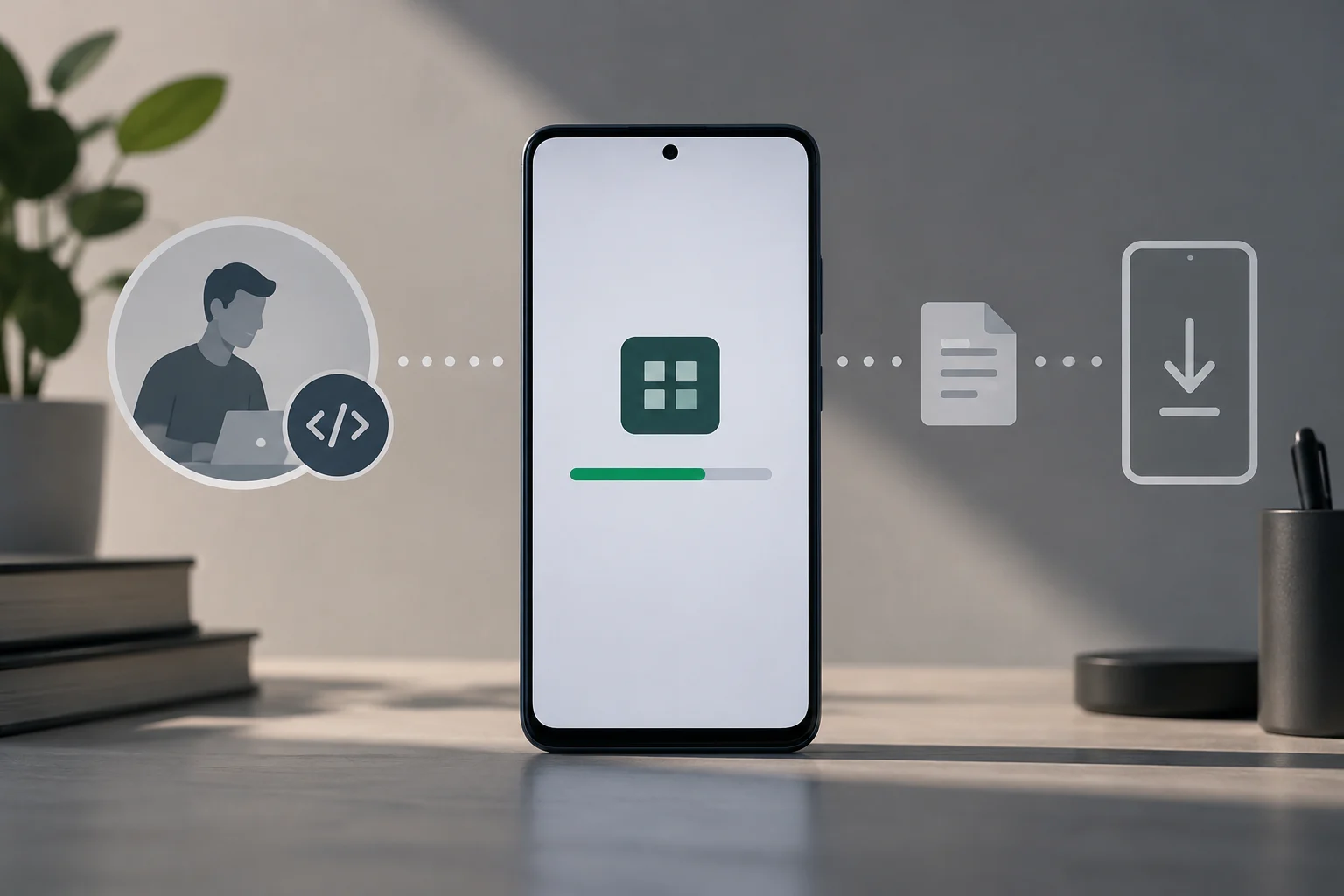
Developer verification is not an age check
Google is rolling out Android Developer Verification, a system that links Android apps to verified developers. It is not a tool for checking an app user’s age: registration identifies who is responsible for an app and is part of protections against software distributed by anonymous developers.
The distinction matters because Google also offers technologies related to age signals for apps. These are separate matters: an age signal can indicate an age category, while developer verification concerns the identity associated with an app. The schedule for the latter should not be mistaken for an announcement of a worldwide expansion of age verification.
There is a practical consequence for those publishing outside Google Play: alternative distribution will remain possible, but apps will have to meet the registration requirements that take effect in each region on covered certified Android devices. Google provides advanced options for installing unregistered apps, so the announcement does not amount to a general ban on sideloading.
What the system checks and how teams can prepare
Android documentation explains that registration associates an app’s package name with a verified developer and also makes it possible to check the SHA-256 fingerprint of its signing certificate. Development teams need to check more than the account holder’s name: they should confirm that the package and certificate used to distribute each build match the registered details.
Google offers the Android Developer ID Status API so development tools, continuous integration environments, and other automated workflows can check whether a package is registered. The response can distinguish a registered package, an unregistered one, and a package name associated with a different certificate fingerprint. This information helps teams find mismatches before releasing a version.
A practical preparation step is to review records in Play Console and Android Developer Console, inventory packages distributed outside Play, and document production signing fingerprints. Teams can also add a check before publication. This is an operational way to avoid surprises, not a claim that Google requires every app to integrate the API.
The schedule has changed: regional rollout in 2026, worldwide in 2027
Google began making developer-verification tools available in its consoles during 2026, giving teams time to verify identities and register apps in advance. However, the date when registration becomes available is not the same as the date when protections apply to user installations.
In an update published on September 29, Google said protections would begin rolling out on September 30, 2026, in participating stores and selected regions. The initial requirement applies to certified Android devices in Brazil, Indonesia, Singapore, and Thailand. Worldwide expansion is planned for 2027, not before the end of 2026.
The date and regional scope matter for launch planning, but they do not automatically make the rule identical across every channel or device. Google describes a phased rollout and specifies conditions for certified devices and participating stores. Developers should follow the updated verification schedule rather than earlier dates that have since changed.
What changes for apps and sideloading
In regions where the protections apply, apps will need to be registered by verified developers to be installed and updated on certified devices covered by the rollout. The requirement may affect apps distributed through Play as well as those offered through other channels: Google allows developers to register apps in Play Console even when they are not distributed in its store.
Google says advanced users will retain options for installing unregistered apps through ADB or an advanced flow. Sideloading is not going away, although installing an unregistered app may require an additional action in scenarios covered by the policy. The exact experience depends on the device, region, and rollout stage.
For people maintaining older apps, internal tools, or versions distributed directly, the most urgent task is to identify which packages must remain available and who controls their publishing credentials. In teams with multiple variants, testing should cover every package name and certificate, not just the main version. This reduces the risk of a legitimate app being excluded because it is associated with the wrong signing certificate.

Android Developer Verification rollout
The schedule distinguishes registration tools for developers from the later installation protections for users.
-
Developer tools
Rolling out in 2026
-
Selected regions
From September 30, 2026
-
Global expansion
Planned for 2027
The 2027 worldwide expansion is planned; the timeline does not specify a date within that year.
Sources and references1
Privacy and security: a specific scope, without overpromising
Google says the system is intended to make it harder for malicious actors to repeatedly distribute apps anonymously. The company has also said that its analysis found more malicious software in sideloading sources than in Google Play. That figure is Google’s claim about its analysis; on its own, it does not show that every app installed from outside Play is dangerous or that registration guarantees an app’s safety.
Verification identifies the developer associated with an app, but it does not replace code reviews, permission controls, or assessments of data-handling practices. Nor is it a quality certification or an approval of every app feature. For users and organizations, registration provides an identity signal about the distributor, not a complete guarantee of how the software behaves.
For privacy, the practical step is to review what information the registration process requests and what obligations apply to each type of account in the relevant console. Developer verification should not be taken to mean that age data is collected or shared: that function belongs to a different area. Companies operating in multiple markets should also check their local legal obligations, because Google’s technical mechanism does not replace regulatory compliance.
A developer checklist
The API can check an app’s registration status and whether its signing-certificate fingerprint matches the one associated with its package name. That comparison can be added to release controls at organizations with multiple teams or distribution channels.
Before an update, a technical lead can check the following:
- Review Google’s consoles to see which apps are registered and which need manual action.
- Confirm that each production certificate’s package name and SHA-256 fingerprint are the expected ones.
- Include apps distributed outside Play, including internal tools that must remain installable on certified devices.
- Test the installation and update flow for regions where protections are rolling out.
- Keep recovery and distribution paths for unregistered apps documented.
What can be concluded from the rollout
Android Developer Verification adds a developer-identity check to app distribution in the scenarios it covers. The effect on each team will depend on where it distributes apps, which devices its customers use, and when the rollout reaches each region. Planning should follow the updated schedule: selected regions from September 2026, with worldwide expansion planned for 2027.
For developers, the most useful step is to check registration status and certificate matching now rather than wait for an installation to fail. For users, the system may make it easier to identify who is behind an app, but it does not replace other security precautions. Compliance teams should keep this identity check separate from any obligation to verify users’ ages.