How HLS Organizes Live Video
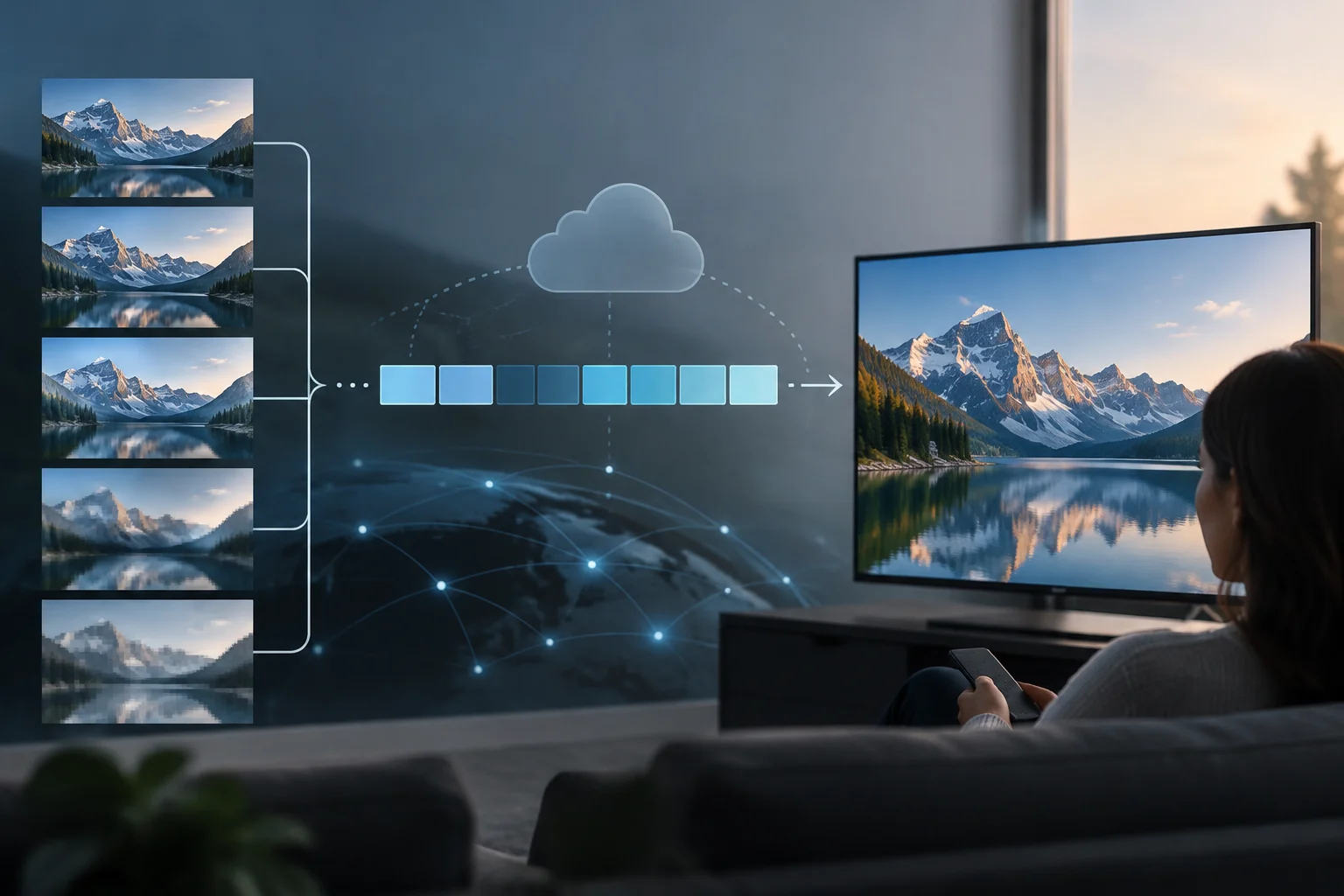
HTTP Live Streaming (HLS) is an Apple technology for distributing audio and video over the internet. Apple says it can deliver content through web servers and CDN networks and adapt playback to network conditions. The protocol is used for both live and on-demand content.
In the model described by RFC 8216, a presentation is referenced by a playlist. The client downloads that playlist and then the segments it lists; during a live broadcast, it reloads the playlist to find newly added segments. The playlist describes the resources that make up playback, while each segment contains part of the media.
Perceived delay depends on when content is published and how it is delivered and played, not on a single setting. Therefore, the presence of a low-latency feature in a specification does not guarantee a particular result for every stream: the system must be measured under actual operating conditions.
What RFC 8216 and the Second Edition Mean
Published in 2017, RFC 8216 describes HLS version 7. It is an informational document defining file formats and server and client actions; it states that it is not an Internet Standards Track specification. Its rules provide a reference for generating and playing playlists and segments covered by that version.
The second edition of HLS appears in an Internet-Draft describing version 13. The text says it would replace RFC 8216 if approved, but that condition does not mean it is an approved RFC. Internet-Drafts are working documents that may be updated, replaced, or become obsolete; implementations should be documented with that status made clear.
When designing or reviewing a system, record which version and document apply to each feature. Do not attribute to RFC 8216 mechanisms added in the second edition. Consulting a specification explains how a feature is defined, but does not prove that it is implemented in a particular server, CDN, or player.
Complete Segments, Parts, and Low-Latency Mechanisms
In the RFC 8216 model, the playlist declares complete segments for the client to download and play. The second edition describes partial segments using tags such as EXT-X-PART. The EXT-X-PART-INF tag provides information about them and is required when a playlist contains one or more EXT-X-PART tags. These features let a playlist describe media parts rather than relying only on complete segments.
The second edition also defines blocking playlist reloads, delta updates, and preload hints. With EXT-X-PRELOAD-HINT, the client can request a resource before it is available; the server keeps the request pending until it can respond. The document calls the combined use of parts, blocking reloads, and preloading low-latency mode.
These mechanisms coordinate resource availability with player requests, but they do not by themselves determine a stream’s final delay. Part duration and system configuration must follow the applicable specification and be tested with the actual components. Confirm support for each feature in the packager, server, CDN, and client being used.
What to Check in the Server, CDN, and Player
The fact that HLS can be distributed through web servers and CDNs does not mean every resource should receive the same caching policy. Playlists can change during a broadcast, while the lifetime and behavior of segments depend on how they are published. Set caching by resource type and check the origin and CDN rules for the chosen stream instead of applying one universal directive.
During testing, record player requests and responses from the origin and CDN. Check whether playlists reflect published resources, whether requests for segments or parts receive consistent responses, and whether playback continues as the playlist is updated. Comparing the origin with the CDN may provide clues about a delivery difference; identify the cause from observed responses rather than assuming it in advance.
Do not infer compatibility solely from the browser or operating system. Apple provides documentation for enabling Low-Latency HLS and a tool called Media Streaming Validator for validating HLS streams and deployments. Validate the complete chain using the components that will actually be deployed: media generation, publication, origin, CDN, and player. Documentation or a validation tool does not establish universal compatibility.
Pre-Deployment Checklist
- Record which HLS version and features are expected from each component. RFC 8216 describes version 7; the second edition, as an Internet-Draft, describes version 13 and includes partial segments and low-latency mechanisms. Confirm actual capabilities of the server and player before designing the stream.
- Run a test with the intended stream and retain client requests, origin responses, and available CDN data. Check that playlists and published resources are interpreted as expected and that playback continues as information is updated. If it fails, use that session’s logs to investigate whether the issue lies in publication, delivery, or client processing.
- Record observed delay together with the configuration, player, delivery path, and test conditions. The measurement describes that scenario, not every HLS deployment. If the application has a latency target, test it with the chosen components under representative conditions before considering the service ready.
As a practical example, review changing playlists separately from the segments and parts published by the stream; then check how each responds through the CDN. Compare the result with what the player expects and repeat the test whenever configuration or components change. This evaluates observed behavior without assuming a single caching policy or a universal latency figure.