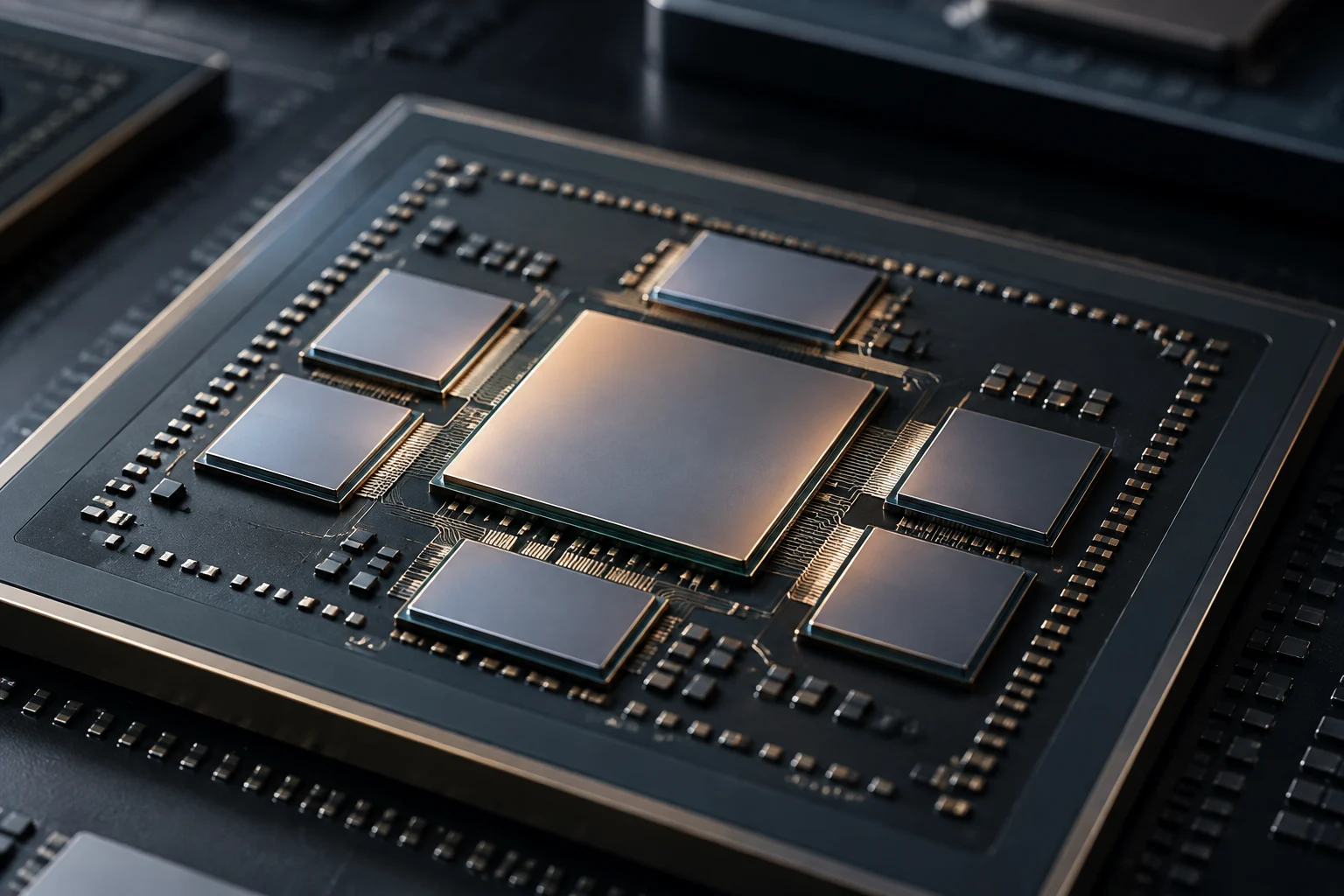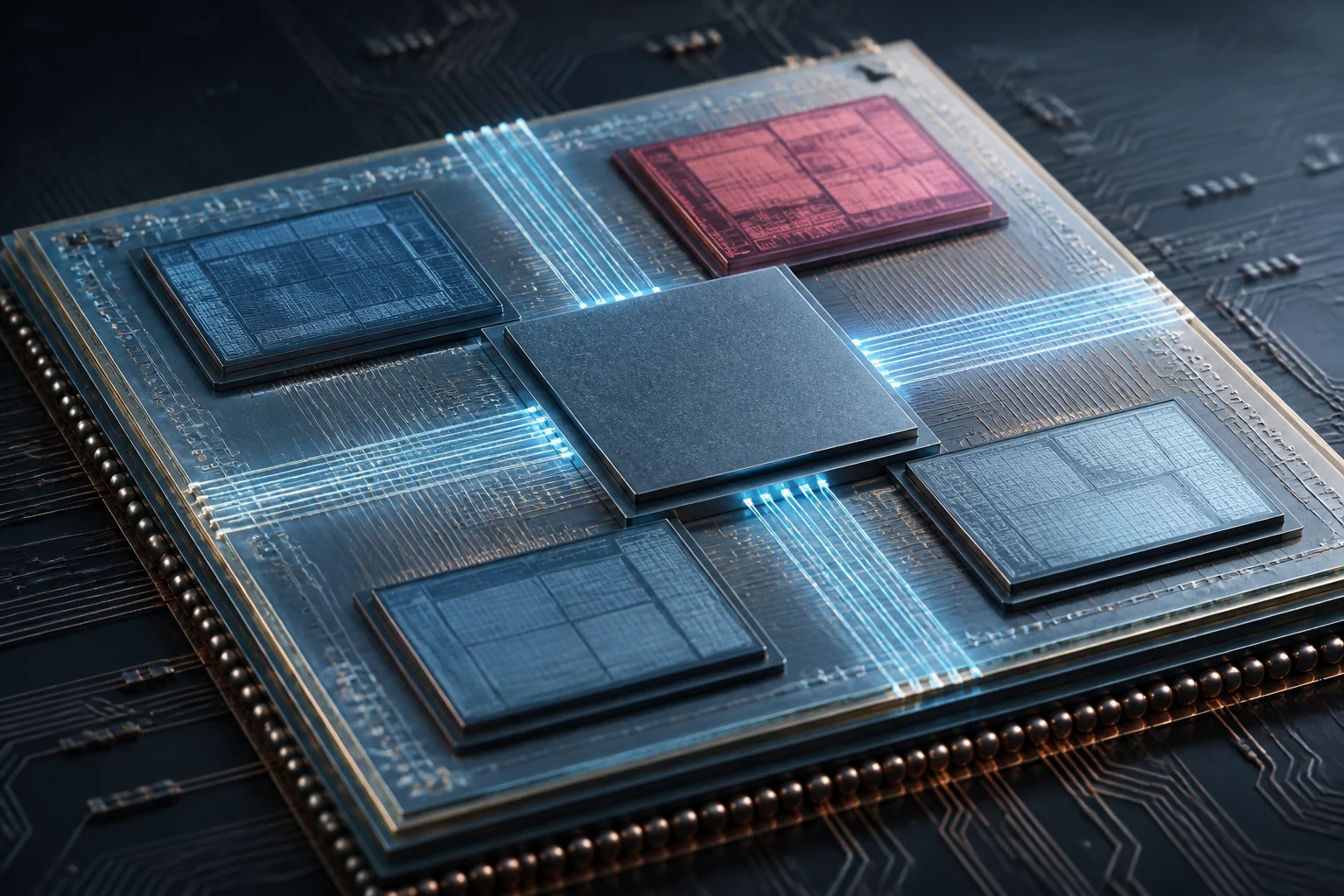
UCIe (Universal Chiplet Interconnect Express) is an open industry standard for interconnects at the package level. Its specifications cover die-to-die physical I/O, protocols, and a software stack, drawing on established standards including PCI Express (PCIe) and Compute Express Link (CXL). It defines shared interfaces and functions, rather than a guarantee that any two chiplets will work together in every system.
The UCIe Consortium presents the standard as a way to build systems-in-package (SiPs) using chiplets from multiple suppliers. The practical scope depends on the specification version and the capabilities implemented in a particular design.
What UCIe covers
UCIe 1.0 describes a standardized die-to-die interconnect, including its physical layer, protocol stack, software model, and compliance testing. The Consortium says the framework is intended to make it easier to combine chiplet components from different suppliers when constructing systems-on-chip, including customized designs. Compliance testing is part of the specification’s scope, but the standard’s stated aims should not be mistaken for a universal compatibility guarantee.
UCIe builds on PCIe and CXL, which are established industry standards. The specification spans several layers of the connection and includes provisions for device compliance and interoperability testing.
What the specification versions add
UCIe 1.1, released in 2023, extended reliability mechanisms to additional protocols and broadened supported usage models. The Consortium describes automotive-oriented improvements, including predictive failure analysis and health monitoring, as well as runtime health monitoring and repair for automotive and other high-reliability applications. The update also added architectural attributes for defining system configurations and registers used in test plans and compliance testing. The Consortium says UCIe 1.1 is backward compatible with UCIe 1.0.
UCIe 2.0, released in 2024, added support for a standardized manageability architecture and addressed testing, manageability, and debugging across the lifecycle of multi-chiplet SiPs. It introduced optional manageability features and the UCIe DFx Architecture (UDA), which includes a management fabric in each chiplet for testing, telemetry, and debugging. UCIe 2.0 also supports 3D packaging; its UCIe-3D approach is optimized for hybrid bonding. The manageability features are optional, according to the Consortium, and UCIe 2.0 is backward compatible with UCIe 1.1 and 1.0.
UCIe 3.0, announced by the Consortium on August 5, 2025, supports data rates of 48 and 64 GT/s and extends the sideband channel to as much as 100 mm. The update also covers continuous-transmission protocols through mappings, standardized early firmware download, priority sideband packets, fast throttling and emergency-shutdown mechanisms, and power-saving features based on runtime recalibration and L2 optimization. The Consortium says UCIe 3.0 is backward compatible with earlier UCIe specifications.
Manageability and security across chiplets
The UCIe CTA, CSSC, and TRoCS Engineering Change Notice (ECN) extends UCIe manageability with mechanisms for establishing trust and reporting chiplet state in multi-chiplet SiPs. It defines a common chiplet lifecycle model and standardized capabilities to report lifecycle state, control access to test and debug interfaces, and cryptographically verify expected chiplet state during system boot and operation.
The ECN also defines the Chiplet Trust Agent (CTA), an extensible, security-hardened module for chiplet security services, and describes key derivation between a Security Director and chiplet CTAs. CSSC and TRoCS add state controls and verification within this manageability framework. The Consortium identifies DICE, NIST key derivation, HMAC, and SHA-based algorithms among the industry practices and standards the ECN aligns with.
UCIe and NVIDIA NVLink-C2C
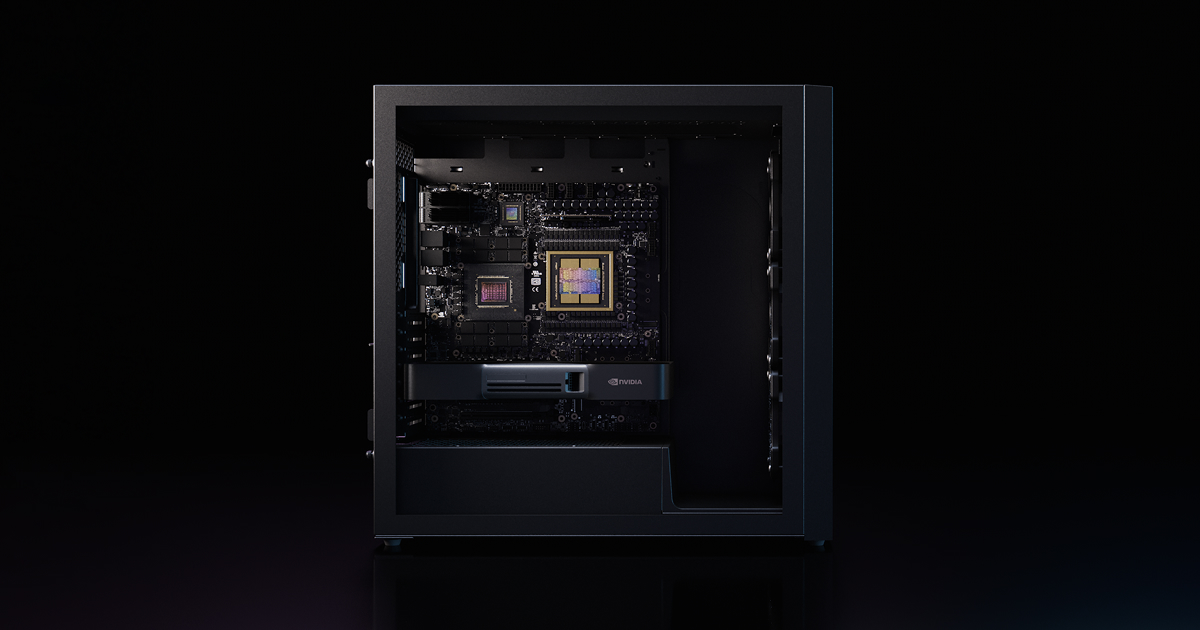
NVIDIA describes NVLink-C2C as a high-bandwidth, coherent chip-to-chip interconnect for connecting NVIDIA processors or accelerators with custom silicon. The company says it supports industry protocols including Arm AMBA CHI and CXL for interoperability between devices.
UCIe is an open industry standard for package-level interconnection; NVLink-C2C is NVIDIA’s interconnect technology. They are distinct offerings, although NVIDIA says NVLink-C2C supports protocols such as CXL.
In 2023, Intel demonstrated a package combining an Intel UCIe IP chiplet fabricated on Intel 3 with a Synopsys UCIe IP chiplet fabricated on TSMC N3E. Intel connected the chiplets using its Embedded Multi-die Interconnect Bridge (EMIB) packaging technology. The demonstration combined Intel and Synopsys components in a UCIe-based package; it illustrates one implementation, not a claim that every UCIe component will work together without additional design and validation.
What UCIe specifies—and what that means in practice
Comparing versions means looking at the functions each one defines: UCIe 1.1 extended reliability mechanisms and compliance testing; UCIe 2.0 added a manageability architecture and 3D packaging support; UCIe 3.0 added 48 and 64 GT/s data rates alongside changes to sideband communication, manageability, and power saving.
UCIe brings physical-layer, die-to-die protocol, and software specifications into one framework, and includes provisions for compliance and interoperability testing. The capabilities vary by version and by the features a system implements. The standard helps define a common basis for chiplet integration; it does not, on its own, certify every combination of components as interoperable.