Legal research on human capabilities and work
On October 28, 2026, the Universitat Oberta de Catalunya (UOC) published an analysis of human enhancement technologies in the workplace. Its author, Antonio Fernández García, a law professor and researcher with the TAXBUSINESS group, examines the ethical, legal and social implications of tools that can expand or alter physical, cognitive or sensory abilities. The academic work appeared in Justicia & Trabajo and is part of the university-funded project “Humanitat millorada i dret.”
The topic extends beyond futuristic devices. The research covers very different technologies: some are intended to compensate for a limitation or reduce physical risks, while others could boost performance, record bodily data or support safety decisions. A common question is how benefits are distributed and who controls the information these technologies produce or make it possible to infer.
On November 4, the UOC added that Fernández García had received the 5th “Cátedra Prevención Cantabria” Prize for Legal Research for work on human enhancement and occupational safety and health. That award came after the news announcement and should not be confused with the date of the academic article, which the university identifies as published in 2026 in issue 6 of Justicia & Trabajo.
Which technologies fall into this category
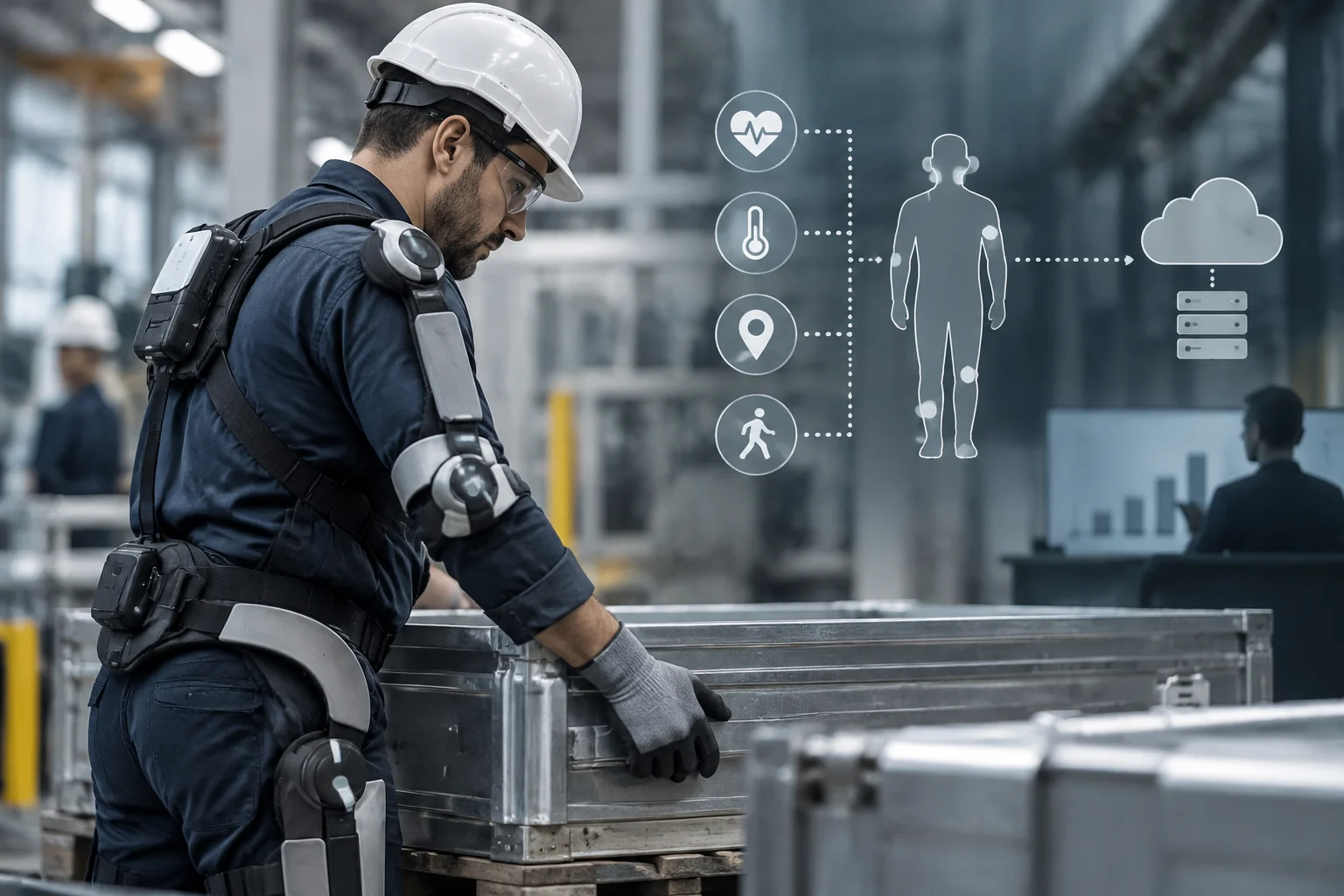
The term covers systems that can enhance or assist human functions at work. Examples discussed in the analysis include exoskeletons, advanced prostheses, drugs used to sustain performance, and wearables such as bracelets, sensor-equipped helmets and connected clothing. The article also considers more invasive developments, including implants and brain-computer interfaces, without suggesting they are as widely deployed as more conventional workplace equipment.
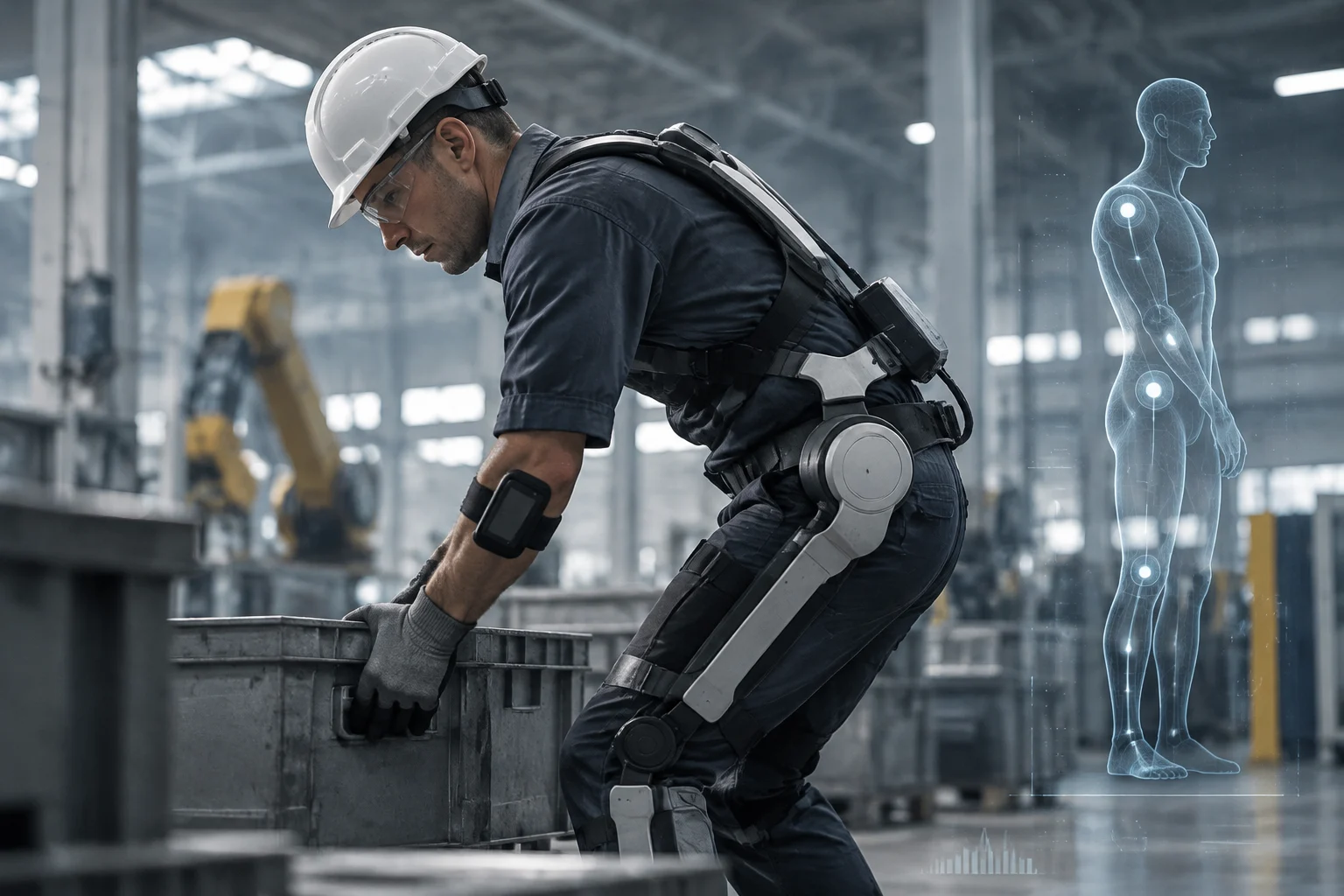
Exoskeletons can assist with tasks involving heavy loads, repetitive movements or demanding postures. Fernández García notes that passive, non-motorized models may be easier to introduce. That does not make them suitable for every job: their value depends on the task and its specific musculoskeletal risks, and using them does not remove the need to organize work safely.
Wearable technologies can measure biometric signals or environmental conditions to detect, for example, fatigue, drowsiness or exposure to hazards. These systems can support faster responses to workplace risks, while also raising questions about monitoring workers’ health.
Potential benefits, without replacing prevention
These tools are appealing because they may help anticipate problems or reduce physical strain. An exoskeleton can assist certain movements; a sensor can warn of hazardous conditions; and an advanced prosthesis can help a person with a disability perform work tasks. These possibilities may support safety and inclusion, but the article does not present them as guaranteed outcomes across all sectors, workers or conditions of use.
For drugs, the analysis distinguishes medical treatment from using substances to maintain or increase work performance. Fernández García says that no medicine is authorized solely to enhance workplace performance; he also warns that non-therapeutic use can be associated with dependence, tolerance and adverse effects. Pressure to extend shifts or sustain attention should not turn medication into a substitute for breaks and sound preventive work organization.
Technology complements, but does not replace, prevention at its source. Before using devices to compensate for exhausting work, an employer should consider whether risks can be reduced by changing processes, workloads, breaks or workstation design. Technology can be useful, but not if it normalizes conditions that continue to expose workers to hazards.
Privacy, surveillance and worker autonomy
Wearables can monitor workers’ biometric data in real time, including signals that may indicate fatigue or drowsiness. The analysis raises concerns about constant health surveillance and the privacy implications of monitoring workers. A preventive purpose does not automatically justify any degree of monitoring: it matters what data are collected, who can access them, how long they are retained and which decisions they inform.
Autonomy is another concern. A practical assessment should not ask only whether equipment improves productivity; it should also consider what data it collects, who can see them and whether less intrusive alternatives exist.
The UOC analysis also considers more invasive developments, including implants and brain-computer interfaces capable of interpreting neural signals. Their potential use raises legal and ethical questions about continuous monitoring of workers’ health and the need to adapt workplace rules to these technologies.
Inequality and employer decisions
The study identifies a risk of a divide between people whose capabilities are technologically enhanced and those who do not use such tools. Unequal access, or a decision not to undergo an intervention, could affect hiring, promotion or continued employment. Advanced prostheses are also part of the analysis, which considers their potential to compensate for disabilities and, in some cases, extend human capabilities.
When considering exoskeletons and wearables, employers should assess who benefits and who bears the risks. The study identifies a risk that unequal access to human-enhancement technologies could contribute to new forms of workplace discrimination, including in hiring, promotion or continued employment.
For managers and occupational safety and data-protection teams, the practical implication is to treat these tools as part of the work system, not as neutral accessories. Before introducing them, organizations should define a specific purpose, assess the need for each data point, determine who can access it and explain to staff how decisions will be made. They should also consider reasonable accommodations and alternatives for people who cannot or do not want to use a device.
What the analysis contributes to workplace decisions
The academic article examines the relationship between human enhancement and occupational safety and health. The project’s members propose changes to frameworks concerning artificial intelligence, medical devices, data protection, non-discrimination and workplace safety and health. These are proposals for regulatory change, presented by the project’s members.
For an organization considering sensors or assistive devices, the useful decision is to weigh the expected preventive benefit against the system’s intrusiveness and workplace effects. That means distinguishing monitoring needed to respond to a hazard from continuous performance surveillance, restricting access to information and preventing health data from being reused for purposes unrelated to safety.
In short, the research offers a framework for considering who decides, who benefits and who bears the cost when technology affects the body or behavior at work. The question is not just whether a tool helps people do more, but whether it improves safety without shifting risks, reducing privacy or creating new barriers for workers.