From point-to-point connection to mass broadcasting
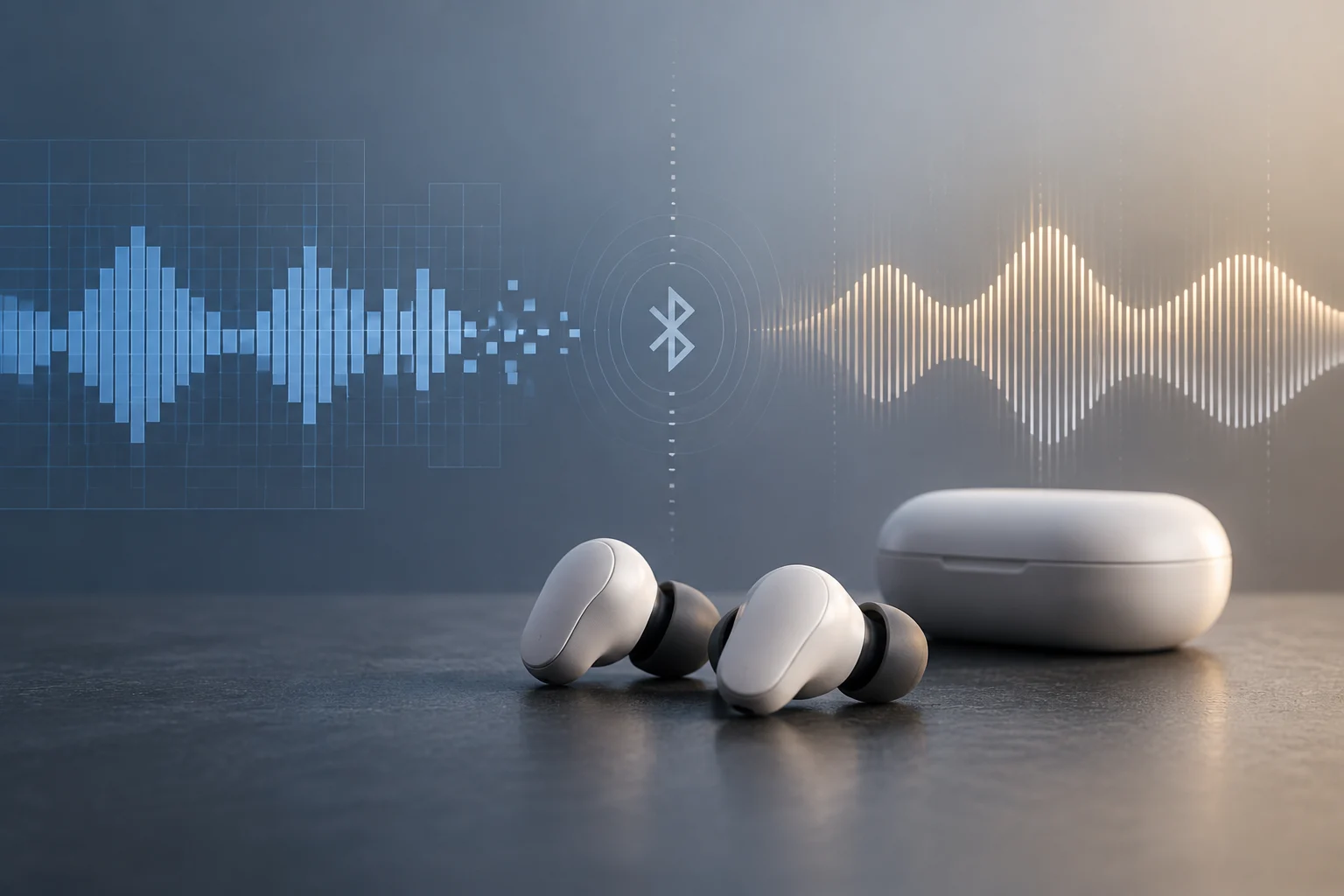
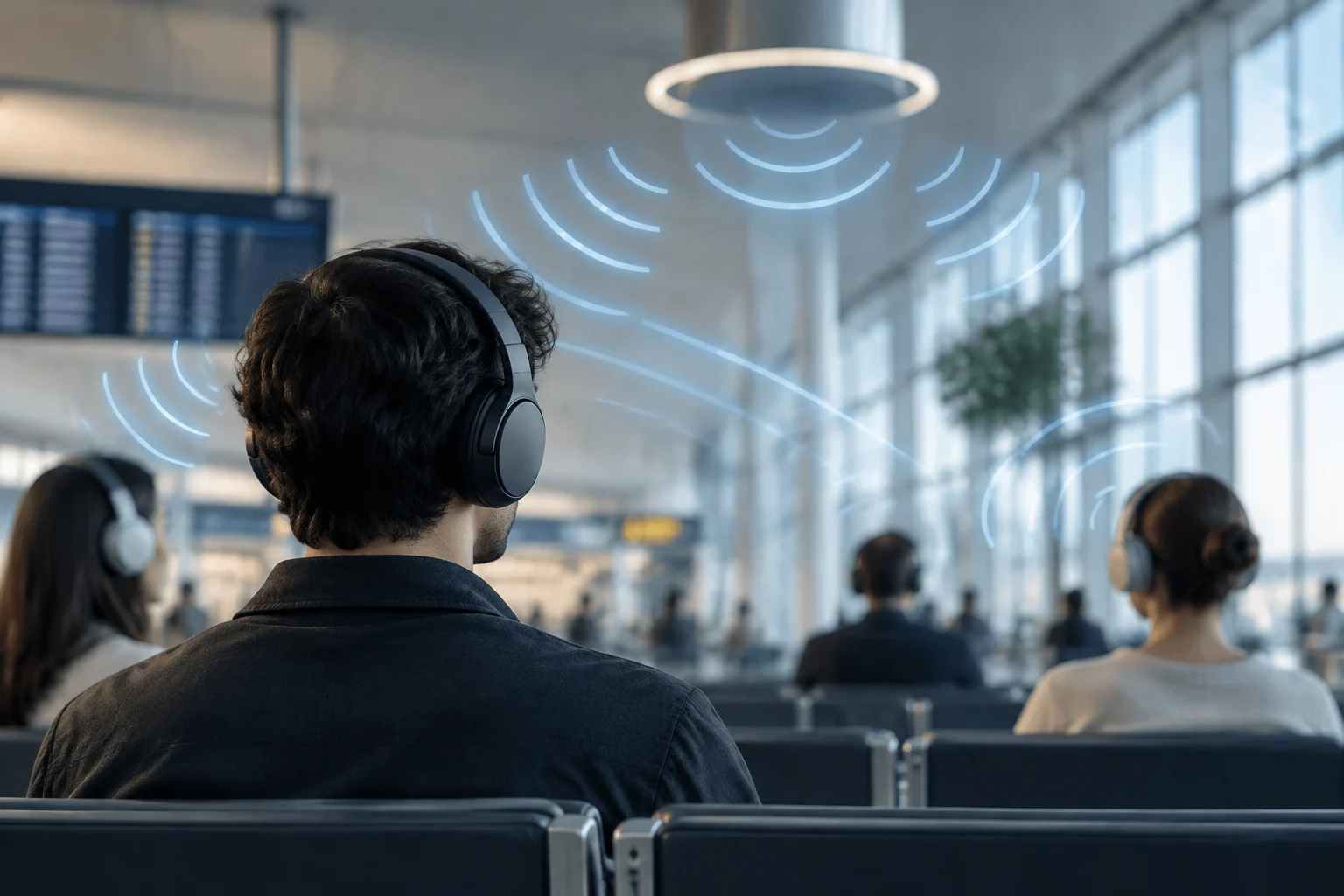
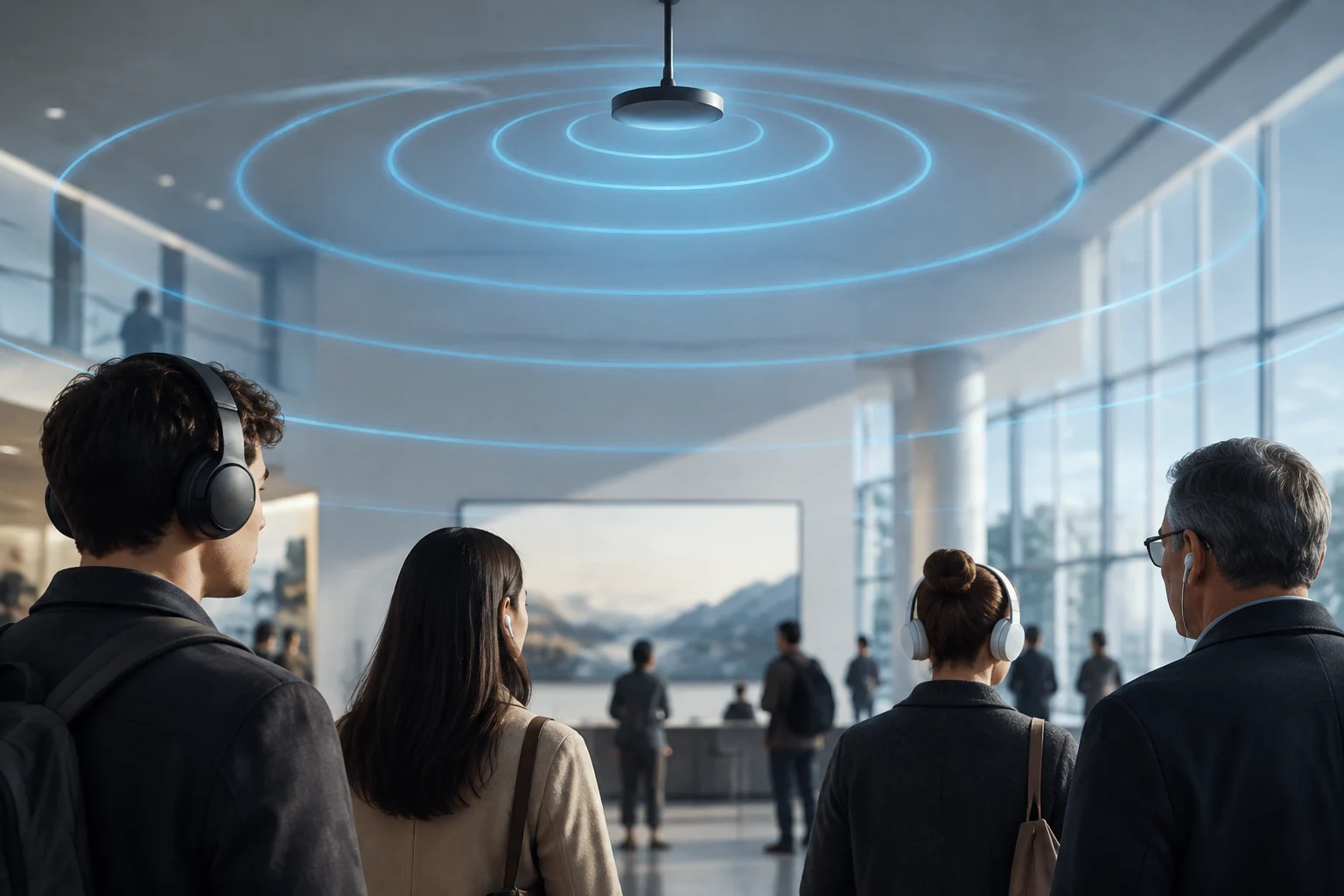
For over two decades, Bluetooth Classic has dominated wireless audio with a strictly unidirectional model: one transmitter and one receiver. This architecture, designed for calls and personal streaming, becomes inefficient when the same content must reach multiple listeners simultaneously. In environments like airports, theaters, or public transport, duplicating audio streams for each device consumes energy and generates inconsistent latency.
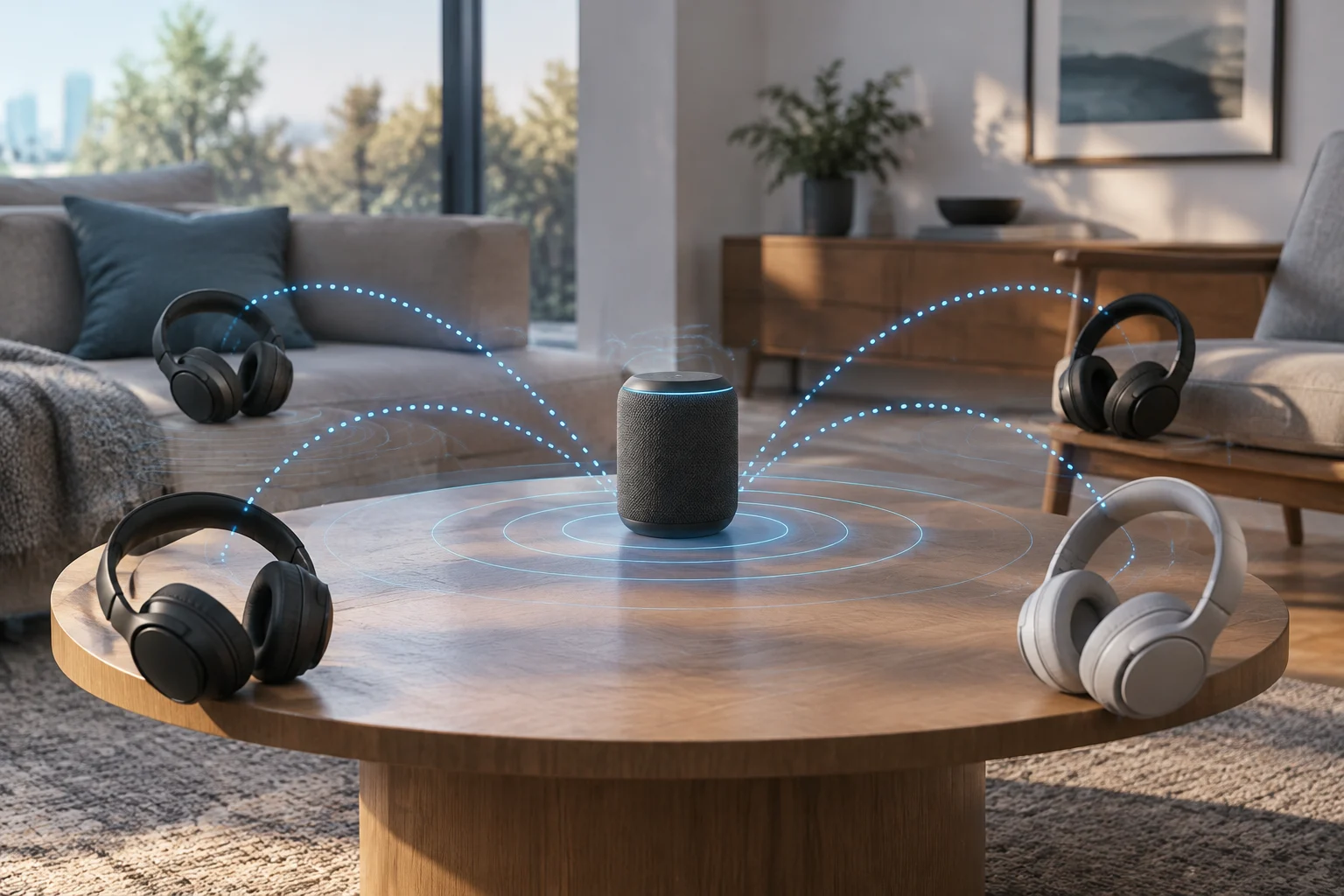
Auracast™ resolves this limitation by allowing a single transmitter to broadcast audio to an unlimited number of nearby receivers without prior pairing. The most precise analogy is not traditional Bluetooth, but Wi-Fi: devices do not connect one-to-one, but rather "tune in" to a shared broadcast channel. This paradigm shift transforms accessibility and the shared listening experience.
The transition is not just technical, but a business model shift. Manufacturers of hearing aids, headphones, and public sound systems are reconfiguring their development pipelines to prioritize broadcast reception over unidirectional connection. This implies a restructuring of audio profiles and greater integration with mobile operating systems.
Technical requirements: LC3 and broadcast profiles
The core of Auracast is Bluetooth LE Audio, a specification that introduces isochronous channels to transmit multiple synchronized audio streams. Unlike previous codecs such as SBC or AAC, LE Audio uses the LC3 (Low Complexity Communication Codec), developed by Fraunhofer IIS in collaboration with Ericsson and the Bluetooth SIG. LC3 offers a better ratio of audio quality to energy consumption, especially in voice services.
For a device to be compatible with Auracast, it must implement the Public Broadcast Profile and the Broadcast Audio URI. These profiles allow receivers to automatically discover available audio streams in an environment, display their description, and connect without manual intervention. The second edition of Nick Hunn’s book Introducing Bluetooth LE Audio, president of the Bluetooth SIG Hearing Aid Working Group, details these specification updates, including the new Gaming Audio Profile (GMAP).
The specification also introduces Multi-Stream Audio, which allows a smartphone to transmit independent and synchronized streams to multiple devices, such as true wireless stereo (TWS) headphones. This capability is fundamental for the personal listening experience, while Auracast focuses on public broadcasting. Both mechanisms coexist within the same LE Audio technical framework.
Adoption status in October 2026
The year 2025 marked the inflection point for Auracast, moving from promise to practice. According to the Bluetooth SIG, deployment in public infrastructure and the growth of compatible devices have been significant. In September 2025, during UnPlugFest in San Francisco, hundreds of engineers from major hearing aid and audio brands tested Auracast interoperability, with results indicating solid cross-compatibility.
In the hearing aid sector, GN Group (ReSound, Jabra) leads adoption with multiple Auracast-ready models already on the market. Starkey has integrated Auracast into its latest Edge AI models, which work without a separate app when scanned with Android/Google phones. WS Audiology (Signia, Widex, Philips) is in active testing phase, with some pilot models already available. Sonova (Phonak) maintains its focus on Bluetooth Classic for its universality, but is developing Auracast reception.
In the cochlear implant field, Cochlear and GN Hearing have launched bimodal solutions that integrate Bluetooth LE Audio and Auracast for the first time. Cochlear’s Baha® 7 sound processor is compatible with ReSound Nexia™ hearing aids, allowing bimodal solution users to access a combined ecosystem with Auracast. In the consumer sector, brands like Jabra are accelerating deployment in headphones and speakers, while Philips HearLink 50 incorporates Bluetooth LE Audio to expand connectivity options.
Adoption in operating systems is uneven. Android/Google has integrated native support for Auracast, allowing detection and connection without additional apps. iOS and Windows are in early implementation phases, with support limited to specific devices. This asymmetry is one of the main barriers to mass adoption in the consumer market.
Practical limitations and interoperability challenges
Despite advances, interoperability between brands remains a challenge. The 2025 UnPlugFest results were positive, but real-world experience in public environments can vary depending on transmitter implementation and device density. Latency and coverage remain critical factors, especially in large spaces with multiple simultaneous audio streams.
In public environments like airports and train stations, Auracast implementation requires dedicated infrastructure. Not all spaces are equipped, and availability varies significantly between countries and operators. The Bluetooth SIG has established a formal entity in Japan, Bluetooth SIG Japan G.K., to accelerate deployment in Asia-Pacific, collaborating with companies like Sony and Panasonic. This initiative reflects the strategic interest of Asian markets in Auracast adoption.
Security is another aspect to consider. Auracast allows audio stream encryption, but key management and device authentication in public environments require robust protocols. Users must verify that the devices they purchase support the necessary security features for their intended use, especially in contexts where audio privacy is relevant.
What to check before buying and expectations for 2027
Before purchasing an Auracast device, users must verify three key aspects: official manufacturer support for Auracast (not just Bluetooth LE Audio), compatibility with their operating system (Android has greater native support), and availability in their usage environment (airports, theaters, public transport). The "Auracast-ready" label must be backed by manufacturer technical documentation, not just marketing.
For 2027, a significant expansion of public infrastructure and greater convergence between operating systems is expected. Standardization of profiles like the Public Broadcast Profile and Broadcast Audio URI will facilitate interoperability between brands. Hearing aid manufacturers currently prioritizing Bluetooth Classic, such as Phonak, will likely integrate Auracast in their next models, reducing market fragmentation.
The practical decision for the user is clear: if the priority is accessibility in public environments and shared listening, Auracast offers significant advantages over Bluetooth Classic. If the priority is universality and compatibility with all devices, Bluetooth Classic remains the safest option. The coexistence of both standards in the coming years is inevitable, and devices supporting both will offer the best long-term experience.