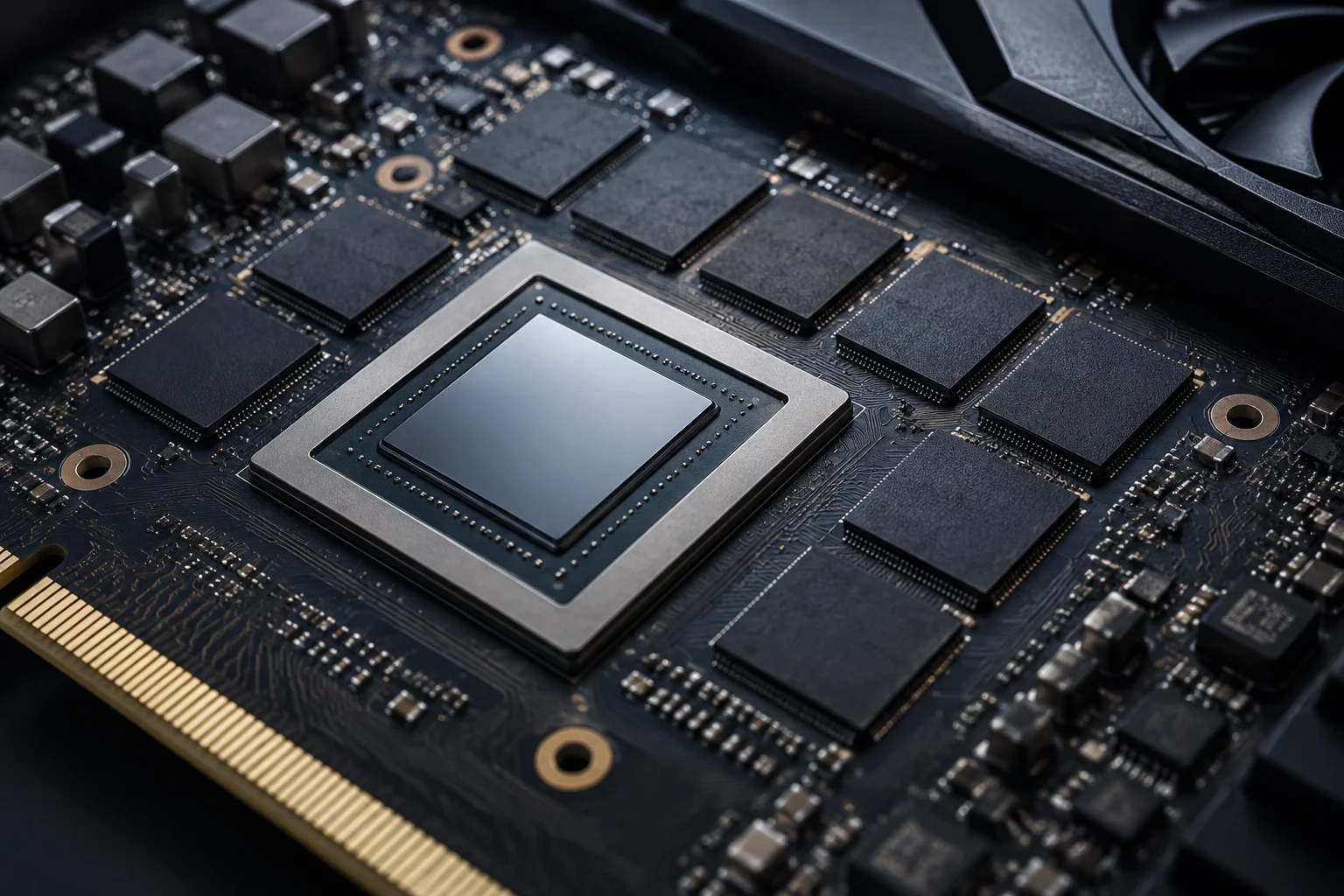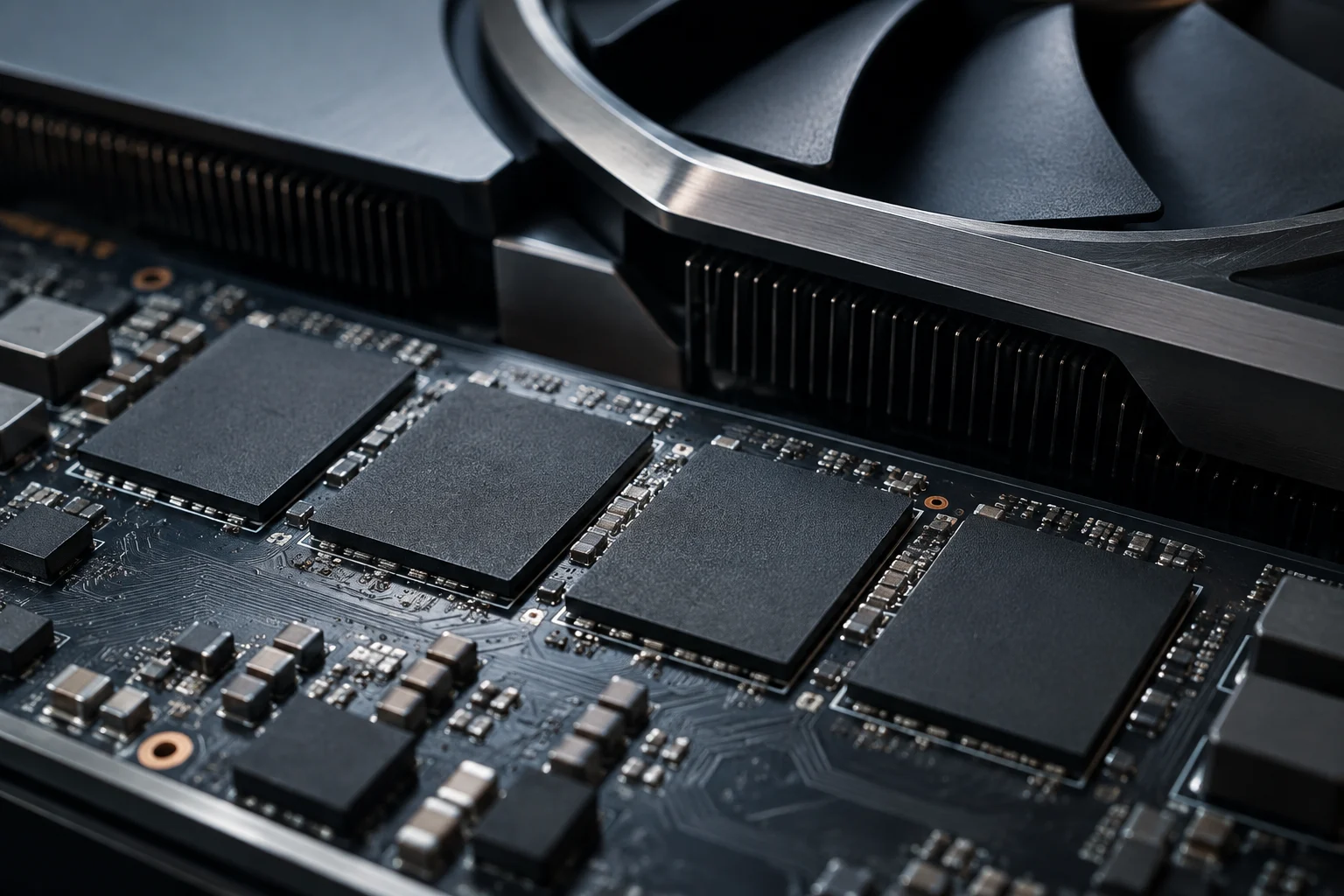
What the coexistence of GDDR6 and GDDR7 means
As of October 2026, the available sources support the conclusion that some GeForce RTX 50 cards use GDDR7, and that support has also appeared in recent changes to AMD’s open-source driver. That does not amount to a complete market transition: the documentation gathered does not provide a verifiable inventory of every current GPU, and a reference in a driver does not confirm that a retail graphics card is on sale.
The distinction matters when comparing systems: GDDR7 describes graphics memory, not the GPU’s overall performance. Memory-chip speed combines with bus width, installed capacity, the graphics processor, power limits and software. That is why the memory name alone is not enough to choose a card or predict how many frames per second it will deliver in a particular game.
It is also useful to distinguish product status from the state of the technology. A manufacturer page identifying a GDDR7 variant confirms that particular configuration; it does not prove that every model in the series, every partner brand or every market uses the same specification. The practical conclusion is limited: compare the exact model number and check its technical specifications before buying.
How GDDR7 transmits data
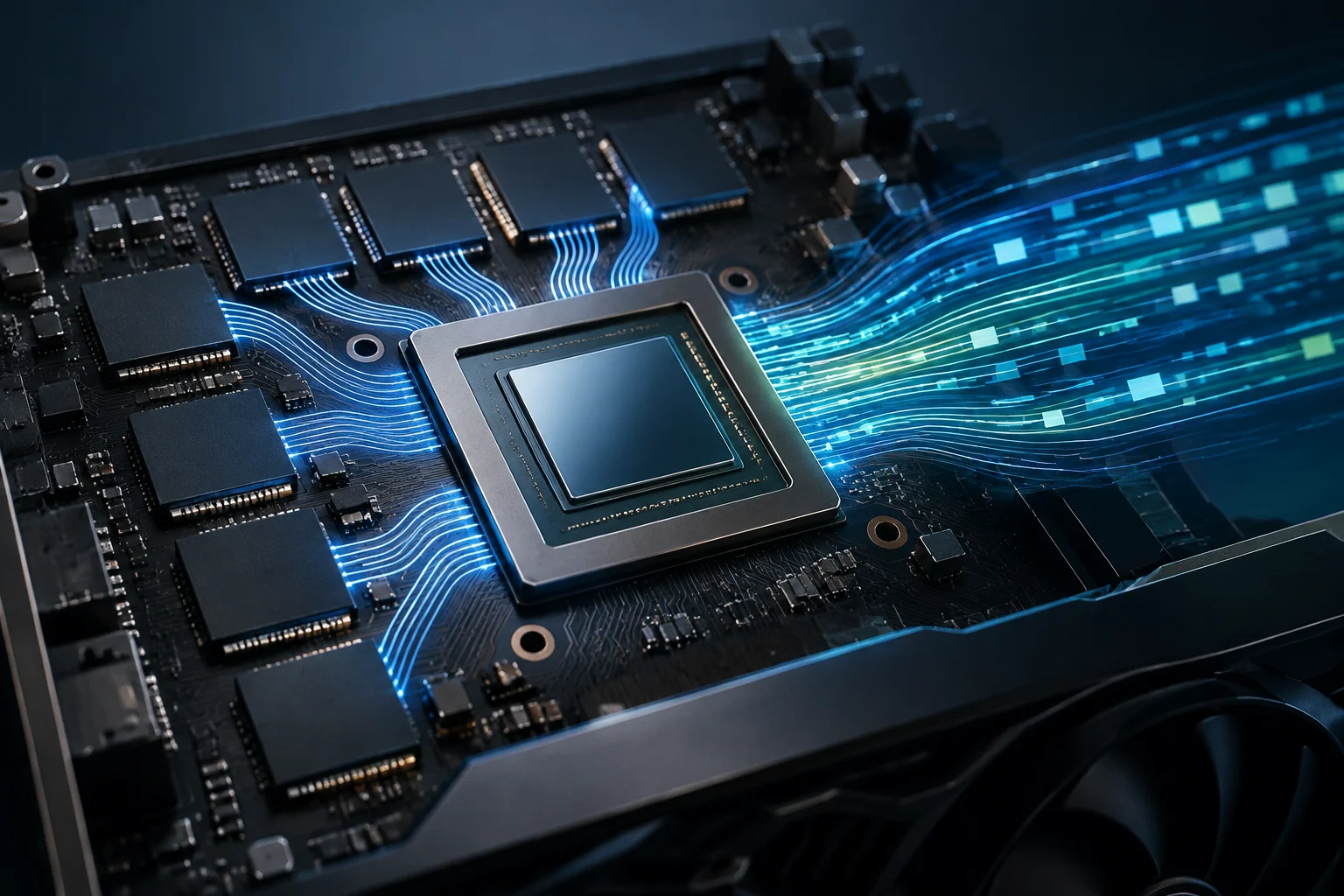
The most notable signalling difference is PAM3. According to the available technical comparison, GDDR6 uses NRZ, which encodes one bit per symbol, while GDDR7 transmits three bits over two cycles. The theoretical advantage is more information per clock interval than with NRZ; it does not mean the entire GPU is automatically 50% faster.
The same memory can produce different results depending on the card’s effective memory speed and bus. Aggregate bandwidth depends on both: the transfer rate per pin and the number of data lines. So per-pin speed figures should not be confused with a card’s total bandwidth or its memory capacity, which is measured in gigabytes.
The technical source consulted also describes four independent 8-bit channels for GDDR7, compared with two 16-bit channels in the GDDR6 architecture it discusses. That organization may give the controller greater flexibility, but does not in itself prove an improvement in an application: establishing a real difference requires comparing equivalent GPUs, buses, frequencies, power limits and workloads.
Which models are identified as having GDDR7 memory
There is concrete confirmation in products from the GeForce RTX 50 family. ASUS’s specification page explicitly identifies the 16 GB TUF Gaming GeForce RTX 5060 Ti as having GDDR7 memory. ASUS also lists a ROG Astral LC based on the GeForce RTX 5090 with 32 GB of GDDR7. These are partner-manufacturer variants, not grounds for assuming that every card with the same graphics processor has an identical design or cooling system.
NVIDIA’s GeForce RTX 50 page lists models in that family and their technologies, but the material provided does not independently verify every combination of model, capacity and memory type. For that reason, this analysis does not treat the claim that “the entire series” uses GDDR7 as verified solely by the existence of the two examples above. The exact SKU’s specification page remains decisive, especially when comparing versions with different memory capacities.
For AMD, the evidence has a different scope. A report from September 2026 describes changes to the open-source AMDGPU driver adding GDDR7 among the supported memory types and links this to a possible future generation. That documents software work, not a confirmed retail product. It does not establish which specific Radeon card will include GDDR7, when it will go on sale, or what capacity or speed it will have.
Bandwidth: what it can and cannot tell us
The technical comparison consulted places GDDR7 at 32 to 48 Gb/s per pin and cites GDDR6 implementations at around 20–24 Gb/s per pin. These figures describe transfer speeds, not gaming performance. Total bandwidth also depends on the bus; memory with a higher data rate may not outperform another card in every task if their architectures, bus widths or other limits differ substantially.
More bandwidth can help when a GPU is waiting for memory data, for example in some texture-heavy or computationally intensive scenarios. But it does not eliminate every bottleneck: if the limit is processing power, memory capacity, storage or the game engine itself, changing the GDDR type may have a smaller effect. The available source provides no independent comparative tests measuring games or AI workloads on equivalent GPUs; therefore, the speed figures cannot be turned into an FPS promise.
Speed should not be confused with capacity either. Memory capacity determines how much data can remain available to the GPU; bandwidth determines how quickly that data can be transferred. Both can matter for professional work or local inference, but the requirement depends on the software and the size of the data or models. Checking application requirements and tests of the specific GPU provides a more useful basis than buying solely because of the GDDR7 label.
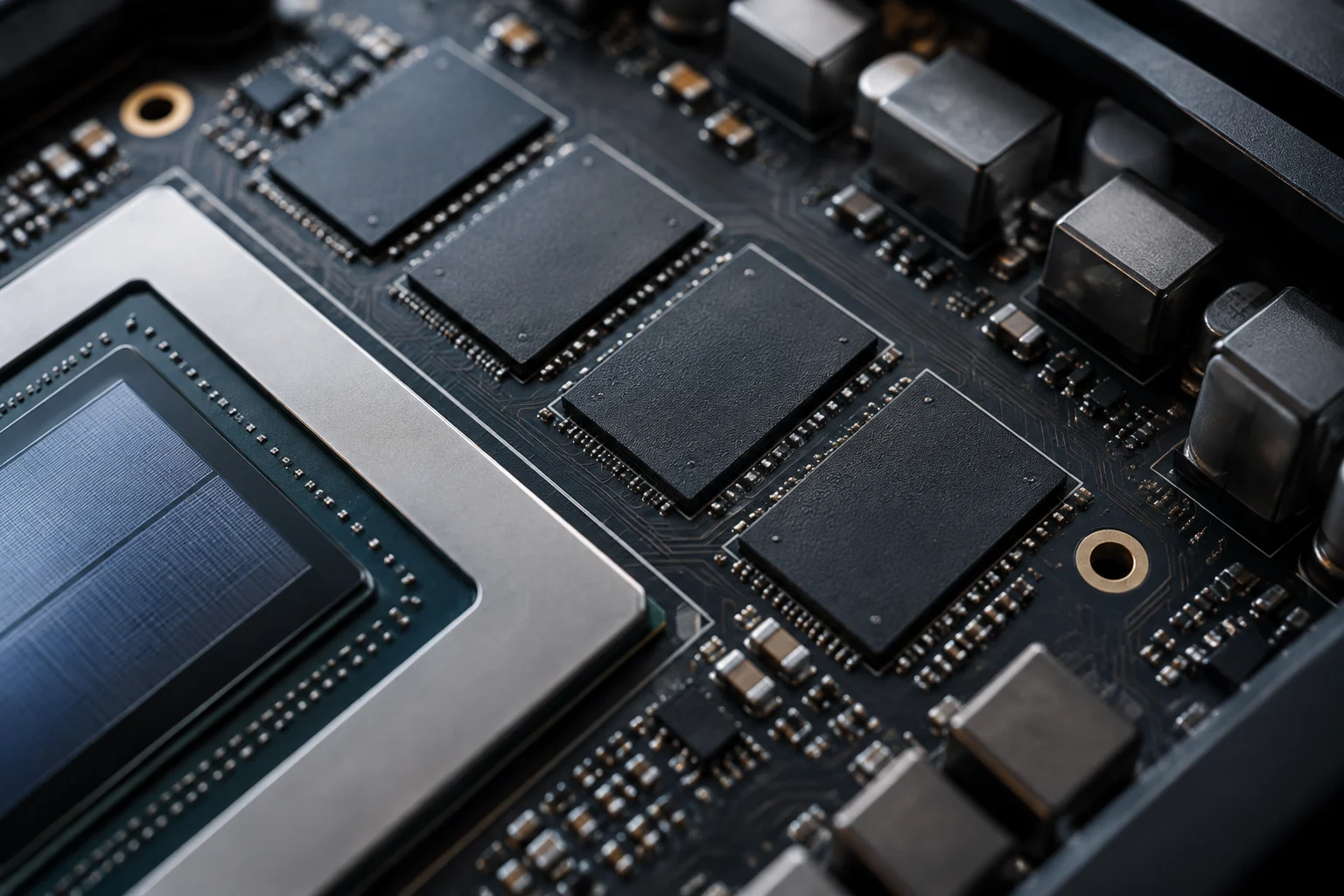
Power consumption, temperature and power-supply choice
The technical comparison cited attributes an operating voltage of 1.1–1.2 V to GDDR7, compared with 1.35 V for standard GDDR6. The lower voltage does not prove that the complete graphics card consumes less power: the GPU, clock speeds, board design and power limit also contribute to total consumption. Nor does voltage alone establish that a card needs less cooling.
Temperature depends on design and workload, among other factors. The source package contains no comparable thermal measurements between GDDR6 and GDDR7 cards and no evidence that the latter systematically require liquid cooling. We therefore avoid inferring cooler requirements from memory type. For a specific purchase, check the card manufacturer’s recommendations, as well as the computer’s dimensions and ventilation.
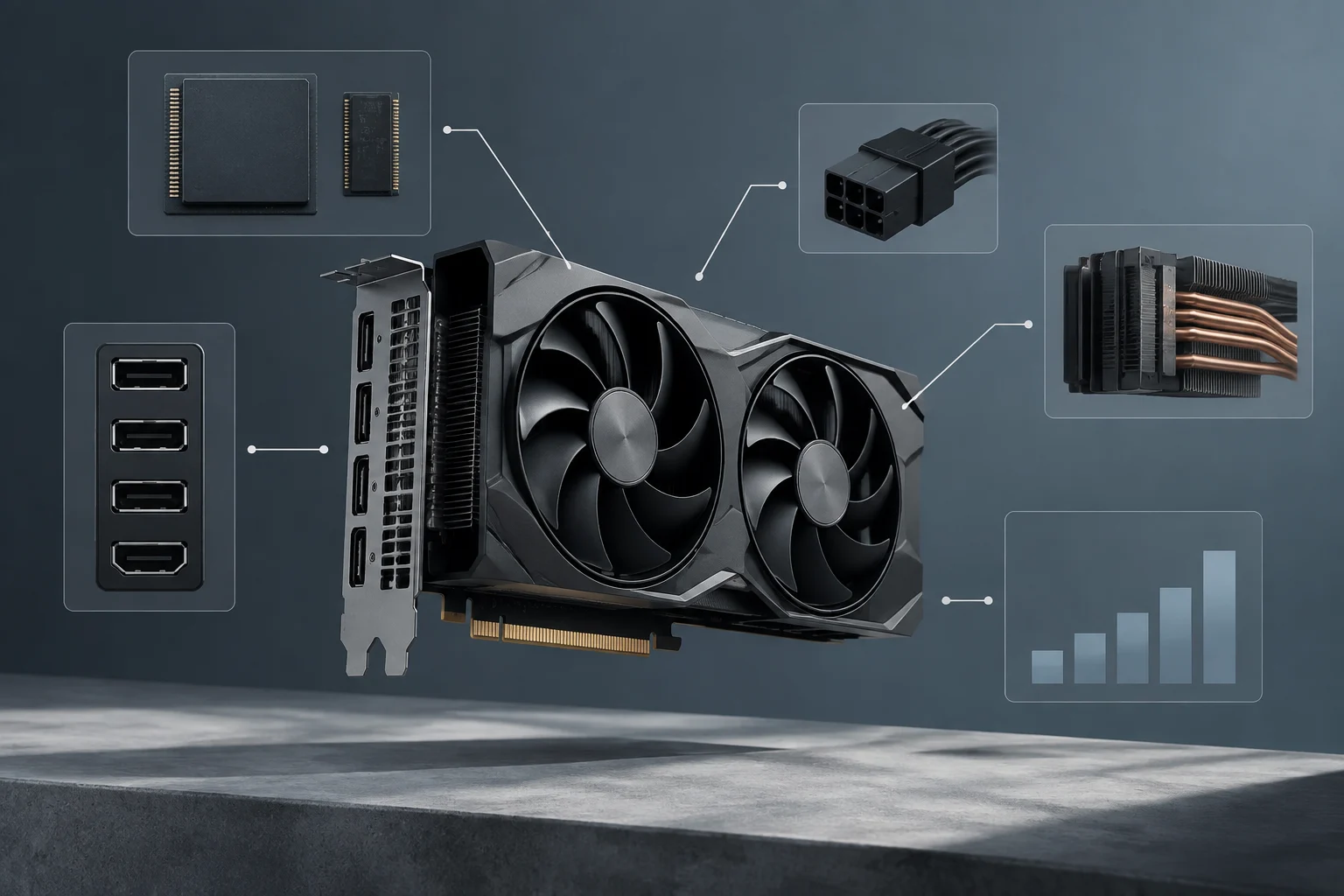
Choose a power supply based on the specifications of the complete graphics card, not its memory in isolation. Check the recommended wattage, required power connectors and available case space; the exact variant can change those requirements. There is no universal power-supply rule for “GDDR7”: two cards with that memory type can have different power consumption.
When an upgrade makes sense
If you are comparing two cards, start with the exact model and compare performance tests in the games or programs you use, at your usual resolution and quality settings. Check memory capacity and specified power consumption as well. GDDR7 is relevant information, but not a sufficient criterion to justify a purchase if the card does not improve the workload that matters to you.
For people who already have a GDDR6 GPU, the available sources do not justify upgrading solely because of the memory generation. The decision may make sense if the new card delivers a demonstrated improvement in performance, capacity or features you need, and is compatible with the rest of your system. Professionals should prioritize published software requirements and application-specific tests over a general expectation about bandwidth.
In short, GDDR7 introduces different signalling and, according to the cited specifications, enables higher transfer rates. Adoption is documented in specific GeForce RTX 50 variants; for AMD, the evidence included points to support under development, not an announced retail model. The practical decision is to compare complete products and real-world evidence, rather than treating a memory technology as an automatic prediction of performance, temperature or power consumption.