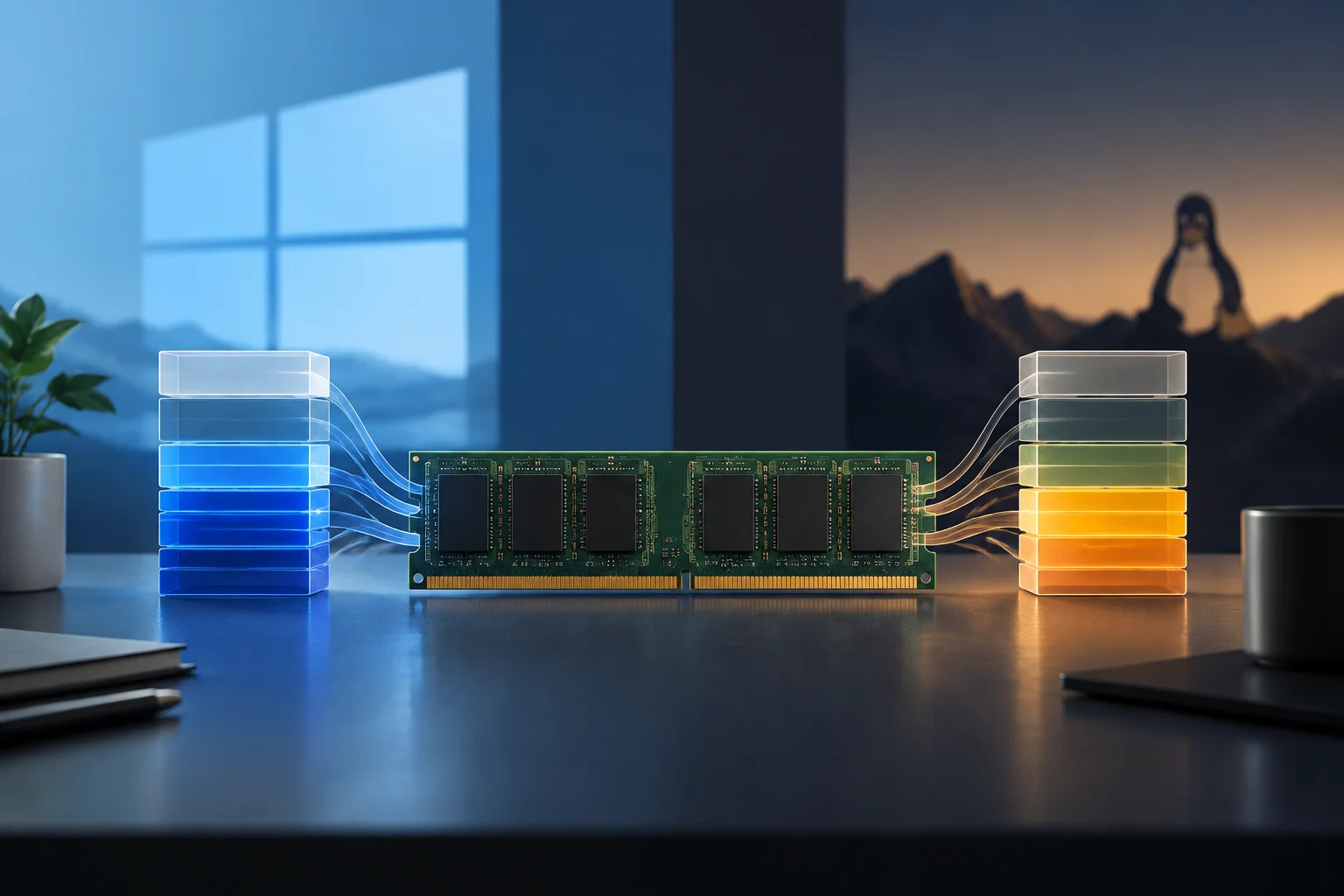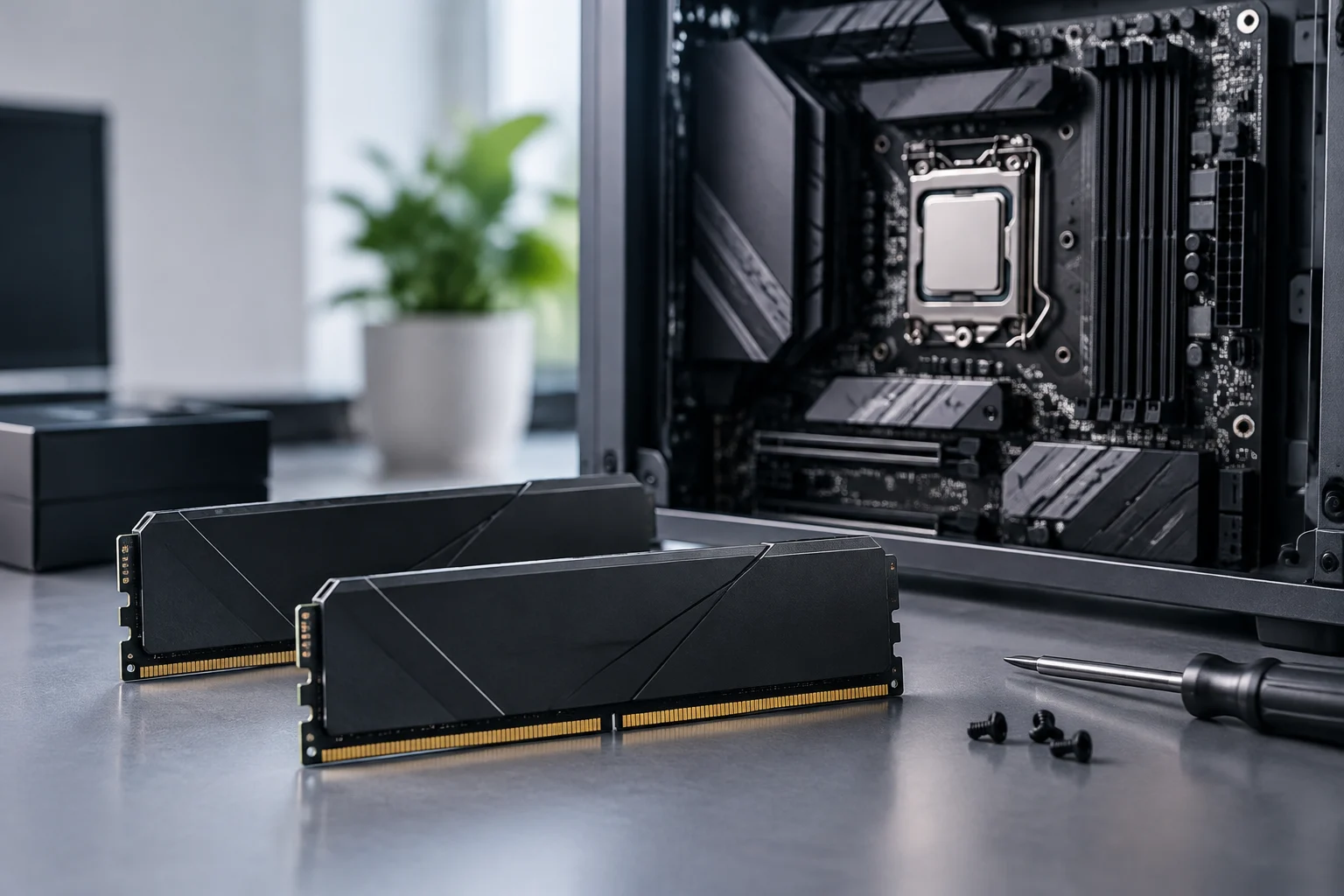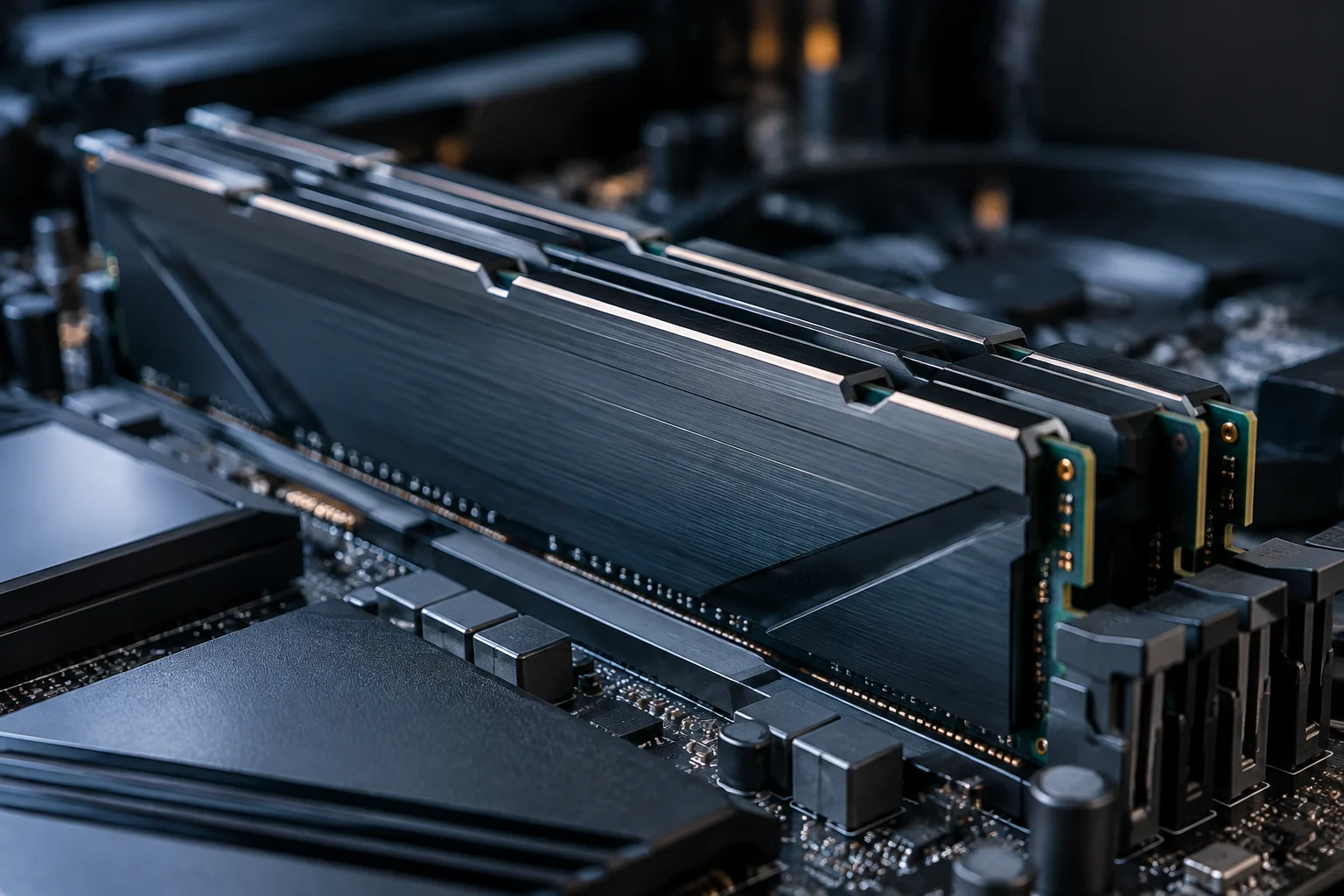
What it means to talk about RAM in 2026
RAM memory is not an isolated component that solely determines a system's speed. Its behavior depends on the processor, motherboard, memory controller, installed configuration, and the specific task. Therefore, an advertised speed figure is insufficient to predict results in applications or games.
Available information allows for a cautious explanation of three specific issues: the DDR5 standard, AMD EXPO configuration profiles associated with Ryzen 7000 platforms, and a report on a high-capacity DDR5 memory demonstration. It does not provide sufficient backing to present a comprehensive comparison of all 2026 formats or to quantify consumption, latency, and real performance between them.
It is also advisable to separate the temporal scope of the sources. Some cover products or tests from 2021 and 2022; another describes a demonstration at CES in January 2026. These are dated antecedents and coverage, not a current measurement or a confirmation of general availability in October 2026. The publication date matters as much as the cited number.
DDR5, DDR5X, and CAMM-2 are not interchangeable terms
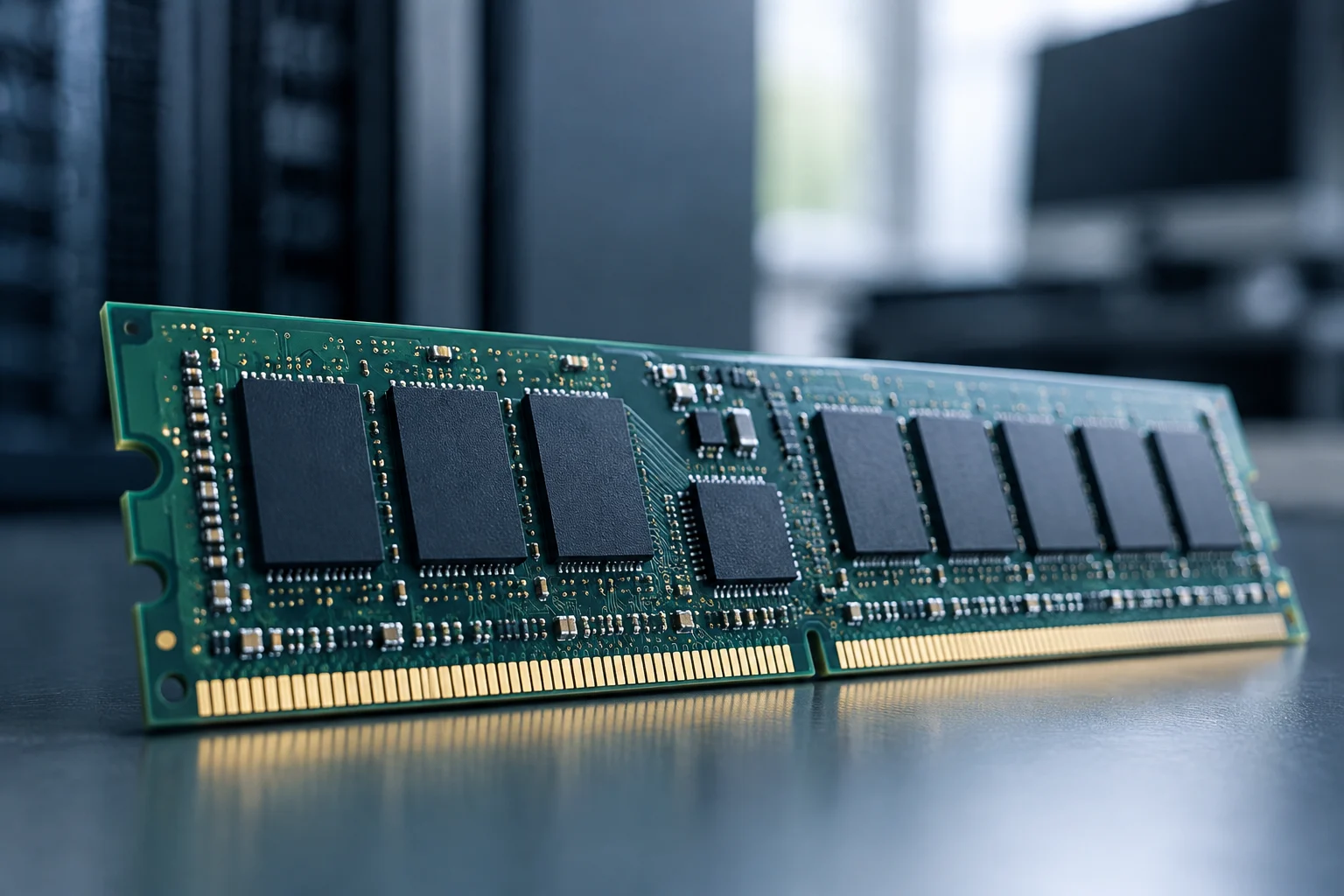
DDR5 is a memory standard. Xataka's coverage of its specification explains architectural changes compared to DDR4, including two 32-bit subchannels per module and an increase in banks. This description helps understand the generation, but it does not turn any commercial frequency into a universal specification: one must distinguish the standard's rules from each system's profiles and adjustments.
In contrast, verified sources do not certify that “DDR5X” is a normalized generation with the speeds, latencies, or consumptions attributed to it in the draft. Using that name as if it were a standard alternative to DDR5 may lead to searching for a category that available evidence does not document. An unverified label must not be confused with a standard.
CAMM-2 is another class of concept: a module format, not a frequency or a memory that guarantees higher bandwidth on its own. The source on GIGABYTE's demonstration at CES 2026 speaks of CQDIMM and the challenges of combining capacity and speed in DDR5; it does not prove that B650 or X670E boards support CAMM-2 or that this format allows, by itself, specific capacity or performance.
Speed, latency, and bandwidth: how to read the figures
Transfer speed, latency, and bandwidth describe different aspects. Theoretical bandwidth depends on the transfer rate and interface width; latency describes response time under a specific configuration and platform. None of these values, in isolation, equals a guarantee of perceptible improvement.
An AIDA64 test published in 2021 on Alder Lake described DDR5-6400 and noted a bandwidth of 88–90 GB/s along with a measured latency of 92.5 ns, in a specific configuration. It is a result from a specific test, not a representative figure for all Alder Lake systems nor a valid comparison with a different mobile technology.
The draft associated frequency, CAS, bandwidth, and watt values to various technologies as if they were homogeneous official specifications. Verified sources do not support that table. Moreover, it mixes units and concepts: MHz is not interchangeable with Mbps without explanation, and a CAS latency expressed in cycles is not directly the same as a latency measured in nanoseconds. Therefore, presenting undocumented figures as a comparison can lead to error.
AMD EXPO profiles: convenience, not a universal guarantee
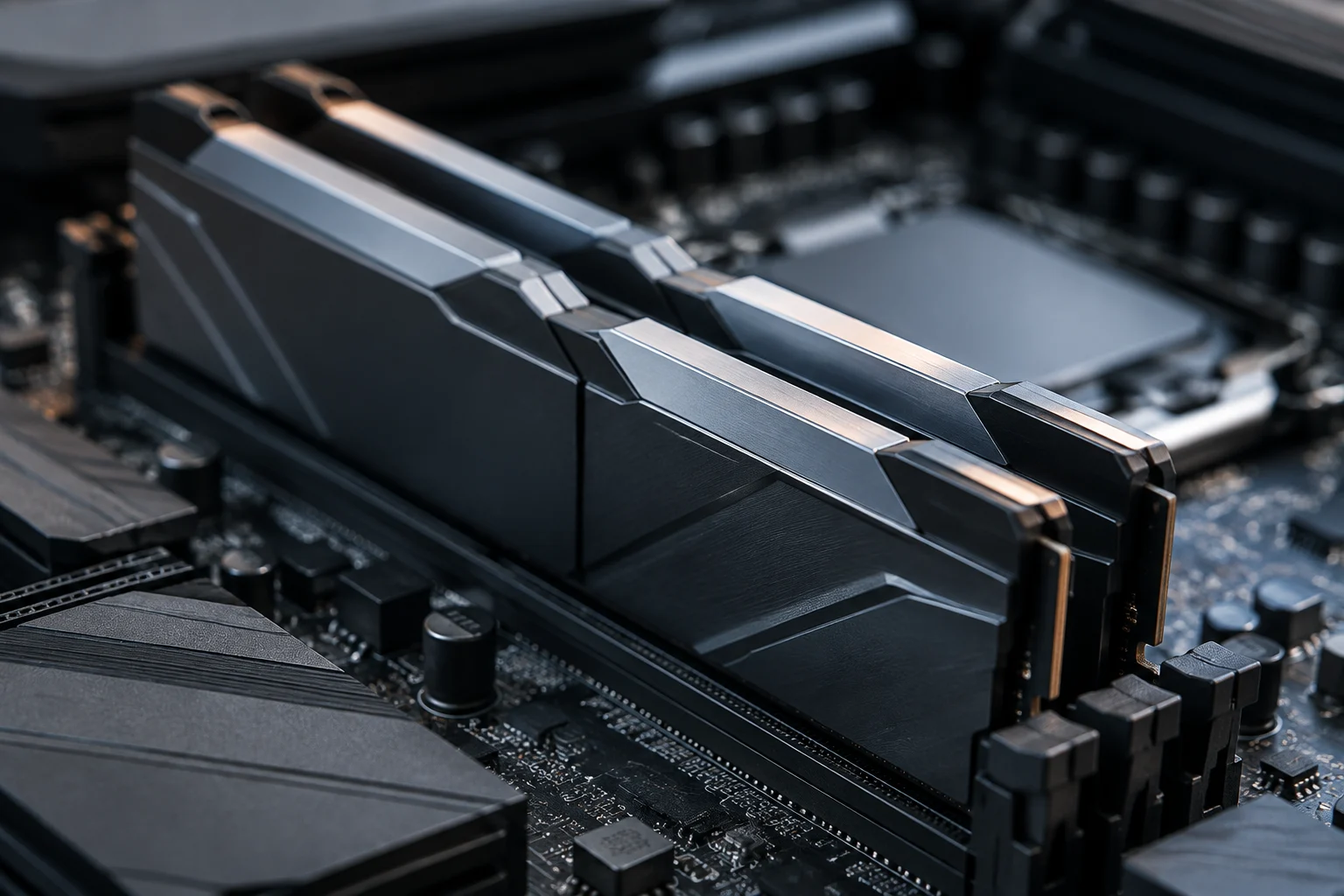
AMD EXPO is a set of memory profiles designed to facilitate performance adjustments on compatible platforms. Geeknetic's coverage, published in August 2022, placed it at the launch of Ryzen 7000 and AM5, and described DDR5 kits then announced with EXPO profiles of up to 6400 MHz. The profile configures parameters; it does not certify that any processor, board, and kit will function at that speed.
Activating a profile does not equate to keeping memory within the standard's base configuration. The result depends on the combination of modules, board, firmware, and processor controller. The available source does not establish a “no overheating” rule nor allows recommending a universal maximum voltage. For a purchase or upgrade, one must check the manufacturer's validated memory list and the processor's specifications.
The same caution applies to performance promises. An advertised improvement or a result obtained with a specific kit should not be automatically transferred to other games, applications, or systems. If the system presents errors after activating a profile, the practical decision is to return to a stable configuration and review compatibility and firmware, not to insist on a frequency that the set cannot sustain.
What performance examples say—and what they do not
The cited tests do not form a common comparative battery. The Alder Lake report with AIDA64 and MadBoxPC's Ryzen 7000 review are distinct pieces, with different platforms and methodologies. They do not allow concluding that a specific memory improves a fixed percentage in games, rendering, or artificial intelligence.
Nor has verifiable evidence been provided for the figures attributed to Cinebench R23, TensorFlow, PyTorch, Cyberpunk 2077, or PassMark in the draft. In the absence of method, complete configuration, and results published in a checkable source, it is not appropriate to turn those percentages into recommendations.
A useful comparison should indicate, at a minimum, processor and board, capacity and number of modules, memory adjustments, firmware version, application, procedure, and repetition of the tests. For games, it is advisable to separate the average frame rate from the minimums and variability; for professional tasks, measure the real work that matters to the user. Without those data, an isolated figure can serve as a historical reference, but not as a purchase forecast.
Capacity, compatibility, and purchase decisions
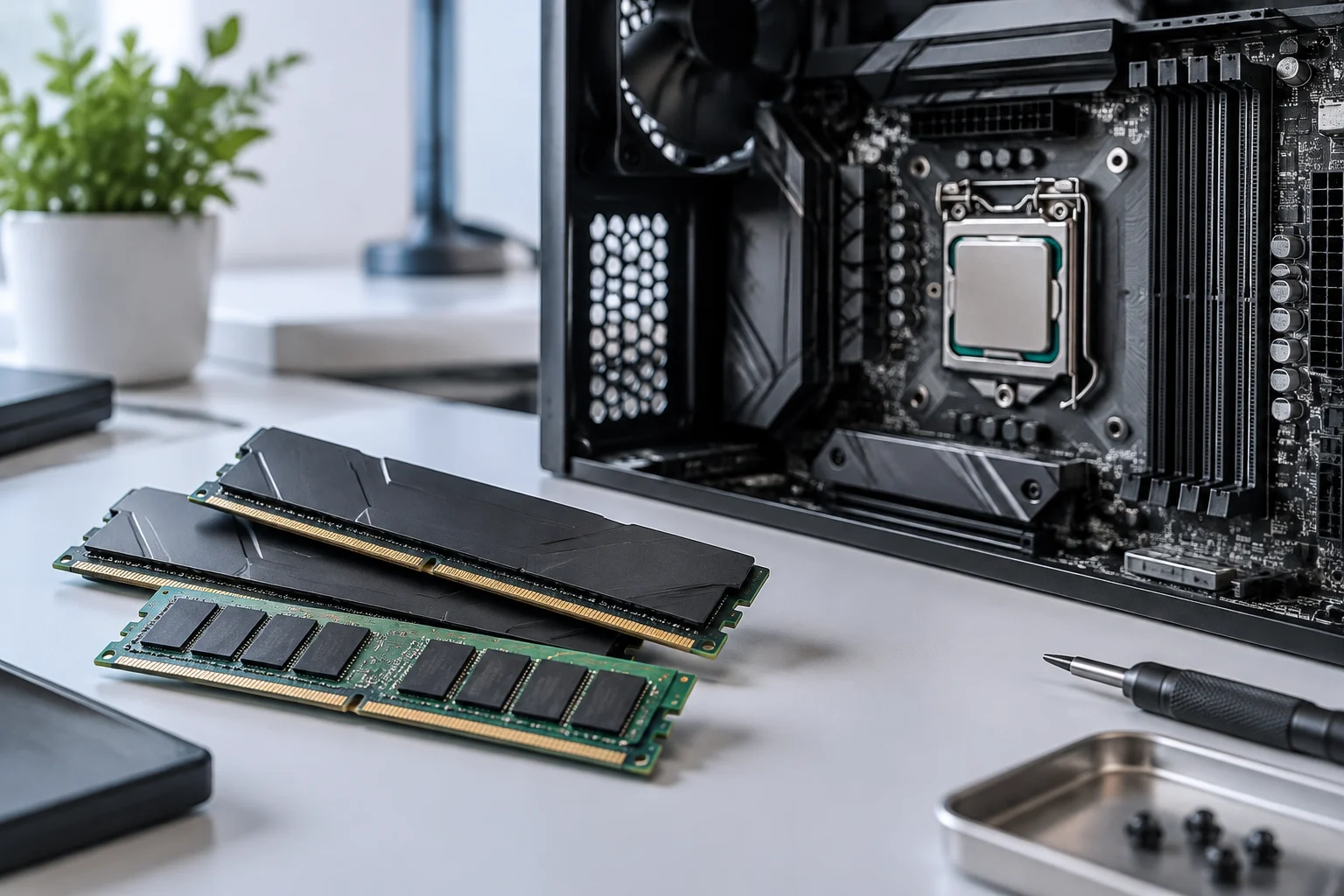
To choose memory, the first practical question is the capacity required by the intended use. Then come the physical format, the type supported by the board or laptop, and the configurations validated by the manufacturer. The advertised speed only makes sense within those limits: an incompatible memory does not become appropriate by having a higher figure on the box.
The news about GIGABYTE's CQDIMM demonstration at CES 2026 deals with the compromise between capacity and speed that may appear when scaling DDR5 modules, especially in high-capacity configurations. A demonstration does not equate to commercial availability nor confirms compatibility with specific boards. Before taking it as a criterion, one must look for an official product sheet and the list of supported platforms.
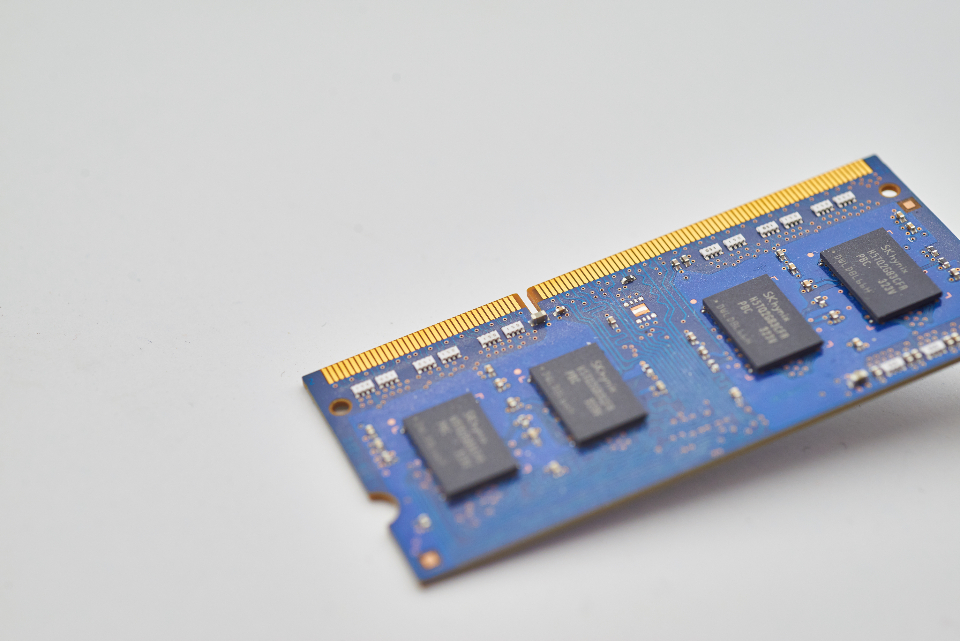
In laptops and phones, memory is usually integrated or conditioned by the device's design. The included sources are not sufficient to assert that a Snapdragon 8 Gen 3 supports LPDDR6, nor to attribute specific latency, bandwidth, or battery life improvements to it. The memory incorporated in a mobile device must be checked in the complete model's sheet, not inferred from rumors about subsequent processor generations.
Conclusions: a prudent guide for each profile
For a desktop PC based on Ryzen 7000, EXPO can simplify the configuration of a compatible kit, but it does not replace the check of board, processor, and modules. If the goal is stability, it is advisable to prioritize a validated configuration rather than chasing an advertised frequency without context.
For a workstation that needs a lot of memory, the CQDIMM demonstration serves as an indication that manufacturers continue exploring how to scale capacity and speed in DDR5. It is not enough, by itself, to recommend CAMM-2, assign a numerical advantage, or anticipate compatibility. One must wait for specifications of the product to be purchased and documentation of the corresponding board.
To compare systems, discard tables that mix standards, formats, and profiles as if they were equivalent, or that do not indicate methodology and source. The most reliable decision starts from the necessary compatibility and capacity; then performance is compared measured on the same platform and in the specific task. Available sources do not support quantitative recommendations for LPDDR6, DDR5X, or AI or game results.