Methodology and Context of the Annual Report
MIT Technology Review, the world's oldest technology publication founded in 1899, has published its selection of the 10 emerging technologies of 2026. This editorial exercise, marking its 25th anniversary, is not a prediction of consumer gadgets but an identification of advances with sufficient maturity to alter critical infrastructures in the coming years. The list is built after months of reporting and debate among the editorial staff, filtering out the noise of passing trends to focus on solutions that are already in the deployment or industrial validation phase.
This year's approach marks a paradigm shift: technology is no longer played out solely in mobile applications or consumer hardware, but in high-energy intensity infrastructures and precision biology laboratories. Unlike previous lists that highlighted individual devices, the 2026 edition presents a set of systemic technologies that interact with each other, from energy generation to human genome editing. This perspective forces professionals to evaluate not only the technical viability of each innovation but its capacity to integrate into existing supply chains and regulatory frameworks.
Energy: Sodium Batteries and Advanced Nuclear
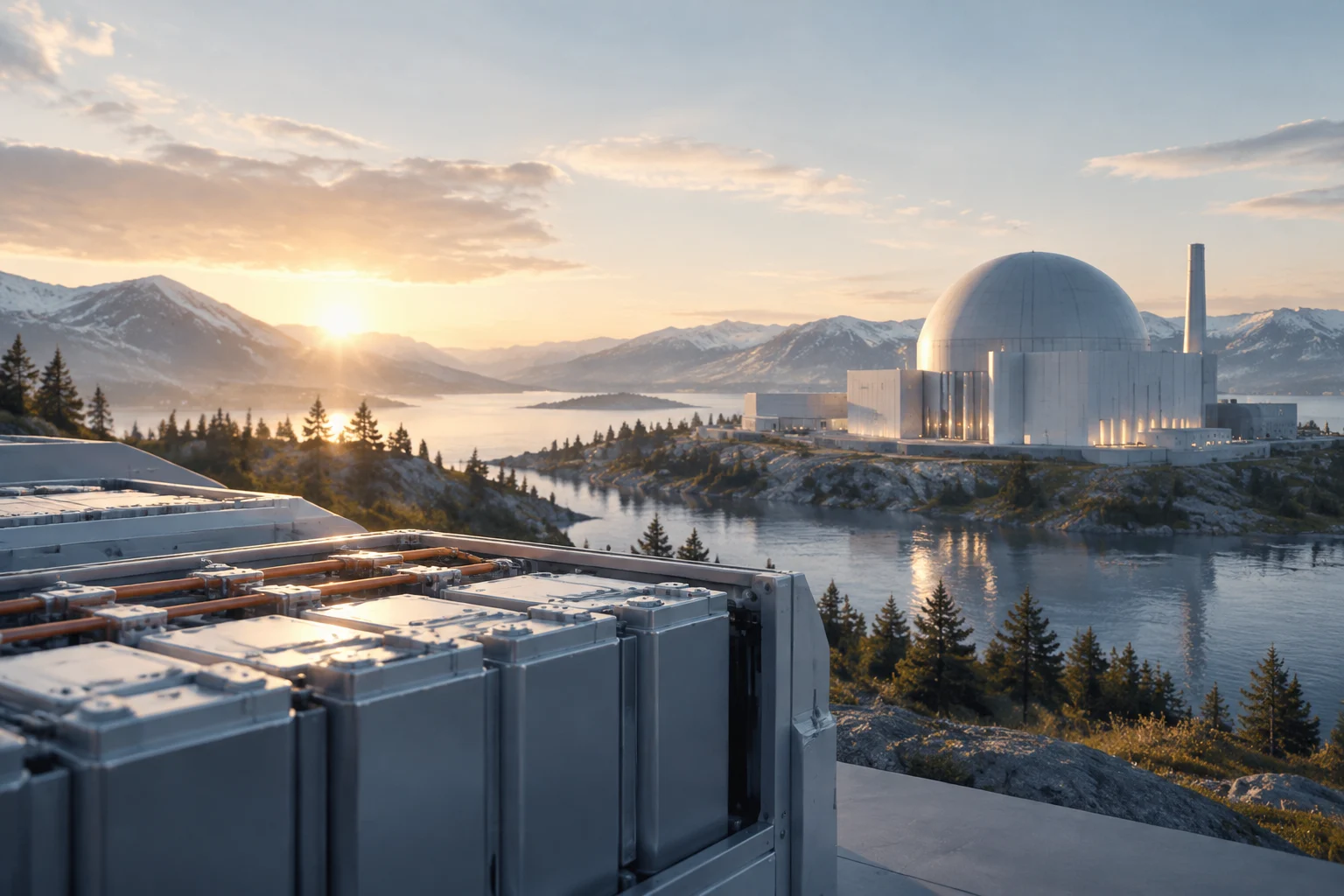
The energy axis dominates the list with two entries that redefine the stability of the electrical grid. Sodium-ion batteries position themselves as the viable alternative to lithium, leveraging the abundance of sodium (present in common salt) to reduce costs and geopolitical dependence on critical supply chains. Their main application is not the high-performance electric vehicle, but stationary storage in electrical grids and affordable vehicles, where lower energy density is compensated by safety and price. Major manufacturers have communicated plans to scale these deployments towards 2026, marking the step from the laboratory phase to industrialization.
In parallel, next-generation nuclear energy introduces reactors with compact designs and new cooling systems that allow for faster and safer installation. These models seek to provide stable, low-carbon energy without the decade-long construction timelines of traditional plants. The combination of both technologies suggests a future where the intermittency of renewables is managed through abundant chemical storage and a modular nuclear base, offering infrastructure managers a tool to plan medium-term energy resilience.
Biotechnology: Genetic Editing and Resurrection
Molecular biology occupies a central place with advances that transcend academic research. Personalized genetic editing has taken a crucial step with the case of KJ, the first patient to receive a gene editing treatment designed to measure for their specific condition. This milestone validates the clinical viability of adapting gene therapies to individual mutations, opening the door to treatments for rare diseases that previously lacked therapeutic options. The surgical precision of these tools allows intervention in DNA with a level of control that reduces the risks of off-target effects.
Another controversial entry is genetic resurrection, which explores the possibility of recovering extinct species or cloning organisms from preserved genetic material. Although its practical application in conservation remains limited and subject to intense ethical debates, its inclusion in the list reflects the maturity of cloning techniques and genomic sequencing. For the pharmaceutical and biotechnology sectors, the message is clear: the ability to manipulate the genetic code is no longer a future promise, but an operational reality that requires robust regulatory frameworks to manage its social and ethical implications.
Artificial Intelligence: From Assistance to Infrastructure
AI in 2026 is characterized by its deep integration into workflows and digital infrastructure. Hyper-scale AI data centers are the new bottleneck and opportunity of the sector, designed to support the massive energy consumption of language models. These complexes are not just servers, but ecosystems of cooling and energy management that require unprecedented urban and industrial planning. The availability of compute at this scale determines the speed of innovation in the rest of the technologies on the list.
On the software development plane, generative programming is transforming the code industry. AI tools that write, test, and deploy code accelerate application production, but pose significant challenges in quality and security. The massive adoption of these tools could reduce the demand for junior profiles, forcing companies to restructure their engineering teams and implement stricter validation protocols. The risk is not the obsolescence of the profession, but the degradation of the technical knowledge base if the transition is not managed with rigor.
Commercial Availability and Maturity Status
It is crucial to distinguish between technologies in the demonstration phase and those with immediate commercial availability. Sodium batteries and modular nuclear reactors are in the industrial scaling phase, with active pilots and signed deployment contracts, but they are not yet immediate purchase solutions for the general market. In contrast, generative programming tools and multimodal AI models are commercially available today, with subscriptions and APIs accessible to companies of all sizes. This status difference implies that investment decisions must be calibrated according to the time horizon: AI offers short-term return, while nuclear energy and personalized genetic editing require patience and long-term capital.
Personalized genetic editing is in an intermediate phase: treatments exist and have been administered, but access is restricted to specialized centers and specific clinical cases. It is not a pharmacy product, but a precision therapy that requires a complex approval and personalization process. For trend analysts, this means that the impact on the mass health market will arrive with a delay of several years, while the impact on research and ultra-rare diseases is immediate.
Strategic Implications for Industry
The 2026 list is not a product catalog, but a map of systemic risks and opportunities. Companies that depend on digital infrastructure must anticipate the scarcity of compute capacity in AI data centers, which could increase cloud service costs and slow down model deployment. In the energy sector, the entry of sodium batteries pressures lithium manufacturers to optimize costs, benefiting grid operators seeking affordable storage. Biotechnology, for its part, requires regulators and insurers to develop new frameworks to cover personalized gene therapies.
For technology professionals, the practical lesson is continuous validation. Generative AI accelerates development but introduces security vulnerabilities that require constant audits. Genetic editing offers cures but poses ethical dilemmas that companies must address with transparency. Modular nuclear energy promises stability, but its social acceptance depends on the clear communication of its benefits and risks. In an environment where technologies couple with each other, the ability to integrate these innovations safely and ethically will be the key competitive differentiator for organizations in the coming decade.