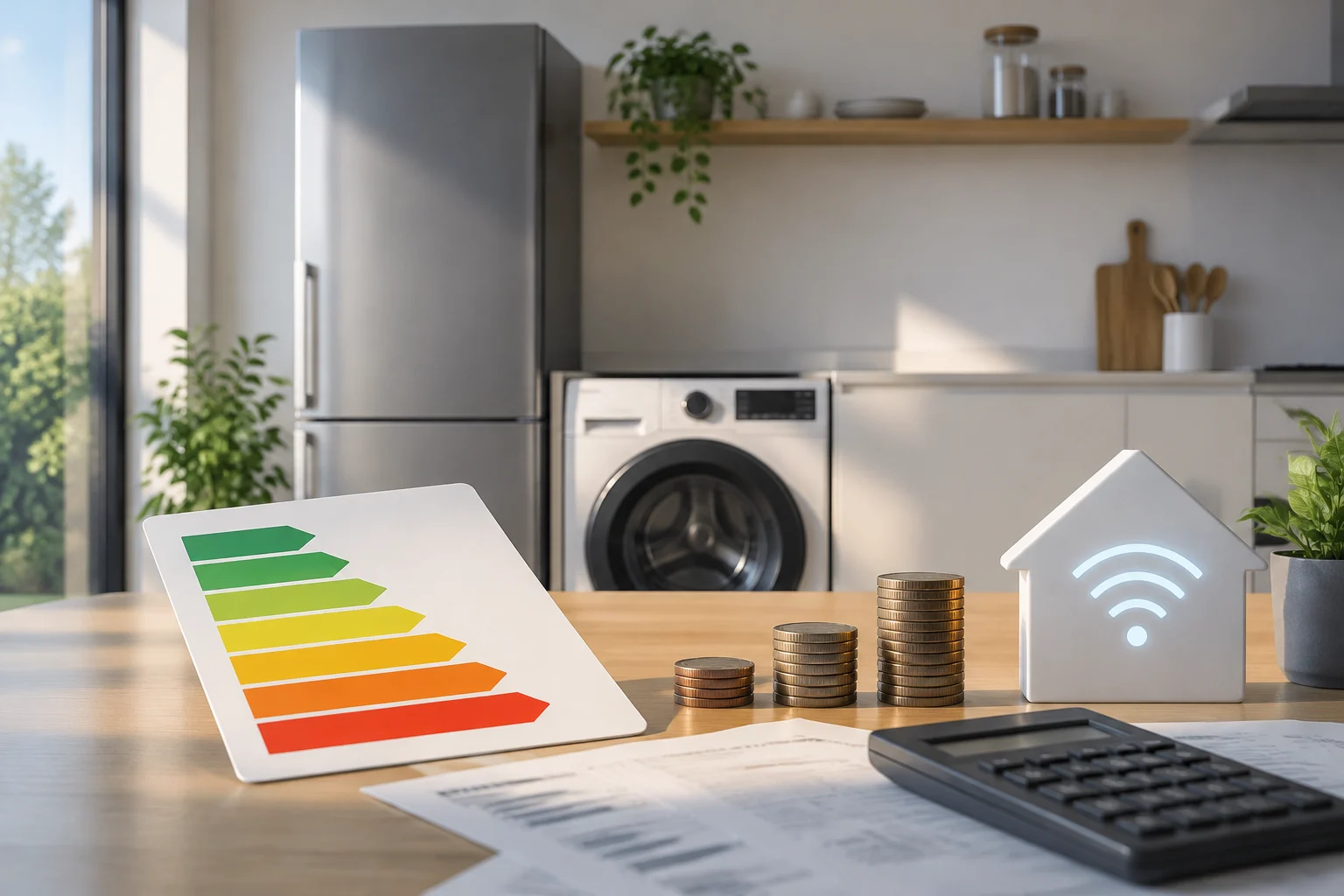
Connectivity is not a measure of efficiency
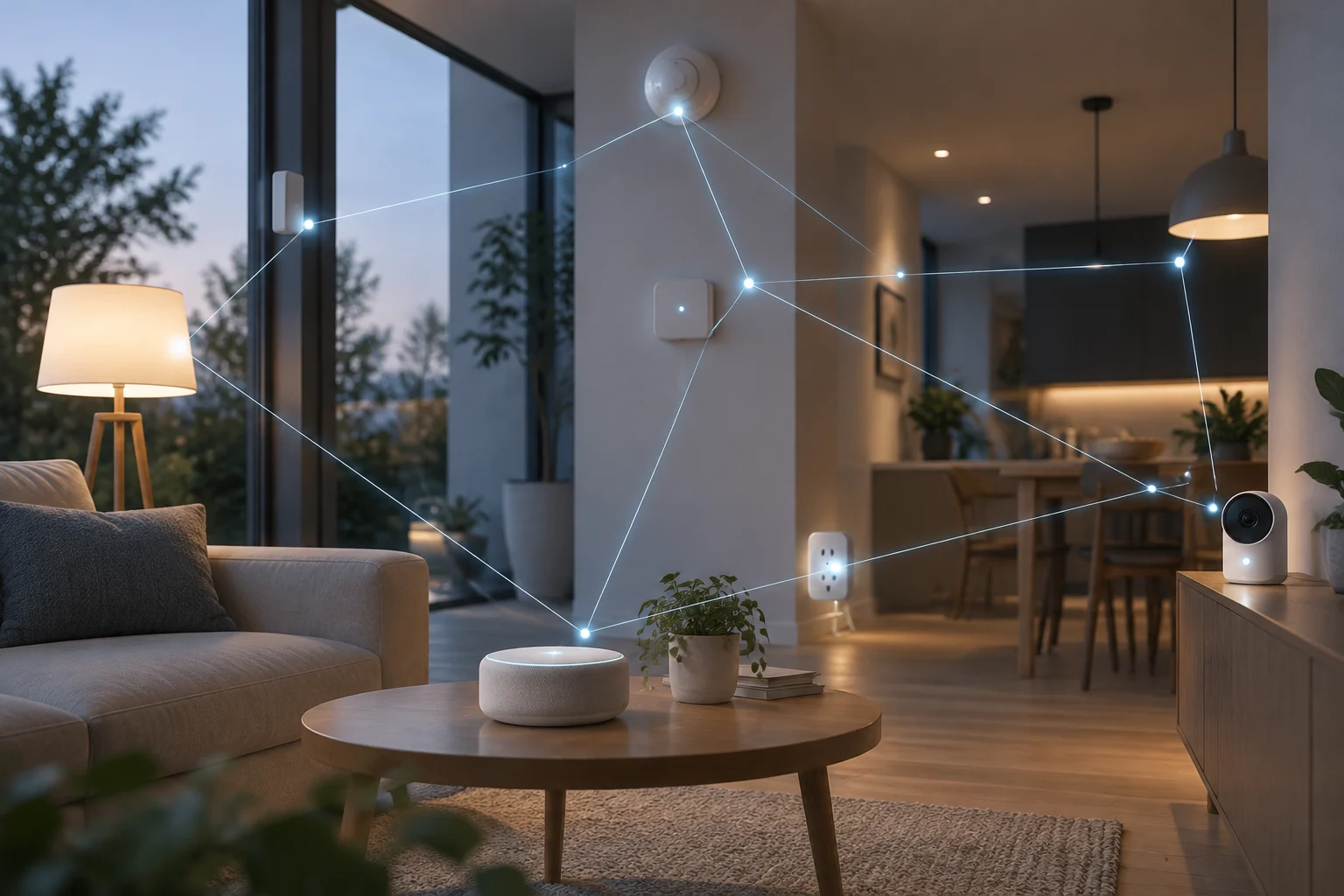
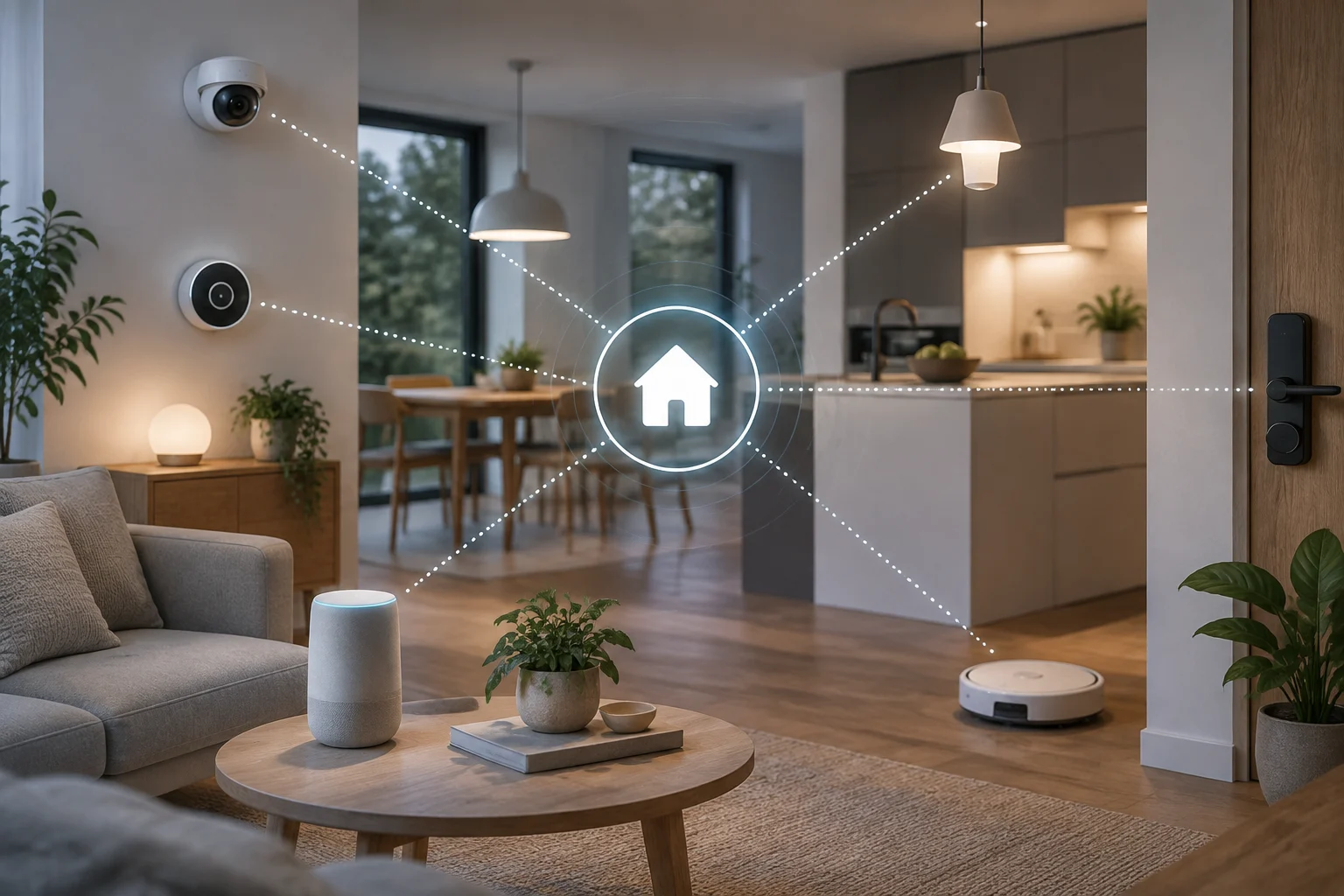
A connected appliance can send alerts to your phone, allow remote control, or integrate with other devices. These functions describe how it communicates or is controlled, not how much electricity it needs to perform its task. To know this, you must look at the energy label and the specifications of the specific model; the word 'smart', by itself, does not allow deducing consumption.
The useful economic question is also not just whether an appliance consumes less than another. The purchase price, consumption during the intended use, the cost of water where applicable, the useful life the buyer considers, and any recurring payment necessary for the features you will actually use matter. Without this data, announcing a payback period would be speculative.
The available evidence for this guide does not document subscription conditions for LG, Samsung, or Bosch, nor does it allow asserting that common features of these brands become paid after the warranty. Therefore, it is not advisable to assume either that there is a fee or that there is not: before buying, you must confirm in writing which features depend on an account, an application, cloud services, or a payment plan.
How to read the European energy label
In the product families to which the rescaled scale applies, the label uses classes from A to G: A represents the highest efficiency within that scale and G the lowest. The European Union also explains that the old classes with '+' signs stopped being used from 2021 for several groups, including refrigerators, dishwashers, washing machines, and screens. Do not compare a new letter with an old label as if they were necessarily equivalent.
The scale was designed to compare models of the same category according to methods and conditions defined for each product. A letter is not a universal promise of savings in euros: household spending depends on how much the appliance is used, the program chosen, and local conditions. Furthermore, the relevant data changes according to the category; a washing machine provides different information from a screen or a refrigerator.
To verify the model, look for its label and product sheet and consult the European Product Registry for Energy Labelling, EPREL, where applicable. The Your Europe portal indicates that EPREL contains information on the consumption of appliances sold in the EU market. Contrast the exact model, not just the brand or commercial family: two similar variants can have different data.
The change of scale also does not mean that the appliance has physically changed. IDAE explained in 2021 that the rescaling could modify the letter without changing the product's efficiency. That date matters: the entry into force of the new label was a regulatory transition of 2021, not a recent announcement or a new obligation of 2026.
Calculating the total cost without inventing savings
The label helps to compare, but to decide if an expensive model is worth it, you must incorporate the purchase price and a realistic usage scenario. At a minimum, note the consumption declared by the documentation for the category and the indicated reference period, the price you will pay, and the annual use you expect. Do not directly convert a label difference into an amount of money: the letter is not an invoice.
A simple calculation can order the comparison, provided its assumptions are presented. If the sheet provides energy per cycle, estimate the annual cycles and multiply by the energy price you pay; if it provides annual consumption, use that value as a base and recognize that household use may differ from the standardized test. Add water or other costs only if there is comparable data for both models.
To estimate a recovery period, divide the price difference by the estimated annual savings. The result is not a guarantee: it depends on the usage pattern being maintained and the estimated savings being correct. If the annual savings are small or uncertain, a high purchase premium may not be recovered during the time the appliance is kept. Compare scenarios, not a single number presented as certainty.
Also separate energy savings from comfort. A fault notification, remote programming, or an automatic function may be useful even if they do not demonstrably reduce consumption. Value them as features, not as efficiency, and avoid attributing economic savings to them without a measurement or a verifiable specification of the model.
Subscriptions, accounts, and internet-dependent features
The research provided does not include official terms of service or support pages from LG, Samsung, or Bosch that certify which features are free, which require a connection, or if there is a payment after the warranty. Therefore, it is not possible to publish a subscription comparison between these brands or ensure that a service will disappear when legal or commercial coverage ends.
Before paying, identify the features that are central to you and ask the seller or manufacturer what happens if you cancel an account, the internet is interrupted, or a cloud service becomes unavailable. Also check if the basic use of the appliance depends on an application and if the function can operate locally. Request current conditions for the model and the market where you buy; conditions can change and should not be inferred from general articles.
A practical check consists of saving, before purchase, the model sheet and the terms linked from the application or official site. Look for explicit references to fees, trial periods, automatic renewal, account requirements, and regional availability. If the answer only says 'smart features included' without explaining duration or service dependency, treat that point as unclarified, not as a confirmed subscription.
The warranty and access to a digital feature are distinct issues. The expiration date of a warranty does not by itself prove that the manufacturer will charge for software, nor that it will maintain connected services indefinitely. If a feature is decisive for the purchase, it is advisable to request a specific answer and keep it; if it cannot be confirmed, value the appliance by the features it will continue to offer without it.
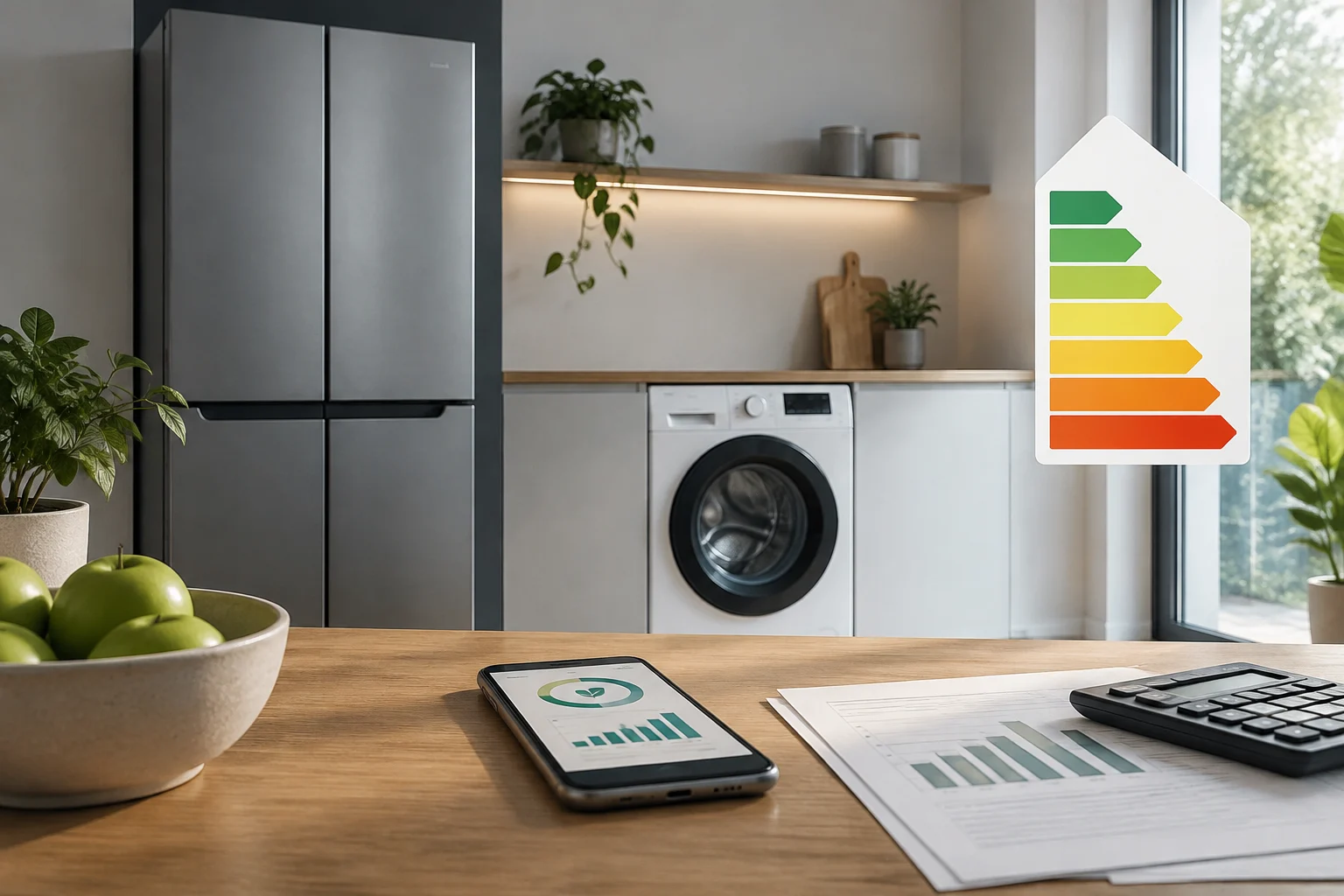
Standby consumption and interoperability: what to check
Standby consumption can matter in equipment that remains connected, but one should not assume that all smart appliances consume a certain amount. Check if the model documentation publishes the data and under what conditions it was measured. If it does not appear in the available sources, the correct conclusion is that it is not verified, not that it is zero or that it is high.
Interoperability also requires precision. Matter, Thread, and Zigbee are not interchangeable names: a commercial compatibility label does not prove which devices work together, which features they support, or if a hub is needed. The supplied research does not contain official Matter documentation or product specifications that allow comparing their compatibility; therefore, it cannot be asserted here that a specific technology guarantees universal integration.
Before buying, review the official sheet of the appliance and the compatibility list of the ecosystem you already have. Look for the name of the standard, the version if specified, hub requirements, and supported features. Verify each specific integration: two products that mention the same platform can offer different controls and depend on different applications or services.
Do not confuse interoperability with energy savings. An integration can facilitate automations or centralize controls, but mere compatibility does not quantify a reduction in consumption. To sustain that conclusion, comparable data on operation and use would be needed; without them, it is more rigorous to value interoperability by comfort, continuity, and compatibility with the devices you already own.
Durability, repair, and purchase decision
Planned obsolescence is a legitimate concern, but it should not be presented as a proven characteristic of an appliance without evidence of its design or repair policies. In this research, there is no specific documentation of parts, duration of updates, repairability, or after-sales support for the LG, Samsung, and Bosch models that the draft proposes to analyze. It cannot be concluded that a connected appliance will become unusable by software or that it is more durable than a simple one.
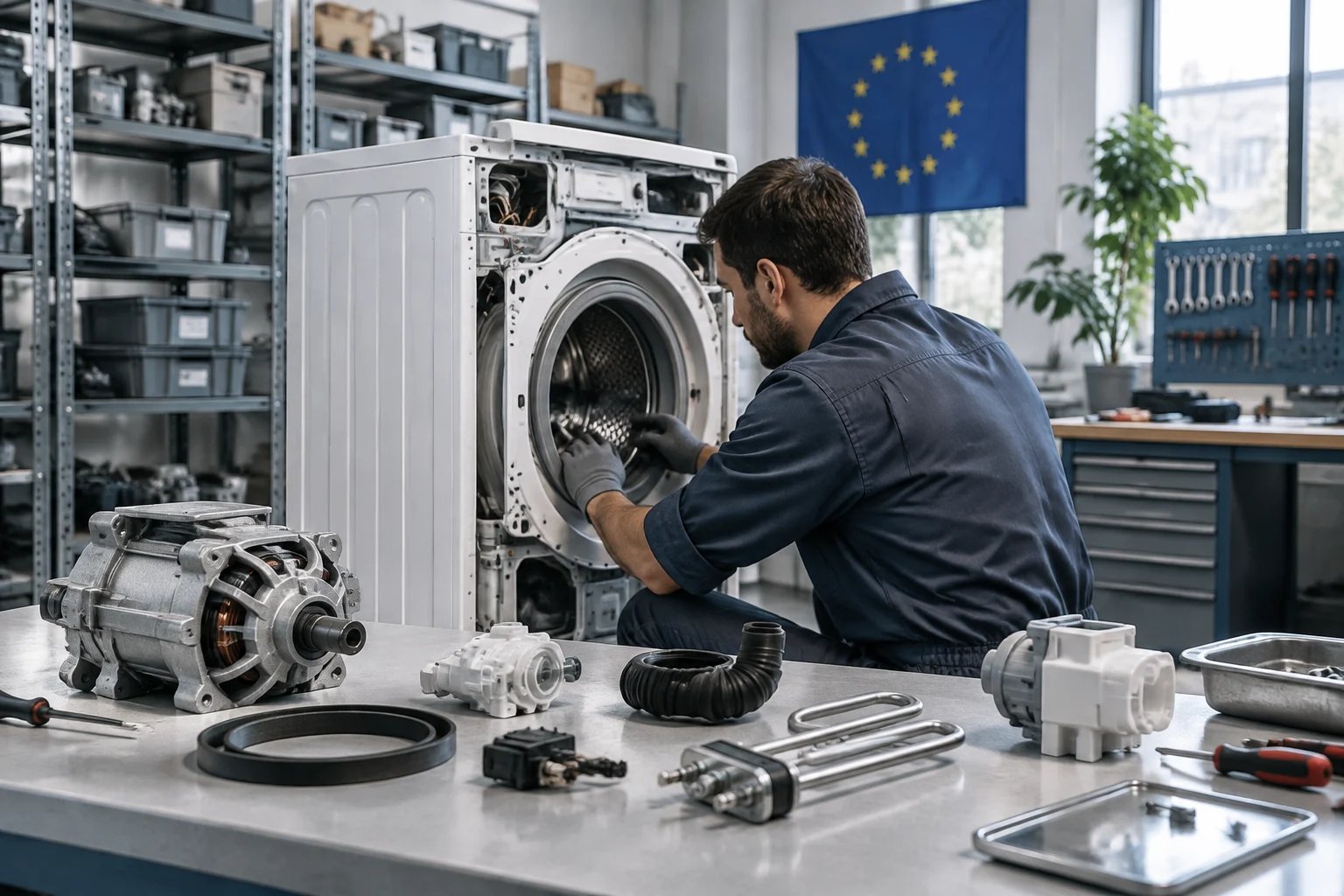
Uncertainty can indeed be reduced with specific questions: how long the declared software support lasts, which features remain operational without a connection, where spare parts are obtained, how much common repairs cost, and what service the manufacturer offers in your country. The availability of parts and support must be checked for the exact reference; a general promise about a brand is not enough.
Checklist before buying
- Identify the exact reference and compare the energy label with models of the same category.
- Use the published consumption and a plausible usage pattern; do not translate the letter directly into euros.
- Add the purchase price and the fees that are expressly confirmed for the features you will use.
- Verify account, connection, hub, and compatibility requirements in official documentation.
- Ask about support, repair, and basic operation if the online service is interrupted.
The final decision depends on what you value. If the main goal is to lower spending, prioritize measurable consumption and total price. If connectivity provides significant comfort, consider paying for it only after knowing its dependencies and cost. A smart appliance is not automatically more efficient, and a less connected one is not automatically better: what is decisive is comparing specific models with verifiable data and declaring what remains unknown.