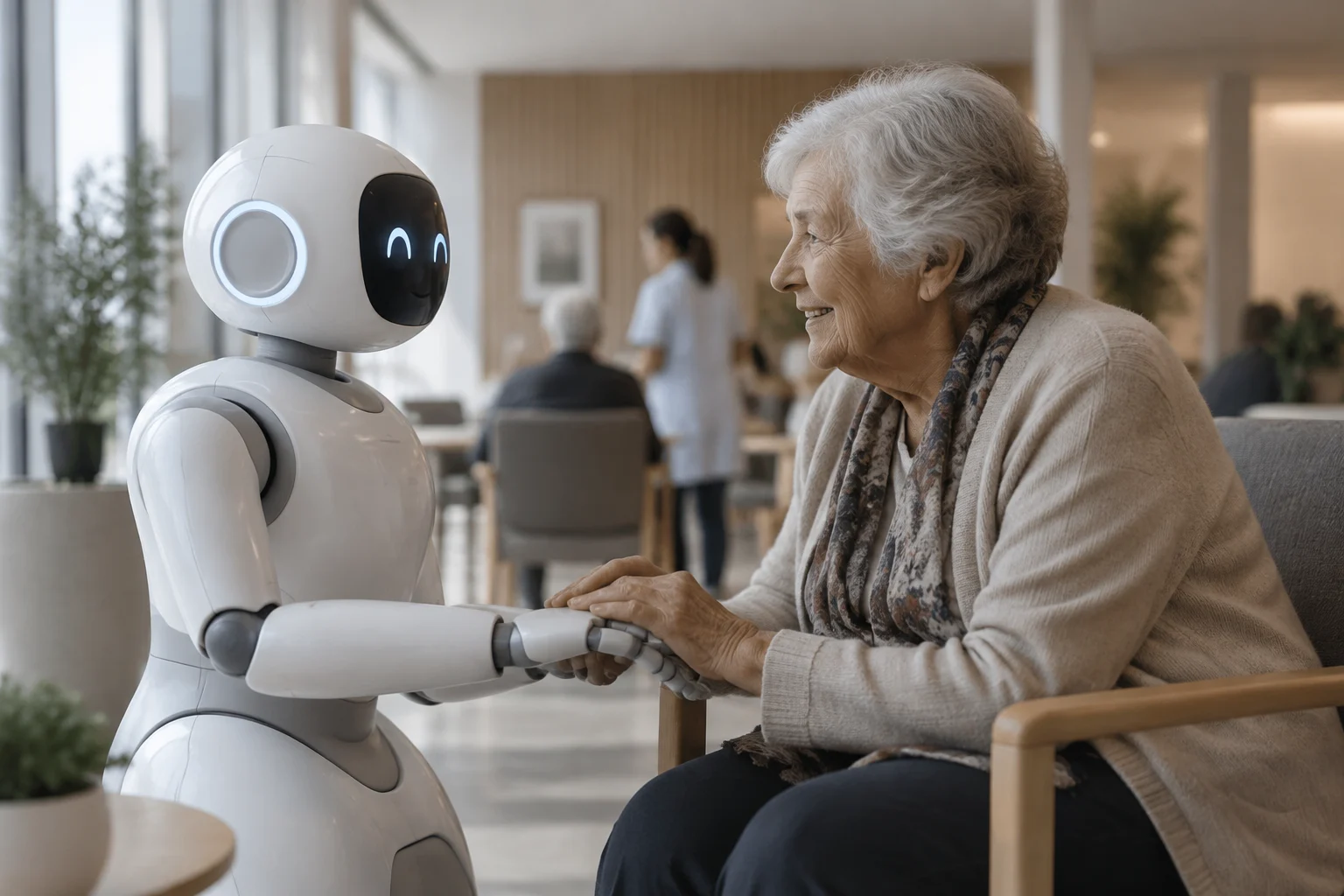
Definition and Scope of Social Robotics
Social robotics distinguishes itself from industrial or generalist service robotics by its primary objective: natural and meaningful interaction with human beings. Unlike factory robotic arms, these devices are designed to communicate, assist, and accompany, using multimodal interfaces that include voice, gestures, and facial expression. In the Spanish context, this category ranges from humanoid robots to immersive virtual reality systems that simulate social environments for training communicative skills.
It is fundamental to separate assistive robotics (oriented to physical tasks such as object transport or mobilization) from pure social robotics, which focuses on emotional and cognitive well-being. This distinction is key to understanding user expectations and applicable regulatory frameworks, as risks and benefits vary significantly between both approaches.
Research Projects in Spain
Spain has an active network of research groups working at the intersection of robotics, artificial intelligence, and social sciences. A notable example is the IncluTIC group at the University of Alicante, which develops projects funded by the Ministry of Science and Innovation to improve communication in students with Autism Spectrum Disorder (ASD). These projects combine virtual reality and social robotics in pilot phases within educational centers.
Another relevant actor is the ROBITA-LAB laboratory at the University of Deusto, focused on the design of social robots for health, education, and entertainment. Its research centers on natural interaction and the translation of robotic technologies to fields such as interactive art and medicine. These academic efforts are the engine of innovation, although their direct impact on society remains limited by the scale of the studies.
Funding and Transfer Initiatives
- Indra-Universia Call: Since 2016, this alliance has awarded more than 350 research proposals in accessible technologies. The 9th edition (2025) granted 25,000 euros in aid to projects like EmpowerTasks and LARA, seeking to accelerate their market arrival.
- European Projects: Groups like PAL Robotics in Barcelona participate in initiatives like Enrich Me, which seek to standardize the evaluation of social robots in residential environments.
Evidence of Impact on Vulnerable Populations
Scientific evidence on the impact of social robotics is promising but fragmented. Pilot studies in older adults with cognitive decline have shown improvements in mood and social participation after interaction with robots with artificial emotional intelligence. However, most of these studies are small-scale, short-duration, and lack robust control groups, limiting the generalization of results.
In the field of education, projects with students with ASD suggest that the combination of virtual reality and robotics can facilitate the training of social skills. Nevertheless, the transfer of these skills to everyday environments outside the laboratory or classroom remains an unresolved challenge. The literature points out that the novelty of the device can inflate initial results, a phenomenon known as the Hawthorne effect.
Common Methodological Limitations
- Small Samples: Most studies include fewer than 30 participants.
- Lack of Standardization: There is no single protocol to measure emotional well-being or social interaction in these contexts.
- Selection Bias: Participants are usually volunteers with higher motivation, which does not represent the general population.
Regulatory and Ethical Framework
The regulation of social robotics in Europe is based on a context-based risk approach. The UNESCO Recommendation on the Ethics of AI, adopted in 2021, establishes fundamental principles such as transparency, privacy, and non-discrimination, which are applicable to social robots. In Spain, there is no specific robotics law, but general data protection (GDPR) and product safety regulations apply.
The Cotec report on robots for elderly care highlights the need for an appropriate regulatory framework that addresses not only physical safety but also the formative and ethical aspects of human-machine interaction. It proposes the training of professional staff in transversal competencies to properly manage these technologies in care environments.
Roboethics is a developing field that seeks to define the moral limits of interaction with robots. Questions such as the privacy of biometric data, emotional manipulation, or civil liability in case of damage still lack clear answers in current legislation. The 2017 European Parliament Resolution on advanced robotics laid the foundations for future regulation, but its implementation remains partial.
Barriers to Mass Adoption
The mass adoption of social robotics in Spain faces significant economic and social barriers. The cost of social robots, which can exceed 10,000 euros per unit, is prohibitive for most families and care centers. Furthermore, maintenance, software updates, and staff training represent recurring costs not contemplated in current funding models.
Social resistance is another key factor. Many users and caregivers express doubts about the capacity of robots to provide genuine care and fear the dehumanization of support relationships. The lack of standardization in outcome evaluation makes it difficult to justify investment to public and private managers, slowing the scalability of pilot projects.
Critical Factors for Adoption
- Cost-Benefit: Lack of sustainable business models that justify the investment.
- Training: Need for training programs for health and education professionals.
- Trust: Building a relationship of trust between users, caregivers, and manufacturers.
Conclusion: Open Questions
Social robotics in Spain is in a maturation phase. Research projects are solid and show potential, but the distance between the laboratory and widespread application remains wide. Current evidence suggests modest benefits in emotional well-being and social interaction, but it does not replace human care nor resolve the structural challenges of population aging.
The open questions are fundamental: How is long-term impact objectively evaluated? Who is responsible in case of failure? How is privacy guaranteed in a continuous interaction environment? The answer to these questions will determine whether social robotics becomes a valuable complementary tool or remains a niche technological curiosity.